• Home
  • Latest
  • Fortune 500
  • Finance
  • Tech
  • Leadership
  • Lifestyle
  • Rankings
  • Multimedia
CommentaryTech

By sunsetting Section 230, Congress could be about to break the internet as we know it

By
Gary Shapiro
Gary Shapiro
Down Arrow Button Icon
By
Gary Shapiro
Gary Shapiro
Down Arrow Button Icon
June 3, 2024, 11:49 AM ET
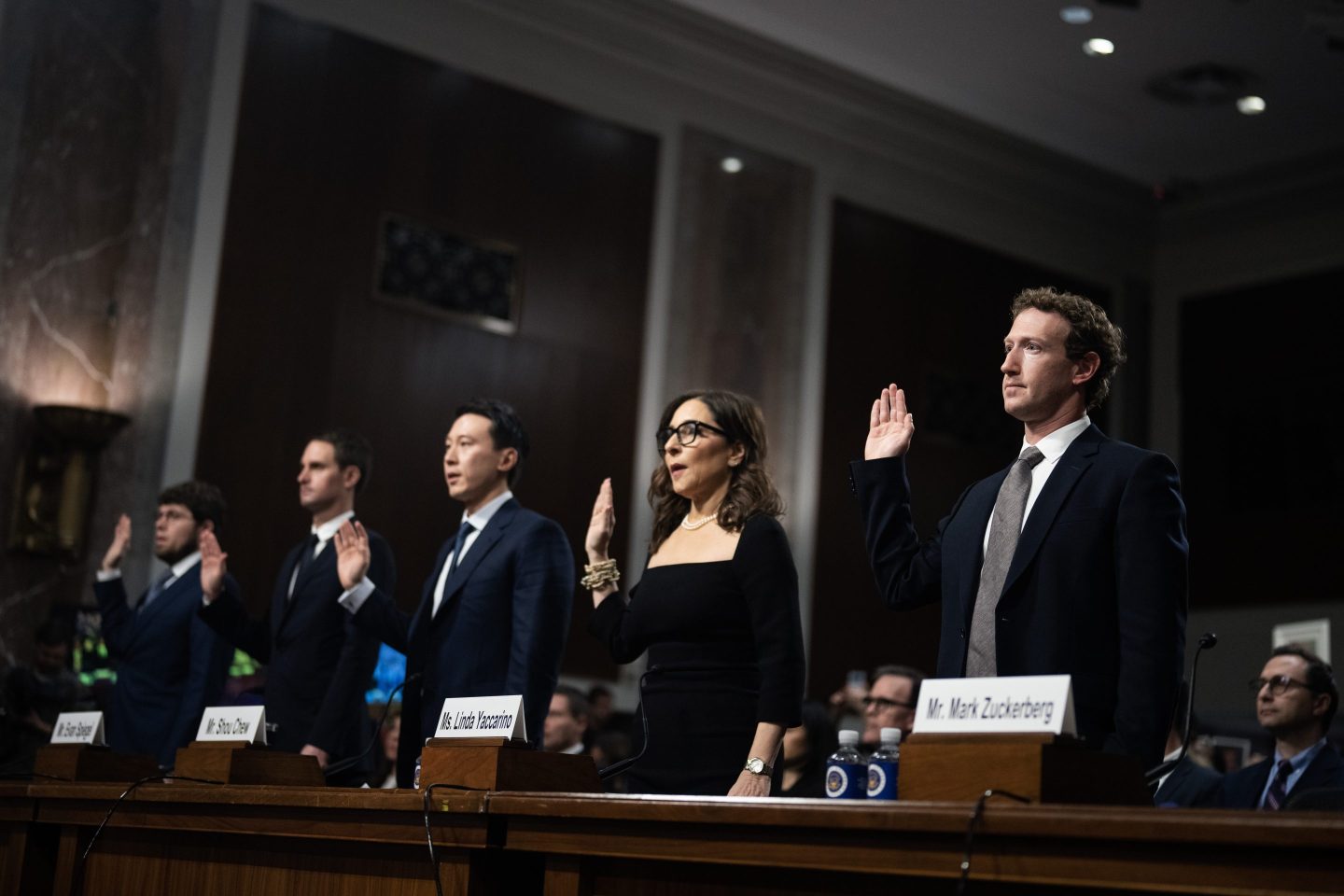
From right, Mark Zuckerberg, CEO of Meta, Linda Yaccarino, CEO of X Corp., Shou Chew, CEO of TikTok, Evan Spiegel, CEO of Snap, and Jason Citron, CEO of Discord, are sworn in to the Senate Judiciary Committee hearing titled "Big Tech and the Online Child Sexual Exploitation Crisis," on Jan. 31.
From right, Mark Zuckerberg, CEO of Meta, Linda Yaccarino, CEO of X Corp., Shou Chew, CEO of TikTok, Evan Spiegel, CEO of Snap, and Jason Citron, CEO of Discord, are sworn in to the Senate Judiciary Committee hearing titled "Big Tech and the Online Child Sexual Exploitation Crisis," on Jan. 31.Tom Williams—CQ - Roll Call, Inc/Getty Images

Gary Shapiro is the CEO of the Consumer Technology Association (CTA).

Leaders in the U.S. House of Representatives are debating a proposal that would dramatically limit speech on the internet. Backed by two powerful house leaders, the proposed “Legislative Proposal to Sunset Section 230 of the Communications Decency Act” would eliminate the protections granted to internet platform providers under Section 230 of the Communications Decency Act. This legislation would deal a critical blow to the fundamentally American tradition of free speech and the internet as we know and love it.

As hearing sponsors Representatives Cathy McMorris Rodgers and Frank Pallone Jr. explained in a recent Wall Street Journal op-ed, the goal of Section 230 was “to help people and businesses connect, innovate and share information” by establishing the common-sense principle that responsibility for online speech lies with the speaker. Section 230 also ensures internet platforms can remove offensive or inappropriate speech without fear of liability. As the lawmakers acknowledge, it “helped shepherd the internet from the ‘you’ve got mail’ era into today’s global nexus of communication and commerce.”

Congress did the right thing in 1996 when it paved the way for the commercial internet to grow with Section 230, precisely so American innovators could create new services for Americans, by Americans. Now, House Committee on Energy and Commerce members of both parties are rushing through legislation that would strip the protections afforded by “the 26 words that created the internet.”

We no longer live in an era where news is delivered by a limited number of broadcast and cable TV channels. Social media and free exchanges of opinion online are a growing source of information for millions of Americans, and Section 230 helps keep those platforms vibrant, engaging, and useful.

Eliminating Section 230 would be a gift from Congress to trial lawyers eager to make a quick buck. In fact, without these protections, anyone could shake down or sue website owners for information posted or comments made by individual users. That would add a potentially crippling “litigation tax” to the cost of doing business for any site that allowed public commentary—and it will put the future of your favorite online services and thousands of other social media sites at risk

While proponents of this legislation like to frame it as pushback against Big Tech, the reality is that Section 230 protects innovators of all sizes, including small businesses and startups. It protects church bulletin boards, online newspapers, and microblogs. Moreover, it protects our free speech. If Section 230 is struck down or weakened, it will leave behind a bleak internet—either an oversanitized version or a free-for-all one. In short, sunsetting Section 230 will chill the free speech allowed by our dynamic internet innovation ecosystem, and eliminate the tools and functions that Americans love and rely on, making the online experience worse for everyone.

Additionally, claims that Section 230 stands in the way of efforts to stop child sex, drug trafficking, and other crimes online ignore the fact that these actions are already prosecutable. If something is illegal in real life, it is illegal on the internet.

Section 230 let us build an economic miracle, and now some in Congress would have us burn it down. Blowing up this legal framework would be shooting ourselves in the foot—and bestowing a tremendous gift onto America’s economic rivals.

As technology moves forward, it is true Congress has many complex issues to deal with, from AI to algorithmic accountability. While grappling with these issues, the one thing Congress should not do is take down the legal tent pole upholding U.S. innovation. This is the time for anyone and everyone who uses and relies on internet platforms to make their voice heard (thanks to Section 230)—and tell Congress “no thanks” to a proposal that would mean a bleak and limited future for the internet.

More must-read commentary published by Fortune:

  • Jamie Dimon is right. The number of U.S. public companies is plummeting—and that’s bad news for the democratic component of the economy
  • Trade and investment data in the last two years dispel the deglobalization and decoupling myths as U.S.-China competition ignites ‘reglobalization’
  • Big Tech employees missed out on $5.1 billion in 401(k) gains over the last decade because of fossil fuels, new research finds
  • ‘As quick as 5 minutes in California or as grueling as 11 hours in Texas’: Research reveals new post-Dobbs map of abortion access driving times

The opinions expressed in Fortune.com commentary pieces are solely the views of their authors and do not necessarily reflect the opinions and beliefs of Fortune.

Join us at the Fortune Workplace Innovation Summit May 19–20, 2026, in Atlanta. The next era of workplace innovation is here—and the old playbook is being rewritten. At this exclusive, high-energy event, the world’s most innovative leaders will convene to explore how AI, humanity, and strategy converge to redefine, again, the future of work. Register now.
About the Author
By Gary Shapiro
See full bioRight Arrow Button Icon

Latest in Commentary

Julian Braithwaite is the Director General of the International Alliance for Responsible Drinking
CommentaryProductivity
Gen Z is drinking 20% less than Millennials. Productivity is rising. Coincidence? Not quite
By Julian BraithwaiteDecember 13, 2025
8 hours ago
carbon
Commentaryclimate change
Banking on carbon markets 2.0: why financial institutions should engage with carbon credits
By Usha Rao-MonariDecember 13, 2025
9 hours ago
Dr. Javier Cárdenas is the director of the Rockefeller Neuroscience Institute NeuroPerformance Innovation Center.
Commentaryconcussions
Fists, not football: There is no concussion protocol for domestic violence survivors
By Javier CárdenasDecember 12, 2025
1 day ago
Gary Locke is the former U.S. ambassador to China, U.S. secretary of commerce, and governor of Washington.
CommentaryChina
China is winning the biotech race. Patent reform is how we catch up
By Gary LockeDecember 12, 2025
1 day ago
millennial
CommentaryConsumer Spending
Meet the 2025 holiday white whale: the millennial dad spending $500+ per kid
By Phillip GoerickeDecember 12, 2025
1 day ago
Sarandos
CommentaryAntitrust
Netflix, Warner, Paramount and antitrust: Entertainment megadeal’s outcome must follow the evidence, not politics or fear of integration
By Satya MararDecember 12, 2025
1 day ago

Most Popular

placeholder alt text
Economy
Tariffs are taxes and they were used to finance the federal government until the 1913 income tax. A top economist breaks it down
By Kent JonesDecember 12, 2025
1 day ago
placeholder alt text
Success
Apple cofounder Ronald Wayne sold his 10% stake for $800 in 1976—today it’d be worth up to $400 billion
By Preston ForeDecember 12, 2025
1 day ago
placeholder alt text
Success
40% of Stanford undergrads receive disability accommodations—but it’s become a college-wide phenomenon as Gen Z try to succeed in the current climate
By Preston ForeDecember 12, 2025
1 day ago
placeholder alt text
Economy
The Fed just ‘Trump-proofed’ itself with a unanimous move to preempt a potential leadership shake-up
By Jason MaDecember 12, 2025
1 day ago
placeholder alt text
Economy
For the first time since Trump’s tariff rollout, import tax revenue has fallen, threatening his lofty plans to slash the $38 trillion national debt
By Sasha RogelbergDecember 12, 2025
1 day ago
placeholder alt text
Success
Apple CEO Tim Cook out-earns the average American’s salary in just 7 hours—to put that into context, he could buy a new $439,000 home in just 2 days
By Emma BurleighDecember 12, 2025
1 day ago
Rankings
  • 100 Best Companies
  • Fortune 500
  • Global 500
  • Fortune 500 Europe
  • Most Powerful Women
  • Future 50
  • World’s Most Admired Companies
  • See All Rankings
Sections
  • Finance
  • Leadership
  • Success
  • Tech
  • Asia
  • Europe
  • Environment
  • Fortune Crypto
  • Health
  • Retail
  • Lifestyle
  • Politics
  • Newsletters
  • Magazine
  • Features
  • Commentary
  • Mpw
  • CEO Initiative
  • Conferences
  • Personal Finance
  • Education
Customer Support
  • Frequently Asked Questions
  • Customer Service Portal
  • Privacy Policy
  • Terms Of Use
  • Single Issues For Purchase
  • International Print
Commercial Services
  • Advertising
  • Fortune Brand Studio
  • Fortune Analytics
  • Fortune Conferences
  • Business Development
About Us
  • About Us
  • Editorial Calendar
  • Press Center
  • Work At Fortune
  • Diversity And Inclusion
  • Terms And Conditions
  • Site Map

© 2025 Fortune Media IP Limited. All Rights Reserved. Use of this site constitutes acceptance of our Terms of Use and Privacy Policy | CA Notice at Collection and Privacy Notice | Do Not Sell/Share My Personal Information
FORTUNE is a trademark of Fortune Media IP Limited, registered in the U.S. and other countries. FORTUNE may receive compensation for some links to products and services on this website. Offers may be subject to change without notice.