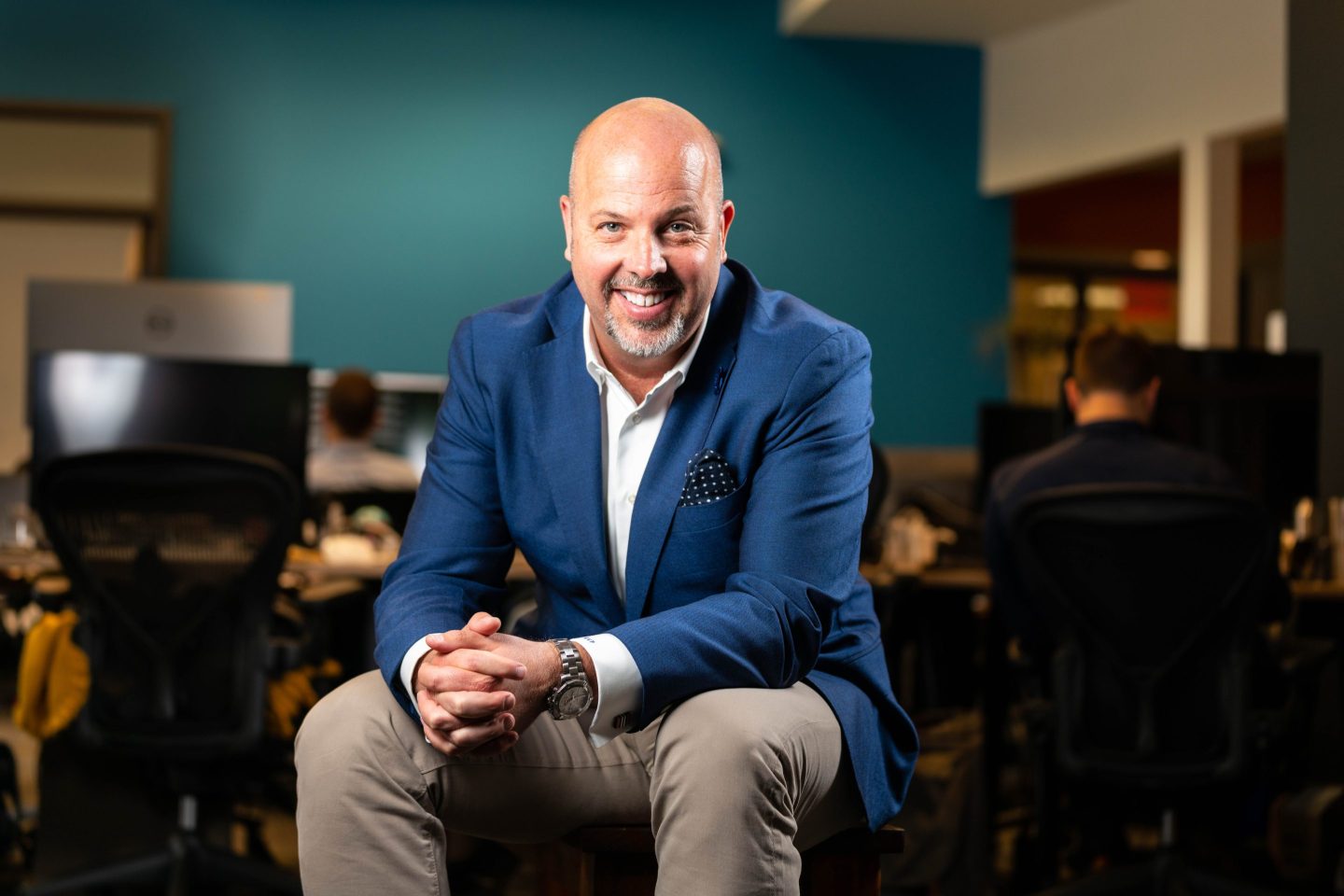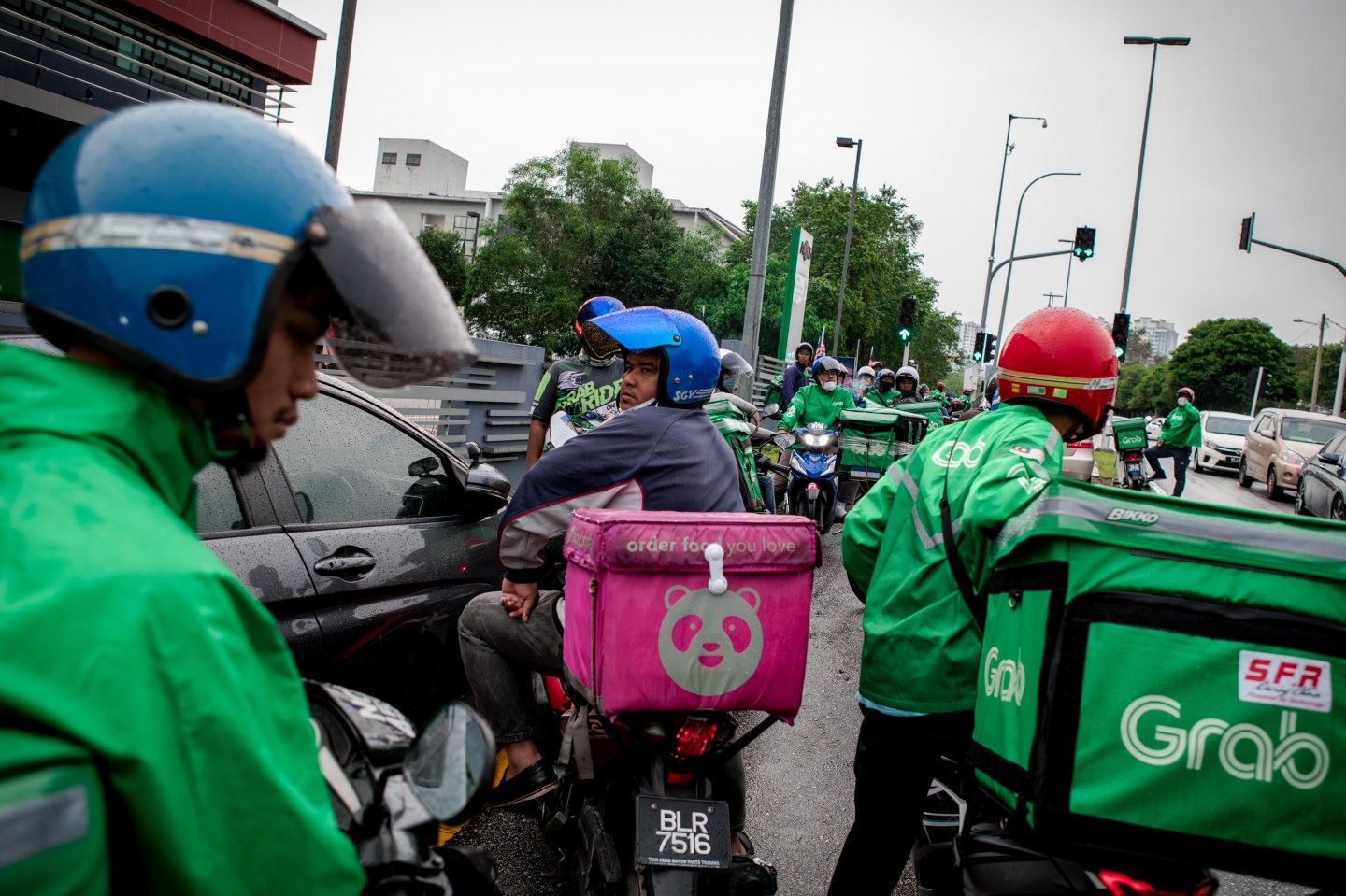
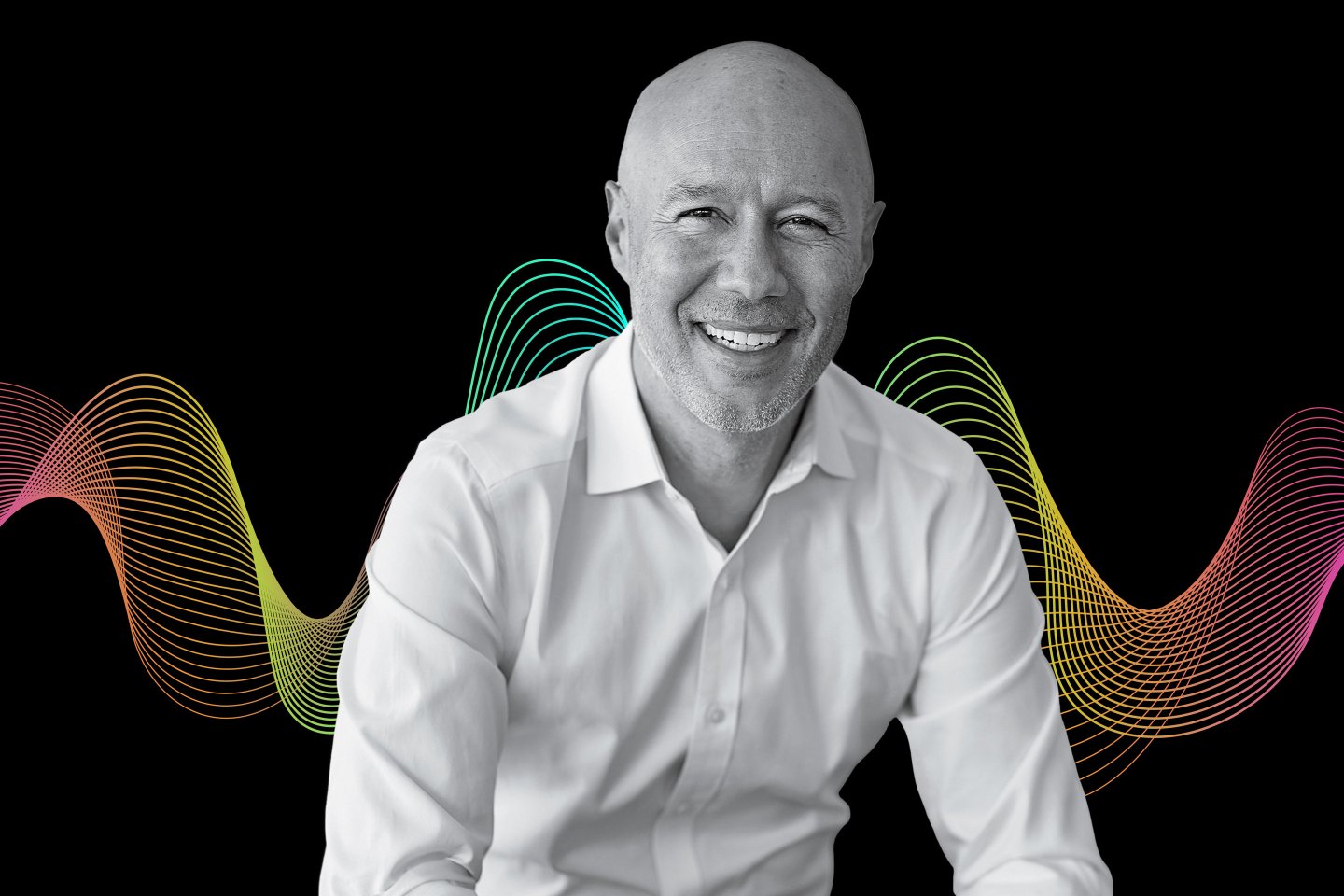
On this episode of Fortune’s Leadership Next podcast, co-hosts Alan Murray and Michal Lev-Ram sit down with David Risher, CEO of Lyft. They talked about Risher’s busy first year with the company, which included an overhaul of how much Lyft drivers get paid and the amount of transparency the company provides about those numbers. The conversation also covered Risher’s long-ago decision to leave a job at Microsoft for what was then a relatively small online bookstore called Amazon. Other topics ranged from the economics of the rideshare category to the nonprofit Risher started in Ecuador as well as what it takes to become the CEO at what was a founder-led company.
Fun side note: Risher was the first CEO to bike to Fortune‘s studio for a Leadership Next interview.
Listen to the episode or read the transcript below.
Transcript
Alan Murray: Leadership Next is powered by the folks at Deloitte who, like me, are exploring the changing rules of business leadership and how CEOs are navigating this change.
Welcome to Leadership Next, the podcast about the changing rules of business leadership. I’m Alan Murray.
Michal Lev-Ram: And I’m Michal Lev-Ram. Today’s guest is David Risher, CEO of Lyft. And this was a really fun conversation. It’s just such a tangible brand, that and Uber, which he did not mention by name, but we can. And he has been in the job for a year now and really set his focus on both the customers and the drivers and making sure that they’re comfortable. And part of that, by the way, is this new initiative they have called Women+ Connect, where female drivers can choose female riders. So transparency, I think, across the board with both customers and drivers is a really, really big thing for him.
Murray: Yeah, it was really impressive. I mean, I’ve always thought of it as kind of a Coke-Pepsi sort of competition, but he made some very clear points about how he’s trying to differentiate Lyft and take advantage of its position in the marketplace. I’ll tell you what really impressed me, Michal, we’ve done, what, 150 of these? Around 150 of these interviews. This is the first time that the interviewee came to the studio on a bicycle.
Lev-Ram: And we should note it was a Lyft bikeshare bicycle. So he, you know, he wasn’t off-brand in his vehicle of choice.
Murray: No, but it was a beautiful spring day and he biked all the way around the tip of Manhattan to get to our offices and showed up, he was breathing well, seemed to be seemed to have handled the ride just fine. It was fun.
Lev-Ram: Well, the two of you can race another time. But, you know, we got to talk about a lot of just some of the challenges and obviously opportunities for them, including geographic expansion. But, you know, both Lyft and Uber have been challenged. COVID was definitely problematic for ridesharing. And so it was really interesting to hear both how they’re coming out of that and also just how he’s leading the company now in a post founder-led era, which is quite different.
Murray: Well, let’s listen in.
[Interview begins.]
David Risher, thanks for being with us.
David Risher: Yeah, of course. It’s nice to be here.
Murray: It’s good to have you. So you’re one year into this job. It’s a big job. What’s been the biggest surprise over the course of that year?
Risher: Oh, man. I mean, this might sound funny, but the biggest surprise is how much you can get done in a year if you really put your mind to it. We had all the ingredients, but we just didn’t quite have the recipe right. And you put them together, great team, big vision around customer obsession, and go, go, go, and it’s amazing to see the growth we’ve seen.
Murray: Michal, can I keep going here for a little bit?
Lev-Ram: Absolutely.
Murray: Because I’d really like to get you to follow up on that. This is a hypercompetitive business. You’re like Coke and Pepsi or maybe more like Hertz and Avis or something. You know, I know when I’m getting a car, I just want the car to be there fast. I don’t care who it comes from. So what is the nature? It’s a fairly undifferentiated product. What can you do? How do you really make ground against Uber in this battle?
Risher: Yeah, it turns out you can do a lot. And it’s interesting because, so first of all, you know, really focusing on the customer really makes a difference. So I’ll give you some examples. When I started, the company had started to focus a little bit too much on Wall Street and a little bit too little on its own riders and drivers. And so, you know, if I’m honest, we were paying our drivers not quite competitive rates. We were charging our riders a little bit more under the hopes of making more money faster. Just a bad strategy, just because to your point, a lot of people they’ll say, you know, who’s going to get me? They’re less expensive. Who’s going to get me there faster? So when I look forward, you know, over the year, you know, just fixing some of the basics really, really helps.
And I’ll give you an example. A year ago, our what we call our pin ETA difference. So let’s say the gap between how fast you might be picked up in the other guy versus us might have been three or four minutes, which is significant if you’re in a hurry.
Murray: Yeah.
Risher: Now it’s ten seconds. What’s ten seconds? So when you get to the point where it’s ten seconds, now you can start to compete on other things. You can start to compete on Women+ Connect, which we launched, which is a product that lets women choose women. You can start to compete on faster airport pickup, where people are very stressed about getting to the airport. So it’s sort of a couple stage thing. You got to make sure you’re focused on your customers. You got to fix the basics to give yourself permission to do some of the other more innovative things. And then you can start to innovate and give people a real reason to choose one or the other instead of having them think it’s kind of the same thing.
Lev-Ram: So I remember the early days of Lyft with the pink mustaches, and you could like sit next to your driver and they would talk to you. Do you feel like that’s still at all the sort of culture, the experience, like is that at all a differentiator, or has that gone away? Because, you know, a lot of drivers are Uber and Lyft drivers today, right? They’re not exclusive to one or the other.
Risher: Yeah. Brands are so interesting and reputations are so interesting because they take a long time to build and once you’ve got them, they actually persist for many years. So I was just.
Murray: We, by the way, at Fortune, we know that.
Risher: For sure you do.
Murray: It’s hard to kill a good brand once….
Risher: Are you guys trying?
Murray: You know we’re not anymore, but there have probably been times in our past when we were trying pretty hard.
Risher: And it’s such a source of strength. Right? Because and of course, you can kill a great brand, but you to and, by the way, Uber has tried over the years. You know what I mean? They’ve seemed pretty good at that from time to time. But so back to us. So look, I was with drivers on Friday morning. I’m here in New York City. We actually have a guild called the Independent Drivers Guild. And one of the first comments people made was around, your riders are nicer. So that’s interesting. So part of what you’re talking about, Michal, is sort of like you know, right from the beginning, this company really decided to focus on being kind of the good guys. And while some of the specifics around the pink mustache and so forth, we’re not using as much anymore, that general vibe absolutely persists. I’ll say one last thing. I drive for Lyft about every six weeks, and it’s a great experience. I can tell you all about it. It’s kind of hilarious, by the way, when I tell people who I am and they kind of go bananas. But one of the things, of course, I always ask is why did you choose us over the other guys today? And a third of the time, maybe half the time they say, you know what? Honestly, I can’t quite say but I just like you guys better. And that persist. That really matters.
Murray: Huh? Wow.
Lev-Ram: I want to know a little bit more. You mentioned Women+ Connect. And I know that’s one of the newer initiatives. I thought it was really interesting to see the numbers that almost half of riders are female, but less than a quarter I think of drivers are female. So where did this initiative come from and what’s been the response?
Risher: So this is a fun story because it actually was the first thing I did when I started. So I started on April 17th of last year, nine o’clock in the morning I come in like any new employee, you know, I get my badge, you know, I get my computer. Ten o’clock in the morning, we have a meeting, and the meeting at the time is called Women Driving Women. And it’s me saying, you know what? This is what we’re going to work on next. And this idea had been floating around for a while, right? Because to your point, you know, half the population is women, but only about 25% of our drivers are, by the way, they only drive about 15% of hours. So what does that tell you? Right? That tells you that they and last interesting data point, DoorDash is about 66% women Dashers 50 to 60%. So it turns out the gig economy works really well for a lot of people and certainly women. And this might sound stereotypical, it also happens to be true. A lot of women are balancing complicated lives. They have, you know, childcare, maybe elder care, something else in their life that makes it somewhat difficult to have a full-time job. So all of those things suggest, gosh, what a great opportunity. But then what’s going wrong? Well, what’s going wrong is maybe not that surprisingly, a lot of women don’t feel super safe driving. Right? And imagine the physics of it, right? You’re in the front seat of the car. There’s someone in the back, you don’t necessarily know the person and so on and so on. So and then when you talk to riders, it turns out that a lot of riders and my friends included, when I would talk to them who are women, they would say it’s not that I feel uncomfortable exactly, but I will say if it’s late at night or if it’s a new city, you know, I would actually prefer a woman driver. So anyway, and a fair amount of sort of anecdotal market research on it and then the numbers sort of spoke for themselves.
So we called together a group of people. Of course, there are all sorts of issues when you do a feature like this, there’s some legal issues, you know, gender is sort of a fraught topic. You can kind of work through all these things, but at the end we said, Look, let’s do this and see what the response is. The response has been phenomenal, phenomenal. We launched it in five cities, then 50. Now we’re all across the United States. If you look at social media, you’ll see women saying, I’m crying. This is what I’ve been waiting for someone to do for years. If you look at our driver activations now, about a third of our applicants are women now, up from the 20 to 25%. So that’s actually growing. It’s just fantastic. And so this is something we were going to do, you know, every single day for the rest of Lyft’s history is we’re going to make it better and better, easier and easier for women to drive other women.
Murray: So smart.
Lev-Ram: David, what other kinds of initiatives do you have in play that are either, you know, current or coming up this year?
Risher: So we’ve talked a lot about rider-focused initiatives and driver-focused initiatives, but our partnership strategy, I think is also really important and actually not super well understood. So we’ve had partnerships, for example, with Delta Airlines for many years, with Starbucks, with Chase. And let me just talk about the Delta one, for instance, because it gives you sort of example. With Delta, you can earn SkyMiles when you take a Lyft ride. So that’s important, right? Because that means that if you’re a Delta SkyMiles customer or client, I’m not sure what the word is, you know, you’re more likely to take us than the other guys. We also provide services to Delta for their pilots and air crew, particularly very early in the morning when shuttle buses and so forth don’t work, and particularly when pilots are in places that are sort of unusual. Maybe they got diverted and so there’s sort of a last-minute thing that has to be done. Very similar with Starbucks. We actually help Starbucks baristas get to work, again typically early in the morning before public transit is operational and so forth. Mastercard, we’ve had a partnership with for years where we’ve, you know, they were kind of actually started in San Francisco with the bikeshare program. And if you saw the Grammys, they actually did an advertisement that mentioned our partnership around planting trees, which we do together in a certain way. The reason I bring all these up is because, you know, I spent a lot of time outside the United States, as I mentioned. And one of the great sayings that you hear in various different countries across the continent of Africa is if you want to go fast, you go alone. But if you want to go far, go together. And we really, as a smaller player than our big competitor, it’s quite helpful for us from a business model perspective and frankly just from sort of an ecosphere and perspective to really have deep partnerships with that with other organizations where we have shared goals. So yeah.
Murray: Again, great companies, they’re great purpose driven companies.
Risher: So every one of them, yeah, that’s the idea.
Murray: A great coalition of brands. I want to go back to something you said at the beginning. Your first year in the job there was, you took what was a four-minute wait, which for somebody who doesn’t like waiting, that’s significant. You took it down to 10 seconds.
Risher: Yeah.
Murray: How’d you do that?
Risher: More drivers, more drivers. So the way rideshare works, it’s a two-sided marketplace. And you have to keep rider and driver in balance, right? If you have too few drivers, prices go up and wait times increase. Of course, if you have too many drivers, you have a different problem as well. So you have to be very, very careful about how you, it’s called, balance the marketplace, keep the marketplace liquid in econometric terms. And so we spent, and we’ll do this forever, a lot of energy figuring out how can we be a more attractive place to drive. First order of business, make sure you’re paying them well. Right? We have a whole white paper about this. You can read about it. It talks about how much drivers make after all their expenses. We now guarantee, guarantee that drivers will never make less than 70% of what a rider pays them after insurance and some other fees. That was a huge, huge deal. And driver sentiment has shifted very dramatically towards Lyft as a result. So again, it’s a bunch of things. Some of it’s very basic, like making sure you’re paying them, you know, the sort of a fair rate and the rate that’s comparable to what they could get doing other things. And some of it is around more innovation, right? Trying to figure out a way to guarantee certain pieces so that and you just do it over and over and over again. You know, city by city, we’re in 280 markets or so. And that’s the result.
Lev-Ram: Is transparency part of it, too? I mean, I would assume that drivers care very much about that. Have you made changes there?
Risher: Absolutely. Absolutely. And in fact, that’s exactly it. So I have a public email address. It’s David at Lyft dot com and drivers. Right. And they’re very clear about what it is that they like and they’re also very clear about what bugs them. And so, but again customer obsession right? So our drivers are our customers so we have to pay attention to what bugs them and the lack of transparency really bothers them. You know, they start to kind of come up with all sorts of theories of what’s going on. So now, and this again, is a relatively new feature, we’ve actually just rolled it out over the last six weeks or so. At the end of every week, you get a full statement that literally starts with how much riders paid because that was the thing that would bug them so much is they would say, you know, I got a, you know, a trip where a rider paid me 50 bucks and I only made ten. And it’s like, what? What? What is that? So anyway, so now we show them, you know, the complete statement, literally everything the rider paid, everything that they got, all their tips, all the tolls, all the different, you know, things. And then, again, if it’s ever less than 70% after those pass-through fees, we literally send them a check. We send them a check. And again, this driver group I talked to the other day, they said I couldn’t believe it the first time I got a rebate, it was sort of like getting a tax rebate. It was it was great.
Murray: So you focus on your customers, you take better care of your drivers. But when when Minneapolis said we’re going to impose a minimum wage on rideshare drivers, you were out.
Risher: Well, so because we take care of our riders and drivers, right. So we by the way, we’re not actually out yet. They’ve now moved that to July 1st. And I hope we can come to a compromise. That’s actually really our goal. But the reason we’ve said we will not continue to operate in Minneapolis if they make these moves is because our drivers will make less, because the rates will go up, let’s say, from 20 to let’s say 50 for the same for the ride. And what will happen then is fewer people will take Lyft and what will happen then is drivers will make less. And so you’ll have the situation where riders are paying more than they want, drivers are not making as much as today, and everyone’s going to be even more annoyed than they are right now. So we said, Look, if you want to do this, we have a way, you know, there there’s actually a compromise that you guys have come up with and we’re ready to say yes. But if you really are stuck on increasing effectively the fares by, you know, double, we just can’t do business that way.
Lev-Ram: Is it surprising at all that this many years in companies like Lyft and Uber are still having these conversations with cities? I mean, I remember being in Austin when you guys pulled out of that city and being stuck somewhere and realizing just like, how do I get home? How do I get back to my hotel? But I don’t know. From my perspective, like, would you have figured this out by now? And wouldn’t you, plus cities have figured it out?
Risher: I am so glad you said that. Yeah, like what? What the heck? So I think, yes, it is surprising, but I think what it reflects is a couple of things. I think one, again, we were talking about brands before, right? Once you have a certain mindset, gosh is it hard to shift that mindset. And I think for a long time the rideshare industry had a certain kind of vibe around it and that vibe was a little bit and and honestly, this is an area where I don’t like to trash talk my competitor. But they were so aggro that cities still are kind of stuck in that mode. And so when we go I talked to the mayor of Boston a couple of weeks ago, the mayor of Washington, D.C., a couple weeks before that. And my point is like, look, we are an important part of this city’s social infrastructure, right? We are getting people out to work, to play, to go to restaurants, to go to bars, to get to the airport. Like this is a big way of how your city connects with itself every single day. Two million rides a day on just the Lyft platform across the nation. So let’s kind of move a little bit forward from some of these squabbles and frankly, many cities have, many states have. But then there’s a separate element, which is it could be seen as politically interesting to sort of pick this kind of fight. And I can also imagine a world, and here I’m trying to be sort of open minded, where genuinely well-intentioned people say, gosh, I really want, you know, this driver population to make more. Of course you do. I completely understand that. And so I’m going to come up with a strategy that I think does that, and they just don’t know the math. And so anyway, so I think it’s kind of all of the above. When I think, well, gosh, I hope we move beyond this. I really do, because it’s not, again, two million rides a day, you know, 700 to 800 million rides a year. And oh, by the way, not just cars, but also bikes here in New York City and across the country. Like we’re a big part of of many workers lives, many drivers lives, of course, riders lives and cities. And I think it’s kind of time to move forward.
Murray: So, David, you’re focusing on customers, you’re focusing on riders, you’re focusing less on shareholders. But at the end of the day, you do have to make money.
Risher: Sure.
Murray: And you haven’t yet.
Risher: Yeah.
Murray: How do you feel about progress towards that goal?
Risher: Great. And the reason is because our sort of our mantra is customer obsession drives profitable growth. So, you know, let’s look at the numbers for a second. So first on the growth side, you know, the first quarter that I was CEO, we grew about 10% year on year, then we grew about 17%, then we grew about 20%, then we grew about 26%. So those are the first four quarters. So we’re growing. So then the question is, will, are we doing a profitably? Well, as you point out, we haven’t made gap profitability yet, but it is absolutely on the you know, on the roadmap. We were free cash flow positive last quarter. That’s Q4 of 2023. We will be free cash flow positive this entire year. Absolutely. We’ve promised it to Wall Street. And when you look at our losses, they are diminishing to the point where they’re really quite small right now and most Wall Street analysts show us turning a profit quite soon. So we are absolutely on that path. Some of it was through very hard decisions. You know, one of my first decision was obviously very difficult involving cutting about 26% of our staff, which is very, very difficult to do. Incredibly hard, you know, kind of heart wrenching work. But you you have to do it if you’re going to be able to lower your prices and pay drivers more, you know, and and and. And now we’re being very disciplined, very disciplined quarter after quarter. And by the way, our CFO, Erin Brewer, one of the best people I’ve ever hired in my entire life, and I’ve hired great people. And she is incredibly disciplined as well. So between the two of us, we’re not giving an inch on that.
Lev-Ram: In terms of growth and the market out there. I mean, your competitor, I can name it, Uber, has always had this like conquer the world approach. You, you know, Lyft from the get go was focused much more on the U.S., I know you’re in Canada as well. But is that changing at all? Do you feel like you need to look elsewhere for that growth in the market? And is that going to happen any time soon?
Risher: So I’ll say a couple of things there. First, let’s let’s talk specifically about geography. You just brought it up. So I was actually just in Toronto earlier this week. We now have an office in Toronto. We’ve got about 80 people there, by the way, mostly engineering. It’s an incredible city for great engineering and technical talent. And we operate rideshare in Canada. We operate rideshare now. So ten seconds of history, to your point, we right from the beginning, we were very much more domestically focused, you know, than the other guys, as you say.
And when I joined, one of the things that the board knew about me was I have spent a lot of time outside the United States. I lived outside the United States for many years. The nonprofit I ran was very global in nature. I probably spent more time outside the U.S. than inside the U.S. over the last 20 years. That’s probably exaggeration, but along those lines. So anyway, so I’m very, very internationally minded. I very much think that what we do bring people together, you know, get drivers a way to earn money that’s flexible, can work worldwide for sure. Now, you do have to get what you’re doing right, right in one geography before you go to many, oherwise you find yourself really getting in trouble that way. I’ve learned that lesson myself. And so we are very focused on North America, but that includes Canada. So our share in Canada over the last nine months since we really started to focus on it is significantly larger. I can give you a specific stat. Our share in Toronto, which is Canada’s biggest city, of course, eight months ago when we were not honestly taking Canada very seriously was about 12%. As of last week, it is 32%. That’s a very, very significant increase over a very short period of time. And again, it sort of comes back to the basics. Price well, pick people up fast. You know, these are things that don’t you know, they’re sort of universal, universal truths. And once you find one, you know, you do more and more of that.
And I’m happy to say, you know, I met with the premier of Ontario when I was in Toronto, and they’re super excited about our arrival because it turns out to be better for everyone to have competition, right? I mean, Uber is there and we haven’t been there, at least in a significant way. It’s better for everyone, right? More drivers on the road, more riders knowing about rideshare and so on and so forth. So anyway, that playbook, I think we can apply elsewhere in the world, particularly when we see maybe a gap, you know, between what people want and what people are getting. It’ll be step by step. You know, I’m not making any predictions on timing, but it’s kind of on the on the roadmap. Let’s just say.
Murray: You know, it’s interesting because you’re developing into a duopoly, right? Uber and Lyft and, historically, duopolies have been pretty good for the duopolists, but not very good for the customer. But is there something about these two-sided marketplaces that ensures that the customer will be well taken care of?
Risher: There is. There is. I think it’s such an interesting point. Like I, I think you’re right. I think this is generally a two-player marketplace in most places around the world. That’s kind of what you see because, in just ten seconds on that, it’s very expensive to build these systems. It’s billions of dollars of CapEx of, you know, share capital that you’ve got to put in the ground to build systems that can match rider and driver, you know, 2 million times a day, 365 days a year, 24 hours, all this sort of thing. So quite expensive. And so therefore you’re not going to get a lot of people doing that once two people are in there. A third person doesn’t come in and say, Cool, I want to spend all that money to, you know, and divide this market up even more. So then the question is, how do you make sure that customers benefit from it? And the short answer is you almost can’t not. So unlike maybe in the cell phone world where you might have two players and customers kind of tend to get the short end of a stick there. With us, we are competing for drivers and riders every single minute, every single minute. If we start to overprice, riders will go to the other guy. If we start to underpay, drivers will go to the other guy. It’s gravitational, you know, there’s literally nothing we can do about that. We’ve seen what happens when you try.
[Music starts.]
Murray: Jason Girzadas, the CEO of Deloitte US, is the sponsor of this podcast and joins me today. Welcome, Jason.
Jason Girzadas: Thank you, Alan. It’s great to be here.
Murray: Jason, we live in an era of disruption, technology disruption, geopolitical disruption, workplace disruption, and it makes accurate predictions about what’s going to happen in the future more difficult than it has ever been. Yet the polls that we do together with you show that most business leaders largely remain optimistic. Why do you think that is?
Girzadas: I think optimism is a result of the fact that we’ve been through an incredibly tumultuous three years. And so I think business leaders realize that they’ve built resiliency into their organizations. The prospect of even more disruption isn’t as foreign of a concept, and I think there’s more confidence in their ability to adapt and to be agile. Secondarily, there’s been tremendous investment in technology and new capabilities that client organizations and executives broadly are optimistic about those creating more value and more opportunity. So it’s a function of what we’ve been through, as well as the investments that have been made that give a sense of optimism despite some of the headwinds.
Murray: And what’s your advice to companies that are struggling with the potential disruption in the future?
Girzadas: Well, disruption is the new normal. I don’t think there’s any placid water on the horizon or calmness that we can predict. So it’s a function of getting accustomed to the discontinuities that are ahead of us, whether it’s around technology or geopolitical change or workplace changes associated with the future of work or the demands of the talent workforce, change is the new normal. As a result, it is requiring executive teams to actually look holistically at those challenges, be facile with doing scenario planning and being on the lookout for where and how to capitalize on disruption versus being concerned by it or seen as a barrier to their success.
Murray: Jason, thanks for your perspective and thanks for sponsoring Leadership Next.
Girzadas: Thank you.
[Music ends.]
Murray: Can we talk about you?
Risher: Sure.
Murray: You honed your teeth at Amazon. That’s where your customer obsession comes from. You talk like a true Amazonian, but then you left in 2009 and started a nonprofit. What was going on there? Explain your journey.
Risher: So in order to understand my strange, you know, zigzag, you almost have to go back a step. So before I worked at Amazon, I worked at Microsoft for many years in the nineties. The reason I bring that up is because that’s where I really started to fall in love with technology. And in fact, the reason I joined Amazon, this was in 1997, was because Amazon at the time was a bookstore. That’s all it was as a $15.6 million, quite small bookstore that had just opened up online the year before. And so, in fact, this is a complete side story and my apologies, but it still resonates in my brain. When I left Microsoft, Bill Gates actually called me into his office and he said, wait a minute, you mean to tell me you were leaving Microsoft where you’ve had success and you’re doing well for some tiny little Internet startup bookstore that nobody’s ever heard of?
Murray: The classic Gates conversation?
Risher: Oh, man, was it. And it got even more so when he said, That has got to be the stupidest decision I’ve ever heard anyone make. And I honestly think he was genuine about it. I mean, I really do think that, by the way, since here we are at Fortune, a reporter at the time for Fortune, Joe Nocera actually wrote a cover story on this a couple of months later called “I Remember Microsoft” and it was about several of us that had left Microsoft in the nineties, much to Bill Gates’s frustration and have gone on to do other things anyway. But why did I leave? I left because it was technology which I learned to love at Microsoft and it was a bookstore which I’ve loved forever. And so, you know, when it come to the end of my Amazon chapter, there are a couple of things. You know, I went and taught for a little bit. As I said, I moved overseas, but then I got super excited about this idea of using digital books to help kids read. And if you indulge me for 30 more seconds, I’ll tell you that story. We actually spent the entire world with our family, our two daughters traveling around the world an entire year, teaching them and road schooling them. Amazing, amazing experience. At the end of that trip, we were in Ecuador and in Ecuador there is a village, a city called Guayaquil. In Guayaquil there was an orphanage. We spent the day at the orphanage because we were doing some social work as well as kind of education, tourism, so forth. And at the end of that day, as we’re walking out, I see a big building with a padlock on it. And I asked the woman who runs the orphanage, why does that building? And she said, that is a library. And all of a sudden I think, wait, hold up. So what’s going on and why does it have an padlock? And she says the books take forever to get here. They come by boat. By the time they get here, they’re often out of date or there is someone else’s junk book that they wanted to get rid of. You know, some, you know, accounting textbook from, you know, 1991 or whatever it might be. So anyway, I said and so therefore, the kids, the girls, the young women there, they’ve lost interest. I said, Well, can I take a look inside? And she said, I think I’ve lost the key to that place.
Murray: [Makes a sound expressing surprise mixed with disgust.]
Risher: Exactly. And it just was like, Whoa, hold up. And now, meanwhile, my two daughters, we had early generation Kindles. We just spent the year traveling. I’m thinking, this is nuts. It makes no sense to cut down trees and move them around all this. Right? So I started a nonprofit all about getting kids reading. You know, fast forward many years. It’s been in operation about 14 years now. We’ve got about 22 million kids who have read on the platform, it’s all digital reading, all on cell phones now. We don’t use Kindle much anymore because everyone’s got a cell phone. And it was incredibly important for me because it was a sense of purpose that I really brought to this job and maybe you can feel that. And it’s really tricky to run nonprofits. They’re quite resource constrained and so forth. So anyway, learned a bunch, but also had great impact and great, great experience in my life.
Lev-Ram: And you’ve said in the past that for-profits should be run like nonprofits. So what do you mean by that exactly?
Murray: That’s a very scary statement, having worked briefly for a nonprofit. So I’m not sure this is the model. What is he talking about?
Risher: So and I know I mean, when I say it, I know people, you know, kind of raise their eyebrows. What I really mean is nonprofits are, if you think about how big societal problems are tackled, you know, for-profits actually tackle a lot of them. Right? You know, the communication problem has sort of been solved by, you know, telephones. You know what I mean? So for-profits, you know, settle, you know, some problems. Then governments take on big issues, right? Education, military, things that the for-profit doesn’t really make a lot of sense. But and then the problems that those two big sort of industries or whatever sectors can’t take care of, those are the ones that the nonprofits are left with. You know, how do you feed people who don’t have resources? How do you educate people who, for whatever reason, have fallen out of the school system and what have you? So some of the world’s biggest problems with the ones that the nonprofits take on, and yet they have the smallest resources, tiny little budgets compared to the scope of the problem. And so if you are a nonprofit leader and running a successful, high-functioning nonprofit, you have to be very smart about making decisions that are very focused. You’ve got to make the best of very limited resources. You have to lead with purpose because otherwise your employees will go across the street and probably get paid twice as much to do, you know, no more work. I can tell you now, people at nonprofits work just as hard as for profit. So I think the reason I say that is because I think as a manager and frankly, as a leader, the for-profit world has certain advantages to it. You know, the more work you do, the more money you make, which means you can pay your employees more and you can invest more in R&D. The nonprofit world has very few of those structural advantages, but a lot of the same problems, maybe even bigger problems. And so as a leader of that, gosh, you put a Fortune 500 CEO into that position and say, you know, run this for a couple of years and I guarantee they will come away A, with a new respect for the sector, but B, with skills that they simply could not have gotten just in the for-profit world. That’s my contention.
Murray: Fascinating.
Lev-Ram: So you do you do believe in making a profit though?
Risher: Oh, 100%.
Murray: And someday he will.
Risher: And I will. Again, it’s on the roadmap. [Laughter from all three.] I’ll tell you a story about that. I worked for Jeff Bezos for many years, and his father, Miguel, who’s just a spectacular human being, when I got this job, he said, Hey, David, that’s fantastic. You know, don’t forget you’re running a for-profit now.
Lev-Ram: That’s funny, but I want to ask you a question, actually, speaking of Jeff Bezos, so you worked for, you know, one founder-led company for Bill Gates at Microsoft and then Jeff Bezos at Amazon, both in the eras where these founders were leading the companies. And then you take on the job at Lyft, which is another founder-led company, smaller, but but another, you know, very it’s very ingrained in the culture. What have you learned over the years working for such kind of strong founder identity companies?
Risher: I think founder-led companies are, you know, kind of the best, you know, until they maybe at a certain point they run into problems. I’ll talk to you about that in a second from from several perspectives. But, you know, if you are a founder-led company, particularly one where the founder has been there for years, which is not easy, right? I mean, founding a company is one thing. Running it, particularly at scale, is quite a different thing. So you’re already talking about a pretty special person who manages to go from small to medium to large and sort of scale that way. But you get a sense of purpose and direction and cultural strength that is really hard to replicate. Now, taking it over has been really interesting because for a couple of reasons. First of all, so much great stuff to work with. You know, people who work at Lyft love working at Lyft. Our legal department you might think, Gosh, legal department, why would a legal department, our legal department, I think the average tenure at Lyft is something like seven years in the legal department, right? So that’s crazy because the problems are interesting and they’ve kind of grown with the company and learned a lot and so on and so forth. So you can really, but of course you can also get some quirks where the company starts to really resemble its founders and starts to have the same blind spot as its founders.
Look, I’ve seen this from both directions. I saw it at Worldreader. I left Worldreader, you know, to take this. And now my number two, Rebecca [Chandler Leege] is running the company. There are all kinds of things that it’s doing as an organization that I couldn’t have gotten it to do because I have my own blind spots and now vice versa with John [Zimmer] and Logan [Green], the founders of Lyft. they have been so incredibly gracious. They’ve really handed me the keys to this, to their baby. That doesn’t make sense. But anyway, changing the diapers of their car. Anyway, the point is that they’ve been absolute exemplary in saying look, David, our contribution is we built this thing and now you’re going to run it and take it to levels that we absolutely couldn’t. And what that does for me is it gives me an enormous amount of freedom to come in and say, you know what, as great as that has been, it’s time to make some changes. But also, let’s build and stand on the shoulders of what they’ve done.
Murray: Our listeners would never forgive us if we didn’t ask you about the EBITDA mistake because it was such a fascinating moment. It was a misplaced zero in a press release that caused the stock to soar, came back down. You now have class action lawsuit. What did you learn from that? Did you learn anything? Was there? Were there any…
Risher: Oh, yeah, we learned a lot. Yeah. I mean, the first thing I have to say and I’ve said this before, I’ll say it again. That’s on me. That’s on me. And I want people really to understand that when you’re the leader of the organization, someone makes a mistake, it’s your problem. And so now I will also say, Man, did our team hustle? And what happened? What happened? It literally was an extra zero that got inserted into an early version of the press release and it just rolled forward. And this despite, literally no exaggeration, hundreds of peoples’ eyes, including my own, seeing it over and over again. But what happened? It was in a forecast piece which gets a little less scrutiny than the backwards looking stuff, the basis point versus percentage that I mean, they’re very, very different words. But unfortunately, of course, they mean something very, very different. And so and we literally found it in real time as we were reading out the sort of earnings report. And we changed it within two minutes, I think. And all of a sudden, our legal team again and actually our policy team jumped into action. So very, very quick response. Absolutely fantastic. And I certainly learned how fast a team can work when it is under that kind of pressure.
Now, what have we also learned? Well, we’ve learned that even though we have really exactly the same process that every other public company has, all sorts of eyes [hard to hear], it wasn’t sufficient. It wasn’t sufficient. So what are we doing? We actually now have a process. We’re just about to go through this as our next earnings come out, where we take all of our materials, we now give them to an outside third party we’ve hired to do exactly this. And what they do is without having any other context, they look not just and sort of double check the numbers, but they try to build the model that our press release and earnings statement is suggesting they build. And then look at what that model results in. And then we compare that back to our internal models and if those models vary by anything that’s significant, we know there was a problem along the way. So it’s a new process. It’s one again, we got so much feedback from other investor relations and CFOs and so forth saying, You know, there but for the grace of God, go I. In other words, you know, you know these mistakes, it’s a one in a million sort of thing, but it happens. We’ve got a tighter process now.
Lev-Ram: It’s interesting because your part of your response to this was not only owning it, but also talking about it, whereas a lot of other companies, a lot of other leaders would have tried to step back from it once it’s fixed. What guided that approach for you?
Risher: That’s a good question. I don’t think I’ve been asked that question before. You know, I think a big part of it, if you don’t mind, maybe I’ll get a little personal in this. What I was about to say was, and again, in my Worldreader, in my nonprofit space, if you’re talking about kids’ education and you’re talking to a minister of education, there’s no baloney. You have to you have to be very straightforward with them. But if I’m really thinking about this, I had a very, very unpleasant argument with my father when I was a teenager. Very, very, very unpleasant. And the root of it, as I look back at it, was I was not straightforward with him in the way that he wanted me to be. And while he was angry at the behavior that had led to this, what he was really angry about, you know, such that I remember it very clearly many years later, was the fact that I wasn’t being straightforward. And I really took that to heart. Now, I don’t want to say I’m a perfect person, but I will say that if it comes to be clear and transparent and straightforward versus not, I will.
Murray: Yeah, no, that’s really interesting. I accused you earlier of having an Amazonian mindset, but that’s a little bit non Amazonian and non Microsoft, that commitment to transparency.
Risher: I think I don’t want to compare it to that, but I will say it’s something that I feel very strongly about. And I’ll say maybe one last thing. Since you now opened this interesting, you know, Pandora’s box. You know, we do surveys of our employees every quarter, employee sentiment surveys, right? And they’ll ask questions like, how confident are you in the leadership of this company, as an example? And one of the things that’s really been gratifying to me is to see how those results have changed since I started, when, let’s say those percentages might have been in the forties and now they’re in the seventies. And by the way, the percentage of people who even answer the survey is now up to 85%, which is really quite high for a survey of this type. And a lot of the, we call them verbatims inside, a lot of the comments come down to you guys are saying what’s what we’re going to do, you’re executing on it, you’re owning mistakes. Like that kind of transparency is enormously powerful.
Murray: So, David, our listeners may not know this, but I know that you came here on your bicycle today. Is this standard standard behavior? Do you travel a lot by bicycle?
Risher: It is very standard behavior. I have bicycled to my office in San Francisco and back every single day. I have been in San Francisco since the day I started. It’s actually not my bicycle, it’s the Lyft bicycle. So Lyft operates the bicycle share systems in San Francisco, here in New York, in Denver, in Washington, D.C., in Boston, super important part of cities, infrastructure. To give you a sense in New York City in the summer, we facilitate on our the Citi bike system about 150,000 rides every single day. So very, very significant part of the city’s infrastructure. It’s also a great way to get out and about. And if you’re particularly on an e-bike, you can do crazy things. You can go huge distances, not even break a sweat and you sort of feel like Superman. So, you know, I’m a big believer that, you know, of course, I absolutely love my job. I literally jump out of bed every single morning. But you also have to have time to do other things in your life. And my 20-minute ride to hear from my hotel this morning, my 20-minute ride to my, which I did with my chief of staff by the way. I said, Hey, let’s go for a ride, and we did it together. We kind of told stories along the way. Such an important way to sort of stay connected to the outside world.
Murray: Wow. Any other sanity hacks you…?
Risher: You know, every Saturday morning I spend about a half an hour writing some reflections on the prior week. And I always look at how has work gone, how is my family doing, my wife and my daughters and my brothers and so forth. How are the relationships I have with my friends and how am I investing in those? How is my health, by which I include, you know, I go to the gym, my bicycle and so forth, and I sort of look at every one of those dimensions. And if they’re all going well, then, you know, things are good. If one of them isn’t sort of on track, then I think to myself, what do I need to do or what can I learn from that? So I find if I look at all four of those things pretty regularly and kind of sort of take the pulse, I stay on track.
Murray: I think I said, I have a last question several questions ago, but I do have the last question, which is I heard you say that you got a Taylor Swift bump last year.
Risher: We did, yeah. Several bumps every time she goes to a city.
Murray: But then even more interesting than the bump was what came out often when I heard you say it, it was kind of a throwaway line, but is that Taylor Swift customers tip significantly better than other customers. So tell us about that.
Risher: It is so interesting to see this. Look, again, Lyft’s purpose is to bring people together. And so when we do things like a venue partnership, where we try to pick people up quickly, you know, after a big concert, whatever, it’s so important because it gives people a better experience. But as a side thing, we also get to see all of these really interesting behaviors. And what you said is absolutely right. Taylor Swift rides, you know, so I’m not necessarily talking about the rider, six months later that we haven’t looked at. But I will tell you, if you’re going to or from a Taylor Swift concert, you are much more likely to be a good tipper. And I’ll give you actually a little side anecdote on this. This also applies. And here’s a fun fact, if you’re going to an ice cream store in a Lyft, you will typically tip 20 to 30% higher than average. If you are leaving an ice cream store, you will tip 40 to 50% higher than average. So it’s really interesting. People’s behaviors actually are quite dependent on the mood they’re in. And, you know, if they’re singing, you know, a Taylor Swift song, I guarantee you they’re in a pretty good mood and they’re more generous with their driver.
Murray: Wow. David Risher, what a great conversation. This is one of my last Leadership Next podcasts but one of the best. It’s so much fun.
Risher: That’s very kind.
Lev-Ram: Thank you, David. Thank you. Great conversation.
Risher: Oh, I really appreciate you guys. Thanks for the very thoughtful questions and our huge congratulations for whatever it is you’re going to do next. I know you can’t say it, but I’m excited to…
Murray: I’ll tell you soon enough. Okay. Thanks a lot.
Risher: For sure.
Murray: Leadership Next is edited by Nicole Vergalla.
Lev-Ram: Our executive producer is Chris Joslin.
Murray: Our theme is by Jason Snell.
Lev-Ram: Leadership Next is a production of Fortune Media.
Murray: Leadership Next episodes are produced by Fortune’s editorial team. The views and opinions expressed by podcast speakers and guests are solely their own and do not reflect the opinions of Deloitte or its personnel. Nor does Deloitte advocate or endorse any individuals or entities featured on the episodes.