• Home
  • News
  • Fortune 500
  • Tech
  • Finance
  • Leadership
  • Lifestyle
  • Rankings
  • Multimedia
TechAI

Google is combining Android and Chrome software group with Pixel and Fitbit hardware division to more broadly integrate AI

By
David Hamilton
David Hamilton
and
The Associated Press
Down Arrow Button Icon
By
David Hamilton
David Hamilton
and
The Associated Press
Down Arrow Button Icon
April 19, 2024, 4:52 AM ET
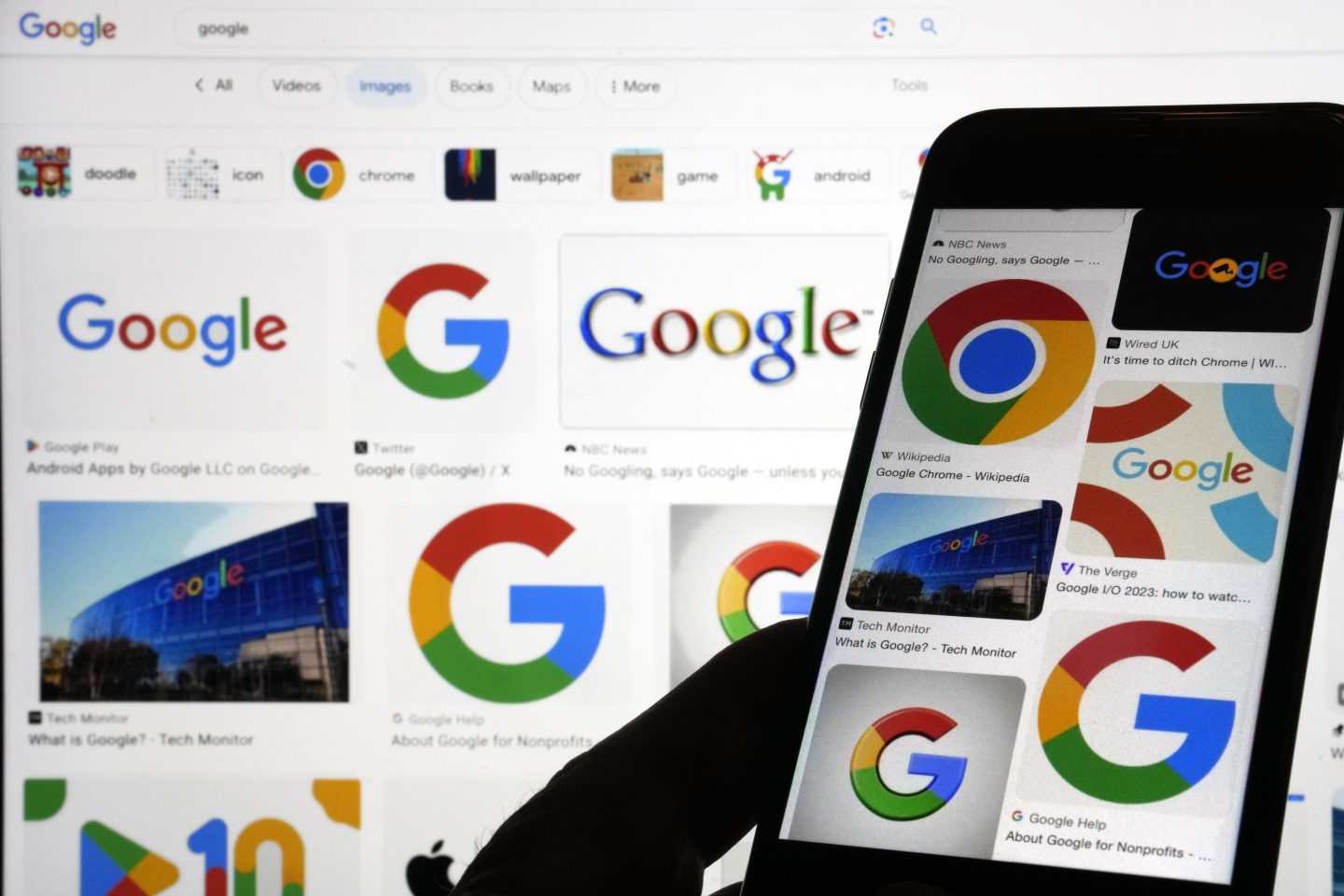
Google said it will combine the software division responsible for Android mobile software and the Chrome browser with the hardware division known for Pixel smartphones and Fitbit wearables.
Google said it will combine the software division responsible for Android mobile software and the Chrome browser with the hardware division known for Pixel smartphones and Fitbit wearables. Richard Drew—AP

Google will combine the software division responsible for Android mobile software and the Chrome browser with the hardware division known for Pixel smartphones and Fitbit wearables, the company said Thursday. It’s part of a broader plan to integrate artificial intelligence more widely throughout the company.

Recommended Video

In a letter to employees, Google CEO Sundar Pichai said the changes will “turbocharge the Android and Chrome ecosystems” while helping to spur innovation.

The decision will place both operations under the oversight of Rick Osterloh, a Google executive who previously oversaw the company’s hardware group. Not long ago, Google insulated Android development from the hardware division, saying it wanted to avoid giving its phone designers an unfair advantage over the other major smartphone makers who used Android — including Samsung and Motorola, as well as Chinese companies such as Oppo and Xiaomi.

Then a few years ago, Google started to position the Pixel as a flagship for demonstrating what AI could accomplish and leaned heavily into developing features that could demonstrate its potential. That meant more integration of AI hardware and software to power those features on mobile devices.

In an interview with The Verge, a tech publication, Osterloh noted that AI is the primary reason for bringing together Google’s consumer hardware and software engineers. He argued that phone technology is already growing more dependent on AI, citing the development of the Pixel camera, which among other things uses the technology for features that enhance nighttime photos or automatically choose the best of several closely timed shots.

Combining the teams, Osterloh added, is a way for Google to move even faster on infusing AI into its features. Designing the Pixel camera several years ago, he said in the interview, required deep knowledge of not just the complex hardware and software systems involved, but also the then-early AI models used for image processing.

“That hardware-software-AI integration really showed how AI could totally transform a user experience,” Osterloh said. “That was important. And it’s even more true today.”

“What you’re now starting to see Google do is flex its core AI innovation engines,” said Chirag Dekate, an analyst with Gartner. “Google wants to dominate the AI, the commanding heights of the emerging AI economy, both on the consumer side as well as on the enterprise side, essentially by infusing AI everywhere and by connecting it.”

Meanwhile, the chief of Google’s software division, Hiroshi Lockheimer, is left without a title and, according to Pichai’s letter, will be starting some other unnamed projects. Lockheimer did join Osterloh for the Verge interview, though, and the two men insisted the changes weren’t the result of a power struggle.

Google is also reorganizing its AI research and responsibility groups, although those changes mostly won’t directly affect consumer products — at least not for now.

Fortune Brainstorm AI returns to San Francisco Dec. 8–9 to convene the smartest people we know—technologists, entrepreneurs, Fortune Global 500 executives, investors, policymakers, and the brilliant minds in between—to explore and interrogate the most pressing questions about AI at another pivotal moment. Register here.
About the Authors
By David Hamilton
See full bioRight Arrow Button Icon
By The Associated Press
See full bioRight Arrow Button Icon

Latest in Tech

Anthropic co-founder and CEO Dario Amodei speaking at Fortune Brainstorm Tech 2023 in Park City, Utah. (Photo: Stuart Isett/Fortune)
NewslettersFortune Tech
Anthropic plows toward an IPO
By Andrew NuscaDecember 3, 2025
19 minutes ago
MagazineFood and drink
A Chinese ice cream chain, powered by super-cheap cones, now has more outlets than McDonald’s
By Theodora YuDecember 3, 2025
2 hours ago
InnovationBrainstorm Design
Video games can teach designers deeper lessons than ‘high score streaks’ and gamification
By Angelica AngDecember 3, 2025
5 hours ago
LawInternet
A Supreme Court decision could put your internet access at risk. Here’s who could be affected
By Dave Lozo and Morning BrewDecember 2, 2025
14 hours ago
AITikTok
China’s ByteDance could be forced to sell TikTok U.S., but its quiet lead in AI will help it survive—and maybe even thrive
By Nicholas GordonDecember 2, 2025
15 hours ago
United Nations
AIUnited Nations
UN warns about AI becoming another ‘Great Divergence’ between rich and poor countries like the Industrial Revolution
By Elaine Kurtenbach and The Associated PressDecember 2, 2025
16 hours ago

Most Popular

placeholder alt text
Economy
Ford workers told their CEO 'none of the young people want to work here.' So Jim Farley took a page out of the founder's playbook
By Sasha RogelbergNovember 28, 2025
5 days ago
placeholder alt text
Success
Warren Buffett used to give his family $10,000 each at Christmas—but when he saw how fast they were spending it, he started buying them shares instead
By Eleanor PringleDecember 2, 2025
1 day ago
placeholder alt text
Economy
Elon Musk says he warned Trump against tariffs, which U.S. manufacturers blame for a turn to more offshoring and diminishing American factory jobs
By Sasha RogelbergDecember 2, 2025
19 hours ago
placeholder alt text
North America
Jeff Bezos and Lauren Sánchez Bezos commit $102.5 million to organizations combating homelessness across the U.S.: ‘This is just the beginning’
By Sydney LakeDecember 2, 2025
20 hours ago
placeholder alt text
C-Suite
MacKenzie Scott's $19 billion donations have turned philanthropy on its head—why her style of giving actually works
By Sydney LakeDecember 2, 2025
1 day ago
placeholder alt text
North America
Anonymous $50 million donation helps cover the next 50 years of tuition for medical lab science students at University of Washington
By The Associated PressDecember 2, 2025
22 hours ago
Rankings
  • 100 Best Companies
  • Fortune 500
  • Global 500
  • Fortune 500 Europe
  • Most Powerful Women
  • Future 50
  • World’s Most Admired Companies
  • See All Rankings
Sections
  • Finance
  • Leadership
  • Success
  • Tech
  • Asia
  • Europe
  • Environment
  • Fortune Crypto
  • Health
  • Retail
  • Lifestyle
  • Politics
  • Newsletters
  • Magazine
  • Features
  • Commentary
  • Mpw
  • CEO Initiative
  • Conferences
  • Personal Finance
  • Education
Customer Support
  • Frequently Asked Questions
  • Customer Service Portal
  • Privacy Policy
  • Terms Of Use
  • Single Issues For Purchase
  • International Print
Commercial Services
  • Advertising
  • Fortune Brand Studio
  • Fortune Analytics
  • Fortune Conferences
  • Business Development
About Us
  • About Us
  • Editorial Calendar
  • Press Center
  • Work At Fortune
  • Diversity And Inclusion
  • Terms And Conditions
  • Site Map

© 2025 Fortune Media IP Limited. All Rights Reserved. Use of this site constitutes acceptance of our Terms of Use and Privacy Policy | CA Notice at Collection and Privacy Notice | Do Not Sell/Share My Personal Information
FORTUNE is a trademark of Fortune Media IP Limited, registered in the U.S. and other countries. FORTUNE may receive compensation for some links to products and services on this website. Offers may be subject to change without notice.