The giant stuffed bear, its face a twisted smile, lumbers across the screen. Menacing music swells. Shadows mask unknown threats. Christopher Robin begs for his life. And is that a sledgehammer about to pulverize a minor character’s head?
Thus unfolds the trailer for the 2023 movie “Winnie the Pooh: Blood and Honey,” a slasher-film riff on A.A. Milne’s beloved characters, brought to you by … the expiration of copyright and the arrival of the classic children’s novel into the American public domain.
We were already living in an era teeming with remixes and repurposing, fan fictions and mashups. Then began a parade of characters and stories, led by Winnie the Pooh and Mickey Mouse with many more to follow, marching into the public domain, where anyone can do anything with anything and shape it into a new generation of stories and ideas.
After a two-decade drought brought on by congressional extensions of the copyright period in 1998, works again began entering the public domain — becoming available for use without licensing or payment — in 2019. The public began to notice in 2022, when Winnie the Pooh was freed for use as the 95-year copyright period elapsed on the novel that introduced him.
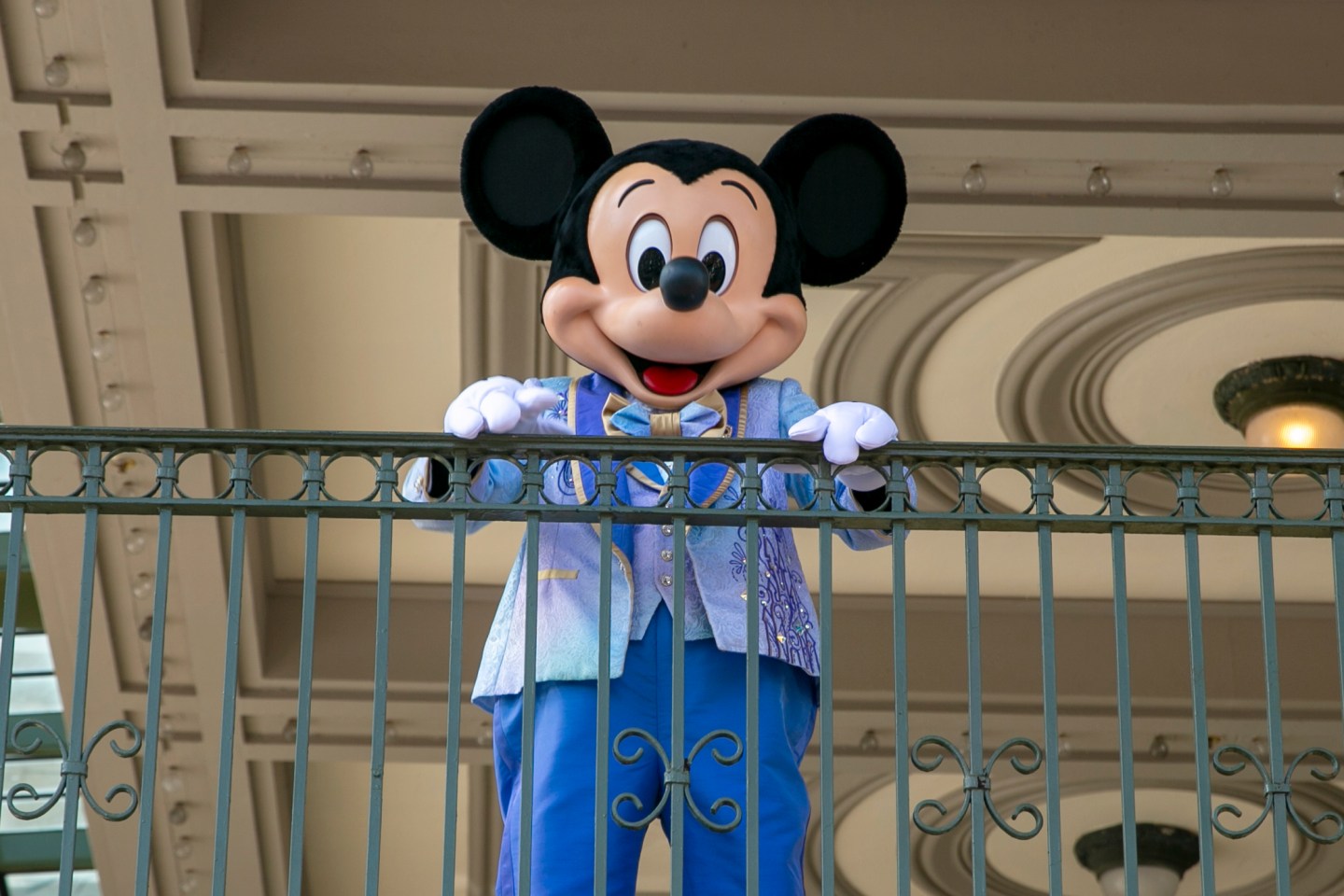
That made possible “Blood and Honey “— not to mention a sequel that dropped last month, a forthcoming third and plans for a “Poohniverse” of twisted public domain characters including Bambi and Pinocchio. Pooh going public was followed this year by a moment many thought would never come: the copyright expiration on the original version of Mickey Mouse, as he appeared in the 1928 Walt Disney short, “Steamboat Willie.”
The mouse and the bear are but the beginning. The heights of 20th century pop culture — Superman among them — lie ahead.
Classic characters, new stories, fresh mashups. Will it be all be a bonanza for makers? Are we entering a heyday of cross-generational collaboration or a plummet in intellectual property values as audiences get sick of seeing variations of the same old stories?
Does a murderous Pooh bear have something to show the 21st century entertainment world?
Could this make a big difference?
Films from Hollywood’s early talkie era have started to become public. King Kong, who has one of his enormous feet in the public domain already because of complications between companies that own a piece of him, will shed his remaining chains in 2029. Then, in the 2030s, Superman will soar into the public domain, followed in quick succession by Batman, the Joker and Wonder Woman.
The possibility of new stories is vast. So is the possibility of repetition. Classic stories and characters could get, well a bit tiresome.
“I don’t feel like it’s going to make that big a difference,” says Phil Johnston, an Oscar nominee who co-wrote Disney’s 2011 “Wreck It-Ralph” and co-wrote and co-directed its sequel, 2018’s “Ralph Breaks the Internet.”
“Like, ‘Winnie the Pooh Blood and Honey’ was was a novelty, made a bit of a splash, I guess. But if someone makes ‘Steamboat Willie’ (into) a jet ski movie or something, who cares?” he says. “If there’s some great new idea behind it, maybe. But there’s nothing I’m looking at where I’m thinking, ‘Oh, my God, now that ’The Jazz Singer’ is available, I’m going to redo that.’”
Many creators were clearly anxious to do something with “The Great Gatsby,” which has been subject to several reinterpretations in very different flavors since it became public in 2021, says Jennifer Jenkins, a professor of law and director of Duke’s Center for the Study of Public Domain.
“We have our feminist retellings of `The Great Gatsby’, where Jordan gets to tell the story from her perspective, Daisy gets to tell the story from her perspective,” Jenkins says. “We got prequels, we got sequels, we’ve got musicals, TV shows, we’ve got the zombie version because we always do. These are things that you can do with public domain work. These are things that you can do with with Mickey Mouse.”
But the newly available works and characters are arriving after years of parent corporations demanding that every creation be tied to their intellectual property. And with some big, “ Barbie ”-sized exceptions, the returns are growing thinner, and artists themselves are a little sick of it.
“The biggest limiting factor right now is that almost everything that anyone wants is has to be from existing IP,” says Johnston, whose newest project is an animated adaptation of Roald Dahl’s “The Twits” for Netflix. ”And that that the notion of an original idea is somehow scary, certainly to a marketing entity, because they just have to work harder to get it into the public’s consciousness. That’s the bummer.”
And while Shakespeare, Dickens and Austen have been public-domain gold mines at various times, other properties have proven more problematic. The forthcoming “Wicked,” starring Ariana Grande and Cynthia Erivo, will be yet another attempt at using the public-domain work of author Frank Baum’s Oz — filtered through a hit novel and Broadway show — to glom onto the classic status of the 1939 “Wizard of Oz” film. Previous tries led to little success, and most were outright flops, most recently 2013’s “Oz the Great and Powerful,” from Disney.
(In an odd quirk of the “Wizard of Oz” rights, the film’s most famous artifact, Dorothy’s ruby slippers, are still the intellectual property of MGM via the 1939 film. In Baum’s book, the shoes were silver.)
In the beginning, Disney led the way with public domain success
Some of the most effective use ever of public domain properties came from Disney itself in its early decades, turning time-tested folktales and novels into modern classics with “Snow White,” “Pinocchio” and “Cinderella.” It would later become the primary protector of the most valuable rights in entertainment, from the Marvel universe to the Star Wars galaxy to its homegrown content.
That has meant a major flowering through the years of fan art and fan fiction, with which the company has a mixed relationship.
“When you look at how the Disney organization actually engages with fan art, there’s a lot of looking the other way,” says Cory Doctorow, an author and activist who advocates for broader public ownership of works. “I always thought that there was so much opportunity for collaboration that was being missed there.”
He gives as an example binders full of fan-fiction biographies of the ghosts at Disney World’s Haunted Mansion, maintained by the teens who work there, which he observed when working on a project with the company’s so-called Imagineers.
“Some of it actually is now part of the lore,” Doctorow says. “I think that creatively that is an organization that really embraces that. I think commercially it’s an organization that has really struggled with it.”
When the law extending copyright by 20 years passed in 1998, musicians including Bob Dylan were among the key figures who had implored Congress to act. Younger generations of musicians, who came up awash in sampling and remixing, made no discernible outcry for another extension. In part this could be because in the streaming era, many of them make little off recorded music.
Jimmy Tamborello, who records and performs electronic music under the name Dntel and as part of The Postal Service — a group whose very name caused trademark headaches with the official version at its inception — says artists are generally happy to allow others to turn their work into new things. The problem is companies that come between them, and get most of the financial benefit.
“There’s always a corporation involved,” Tamborello says. “I think no one would care if it was just artists to artists. I feel like it would be nice if it was more open, more free. It seems like it has more to do with respecting the original work.”
He says it was “really exciting” when the rapper Lil Peep used his hook from The Postal Service’s best known song, “Such Great Heights” on a track released on YouTube and Soundcloud even before he made the proper legal arrangements to use it on an album.
Johnston says age and experience have made him feel less possessive about his own work.
“Earlier in my career, everything was an affront. Everything made me angry and like, ‘That was that was my idea! I should have had credit for that!’” he says. “I don’t want to say I’m just easy and breezy about it, but I think there are so few truly original ideas. …. We all kind of will have similar thoughts at a certain point. So it doesn’t particularly bother me.”
His attitude changes if the re-maker is not an artist but artificial intelligence. That was a key issue in last year’s Hollywood writers and actors strikes — and is yet another facet of remix culture that, alongside copyright expirations, could change the faces of some of history’s most renowned characters in ways no one has ever considered.
“If a writer feels for me, it’s fine,” Johnston says. “If an AI steals from me, that sucks.”