• Home
  • News
  • Fortune 500
  • Tech
  • Finance
  • Leadership
  • Lifestyle
  • Rankings
  • Multimedia
TechAmazon

Amazon hits pause on controversial seller fee rollout that had caused a revolt

Jason Del Rey
By
Jason Del Rey
Jason Del Rey
Tech Correspondent
Down Arrow Button Icon
Jason Del Rey
By
Jason Del Rey
Jason Del Rey
Tech Correspondent
Down Arrow Button Icon
April 1, 2024, 3:59 PM ET
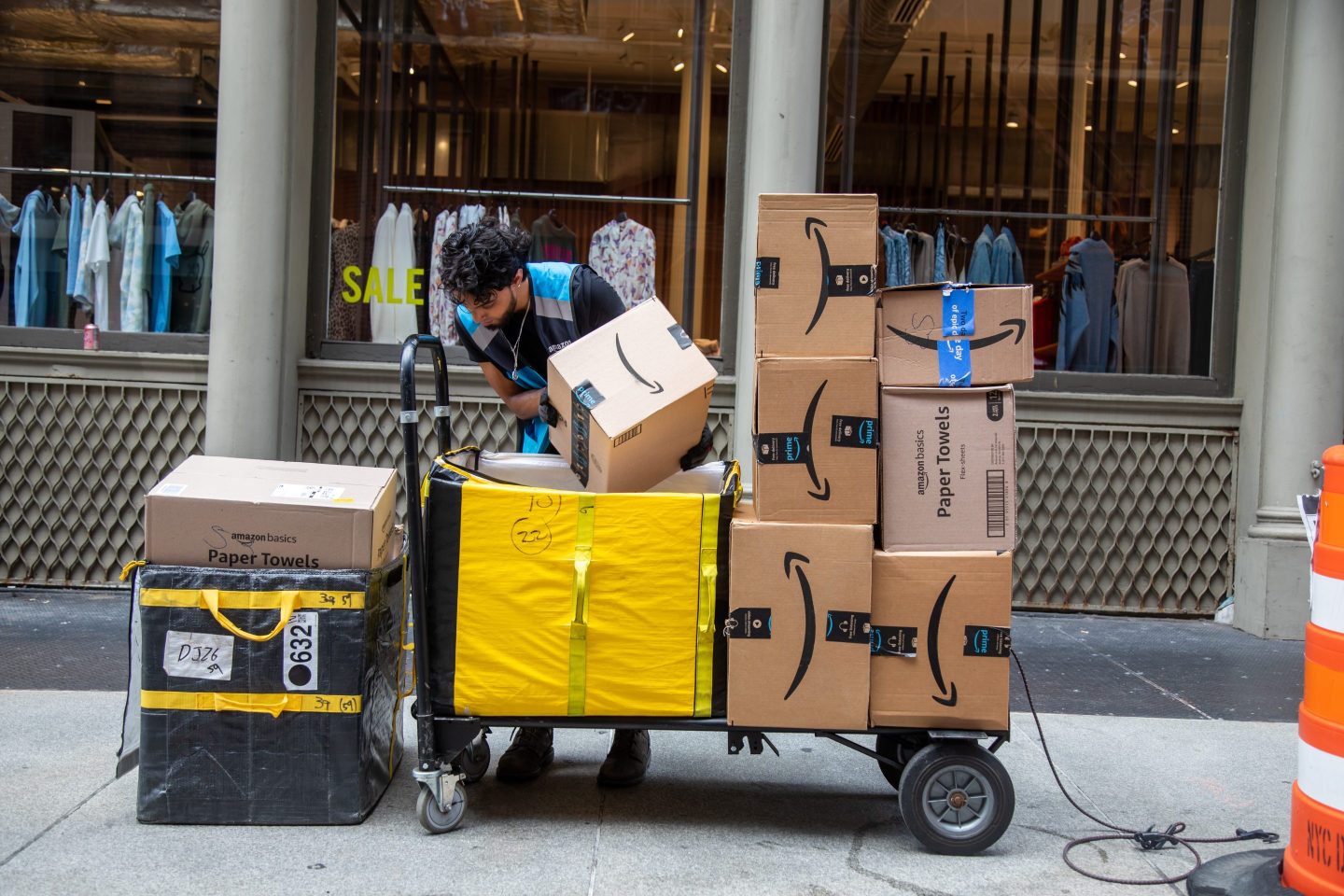
A worker delivers Amazon packages in New York City.
Amazon is pausing a new fee that was set to go into effect on April 1.Michael Nagle—Bloomberg/Getty Images

Hundreds of thousands of merchants on Amazon will get a brief reprieve from a new controversial fee that was to take effect on April 1, a company executive said.

Recommended Video

Amazon will still charge affected sellers the fee as planned, but will credit them back at the end of April. The company is referring to this grace period as a “transition period” that will show sellers how they would be affected by the so-called low-inventory fee without the sellers yet footing the bill.

“We have heard feedback from a number of sellers that they are uncertain about how, if at all, the new fee will impact their business,” Dharmesh Mehta, an Amazon vice president, said in a post published to LinkedIn on Monday. “To help address these questions and ensure sellers better understand how or if the fee will impact them, we have decided to have the month of April 2024 be a transition period for which all of these low-inventory-level fees will be credited back to sellers.”

Read more: Entrepreneurs seeking millions from Amazon’s Alexa Fund face a stark reality

As its name indicates, Amazon will charge some sellers who store goods in the company’s warehouses this new fee if they do not consistently keep enough inventory.

Mehta’s post was met with relief and thanks from some sellers in the comments section, while others continued to express disgust for both the idea behind the fee as well as the execution of the rollout. Amazon will also hit U.S. sellers with new “inbound placement fees” if sellers do not ship inventory into at least four different Amazon warehouses. Previously, a seller might ship inventory to only one Amazon warehouse, and Amazon would then foot the bill to split up the inventory among different warehouses in various regions nationwide.

Over the last month, Fortune has reported on this new slate of fees that have caused widespread angst and outrage across the seller community that’s responsible for more than 60% of goods that Amazon sells globally. A week after the first article on this topic, Fortune reported exclusively that the Federal Trade Commission had begun contacting Amazon sellers and probing for more information about the anticipated impact of these fees.

Amazon generated $140 billion in revenue alone last year from fees it charges sellers, which can amount to a 50% cut of sellers’ sales when their advertising costs were added in. Now, with the new fees, Amazon’s cut will rise above 50% for certain merchants. Some sellers told Fortune that the new low-inventory fee is unfair because Amazon also charges them extra if they store too much inventory in one of their warehouses.

“You gotta precisely thread the needle to not get completely killed,” Judah Bergman, CEO of baby-product company Jool Baby, previously told Fortune about the challenge of the new low-inventory charges coupled with existing inventory fees that Amazon levies for storing too much inventory.

As the post from the Amazon executive implied, other sellers have been confused by how the low-inventory fee will affect them. Sellers specializing in seasonal products, for example, are worried about being charged because their items may not be in demand year-round.

Some Amazon sellers have told Fortune that the combination of the two new fees will either force them to raise prices or close up shop. Others have said they are looking into storing and shipping products on their own, rather than paying Amazon to do so through its Fulfillment by Amazon (FBA) service. One challenge for sellers is that FBA is the only way to guarantee that their merchandise qualifies for Amazon Prime shipping, which makes their products more attractive to many buyers. Still, other sellers are choosing to pay Amazon for another warehousing service, called Amazon Warehousing and Distribution (AWD), because the company says sellers can avoid low-inventory and inbound placement fees if they use that service.

Are you an Amazon employee or Amazon seller with thoughts on this topic or a tip to share? Contact Jason Del Rey at jason.delrey@fortune.com, jasondelrey@protonmail.com, or through secure messaging app Signal at 917-655-4267. You can also message him on LinkedIn or at @delrey on X.

Fortune Brainstorm AI returns to San Francisco Dec. 8–9 to convene the smartest people we know—technologists, entrepreneurs, Fortune Global 500 executives, investors, policymakers, and the brilliant minds in between—to explore and interrogate the most pressing questions about AI at another pivotal moment. Register here.
About the Author
Jason Del Rey
By Jason Del ReyTech Correspondent
LinkedIn iconTwitter icon

Jason Del Rey is a technology correspondent at Fortune and a co-chair of the Fortune Brainstorm Tech and Fortune Brainstorm AI conferences.

See full bioRight Arrow Button Icon

Latest in Tech

Greg Peters
Big TechMedia
Top analyst says Netflix’s $72 billion bet on Warner Bros. isn’t about the ‘Death of Hollywood’ at all. It’s really about Google
By Nick LichtenbergDecember 5, 2025
1 hour ago
Elon Musk, wearing a suit and in front of a dark blue background, looks to the side and frowns.
Big TechTesla
Elon Musk says Tesla owners will soon be able to text while driving, despite it being illegal in nearly all 50 states
By Sasha RogelbergDecember 5, 2025
1 hour ago
Mark Zuckerberg, chief executive officer of Meta Platforms Inc., during the Meta Connect event in Menlo Park, California, US, on Wednesday, Sept. 27, 2023. Meta Platforms Inc. introduced its latest lineup of head-worn devices, staking fresh claim to the virtual and augmented-reality industry just ahead of Apple Inc. pushing into the market. Photographer: David Paul Morris/Bloomberg via Getty Images
Big TechMeta
Mark Zuckerberg rebranded Facebook for the metaverse. Four years and $70 billion in losses later, he’s moving on
By Eva RoytburgDecember 5, 2025
2 hours ago
Construction workers are getting a salary bump for working on data center projects during the AI boom.
AIU.S. economy
Construction workers are earning up to 30% more and some are nabbing six-figure salaries in the data center boom
By Nino PaoliDecember 5, 2025
3 hours ago
Robert F. Kennedy
PoliticsHealth
Robert F. Kennedy Jr. turns to AI to make America healthy again
By Ali Swenson and The Associated PressDecember 5, 2025
4 hours ago
Steve Jobs holds up the first iPod Nano
Big TechApple
Apple is experiencing its biggest leadership shakeup since Steve Jobs died, with over half a dozen key executives headed for the exits
By Dave SmithDecember 5, 2025
5 hours ago

Most Popular

placeholder alt text
Economy
Two months into the new fiscal year and the U.S. government is already spending more than $10 billion a week servicing national debt
By Eleanor PringleDecember 4, 2025
1 day ago
placeholder alt text
Success
‘Godfather of AI’ says Bill Gates and Elon Musk are right about the future of work—but he predicts mass unemployment is on its way
By Preston ForeDecember 4, 2025
1 day ago
placeholder alt text
Success
Nearly 4 million new manufacturing jobs are coming to America as boomers retire—but it's the one trade job Gen Z doesn't want
By Emma BurleighDecember 4, 2025
1 day ago
placeholder alt text
Success
Nvidia CEO Jensen Huang admits he works 7 days a week, including holidays, in a constant 'state of anxiety' out of fear of going bankrupt
By Jessica CoacciDecember 4, 2025
1 day ago
placeholder alt text
Real Estate
‘There is no Mamdani effect’: Manhattan luxury home sales surge after mayoral election, undercutting predictions of doom and escape to Florida
By Sasha RogelbergDecember 4, 2025
1 day ago
placeholder alt text
Economy
Tariffs and the $38 trillion national debt: Kevin Hassett sees ’big reductions’ in deficit while Scott Bessent sees a ‘shrinking ice cube’
By Nick LichtenbergDecember 4, 2025
1 day ago
Rankings
  • 100 Best Companies
  • Fortune 500
  • Global 500
  • Fortune 500 Europe
  • Most Powerful Women
  • Future 50
  • World’s Most Admired Companies
  • See All Rankings
Sections
  • Finance
  • Leadership
  • Success
  • Tech
  • Asia
  • Europe
  • Environment
  • Fortune Crypto
  • Health
  • Retail
  • Lifestyle
  • Politics
  • Newsletters
  • Magazine
  • Features
  • Commentary
  • Mpw
  • CEO Initiative
  • Conferences
  • Personal Finance
  • Education
Customer Support
  • Frequently Asked Questions
  • Customer Service Portal
  • Privacy Policy
  • Terms Of Use
  • Single Issues For Purchase
  • International Print
Commercial Services
  • Advertising
  • Fortune Brand Studio
  • Fortune Analytics
  • Fortune Conferences
  • Business Development
About Us
  • About Us
  • Editorial Calendar
  • Press Center
  • Work At Fortune
  • Diversity And Inclusion
  • Terms And Conditions
  • Site Map

© 2025 Fortune Media IP Limited. All Rights Reserved. Use of this site constitutes acceptance of our Terms of Use and Privacy Policy | CA Notice at Collection and Privacy Notice | Do Not Sell/Share My Personal Information
FORTUNE is a trademark of Fortune Media IP Limited, registered in the U.S. and other countries. FORTUNE may receive compensation for some links to products and services on this website. Offers may be subject to change without notice.