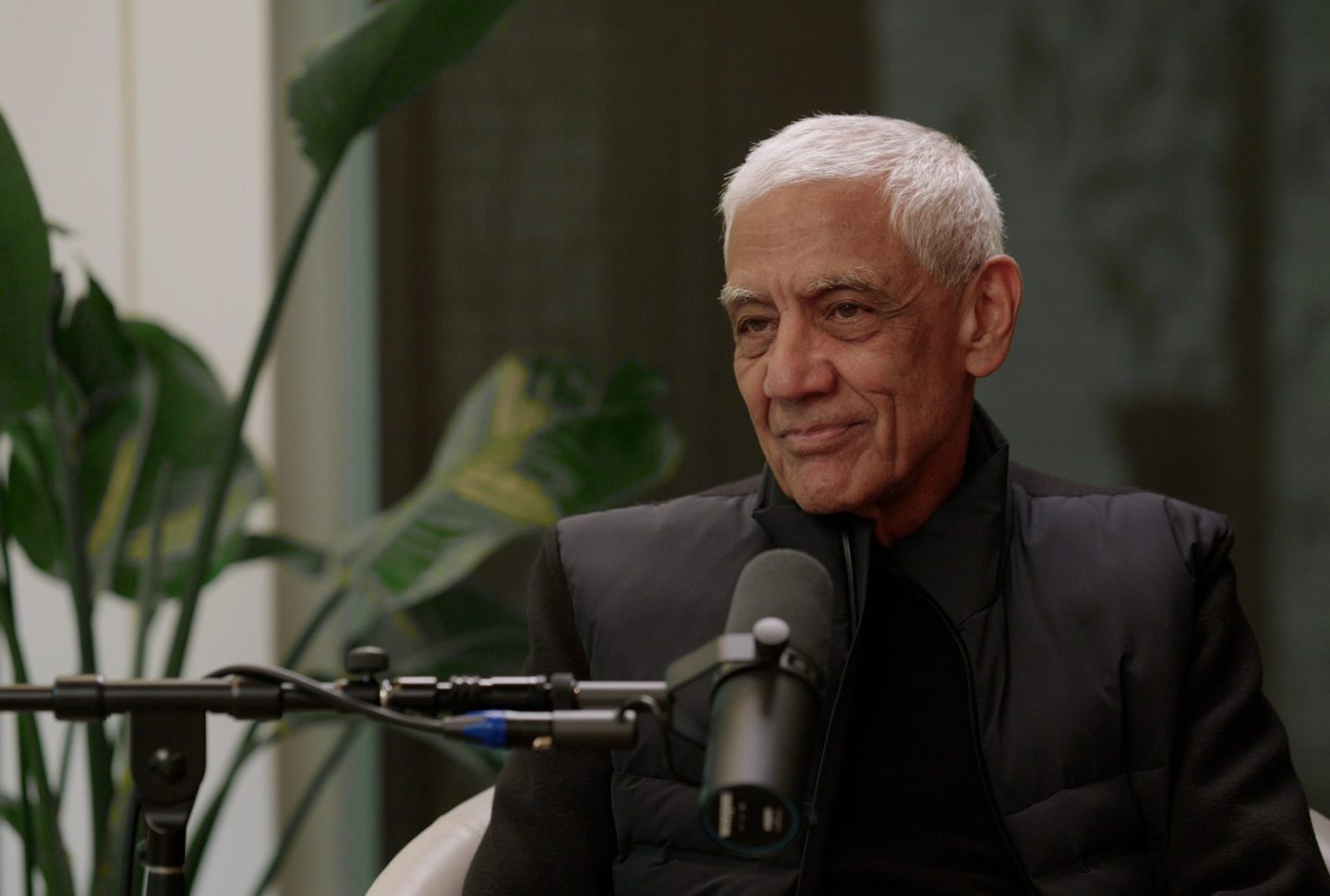

What possesses the wealthy scion of one of America’s greatest industrialist families to embark on a late-in-life crusade to overhaul the fundamental infrastructure of the entire internet? Something that even exorbitant wealth can’t shield someone from: How mean people can be on the internet.
During a messy, public divorce, which ultimately settled in 2011, Frank McCourt Jr., then the owner of the Los Angeles Dodgers, received a huge amount of internet backlash from the team’s fans. The attention he expected, but not the vitriol.
“Of course it comes with the territory,” McCourt tells Fortune in an interview. “You own a magnificent franchise like the Dodgers in a big media market like LA, you get divorced. There’s going to be a lot of noise—I get it.”
But this was 2010 to 2011, the birth of the social media age.
“At the time Facebook was six or seven years old and smartphones were ubiquitous,” he recalls. “I saw how social media just became a weapon of character assassination. People who were not necessarily well-intended could just say whatever they wanted and you had no way of defending yourself.”
Ten years after that “very difficult time” McCourt founded Project Liberty, an advocacy group dedicated to reforming the internet and breaking up the power of Big Tech companies. For McCourt, one of the critical issues troubling internet users is that a select few companies—he names the likes of Alphabet, Meta, and Amazon among others—collect inordinate amounts of data on users. Those companies and plenty others—ranging from tax preparers to carmakers—collect everything from who a user’s closest friends are, to where they went on a given day, to what their mood might be. Often they use those vast swaths of data to make predictions about people’s lives and future behavior, with an accuracy that borders on clairvoyance.
Amazon, Meta, and Google’s parent company Alphabet did not respond to a request for comment.
The idea that the extraordinary power of certain tech companies has led to a new world order has been written about by intellectuals and technologists across the globe. Commentators have invented new terms like surveillance capitalism—coined by former Harvard professor Shoshana Zuboff—or technofeudalism—as former Greek Finance Minister Yanis Varoufakis calls it—to describe the world in which digital data aggregation bleeds into real world monitoring, all while the reams of information collected enrich a select few companies and individuals.
While the terminology may differ, the core idea is that these companies wield outsize power. Sometimes even on par with that of a government. A centrist version of the story comes from tech blogger Ben Thompson, who put it in a recent post in his Stratechery newsletter: “Over the last two decades, we have drifted to a world still organized by nation states, but with a parallel political economy defined by American tech companies.”
McCourt wants to take the data controlled by Big Tech, and the power that lies with it, and return it back to internet users through a new system called a “decentralized social networking protocol.” In essence, it’s the idea that companies that dominate the internet—Google for search, Amazon for shopping, Meta for social connections—would be forced to give up their monopolies on data collection. McCourt is now one of the latest in the line of thinkers to have opined about the state of the digital world.
For McCourt our online presence that gets devoured by algorithms isn’t just about a collection of data points, it’s a question of personhood. “All this information about us is our lived archive—it’s who we are in the digital age,” he says.
That digital personhood, which comprises much of our life offline as well, belongs to big tech companies, according to McCourt. “If I said ‘describe yourself,’ you would list a bunch of attributes,” he says. “Well, those and tens of thousands of others are now all mapped by these big platforms. So they own you. They own me. And we need to fix that.”
Varoufakis, McCourt, and their ilk believe the tech companies maintain their power by being black boxes inaccessible to ordinary online users.
“It’s very controlling and manipulative,” McCourt says. “I would say it is completely at odds with democratic ideals. The secret sauce in America has not been centralization, autocrats ruling us and 24/7 surveillance. It’s about individual freedom, choice and autonomy.”
Worse yet, according to McCourt, is that they then sell that data to advertisers for huge sums of money. In 2023, Meta made $131.9 billion from ad sales, while Alphabet made $65.5 billion from ad sales in the fourth quarter of 2023 alone.
“Everything we do in our digital lives—which is a ton—is surveilled and mapped” McCourt says. “That’s the holy grail of the commercial internet now. It’s having all this information about us, so that we can be sold things, shown what to read, or how to think, or how to be triggered, because these algorithms know more about us than we know about us.”
McCourt sees a major dissonance in the fact that, while people create the data, the companies own it. Instead, he wants users to own their data and then, should they wish to, opt in to sell it to advertisers. That could be useful if they happen to be in the market for a certain product, according to his recently released book Our Biggest Fight: Reclaiming Liberty, Humanity, and Dignity in the Digital Age, coauthored with CoinDesk chief content officer Michael Casey.
“We’re the ones with the data; the businesses, charities, and other entities wanting to use it should offer us something in return,” McCourt and Casey write.
What is a decentralized internet?
McCourt says everyday netizens have gotten a raw deal, exchanging the totality of their privacy for a free app or online service. It’s a deal they wouldn’t have accepted in the real world. If a company offered free stamps for life, but in return asked to read your mail, “put cameras in every room of your house to surveil you 24/7,” and “benefit from all your relationships, thoughts, and feelings, we would say ‘you’re crazy,’” McCourt says.
Essentially McCourt is questioning the adage that governs much of online life—if it’s free, then you are the product.
To mitigate that risk, he argues, people should be able to own their own data. In the new internet McCourt envisions, users would set their own terms of use and if a company agreed to them their information would be made available for targeting ads or collecting information.
McCourt likens much of the work he is doing to RCN, a telecommunications company started by his brother David McCourt in 1993. The company’s big innovation at the time, according to McCourt, was to allow people to own their phone number so that it stayed with them when they transferred from one phone company to another. That meant they didn’t have to reach out to all their friends and family with their new contact info. This new interoperability, he says, was key to creating a competitive phone industry that didn’t keep consumers trapped with the same provider because of the inconvenience of having to get a new phone number. McCourt argues the same should apply to the digital world, with online data. Users should be able to take their data with them wherever they go on the internet.
“People had a visceral emotional reaction to owning a phone number, I would think they would certainly have an even stronger reaction to owning their information, data, and social graph online,” McCourt says.
To make that happen, McCourt wants to create a new internet protocol that would make safeguarding individual privacy a built-in feature of the new internet. Just as earlier internet protocols like the TCP/IP that allowed devices to connect to each other; and was then followed by HTTP, which essentially gave everyday users of computers the opportunity to access the internet via a web browser, became the foundations of contemporary online life. Neither of these protocols is owned by a single company, which is why using the internet is generally speaking the same experience across any device and regardless of what website or app someone is using. No one company “owns” the internet—hence the term decentralized.
“If we as human beings are the users of the internet,” McCourt says,” and if our relationships, our data, and our information are what creates value, why not create another protocol layer that would actually free up the data, so that it’s not the the property of these big platforms, but rather embedded in the internet itself?”
That echoes proposals made by other internet luminaries, including computer scientist Tim Berners-Lee, considered one of the founders of the internet. Berners-Lee, also a critic of the concentration of data in the hands of big companies, has “a vision for an alternative world, in which that data does exist, but it’s at the beck and call of the user themselves,” he told Time in 2019.
Business will lead the way, governments will follow
For McCourt, the solution will require new companies to shape this new digital world he imagines. “We need to innovate our way out of it, because I don’t believe the government is going to be able to regulate us out of this mess,” he says.
Instead businesses will have to show governments the way.
“What they really need is technology that enables and actualizes those public policy objectives,” MCCourt says. “Rather than trying to constrain something that’s doing harm and is out of control, why not just have the tech harmonized with the societal policy objectives?”
The European Union has made major progress in passing laws meant to regulate major tech firms. In 2016, the bloc passed the General Data Protection Legislation, considered one of the toughest data privacy laws in the world. It also passed two new pieces of legislation—the Digital Markets Act and the Digital Services Act—meant to constrain how much influence the industry’s biggest players could exert on digital marketplaces, like app stores and digital ad exchanges. Project Liberty’s calls for a decentralized internet have a “great audience in Europe” because they see the new protocol as consistent with the continent’s public policy goals, McCourt says.
One thing he will need the government’s help is clawing back personal data from companies that already have it, if one day it does pass a law creating a decentralized internet. “The problem would be solved moving forward…but if you want your archival data, you should be able to get it.”
Until then, McCourt keeps banging the drum for what he considers the unfairness of current online life. “We’re not even citizens in the digital world,” he says. “We’re subjects. We’re just data to these big platforms. It’s very dehumanizing, it’s kind of sucking the life out of us.”