• Home
  • News
  • Fortune 500
  • Tech
  • Finance
  • Leadership
  • Lifestyle
  • Rankings
  • Multimedia
EnvironmentSecurities and Exchange Commission

SEC chair drags climate rule across the finish line despite objections from commissioners, who say it will ‘spam investors with the commission’s pet topic of the day’

Amanda Gerut
By
Amanda Gerut
Amanda Gerut
News Editor, West Coast
Down Arrow Button Icon
Amanda Gerut
By
Amanda Gerut
Amanda Gerut
News Editor, West Coast
Down Arrow Button Icon
March 6, 2024, 1:22 PM ET
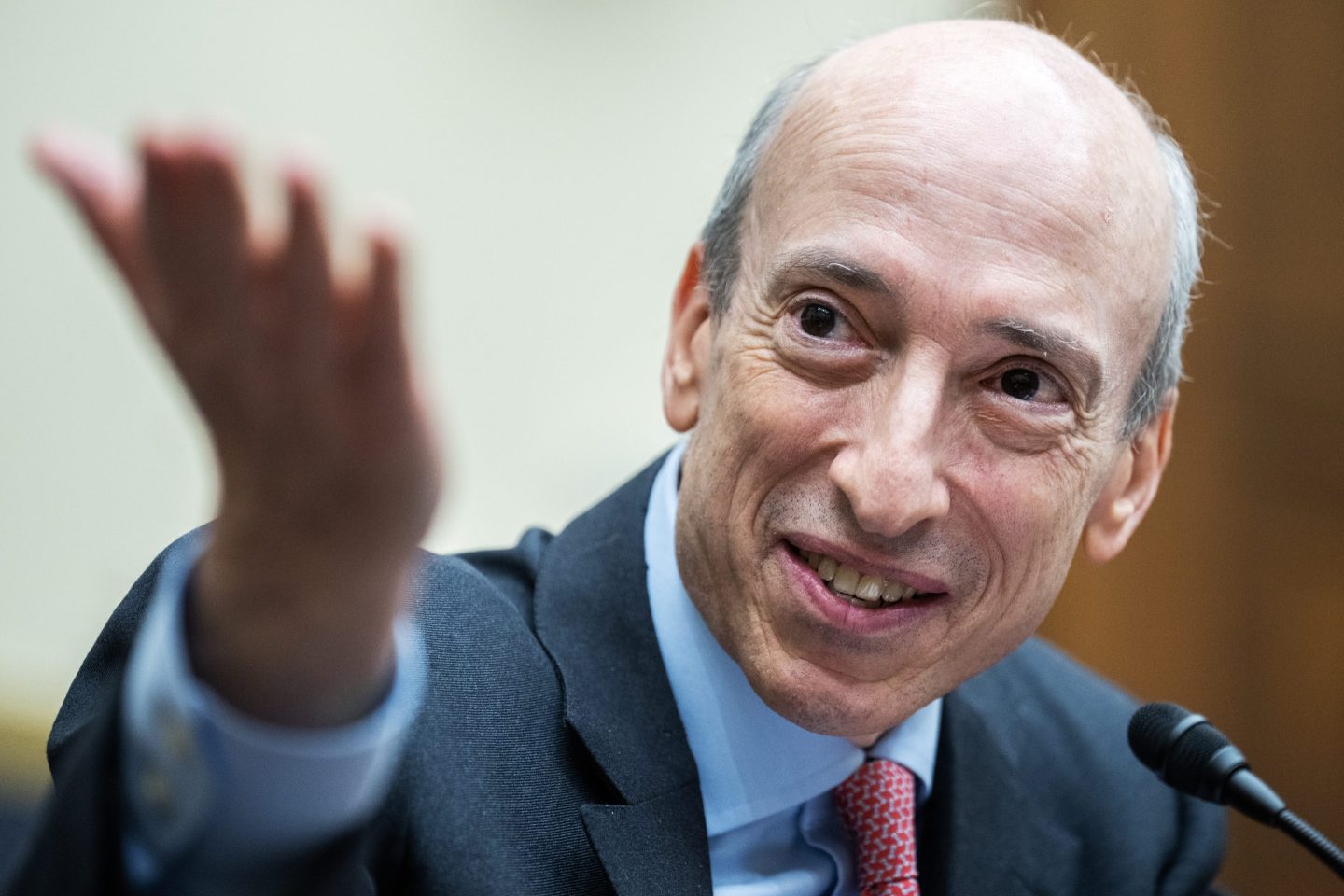
SEC chairman Gary Gensler
Securities and Exchange Commission Chair Gary Gensler shepherded the approval of a landmark climate rule today.Tom Williams—CQ–Roll Call Inc./Getty Images

The Securities and Exchange Commission adopted a raft of new climate change risk disclosure requirements Wednesday morning in a 3–2 vote that is nearly certain to see a legal challenge. Even at 886 pages, the final rule is an Ozempic-treated version of the initial proposal, with some of the most controversial components clipped out. 

Commissioner Hester Peirce, who voted against the final rule, said its fundamental flaw was that it would allow for “special treatment” for investors that prioritize climate data and, thus, would claim disproportionate time in disclosures and “management and directors’ brain space.” The rule “fails to justify that disparate treatment,” said Peirce. She also said some climate data was tantamount to “high-priced guesses” and that adopting the rule could amount to the SEC acting to “spam investors with the commission’s pet topic of the day: climate.”

Since the rule was initially introduced in 2022, the landscape around environmental, social, and governance issues—even use of the term ESG—has shifted dramatically. Some of the largest asset management firms, including J.P. Morgan Asset Management, State Street, and Pimco have exited some of the most influential investor climate coalitions. The rule has drawn both support and criticism, eliciting more than 15,000 comment letters. The SEC, in proposing the rule, relied on investor participation in those groups as support for its rationale that investors were seeking the commission to act on climate-risk disclosure. 

SEC chairman Gary Gensler in his remarks Wednesday morning noted the rules the SEC was adopting were “grounded in materiality,” a concept the Supreme Court articulated the meaning of in the 1970s and 1980s, he added.

“There are far more investors making investment decisions informed by climate risk, and far more companies are making disclosures about climate risks,” said Gensler. “In this context, [the SEC] has a role to play with regard to climate-related disclosures.”

The new rule, the full text of which has yet to be released to the public, will standardize companies’ annual disclosures about climate risk and require them in annual reports, said Gensler. Previously, investors relied on companies to voluntarily produce some of the data included in the rule through various sources or as the result of pressure from investor groups or shareholder proposals. 

The SEC’s rule will standardize the set of disclosures and metrics that supporters of the rule say will give investors a way to easily compare and track how closely companies are hewing to their low-carbon transition plans—and how companies are factoring in the use of carbon offsets and renewable-energy certificates in meeting climate and transition goals.

The final rule the SEC adopted will require data on climate-related risks that are “reasonably likely to materially impact” business strategy, results of operations, or financial conditions, along with the governance and management of risks, said Erik Gerding, director of the SEC’s Division of Corporation Finance. Companies will also have to include the effects of severe weather events and other natural conditions in their financial statements, he said.

The final rule scrubbed some of the most controversial portions of the initial proposal, including requiring a company to offer up explanations about the level of climate expertise on the board and requiring disclosures about so-called Scope 3 greenhouse gas emissions. The SEC defined Scope 3 emissions as indirect greenhouse gas emissions that result from sources a company doesn’t own or control, like those related to buying and selling goods from third parties and transporting them, or employees’ business travel. 

Losing Scope 3 from the rule is a loss for investors, said Sarah Merricks, former chief of staff at the U.S. Green Building Council and current cofounder and chief of strategy for the Global Network for Zero. “The watering down of Scope 3 emissions elimination in regulations and plans, including the SEC climate disclosure rules, and the very definition of net zero” is a deeply concerning trend, said Merricks in a statement to Fortune. 

“Without mandates for Scope 3 emissions disclosure, investors are getting an incomplete picture of an organization’s sustainability progress; the value chain produces the majority of most businesses’ emissions,” she said. “While I understand that the SEC may be concerned about the potential legal challenges a Scope 3 disclosure mandate could bring, we are less than six years away from Paris Agreement targets and have no time to waste.”

Peirce said the final rule was so different that it should have been proposed again for comment and should have grappled with the different legal jurisdictions that have emerged given rules in the European Union and California.


Fortune Brainstorm AI returns to San Francisco Dec. 8–9 to convene the smartest people we know—technologists, entrepreneurs, Fortune Global 500 executives, investors, policymakers, and the brilliant minds in between—to explore and interrogate the most pressing questions about AI at another pivotal moment. Register here.
About the Author
Amanda Gerut
By Amanda GerutNews Editor, West Coast

Amanda Gerut is the west coast editor at Fortune, overseeing publicly traded businesses, executive compensation, Securities and Exchange Commission regulations, and investigations.

See full bioRight Arrow Button Icon

Latest in Environment

satellite
AIData centers
Google’s plan to put data centers in the sky faces thousands of (little) problems: space junk
By Mojtaba Akhavan-TaftiDecember 3, 2025
1 day ago
claude
EnvironmentSan Francisco
San Francisco mourns its albino alligator, Claude, dead at 30 years old
By Janie Har and The Associated PressDecember 3, 2025
1 day ago
AIAmazon
More than 1,000 Amazon employees sign open letter warning the company’s AI ‘will do staggering damage to democracy, our jobs, and the earth’
By Nino PaoliDecember 2, 2025
3 days ago
Brazil
EnvironmentBrazil
Why the world’s top coffee producer is switching up its beans
By Renata Carlos Daou and BloombergNovember 30, 2025
4 days ago
EuropeSwitzerland
Swiss voters reject tax of up to 50% on large donations or inheritances, fearing exodus of wealthy instead of fighting climate change
By Jamey Keaten and The Associated PressNovember 30, 2025
4 days ago
Jacqueline Novogratz is the founder and CEO of Acumen
Commentaryphilanthropy
Philanthropy isn’t fading. It’s evolving
By Jacqueline NovogratzNovember 30, 2025
4 days ago

Most Popular

placeholder alt text
Economy
Two months into the new fiscal year and the U.S. government is already spending more than $10 billion a week servicing national debt
By Eleanor PringleDecember 4, 2025
11 hours ago
placeholder alt text
North America
Jeff Bezos and Lauren Sánchez Bezos commit $102.5 million to organizations combating homelessness across the U.S.: ‘This is just the beginning’
By Sydney LakeDecember 2, 2025
2 days ago
placeholder alt text
Success
‘Godfather of AI’ says Bill Gates and Elon Musk are right about the future of work—but he predicts mass unemployment is on its way
By Preston ForeDecember 4, 2025
7 hours ago
placeholder alt text
Economy
Ford workers told their CEO 'none of the young people want to work here.' So Jim Farley took a page out of the founder's playbook
By Sasha RogelbergNovember 28, 2025
6 days ago
placeholder alt text
North America
Anonymous $50 million donation helps cover the next 50 years of tuition for medical lab science students at University of Washington
By The Associated PressDecember 2, 2025
2 days ago
placeholder alt text
AI
IBM CEO warns there’s ‘no way’ hyperscalers like Google and Amazon will be able to turn a profit at the rate of their data center spending
By Marco Quiroz-GutierrezDecember 3, 2025
1 day ago
Rankings
  • 100 Best Companies
  • Fortune 500
  • Global 500
  • Fortune 500 Europe
  • Most Powerful Women
  • Future 50
  • World’s Most Admired Companies
  • See All Rankings
Sections
  • Finance
  • Leadership
  • Success
  • Tech
  • Asia
  • Europe
  • Environment
  • Fortune Crypto
  • Health
  • Retail
  • Lifestyle
  • Politics
  • Newsletters
  • Magazine
  • Features
  • Commentary
  • Mpw
  • CEO Initiative
  • Conferences
  • Personal Finance
  • Education
Customer Support
  • Frequently Asked Questions
  • Customer Service Portal
  • Privacy Policy
  • Terms Of Use
  • Single Issues For Purchase
  • International Print
Commercial Services
  • Advertising
  • Fortune Brand Studio
  • Fortune Analytics
  • Fortune Conferences
  • Business Development
About Us
  • About Us
  • Editorial Calendar
  • Press Center
  • Work At Fortune
  • Diversity And Inclusion
  • Terms And Conditions
  • Site Map

© 2025 Fortune Media IP Limited. All Rights Reserved. Use of this site constitutes acceptance of our Terms of Use and Privacy Policy | CA Notice at Collection and Privacy Notice | Do Not Sell/Share My Personal Information
FORTUNE is a trademark of Fortune Media IP Limited, registered in the U.S. and other countries. FORTUNE may receive compensation for some links to products and services on this website. Offers may be subject to change without notice.