• Home
  • Latest
  • Fortune 500
  • Finance
  • Tech
  • Leadership
  • Lifestyle
  • Rankings
  • Multimedia
CommentaryBanks

SIFMA: Proposed Basel III Endgame new trading capital rules would hobble U.S. banks, capital markets, and the broader economy

By
Kenneth E. Bentsen, Jr.
Down Arrow Button Icon
By
Kenneth E. Bentsen, Jr.
Down Arrow Button Icon
February 27, 2024, 12:52 PM ET
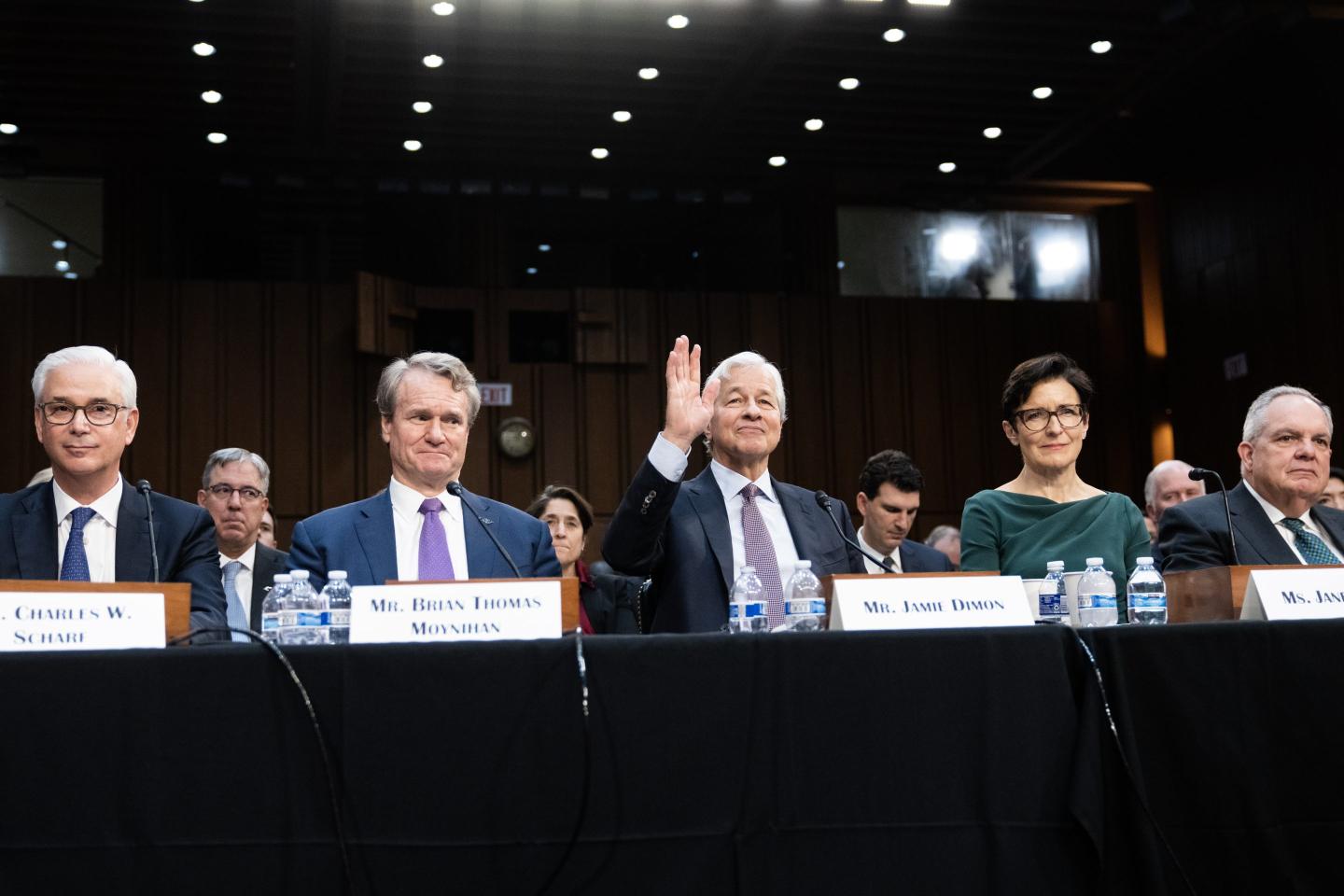
CEOs from left, Charles Scharf, Wells Fargo, Brian Moynihan, Bank of America, Jamie Dimon, JPMorgan Chase, Jane Fraser, Citigroup, and Ronald O'Hanley, State Street, testify during the Senate Banking, Housing, and Urban Affairs Committee hearing
CEOs from left, Charles Scharf, Wells Fargo, Brian Moynihan, Bank of America, Jamie Dimon, JPMorgan Chase, Jane Fraser, Citigroup, and Ronald O'Hanley, State Street, testify during the Senate Banking, Housing, and Urban Affairs Committee hearingom Williams/CQ-Roll Call, Inc via Getty Images

There has been widespread criticism of the proposed Basel III Endgame reforms of U.S. bank capital requirements from both sides of the aisle and all corners of the economy. U.S. bank capital levels are already extraordinarily robust by historical standards as they appropriately balance financial stability with economic growth. The Basel Endgame proposal would dramatically hike capital requirements, resulting in higher prices and increased costs of financing for American businesses and consumers.

While this complex proposal will have significant effects across the economy, one of its less-discussed components would potentially have the most far-reaching impacts. As SIFMA–which represents the interests of broker-dealers, investment banks, and asset managers–called out in comment letters submitted to the agencies last month, the proposed increases in capital for banking organizations’ trading activities would be far more significant than stated in the proposal and are not commensurate with the underlying risks. The proposed changes will negatively affect large banks’ capital markets activities, with serious knock-on effects for the real economy, impacting companies, consumers, and savers who benefit directly or indirectly from bank involvement in U.S. capital markets.

Regulators have not fully accounted for these impacts because they did not conduct the necessary, robust analysis in advance of issuing the proposal demonstrating why Basel III Endgame capital increases are needed at this time, and what the costs of doing so would be for specific markets and products as well as the broader economy.

To fill some of this information gap, SIFMA facilitated an industry quantitative impact study (QIS) with input from the eight largest U.S. banks. It found that the proposed Fundamental Review of the Trading Book (FRTB) and the revised credit valuation adjustment (CVA) framework would result in a 129% increase in market-risk and CVA risk-weighted assets under the new approach. Those increases are likely to be even greater given the significant duplication of risk capture between the new proposed framework and the Federal Reserve’s stress testing regime, leading to a significant over-calibration of capital requirements for large banks’ trading activities.

Given that the U.S. capital markets provide 75%  of the financing for non-financial corporates and intermediate the hedging activities of these corporates, such dramatic capital increases would undermine market liquidity and vibrancy and would increase costs and reduce choice for businesses, consumers, and government entities that rely on U.S. capital markets for the vast majority of their funding. In turn, this would adversely affect U.S. businesses, households, and taxpayers, and negatively impact U.S. economic growth.

For example, as several commenters on the proposal have noted, Basel Endgame would make securitizations of mortgages, credit cards, auto loans, equipment leases and loans, and commercial loans more expensive for consumers and business that rely on such financing. As the broad-based Coalition for Derivatives End Users highlighted in their comment letter, Basel Endgame would increase the costs and reduce the ability of non-financial corporations to hedge risks associated with currency fluctuations, commodity prices, and shifting interest rates, resulting in greater price volatility and increased costs for consumers for goods, services, and everyday necessities. Pension funds have noted that several aspects of the proposal would make it more difficult for them to deliver returns for retirees, while multiple state and local government groups have raised concerns that it would increase the costs of issuing municipal debt, making it more difficult to fund public infrastructure projects and increasing costs for taxpayers.

These dramatic capital increases related to banks’ trading activities also contrast to the approach to Basel III implementation taken elsewhere around the globe. For example, in the United Kingdom (UK) and the European Union (EU), policymakers adopted more risk-sensitive approaches to key capital markets elements of the proposal, even though their economies rely less on capital markets financing and bank involvement in those markets is generally smaller than in the United States. The U.K. and EU reforms are expected to result, respectively, in a 3.2% and 15% increase in aggregate capital levels for their global systematically important banks (GSIBs), compared to a nearly 30% increase in overall capital levels for the U.S. GSIBs resulting from both the Basel Endgame proposal and the proposed changes to the GSIB surcharge.

U.S. banking regulators need to take a hard look at these numbers and the array of analyses shared by SIFMA and other stakeholders, and then make material changes to the Basel Endgame proposal. These changes include allowing for greater recognition of risk diversification, creating stronger incentives for firms to adopt the FRTB internal models approach, and more appropriately tailoring capital requirements to the actual risks posed by certain products to avoid adverse impacts on key markets and end users. Most importantly, the banking agencies should reduce the over-calibration of capital requirements that result from the overlap between the proposed new framework and the stress testing process.

The only prudent path ahead would be for the agencies to re-propose the entire rule for public comment with a new 120-day comment period. Any re-proposal should explicitly define the specific capital problems that need to be addressed and how a proposed solution would address them and should be backed up by a robust economic analysis demonstrating the benefits and costs of the proposed changes. The stakes for our economy are too high to move hastily and get this critical rulemaking wrong.

Kenneth E. Bentsen, Jr. is the president and CEO of SIFMA, the leading trade association for broker-dealers, investment banks, and asset managers operating in the U.S. and global capital markets. From 1995 to 2003, Mr. Bentsen served as a Member of the United States House of Representatives from Texas.

More must-read commentary published by Fortune:

  • Here’s how the U.S., Europe, and China are faring in the post-pandemic race for economic growth
  • Global trade is at a critical juncture–and we can’t take it for granted, WTO meeting chair warns
  • Boeing is shaking up its ‘good ole boys’ culture–but the company still has a long way to go before it gets its production and financials right
  • The anti-DEI movement has gone from fringe to mainstream. Here’s what that means for corporate America

The opinions expressed in Fortune.com commentary pieces are solely the views of their authors and do not necessarily reflect the opinions and beliefs of Fortune.

Join us at the Fortune Workplace Innovation Summit May 19–20, 2026, in Atlanta. The next era of workplace innovation is here—and the old playbook is being rewritten. At this exclusive, high-energy event, the world’s most innovative leaders will convene to explore how AI, humanity, and strategy converge to redefine, again, the future of work. Register now.
About the Author
By Kenneth E. Bentsen, Jr.
See full bioRight Arrow Button Icon

Latest in Commentary

Finance
Lorem ipsum dolor sit amet, consectetur adipiscing elit, sed do eiusmod tempor incididunt ut labore et dolore magna aliqua. Ut enim ad minim veniam
By Fortune Editors
October 20, 2025
Finance
Lorem ipsum dolor sit amet, consectetur adipiscing elit, sed do eiusmod tempor incididunt ut labore et dolore magna aliqua. Ut enim ad minim veniam
By Fortune Editors
October 20, 2025
Finance
Lorem ipsum dolor sit amet, consectetur adipiscing elit, sed do eiusmod tempor incididunt ut labore et dolore magna aliqua. Ut enim ad minim veniam
By Fortune Editors
October 20, 2025
Finance
Lorem ipsum dolor sit amet, consectetur adipiscing elit, sed do eiusmod tempor incididunt ut labore et dolore magna aliqua. Ut enim ad minim veniam
By Fortune Editors
October 20, 2025
Finance
Lorem ipsum dolor sit amet, consectetur adipiscing elit, sed do eiusmod tempor incididunt ut labore et dolore magna aliqua. Ut enim ad minim veniam
By Fortune Editors
October 20, 2025
Finance
Lorem ipsum dolor sit amet, consectetur adipiscing elit, sed do eiusmod tempor incididunt ut labore et dolore magna aliqua. Ut enim ad minim veniam
By Fortune Editors
October 20, 2025

Most Popular

Finance
Lorem ipsum dolor sit amet, consectetur adipiscing elit, sed do eiusmod tempor incididunt ut labore et dolore magna aliqua. Ut enim ad minim veniam
By Fortune Editors
October 20, 2025
Finance
Lorem ipsum dolor sit amet, consectetur adipiscing elit, sed do eiusmod tempor incididunt ut labore et dolore magna aliqua. Ut enim ad minim veniam
By Fortune Editors
October 20, 2025
Finance
Lorem ipsum dolor sit amet, consectetur adipiscing elit, sed do eiusmod tempor incididunt ut labore et dolore magna aliqua. Ut enim ad minim veniam
By Fortune Editors
October 20, 2025
Finance
Lorem ipsum dolor sit amet, consectetur adipiscing elit, sed do eiusmod tempor incididunt ut labore et dolore magna aliqua. Ut enim ad minim veniam
By Fortune Editors
October 20, 2025
Finance
Lorem ipsum dolor sit amet, consectetur adipiscing elit, sed do eiusmod tempor incididunt ut labore et dolore magna aliqua. Ut enim ad minim veniam
By Fortune Editors
October 20, 2025
Finance
Lorem ipsum dolor sit amet, consectetur adipiscing elit, sed do eiusmod tempor incididunt ut labore et dolore magna aliqua. Ut enim ad minim veniam
By Fortune Editors
October 20, 2025
Fortune Secondary Logo
Rankings
  • 100 Best Companies
  • Fortune 500
  • Global 500
  • Fortune 500 Europe
  • Most Powerful Women
  • Future 50
  • World’s Most Admired Companies
  • See All Rankings
Sections
  • Finance
  • Fortune Crypto
  • Features
  • Leadership
  • Health
  • Commentary
  • Success
  • Retail
  • Mpw
  • Tech
  • Lifestyle
  • CEO Initiative
  • Asia
  • Politics
  • Conferences
  • Europe
  • Newsletters
  • Personal Finance
  • Environment
  • Magazine
  • Education
Customer Support
  • Frequently Asked Questions
  • Customer Service Portal
  • Privacy Policy
  • Terms Of Use
  • Single Issues For Purchase
  • International Print
Commercial Services
  • Advertising
  • Fortune Brand Studio
  • Fortune Analytics
  • Fortune Conferences
  • Business Development
  • Group Subscriptions
About Us
  • About Us
  • Editorial Calendar
  • Press Center
  • Work At Fortune
  • Diversity And Inclusion
  • Terms And Conditions
  • Site Map
  • About Us
  • Editorial Calendar
  • Press Center
  • Work At Fortune
  • Diversity And Inclusion
  • Terms And Conditions
  • Site Map
  • Facebook icon
  • Twitter icon
  • LinkedIn icon
  • Instagram icon
  • Pinterest icon

Latest in Commentary

gary
Commentaryregulation
The biggest mistake CEOs make with AI has nothing to do with the technology
By Gary ShapiroApril 1, 2026
1 hour ago
trump
CommentaryEPA
The EPA just valued a human life at $0. That’s not just a moral crisis — it’s a market crisis
By Andrew BeharApril 1, 2026
3 hours ago
dressel
Commentaryhistory
AI can’t remember what your company learned the hard way 
By Jason DresselApril 1, 2026
4 hours ago
pelosi
CommentaryElections
Congress has a lower approval rating than Hitler in some polls. And we just keep voting for the same 2 parties
By Stu StrumwasserApril 1, 2026
5 hours ago
gen z
CommentaryGen Z
Gen Z is engineering an analog future — and it’s at least a $5 billion opportunity
By Luba KassovaApril 1, 2026
6 hours ago
brian
CommentaryCulture
The real engine of innovation is trust
By Brian DoublesMarch 31, 2026
19 hours ago

Most Popular

Jerome Powell says the $39 trillion national debt is ‘not unsustainable,’ but warns the trajectory ‘will not end well’
Economy
Jerome Powell says the $39 trillion national debt is ‘not unsustainable,’ but warns the trajectory ‘will not end well’
By Fortune EditorsMarch 30, 2026
2 days ago
Markets cheer as Trump threatens to abandon Iran war, but Jamie Dimon sides with allies: ‘Win this thing and clean up the straits’
Energy
Markets cheer as Trump threatens to abandon Iran war, but Jamie Dimon sides with allies: ‘Win this thing and clean up the straits’
By Fortune EditorsMarch 31, 2026
1 day ago
A man used AI to call 3,000 Irish bartenders to track the cost of Guinness. Now pubs are lowering their prices to compete
AI
A man used AI to call 3,000 Irish bartenders to track the cost of Guinness. Now pubs are lowering their prices to compete
By Fortune EditorsMarch 30, 2026
2 days ago
Kevin O'Leary says if you earn $68,000 a year and follow this rule, you'll retire a millionaire
Personal Finance
Kevin O'Leary says if you earn $68,000 a year and follow this rule, you'll retire a millionaire
By Fortune EditorsMarch 31, 2026
23 hours ago
The federal government shed 385,000 employees last year. Now the Trump administration is on a blitz to hire Gen Z workers
Politics
The federal government shed 385,000 employees last year. Now the Trump administration is on a blitz to hire Gen Z workers
By Fortune EditorsMarch 31, 2026
1 day ago
Two-thirds of parents say their adult Gen Z kids still rely on them financially  for support—even though it's putting them under strain
Success
Two-thirds of parents say their adult Gen Z kids still rely on them financially  for support—even though it's putting them under strain
By Fortune EditorsMarch 31, 2026
23 hours ago

© 2026 Fortune Media IP Limited. All Rights Reserved. Use of this site constitutes acceptance of our Terms of Use and Privacy Policy | CA Notice at Collection and Privacy Notice | Do Not Sell/Share My Personal Information
FORTUNE is a trademark of Fortune Media IP Limited, registered in the U.S. and other countries. FORTUNE may receive compensation for some links to products and services on this website. Offers may be subject to change without notice.