• Home
  • Latest
  • Fortune 500
  • Finance
  • Tech
  • Leadership
  • Lifestyle
  • Rankings
  • Multimedia
TechEnvironment

With AI forcing data centers to consume more energy, software that hunts for clean electricity across the globe gains currency

By
Naureen S. Malik
Naureen S. Malik
and
Bloomberg
Bloomberg
Down Arrow Button Icon
By
Naureen S. Malik
Naureen S. Malik
and
Bloomberg
Bloomberg
Down Arrow Button Icon
February 25, 2024, 11:44 AM ET
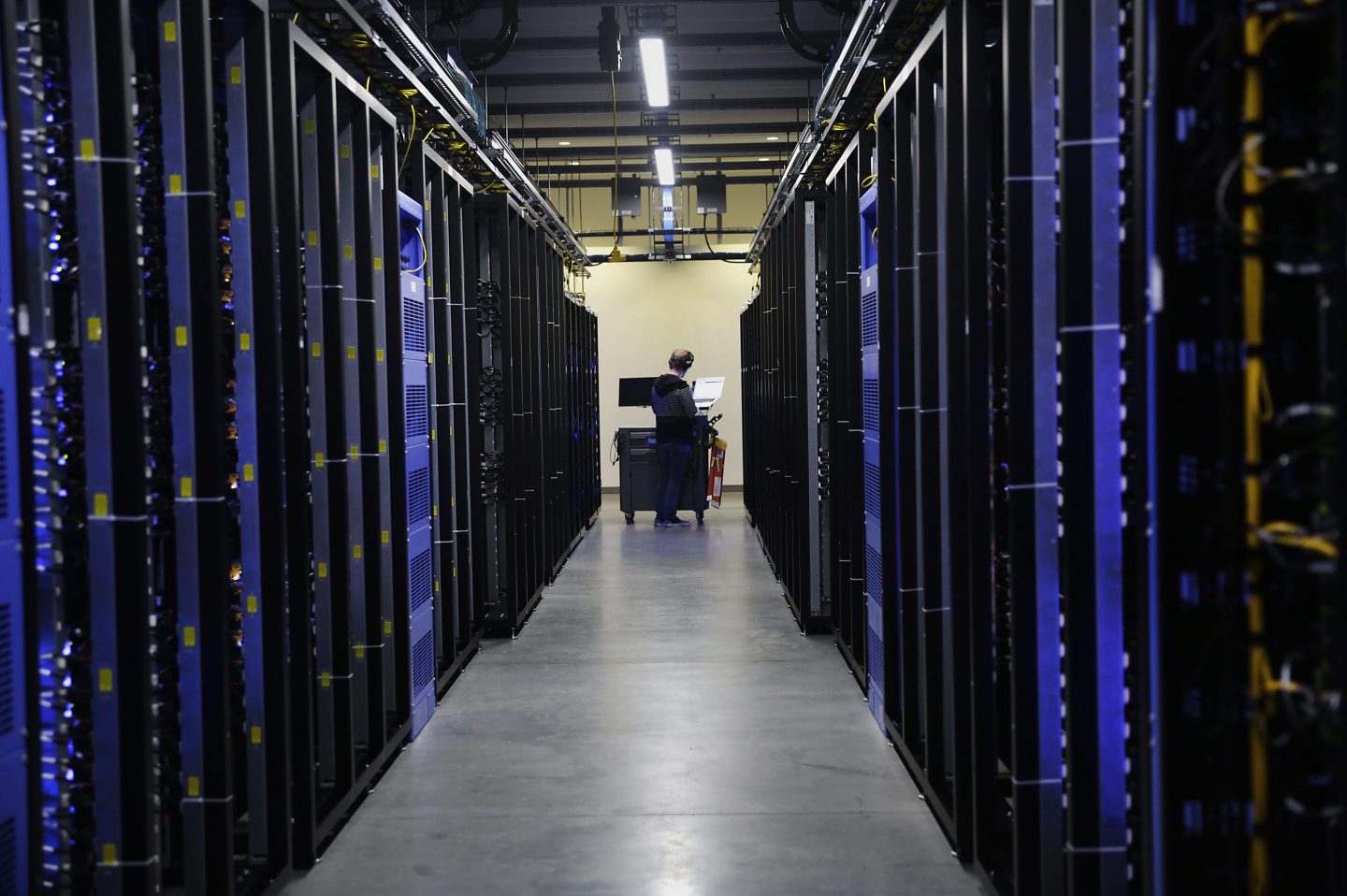
A data center in Prineville, Oregon.
A data center in Prineville, Oregon.Meg Roussos—Bloomberg/Getty Images

Tech giants are racing to ward off a carbon time bomb caused by the massive data centers they’re building around the world.

A technique pioneered by Google is gaining currency as more power-hungry artificial intelligence comes online: Using software to hunt for clean electricity in parts of the world with excess sun and wind on the grid, then ramping up data center operations there. Doing so could cut carbon and costs.

There’s an urgent need to figure out how to run data centers in ways that maximize renewable energy usage, said Chris Noble, co-founder and chief executive officer of Cirrus Nexus, a cloud-computing manager tapping data centers owned by Google, Microsoft and Amazon.

The climate risks sparked by AI-driven computing are far-reaching — and will worsen without a big shift from fossil fuel-based electricity to clean power. Nvidia Corp. Chief Executive Officer Jensen Huang has said AI has hit a “tipping point.” He has also said that the cost of data centers will double within five years to power the rise of new software.

Already, data centers and transmission networks each account for up to 1.5% of global consumption, according to the International Energy Agency. Together, they’re responsible for emitting about as much carbon dioxide as Brazil annually.

Hyperscalers — as the biggest data center owners like Google, Microsoft and Amazon are known — have all set climate goals and are facing internal and external pressure to deliver on them. Those lofty targets include decarbonizing their operations.

But the rise of AI is already wreaking havoc on those goals. Graphics processing units have been key to the rise of large language models and use more electricity than central processing units used in other forms of computing. Training an AI model uses the more power than 100 households in a year, according to IEA estimates.

“The growth in AI is far outstripping the ability to produce clean power for it,” he said.

Moreover, AI’s energy consumption is volatile and more akin to a sawtooth graph than a smooth line that most data center operators are used to. That makes decarbonization a challenge, to say nothing of ensuring grid stability.

AI’s growth is being driven by North American companies, keeping computing power — and energy usage — concentrated there, said Dave Sterlace, account director for global data centers at Hitachi Energy. That’s a trend he didn’t expect two years ago.

To lower data center CO2 emissions, hyperscalers and other data center providers have financed massive amounts of solar or wind farms and used credits to offset emissions. (In the case of credits, some have failed to have a meaningful impact on emissions.)

But that alone won’t be enough, especially as AI use ticks up. That’s why operators are turning to the strategy employed by Alphabet Inc. unit Google called load shifting. The idea: Lower emissions by upending the way data centers function.

Today, most data centers seek to operate in a “steady state,” such that their energy consumption is fairly stable. That leaves them at the mercy of the grid they’re connected to and whatever the day’s mix of natural gas, nuclear and renewable power generation is given the lack of transmission lines between regions. To break their reliance on dirtier grids, tech giants are looking for opportunities to shift daily or even hourly data center operations around the world in an effort to soak up excess renewable energy production.

Google launched the first effort to match its power usage at certain data centers with zero-carbon power on an hourly basis in a bid to get its machines running on clean energy 24/7. No one has fully achieved that goal yet. And, to be sure, the strategy of shifting loads around the world might be complicated by countries pushing for data sovereignty policies that attempt to restrict and safeguard the flow of data across borders. But what Cirrus Nexus and Google are testing could still be a critical piece of the puzzle for cutting emissions.

Manhattan-based Cirrus Nexus scours the world’s power grids and measures emissions in five-minute increments to find the least polluting computing resources for itself and its clients in industries that range from pharmaceuticals to accounting. The company had a chance to put that search into practice last summer.

The Netherlands was in the midst of its sunniest June on record, causing the cost of solar power on the grid to drop. That made it cheaper and less carbon-intensive to run servers. Cirrus Nexus then shifted its computing load to California once the sun went down in the Netherlands, allowing it to draw on solar power just coming online for the day in the Golden State.

By chasing the sun from Europe to the US West Coast and back again, the company was able to slash computing emissions for certain workloads for itself and clients by 34% rather than relying on servers in either location alone, according to company data shared with Bloomberg Green. Making operations flexible to do that comes with both benefits and risks.

Being able to pursue spare zero-carbon megawatts can help reduce stress on grids, such as during a heat wave or frigid winter storm. But data centers need to cooperate with utilities and grid operators because big swings in demand can throw electric systems into disarray, boosting the odds of blackouts. Dominion Energy, which is seeing data center demand soar at its Virginia utility, is working on a program to harness load shifting at data centers to ease stress on the grid during extreme weather.

In recent years, Google and Amazon have tested shifting data center use for their own operations and for clients that use their cloud services. (Cirrus Nexus, for instance, uses cloud services offered by Amazon, Microsoft and Google.) In Virginia, Microsoft inked a deal with Constellation Energy Corp. that guarantees more than 90% of the power for its area data center will be zero-carbon energy. Reaching 100%, though, remains a formidable goal for it and other hyperscalers.

Google’s data centers run on carbon-free energy about 64% of the time, with 13 of the regional sites getting to 85% and seven at just over 90% globally, said Michael Terrell, who leads Google’s 24/7 carbon-free energy strategy.

“But if you’re not displacing fossil assets, then you’re not completely achieving your climate goals,” said Terrell.


Join us at the Fortune Workplace Innovation Summit May 19–20, 2026, in Atlanta. The next era of workplace innovation is here—and the old playbook is being rewritten. At this exclusive, high-energy event, the world’s most innovative leaders will convene to explore how AI, humanity, and strategy converge to redefine, again, the future of work. Register now.
About the Authors
By Naureen S. Malik
See full bioRight Arrow Button Icon
By Bloomberg
See full bioRight Arrow Button Icon

Latest in Tech

Finance
Lorem ipsum dolor sit amet, consectetur adipiscing elit, sed do eiusmod tempor incididunt ut labore et dolore magna aliqua. Ut enim ad minim veniam
By Fortune Editors
October 20, 2025
Finance
Lorem ipsum dolor sit amet, consectetur adipiscing elit, sed do eiusmod tempor incididunt ut labore et dolore magna aliqua. Ut enim ad minim veniam
By Fortune Editors
October 20, 2025
Finance
Lorem ipsum dolor sit amet, consectetur adipiscing elit, sed do eiusmod tempor incididunt ut labore et dolore magna aliqua. Ut enim ad minim veniam
By Fortune Editors
October 20, 2025
Finance
Lorem ipsum dolor sit amet, consectetur adipiscing elit, sed do eiusmod tempor incididunt ut labore et dolore magna aliqua. Ut enim ad minim veniam
By Fortune Editors
October 20, 2025
Finance
Lorem ipsum dolor sit amet, consectetur adipiscing elit, sed do eiusmod tempor incididunt ut labore et dolore magna aliqua. Ut enim ad minim veniam
By Fortune Editors
October 20, 2025
Finance
Lorem ipsum dolor sit amet, consectetur adipiscing elit, sed do eiusmod tempor incididunt ut labore et dolore magna aliqua. Ut enim ad minim veniam
By Fortune Editors
October 20, 2025

Most Popular

Finance
Lorem ipsum dolor sit amet, consectetur adipiscing elit, sed do eiusmod tempor incididunt ut labore et dolore magna aliqua. Ut enim ad minim veniam
By Fortune Editors
October 20, 2025
Finance
Lorem ipsum dolor sit amet, consectetur adipiscing elit, sed do eiusmod tempor incididunt ut labore et dolore magna aliqua. Ut enim ad minim veniam
By Fortune Editors
October 20, 2025
Finance
Lorem ipsum dolor sit amet, consectetur adipiscing elit, sed do eiusmod tempor incididunt ut labore et dolore magna aliqua. Ut enim ad minim veniam
By Fortune Editors
October 20, 2025
Finance
Lorem ipsum dolor sit amet, consectetur adipiscing elit, sed do eiusmod tempor incididunt ut labore et dolore magna aliqua. Ut enim ad minim veniam
By Fortune Editors
October 20, 2025
Finance
Lorem ipsum dolor sit amet, consectetur adipiscing elit, sed do eiusmod tempor incididunt ut labore et dolore magna aliqua. Ut enim ad minim veniam
By Fortune Editors
October 20, 2025
Finance
Lorem ipsum dolor sit amet, consectetur adipiscing elit, sed do eiusmod tempor incididunt ut labore et dolore magna aliqua. Ut enim ad minim veniam
By Fortune Editors
October 20, 2025
Fortune Secondary Logo
Rankings
  • 100 Best Companies
  • Fortune 500
  • Global 500
  • Fortune 500 Europe
  • Most Powerful Women
  • Future 50
  • World’s Most Admired Companies
  • See All Rankings
Sections
  • Finance
  • Fortune Crypto
  • Features
  • Leadership
  • Health
  • Commentary
  • Success
  • Retail
  • Mpw
  • Tech
  • Lifestyle
  • CEO Initiative
  • Asia
  • Politics
  • Conferences
  • Europe
  • Newsletters
  • Personal Finance
  • Environment
  • Magazine
  • Education
Customer Support
  • Frequently Asked Questions
  • Customer Service Portal
  • Privacy Policy
  • Terms Of Use
  • Single Issues For Purchase
  • International Print
Commercial Services
  • Advertising
  • Fortune Brand Studio
  • Fortune Analytics
  • Fortune Conferences
  • Business Development
  • Group Subscriptions
About Us
  • About Us
  • Editorial Calendar
  • Press Center
  • Work At Fortune
  • Diversity And Inclusion
  • Terms And Conditions
  • Site Map
  • About Us
  • Editorial Calendar
  • Press Center
  • Work At Fortune
  • Diversity And Inclusion
  • Terms And Conditions
  • Site Map
  • Facebook icon
  • Twitter icon
  • LinkedIn icon
  • Instagram icon
  • Pinterest icon

Latest in Tech

The Navy confirmed an ‘abundant amount’ of Uncrustables when the Artemis II crew lands. Smucker’s just offered them a lifetime supply
PoliticsFood and drink
The Navy confirmed an ‘abundant amount’ of Uncrustables when the Artemis II crew lands. Smucker’s just offered them a lifetime supply
By Catherina GioinoApril 10, 2026
2 hours ago
Three people sit behind a desk and look at the phone screen of the person in the middle.
Future of WorkConsulting
Meet ‘trendslop,’ the new, AI-fueled scourge of workplace consultants everywhere
By Sasha RogelbergApril 10, 2026
2 hours ago
Amazon is still paying Jeff Bezos an $80,000 yearly salary—but $1.6 million for travel and security
Big TechCEO salaries and executive compensation
Amazon is still paying Jeff Bezos an $80,000 yearly salary—but $1.6 million for travel and security
By Marco Quiroz-GutierrezApril 10, 2026
4 hours ago
Kash Patel sits with his two fingers on lips
CybersecurityIran
First they went after medtech, then Kash Patel. Iranian hackers’ next target is likely ‘low-hanging fruit’ in water, energy, and tourism, experts say
By Jacqueline MunisApril 10, 2026
5 hours ago
scott bessent
CybersecurityFederal Reserve
The AI that found 27-year-old vulnerabilities no human ever caught before just forced an emergency meeting with every major Wall Street CEO
By Jake AngeloApril 10, 2026
6 hours ago
Ukraine will have the most important defense industrial base in the free world, former CIA chief predicts
InnovationDefense
Ukraine will have the most important defense industrial base in the free world, former CIA chief predicts
By Jason MaApril 10, 2026
9 hours ago

Most Popular

The U.S. government is spending $88 billion a month in interest on national debt—equal to spending on defense and education combined
Economy
The U.S. government is spending $88 billion a month in interest on national debt—equal to spending on defense and education combined
By Fortune EditorsApril 9, 2026
2 days ago
A Meta employee created a dashboard so coworkers can compete to be the company's No. 1 AI token user—and Zuckerberg doesn't even rank in the top 250
AI
A Meta employee created a dashboard so coworkers can compete to be the company's No. 1 AI token user—and Zuckerberg doesn't even rank in the top 250
By Fortune EditorsApril 9, 2026
2 days ago
Mark Cuban admits he made a mistake letting go of the Mavericks: 'I don't regret selling. I regret who I sold to'
Investing
Mark Cuban admits he made a mistake letting go of the Mavericks: 'I don't regret selling. I regret who I sold to'
By Fortune EditorsApril 9, 2026
1 day ago
Schools across America are quietly admitting that screens in classrooms made students worse off and are reversing years of tech-first policies
Innovation
Schools across America are quietly admitting that screens in classrooms made students worse off and are reversing years of tech-first policies
By Fortune EditorsApril 10, 2026
16 hours ago
'I hate working 5 days': Zoom CEO says traditional work schedules are becoming obsolete—and predicts a 3-day workweek by 2031
Success
'I hate working 5 days': Zoom CEO says traditional work schedules are becoming obsolete—and predicts a 3-day workweek by 2031
By Fortune EditorsApril 9, 2026
1 day ago
 The world's 500 richest people made more than a quarter trillion yesterday as volatile markets react to fragile Iran war ceasefire
Economy
 The world's 500 richest people made more than a quarter trillion yesterday as volatile markets react to fragile Iran war ceasefire
By Fortune EditorsApril 9, 2026
1 day ago

© 2026 Fortune Media IP Limited. All Rights Reserved. Use of this site constitutes acceptance of our Terms of Use and Privacy Policy | CA Notice at Collection and Privacy Notice | Do Not Sell/Share My Personal Information
FORTUNE is a trademark of Fortune Media IP Limited, registered in the U.S. and other countries. FORTUNE may receive compensation for some links to products and services on this website. Offers may be subject to change without notice.