
• Home
  • Latest
  • Fortune 500
  • Finance
  • Tech
  • Leadership
  • Lifestyle
  • Rankings
  • Multimedia
SuccessComputers

Michael Dell founded his $90 billion company—once the largest PC maker—as a 19-year-old in his college dorm. Here’s his secret to making it big

Sydney Lake
By
Sydney Lake
Sydney Lake
Associate Editor
Down Arrow Button Icon
Sydney Lake
By
Sydney Lake
Sydney Lake
Associate Editor
Down Arrow Button Icon
November 17, 2025, 12:05 PM ET
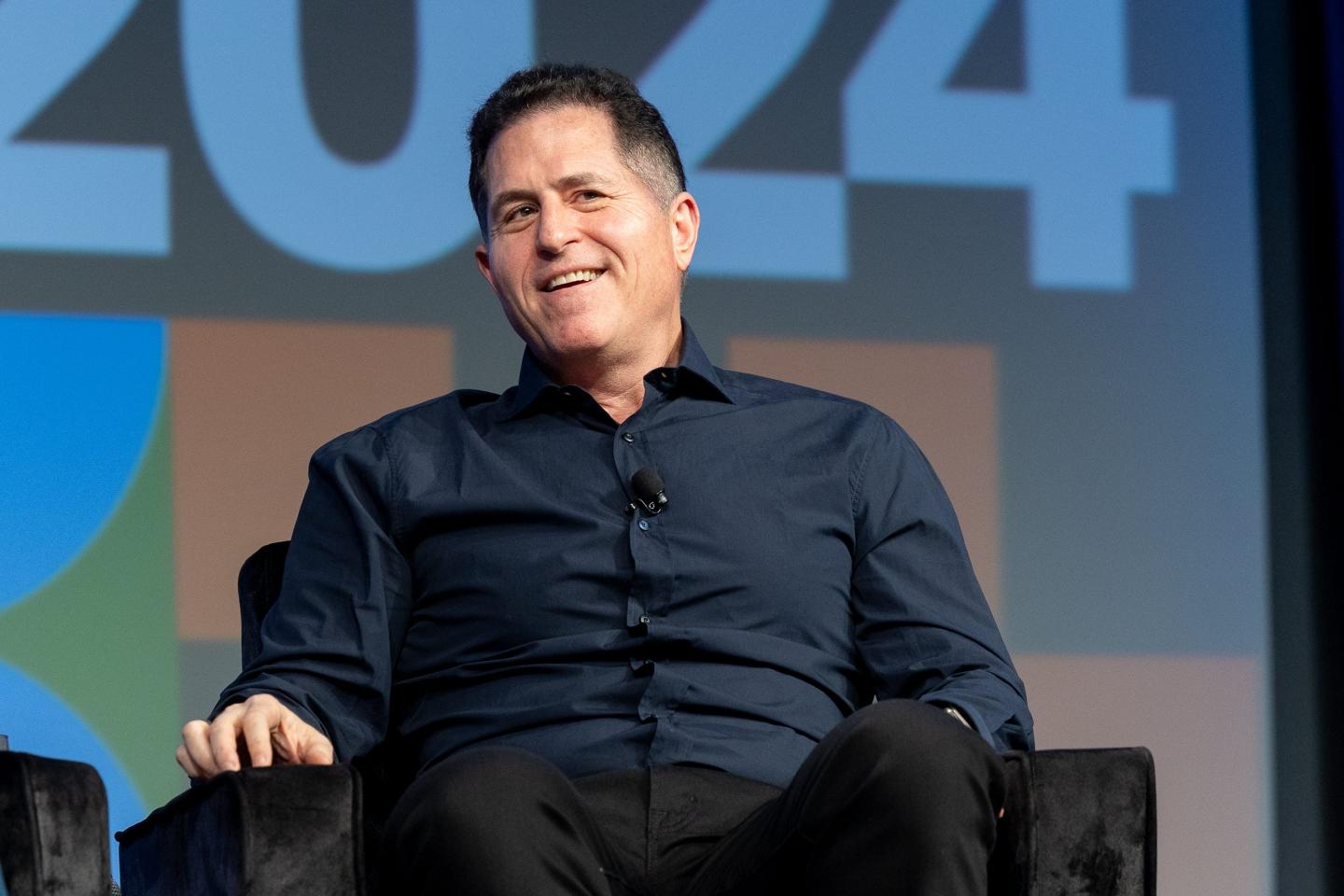
“If you want to really make it big, you better come up with something unique,” Michael Dell, the founder, chairman, and CEO of Dell Technologies, told Fortune in a 2017 interview.
“If you want to really make it big, you better come up with something unique,” Michael Dell, the founder, chairman, and CEO of Dell Technologies, told Fortune in a 2017 interview.Getty Images—

Some of the most successful tech companies in U.S. history started from humble beginnings. Former Apple CEO Steve Jobs built the tech giant’s first computer model in a garage—and Dell’s founder started his $90 billion legacy from his dorm room. Another thing they have in common—they were both college dropouts. 

Recommended Video

While many businesses have modest beginnings, Dell says risk-taking focused his mind. 

“If you want to really make it big, you better come up with something unique,” Michael Dell, the founder, chairman, and CEO of Dell Technologies, told Fortune in a 2017 interview. “It better be differentiated—that nobody else is doing.”

His other piece of advice for entrepreneurs is to take feedback with a grain of salt. Instead, he says, he empowers people to trust their gut instincts on whether a new product or business idea will be successful in the long run.

“If you go and ask people if it’s a good idea, most of them will tell you no,” Dell told Fortune. “So don’t go ask.”

To please his parents, Dell took up pre-med at the University of Texas in 1983, according to Entrepreneur. But Dell had long been fascinated by computers and technology, having disassembled an Apple II model at the age of 15 to see how it worked, according to a 1999 biography, Direct From Dell: Strategies That Revolutionized an Industry. It was at the age of 19 that Dell started selling upgrade kits for personal computers to other students in his dorm—a move that launched his tech empire.

Taking a risk

Dell Technologies was born from risk. Only partway into his college career, Dell had just $1,000 to invest into the business, and his manufacturing team consisted of “three guys with screwdrivers sitting at six-foot tables,” he said in Direct From Dell.

“You have to embrace risk, and you have to accept failure,” Dell told Fortune.

Even before the inception of Dell Technologies, Dell had long had an entrepreneurial spirit. While attending Memorial High School in Houston, he sold subscriptions to the Houston Post (later acquired by the Houston Chronicle), and was hugely successful in learning how to target specific populations instead of pursuing the classic cold-call sales technique. He made $18,000 in one year from that venture, which was even more than some of his high school teachers made, according to a 2021 Fortune Leadership Nextpodcast. 

Dell had figured out newlyweds were more likely to buy newspaper subscriptions, so using FOIA requests, he found the marriage licenses—and subsequently, addresses—of the people he thought would be most likely to purchase a newspaper subscription from him. 

“Jackpot!” Dell said in the 2021 Fortune podcast. Dell then used those addresses in direct-mail campaigns, and even hired a few friends to help him with his venture.

Growing from a dorm room operation into a full-blown tech empire, Dell remained steadfast in taking risks. By the age of 27, he had become the youngest CEO in the Fortune 500 in 1992—and by 2001, Dell Technologies became the world’s largest personal-computer maker. The company’s success in the 1990s owed a lot to what Dell learned selling newspapers, with a similarly innovative direct-marketing strategy.

The numbers tracking Dell’s trajectory as a public, then private, then public company are headspinning. Valued at over $120 billion in 1997, when Apple was floundering at $2.3 billion, the company’s devotion to its core PC business threw it for a loop after the dot-com crash. By 2007, it was time for a change amid slower sales and greater competition.

“The direct model has been a revolution, but it is not a religion,” Dell wrote in an April 2007 memo to his 80,000 employees. Even Dell admits in its company history “many believed that it was a dying company that would perish like Kodak or Motorola.” That led to leadership changes and new corporate strategies, with Dell’s knack for creative solutions ultimately breathing new life into his creation again and again.

The founder ultimately took Dell private in 2013 for $24.4 billion in the biggest leveraged buyout since the Global Financial Crisis. And with help from private equity sponsor Silver Lake, Dell retooled, especially via the highest-valued tech acquisition ever, EMC Corp. for $67 billion in 2015. The company re-listed the next year at a $16 billion market cap, which had climbed to almost $90 billion, as of Nov. 17. And as for Michael Dell himself? His own net worth is estimated at $150 billion by the Bloomberg Billionaires Index.

Dell told Fortune that risk-taking has been his greatest advantage in business, and a downfall for other major corporations.

“Big companies generally [aren’t good at taking risks],” Dell told Fortune. “If you talk about risk, they’ll talk about the risk reduction, and the risk committee, and the risk management, and all those say the risk is bad. Well, if you don’t have risk, you don’t have innovation.”

In fact, Dell says, his company does “all sorts of things internally to promote risk innovation,” including investing billions of dollars in research and development.

“We’ve got hundreds of projects, and they’re not all going to work out,” Dell told Fortune. “That’s okay.” 

A version of this story appeared on Fortune.com on February 23, 2024.

Join us at the Fortune Workplace Innovation Summit May 19–20, 2026, in Atlanta. The next era of workplace innovation is here—and the old playbook is being rewritten. At this exclusive, high-energy event, the world’s most innovative leaders will convene to explore how AI, humanity, and strategy converge to redefine, again, the future of work. Register now.
About the Author
Sydney Lake
By Sydney LakeAssociate Editor
LinkedIn iconTwitter icon

Sydney Lake is an associate editor at Fortune, where she writes and edits news for the publication's global news desk.

See full bioRight Arrow Button Icon

Latest in Success

Apple CEO Tim Cook
SuccessBillionaires
Apple CEO Tim Cook out-earns the average American’s salary in just 7 hours—to put that into context, he could buy a new $439,000 home in just 2 days
By Emma BurleighDecember 12, 2025
59 minutes ago
Tensed teenage girl writing on paper
SuccessColleges and Universities
40% of Stanford undergrads receive disability accommodations—but it’s become a college-wide phenomenon as Gen Z try to succeed in the current climate
By Preston ForeDecember 12, 2025
2 hours ago
SuccessHow I made my first million
Hinge CEO says he bribed students with KitKats to get the $550 million-a-year business off the ground: ‘I had to beg and borrow a lot’
By Orianna Rosa RoyleDecember 12, 2025
2 hours ago
Steve Jobs, Steve Wozniak, and Ronald Wayne's signatures on the bottom of Apple's founding contract.
SuccessWealth
Apple cofounder Ronald Wayne sold his 10% stake for $800 in 1976—today it’d be worth up to $400 billion
By Preston ForeDecember 12, 2025
3 hours ago
Former Meta COO Sheryl Sandberg
SuccessWomen
Sheryl Sandberg breaks down why it’s a troubling time for women in the workplace right now
By Emma BurleighDecember 12, 2025
7 hours ago
Late Apple cofounder Steve Jobs
SuccessCareers
Apple’s Steve Jobs told students to never ‘settle’ in their careers: ‘If you haven’t found it yet, keep looking’
By Emma BurleighDecember 11, 2025
1 day ago

Most Popular

placeholder alt text
Success
At 18, doctors gave him three hours to live. He played video games from his hospital bed—and now, he’s built a $10 million-a-year video game studio
By Preston ForeDecember 10, 2025
2 days ago
placeholder alt text
Success
Palantir cofounder calls elite college undergrads a ‘loser generation’ as data reveals rise in students seeking support for disabilities, like ADHD
By Preston ForeDecember 11, 2025
1 day ago
placeholder alt text
Investing
Baby boomers have now 'gobbled up' nearly one-third of America's wealth share, and they're leaving Gen Z and millennials behind
By Sasha RogelbergDecember 8, 2025
4 days ago
placeholder alt text
Economy
Tariffs are taxes and they were used to finance the federal government until the 1913 income tax. A top economist breaks it down
By Kent JonesDecember 12, 2025
6 hours ago
placeholder alt text
Economy
‘We have not seen this rosy picture’: ADP’s chief economist warns the real economy is pretty different from Wall Street’s bullish outlook
By Eleanor PringleDecember 11, 2025
1 day ago
placeholder alt text
Uncategorized
Transforming customer support through intelligent AI operations
By Lauren ChomiukNovember 26, 2025
16 days ago
Rankings
  • 100 Best Companies
  • Fortune 500
  • Global 500
  • Fortune 500 Europe
  • Most Powerful Women
  • Future 50
  • World’s Most Admired Companies
  • See All Rankings
Sections
  • Finance
  • Leadership
  • Success
  • Tech
  • Asia
  • Europe
  • Environment
  • Fortune Crypto
  • Health
  • Retail
  • Lifestyle
  • Politics
  • Newsletters
  • Magazine
  • Features
  • Commentary
  • Mpw
  • CEO Initiative
  • Conferences
  • Personal Finance
  • Education
Customer Support
  • Frequently Asked Questions
  • Customer Service Portal
  • Privacy Policy
  • Terms Of Use
  • Single Issues For Purchase
  • International Print
Commercial Services
  • Advertising
  • Fortune Brand Studio
  • Fortune Analytics
  • Fortune Conferences
  • Business Development
About Us
  • About Us
  • Editorial Calendar
  • Press Center
  • Work At Fortune
  • Diversity And Inclusion
  • Terms And Conditions
  • Site Map

© 2025 Fortune Media IP Limited. All Rights Reserved. Use of this site constitutes acceptance of our Terms of Use and Privacy Policy | CA Notice at Collection and Privacy Notice | Do Not Sell/Share My Personal Information
FORTUNE is a trademark of Fortune Media IP Limited, registered in the U.S. and other countries. FORTUNE may receive compensation for some links to products and services on this website. Offers may be subject to change without notice.