McDonald’s reported a rare sales miss in its-fourth quarter earnings report earlier this month. Starbucks is forecasting slower growth for the rest of the year, even lower than what analysts predicted. And Yum Brands, parent company of Taco Bell, also reported a hit to fourth-quarter sales.
What do these companies have in common? Besides the obvious—they’re fast-food proprietors—these groups and others have been targeted for their perceived support for Israel’s military campaign in Gaza—and each company cited those protests as a material hit to earnings last quarter.
Since the outbreak of the war in Gaza, anti-war activists around the world have called for an end to the conflict while pressuring companies that they claim have supported Israel or suppressed pro-Palestinian speech on social media. The war, incited by an Oct. 7 Hamas attack that killed 1,200 and took hundreds of hostages, has escalated into a wider campaign in Gaza that has killed 28,000 people, including 12,000 children, and drawn criticism from the United Nations’ International Court of Justice, among others. President Joe Biden, widely criticized for supporting Israel, has lately called Israel’s response “over the top,” which he followed by calling for a temporary cease-fire.
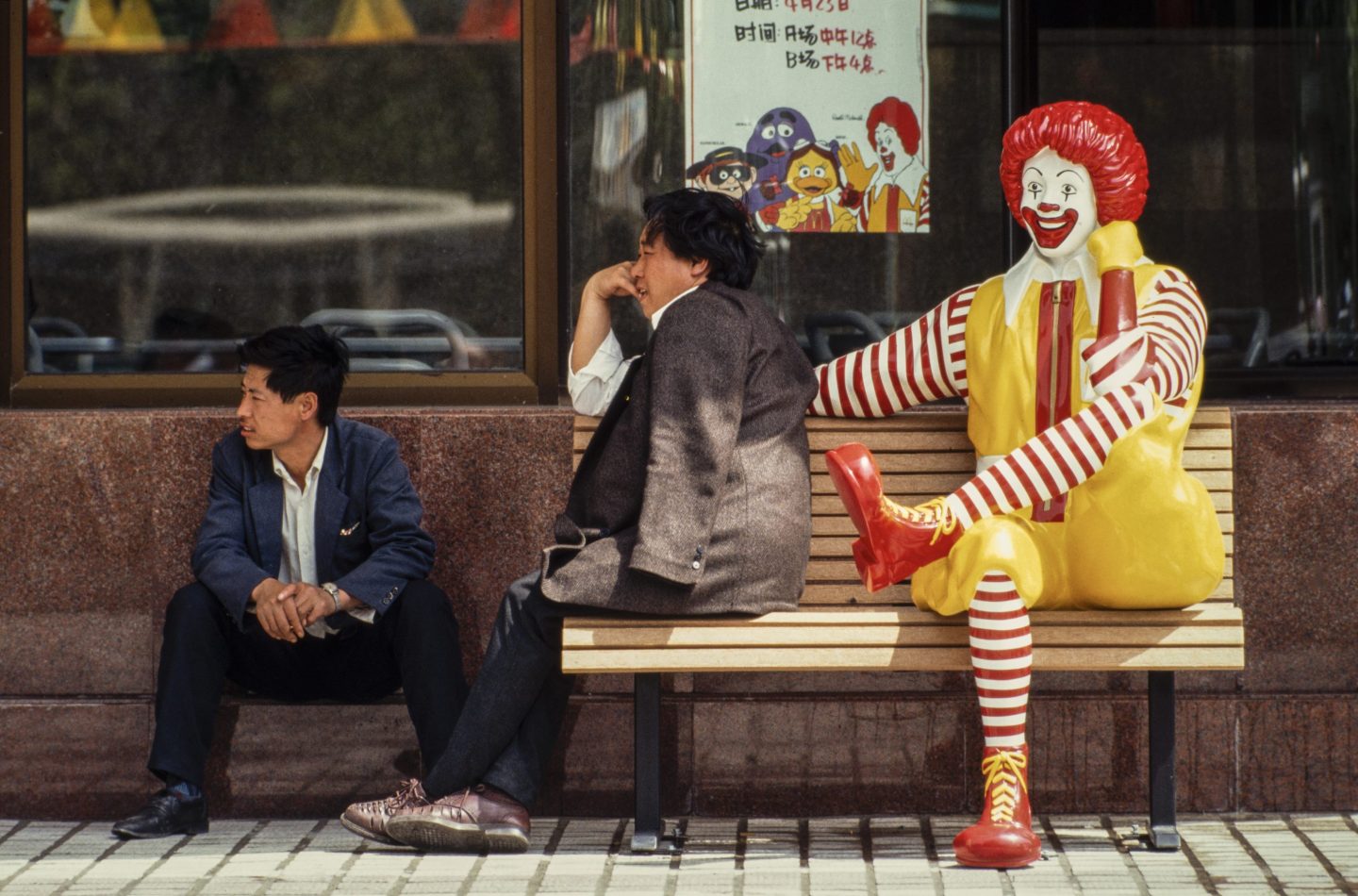
Burgers aren’t supposed to be political, though. Tell that to McDonald’s, whose Q4 earnings report revealed that sales in its international licensed markets and corporate sector, including the Middle East, shrank to 0.7% growth, compared to 16.5% the prior year, “reflecting the impact of the war in the Middle East.”
In a letter posted to LinkedIn, McDonald’s president and CEO Chris Kempczinski recognized that several markets in the Middle East “and some outside the region are experiencing a meaningful business impact due to the war,” and that “associated misinformation,” is affecting brands like his.
In October, photos of a McDonald’s franchise in Israel donating thousands of free meals to soldiers went viral, which ignited calls to boycott the chain. This moment also marked a period of declining sales in McDonald’s Middle Eastern and Muslim-majority markets like Indonesia and Malaysia.
It’s all about the franchise
Under McDonald’s franchise model, individual restaurants are not strictly controlled by the parent chain and often decide things like business location, pricing, advertisements, products, hiring, and even holidays it wants to observe. The perks of this model means the parent company can have bigger access to capital, open multiple locations, and increase brand awareness with minimal supervision of the franchisee. (Ray Kroc, the man who wrested control of McDonald’s from the McDonald brothers, famously said that it was secretly a real-estate company as a result of this franchise model, a story told in the ironically titled movie, “The Founder.”)
The downsides of the franchise model, as the company may be seeing now, includes loss of complete brand control and increased potential for legal disputes since franchisees have a lot of control over their operations.
Ajai Gaur, a professor of management and global business at Rutgers, explained how a parent company “doesn’t have much control” over its franchises, which can also “engage in social movements like charity.”
“Even if the head office could do something, what would they do?” Gaur said, arguing that more transparency could help companies avoid attacks long-term. A parent company could show, for example, “whatever number of franchisees it has in Saudi Arabia, how many local people are employed there, what the business, profit, employment, and benefits are for the local community—and what the costs of the boycotts are.”
Beyond that, he said, companies often change their presence in foreign markets during times of war–two weeks after Russia’s invasion of Ukraine, McDonald’s, Coke, Starbucks and Netflix suspended operations in Russia. Within a very short period, “a lot of firms just sort of gave up everything there, and that obviously has financial consequences, he said.
Customers don’t expect them to stay neutral, either. “Society is becoming very sensitive to what organizations do,” Gaur said, “and they expect organizations to go beyond profit-making machines.”
“If you don’t build your own narrative, someone else will build the narrative for you,” Gaur said.
Meanwhile, Yum Brands came under fire for its investment in Israeli startups, like TicTuk, an Israeli company that allows customers to order food on social networks and message apps. On an earnings call with investors last week, the brand’s CEO David Gibbs said “top line sales were impacted by the conflict in the Middle East region, with varying degrees of impact across markets in the Middle East, Malaysia, and Indonesia.”
For Starbucks, which has also been a target of antiwar activists, sales also fell short of analysts’ expectations, as revealed by its first-quarter report released last month. On the earnings call, Starbucks CEO Laxman Narasimhan said the company saw “negative impact to our business in the Middle East” and that “events in the Middle East also had an impact in the US, driven by misperceptions about our position.” Rachel Ruggeri, Starbucks’ executive vice president, added she expects the conflicts will contribute to lower earnings in the second quarter of the year.
Calls to boycott Starbucks came after the company sued Workers United, the union that represents some of its employees, for trademark infringement after the union made a social-media post stating, “Solidarity with Palestine!” on X. The company demanded the union group stop using its name and similar logo. According to the Associated Press, the workers put up the tweet without authorization of union leaders and it was removed after about 40 minutes. The union group responded with its own lawsuit and seeks to continue using Starbucks’ name and logo.
Matthew Goodman, a senior economic analyst at M Science, told Fortune that tracking the effect of a boycott is “very hard,” especially because other challenges, like shifts in consumer spending, price hikes, unions, and a shaky performance of its seasonal drinks, also affects its earnings. Still, companies need to be “more proactive than ever in monitoring and managing their reputations to minimize the risk that unflattering information, whether accurate or not, leads to consumer boycotts,” he said.
Last December, Starbucks’ stock fell by nearly 10%, a loss in value of nearly $12 billion, due to worker strikes and low foot traffic from customers.
David Denoon, a professor that studies politics and economics at New York University, told Fortune that boycotts are “an increasingly effective tool of economic pressure” because of social media, which allows organizers “to contact millions of people whom they might not otherwise have known.”
On TikTok, hashtags for boycotts have gotten more than 300 million views and shares, and other brands have been thrown into the fire, too. Retail clothing brand Zara became a boycott target after releasing a photo shoot in December that featured broken walls, rubble, and statues with missing limbs wrapped in white cloth, which activists called out as insensitive. The hashtag #boycottzara has more than 86 million views on the social platform.
Historically, boycotts have surprised companies by coming from all directions. Last year was rough for Bud Light, for instance, after the company’s social promotion with transgender influencer Dylan Mulvaney led to conservatives and celebrities boycotting the brand. The company said it lost about $395 million in North American revenue in the following months.
For 35 years, consumer boycotts were the heart of the campaign to end apartheid rule in South Africa, which ultimately ended in 1990. The boycotts, which largely did not touch fast food, in line with today’s patterns, ultimately caused British imports of South African textiles to fall by 35% between 1983 and 1986.
McDonald’s, Starbucks and Yum Brands did not respond to requests for comment.