
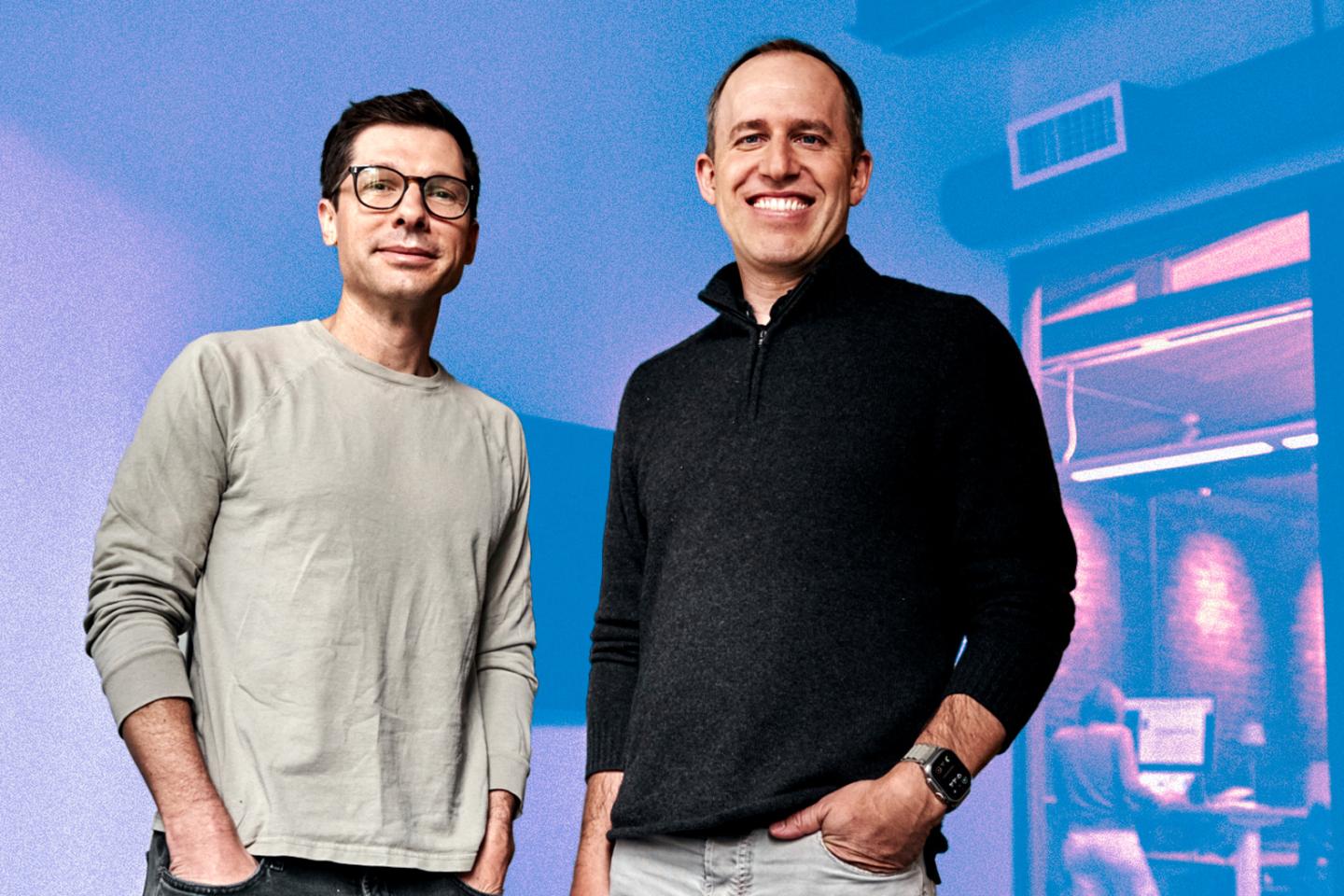
Moments after Bret Taylor resigned as co-CEO of cloud-software giant Salesforce in January 2023, he received a call from an old friend inviting him to lunch.
With time on his hands, Taylor accepted the invitation and met Clay Bavor, a veteran Google executive, at a Mediterranean restaurant in Palo Alto. “My read on it was, he was checking in on me,” Taylor recalled.
The duo, who had worked together at Google nearly two decades ago, spent the next several hours sipping herbal tea and chatting. By the time they left, Taylor and Bavor had decided to start a new company together.
Sierra, the name of their new joint venture, is hoping to make a mark in the crowded field of conversational AI startups, with a focus on business customers. Ahead of Sierra’s official launch on Tuesday, the two founders sat down with Fortune and offered the first detailed look at their new startup, its roster of clients, and the technology that powers it.
The startup idea that began over lunch has now grown into a team of 30 staffers, with an office in San Francisco’s SoMa neighborhood. The AI “agents” created by Sierra technology are already engaged in hundreds of thousands of customer conversations every month for clients including WeightWatchers, SiriusXM, Sonos, and OluKai, according to the company.
And in another sign of confidence in the year-old startup, blue-chip Silicon Valley investors led by Sequoia Capital and Benchmark have already invested a total of $110 million.
Still, Sierra is competing against some very large players who are investing vast sums into their own AI offerings—including Taylor’s former company, Salesforce. And while the buzz and expectations for businesses’ adoption of AI are red-hot, the actual implementation of conversational AI tools is in its early stages, with the benefits still largely unproven.
For Taylor, whose exit from the Salesforce C-suite caught many observers—including co-CEO and founder Marc Benioff—by surprise, the challenge of making the magic of AI a standard feature for Main Street businesses is part of the appeal.
“I looked at these amazing technologies, and it’s so easy for the technology companies around us to deploy because we’ve got buildings full of engineers who can follow the latest research,” said Taylor, who is CEO at Sierra.
“The greatest opportunity we have,” he said, “is to enable every company, no matter how sophisticated or technical, to deploy [AI] successfully.”
Inspired by nature, not robots
By naming the company after the Sierra mountain range in the Western U.S., Taylor and Bavor hoped to drive home the message that their sights extend far beyond the Silicon Valley horizon. The name was a deliberate choice to counter what they say is the common imagery of robots and metallic objects associated with artificial intelligence.
“We looked a lot at inspiration from nature because we felt like we wanted to sort of offset some of the naturally cold imagery that comes with AI,” Taylor said.
Instead of pitching AI as a tool for businesses to accomplish arcane internal tasks, Sierra is betting on easy-to-understand, pragmatic uses of AI technology like conversational “agents” who can interact with customers for support, account management, and other issues. These AI agents can answer questions faster than humans and at much lower cost, the company says.
Sierra isn’t the first to think of this, either. There’s already a whole slew of chatbots for customer service: Twilio’s CustomerAI, Zendesk’s Answer Bot, and perhaps the most well-positioned, Salesforce’s Einstein.
Taylor draws inspiration from the dotcom era, suggesting that in today’s landscape, small startups possess an opportunity to outmaneuver larger incumbents, who might be beholden to bigger obstacles.
“I think certainly incumbent technology companies have some advantages, data, customer base distribution channels, and we certainly understand that,” Taylor said, adding that there’s also an absence of clear market leaders, which presents an opportunity for Sierra to seize a portion of the market share. “The technology challenges are so formidable, even if you talk with three companies adjacent to the space, they’ve got three completely different approaches.”
Sequoia’s Ravi Gupta, who is on Sierra’s board along with Benchmark’s Peter Fenton, is more blunt about the competitive landscape, telling Fortune that the $110 million in funding gives the startup the chance to “to always be on offense.” While Gupta and Sierra would not comment on the valuation of the startup, Bloomberg reported in January that Sierra was seeking to raise funds at almost a $1 billion valuation.
Sierra uses a mix of customized AI models
In a departure from the conventional Silicon Valley playbook, Sierra is actually building the AI agents for customers, rather than just selling the tools for customers to do it themselves. It’s a business model that may not scale as rapidly, but the idea is that many companies, even very large ones, don’t have the in-house resources, expertise, or desire to take on this kind of complex project.
“It’s possible to build a couch by going to Home Depot and buying lumber and cushions and fabric and putting it together yourself,” Bavor said. “Most people just want to buy a couch.”
And given the risks to a company’s brand if an AI agent goes rogue, Sierra is betting that its expertise and experience will carry a lot of weight.
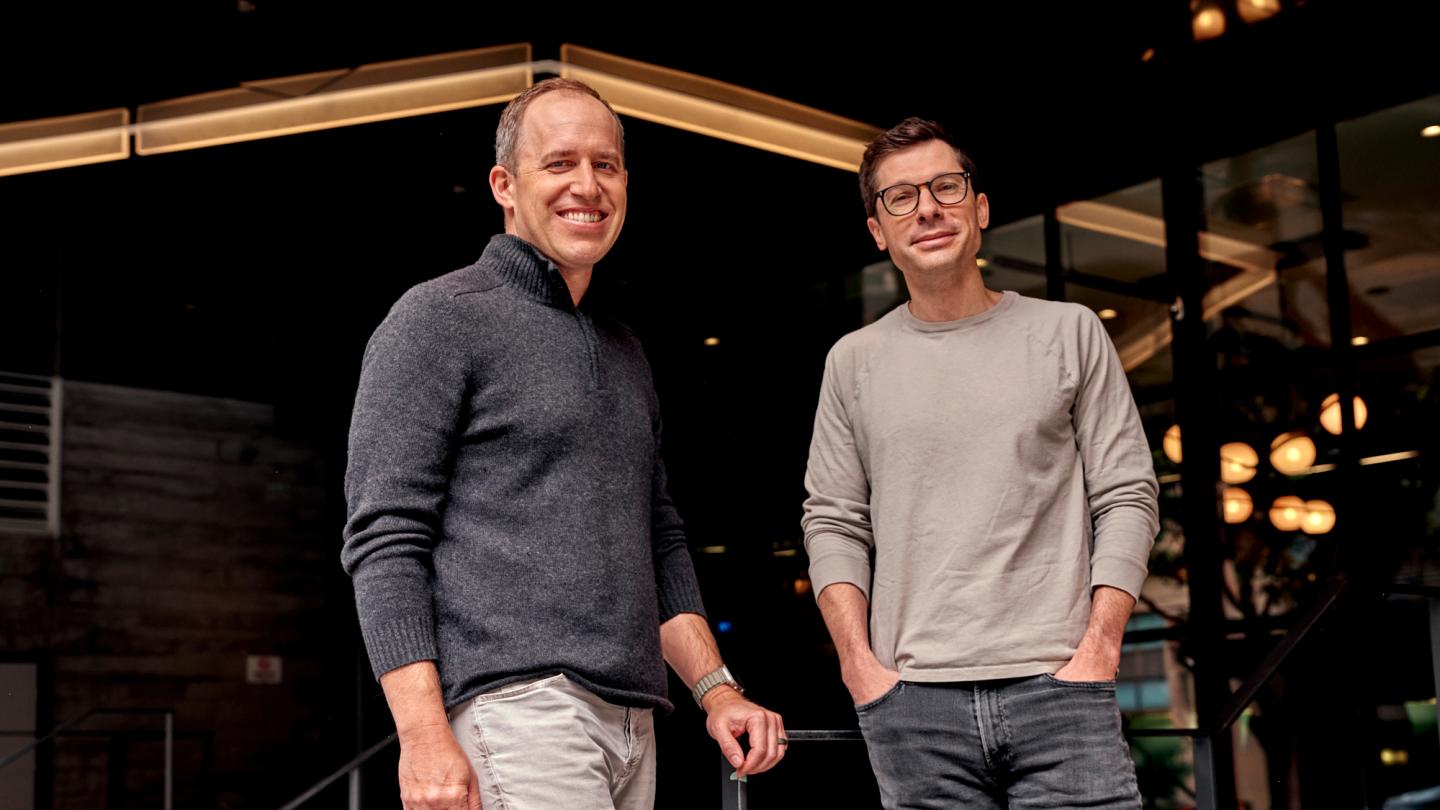
A typical agent based on Sierra’s technology uses four or five different AI models when it receives a message from a user. One of the models might generate a response, for example, while another model might be tapped to prevent hallucinations. Sierra uses a mix of proprietary and open-source large language models, including frontier models from OpenAI and Microsoft that are tweaked by their team of researchers to fit a customer’s use case.
The company trains its AI models to reason and make decisions by giving them specific goals and guidelines, similar to how a person might follow rules for their job. This approach allows them to onboard new customers quickly without needing a lot of their data, Taylor said, and he believes this sets them apart because they can adapt to new policies or changes in a customer’s needs much faster than traditional AI models, which might take weeks or months to update.
When your cofounder is also OpenAI’s chairman
With Sierra, Bavor and Taylor are having a reunion 15 years in the making.
Taylor, who was a cocreator of Google Maps, met Bavor at Google in 2005. Over the following years, Bavor ascended the corporate ladder with roles managing products like Gmail and Google Drive, and taking charge of Google’s virtual reality division in 2015.
Taylor meanwhile left Google in 2007 and has spent the intervening years shuttling between entrepreneurship and Big Tech. After Facebook acquired FriendFeed, a social network he cofounded, Taylor went on to become CTO at Facebook. He then left to start Quip, a cloud productivity software tool that Salesforce acquired for $750 million in 2016. This time the acquisition led him all the way to the co-CEO job at Salesforce, alongside Benioff.
“I joke that I’ve been trying to work with Clay again for the past 15 years. We have a monthly poker game that happens roughly twice a year,” Taylor said.
The two cofounders take turns working out of each other’s garages every couple of weeks as a break from going into the San Francisco office. “[It’s] kind of the right time in both of our lives, and I think it just came from kind of like a true, authentic, just excitement about the technology,” Taylor said.
The return to startup life has not been without some drama for the 43-year-old Taylor. His surprise departure from Salesforce unsettled investors, particularly since he was widely considered to be Benioff’s anointed successor. While Taylor and Benioff both said Taylor was leaving to return to his entrepreneurial roots, the Wall Street Journal reported that there had been growing tension between the two leaders.
Taylor was also in the center of the storm during Elon Musk’s chaotic $44 billion purchase of Twitter, where Taylor was on the board and responsible for overseeing the transaction. In November 2023, Taylor found himself connected to another big Silicon Valley boardroom blowup when he was tapped to step in as chair of OpenAI following the ouster-and-return of founder Sam Altman.
Asked about the possibility of a conflict of interest arising from his involvement with both Sierra and the board at OpenAI—a situation that prompted LinkedIn founder Reid Hoffman to step down from the same board—Taylor emphasized that he doesn’t view Sierra as directly competing with OpenAI initiatives. In instances where there might be perceived overlap, he said, he can simply recuse himself from the decision-making process.
“I took on the role because I care so much about the OpenAI mission and I was—like many other people in the world—pretty anxious over the course of that weekend that the mission was at risk,” Taylor said, referring to Altman’s stated goal of developing artificial general intelligence, a still theoretical type of AI that proponents hope will be able to perform most tasks as well as or better than humans.
“We’re at a slightly higher altitude, we’re not building artificial general intelligence, right,” Taylor said. “We’re bringing a product to enterprises.”
If the past year has been put Taylor in the center of the Silicon Valley spotlight, he’s working with Bavor to keep Sierra on a different stage.
Do you have insight to share? Got a tip? Contact Kylie Robison at kylie.robison@fortune.com, through secure messaging app Signal at 415-735-6829, or via X DM.