• Home
  • Latest
  • Fortune 500
  • Finance
  • Tech
  • Leadership
  • Lifestyle
  • Rankings
  • Multimedia
FinanceFederal Reserve

Jerome Powell is vague on rate cuts because he’s ‘petrified’ of repeating the mistakes of one predecessor, says ‘Big Short’ investor Steve Eisman

Will Daniel
By
Will Daniel
Will Daniel
Down Arrow Button Icon
Will Daniel
By
Will Daniel
Will Daniel
Down Arrow Button Icon
February 6, 2024, 1:19 PM ET
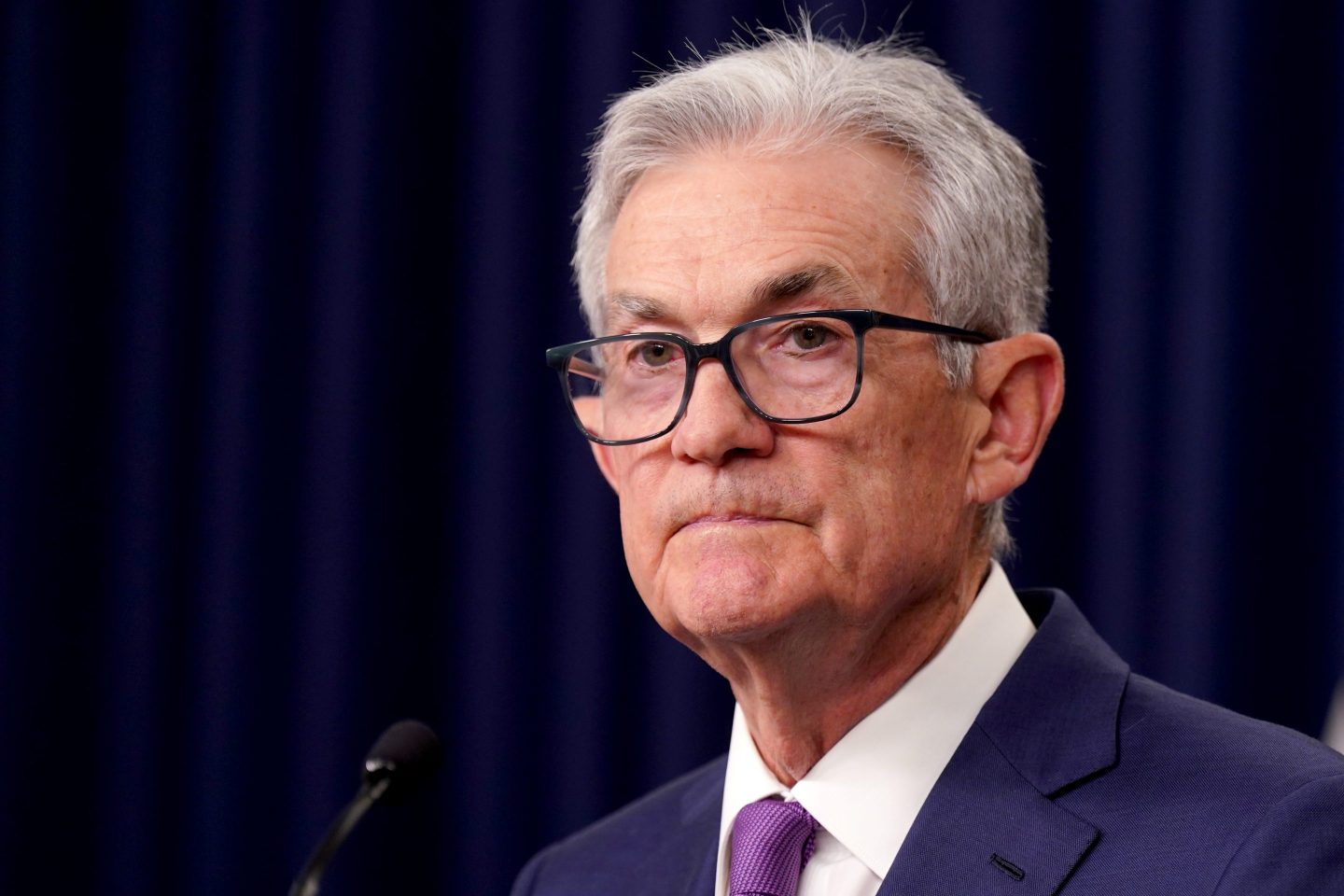
Jerome Powell
Fed Chair Jerome Powell at a news conference following a Federal Open Market Committee meeting in Washington, D.C., on Jan. 31, 2024.Al Drago—Bloomberg/Getty Images

Federal Reserve Chairman Jerome Powell has avoided announcing interest rate cuts in recent months despite a steady drop in U.S. inflation, and Steve Eisman, a senior portfolio manager at Neuberger Berman, has a theory about why. 

The veteran investor who rose to fame after he was portrayed predicting and profiting from the 2007–08 supreme mortgage crisis in the 2010 book, The Big Short, and a subsequent film of the same name, believes that Powell has learned from history, particularly the history of Paul Volcker, the Fed chair known for defeating inflation in the 1980s and sparking a recession in the process. 

“I actually think, deep down, Powell is petrified of redoing Volcker again,” Eisman told CNBC Monday.

To understand what Eisman is getting at, we have to delve into some 1970s and ’80s economic history, including the tenures of former Fed chairs Volcker and Arthur Burns, and the pivotal moment of that era which resembles the early 2020s.

Avoiding a ‘Volcker shock’—by doing nothing

Paul Volcker is probably the most famous Fed chairman of all time. “Tall Paul,” known for his height, his dour demeanor, and his habit of chomping on an unlit cigar while testifying to Congress, has gone down in history as a visionary. He’s often praised for combating the rampant inflation of the 1970s by raising interest rates at an unprecedented speed in the early ‘80s. His success in the role paved the way for the eventual triumph of Ronald Reagan on the back of an economic recovery, and the birth of a whole financial regime that lasted until at least the Great Recession of 2008.

On the other hand, Volcker’s predecessor, Burns, is lambasted in the history books as a passive chair who failed to take action as inflation ran up and away, setting the stage for Volcker’s emergency surgery. But what often gets lost in the history of that era—and what Eisman is referring to—is that it took multiple rounds of rate hikes and a short but nasty recession for Volcker to truly defeat inflation.

After what is now called the first “Volcker shock”—where Volcker raised rates to over 18% to fight inflation quickly after taking office in August 1979—rates were actually slashed to around 9% by the summer of 1980 because the economy was stumbling.

Then, with inflation proving persistent, Volcker raised interest rates again to a peak of roughly 20% by January 1981. The policy amounted to a whipsaw for the economy and sparked a serious recession in 1981 and 1982, where the unemployment rate surged to a peak of 11%—the highest level in post-WWII history, barring the brief, COVID-induced spike in 2020.

Eisman believes it’s this fate that Fed Chair Powell is hoping to avoid today. With inflation fading, instead of cutting interest rates right away, Powell is attempting to slowly lower rates over time to avoid the type of whipsaw monetary policy that can spark recessions.

“Put it this way, they’ve engineered what looks to be a soft landing. Inflation is coming down, the economy is still strong, why would you waste rate cuts now and risk a resurgence of inflation?” Eisman argued.

With inflation fading and the economy proving it can withstand the current level of interest rates in recent months, Fed Chair Powell’s best option might be to simply do nothing, instead of opting for economy and market-juicing rate cuts.

Eisman argued that the Fed can already “declare victory” over inflation and that it has “engineered something really pretty fantastic.” That means, unlike Paul Volcker, who was faced with persistent inflation and a weakening economy in the early 1980s that in some ways forced him to choose between inflation or a recession, Powell has the luxury of simply waiting to see how the economic data looks in coming months before altering policy.

According to Eisman, the Fed should just say something like: “We will wait to see some data. If the economy really starts to weaken, we will hold [rate cuts] in reserve, and until then we’ll just leave things the way they are—they seem to be pretty good.”

“What’s the matter with that?” he added.

Eisman’s remarks contrast with earlier analysis of Powell’s tenure, with many financial observers claiming that the Fed chair was trying for the exact opposite: to draw comparisons to Volcker and avoid any with Burns.

Join us at the Fortune Workplace Innovation Summit May 19–20, 2026, in Atlanta. The next era of workplace innovation is here—and the old playbook is being rewritten. At this exclusive, high-energy event, the world’s most innovative leaders will convene to explore how AI, humanity, and strategy converge to redefine, again, the future of work. Register now.
About the Author
Will Daniel
By Will Daniel
LinkedIn iconTwitter icon
See full bioRight Arrow Button Icon

Latest in Finance

JPMorganChase CEO Jamie Dimon says AI will eliminate jobs—and that soft skills will be more important than ever.
Future of WorkTech
Jamie Dimon says soft skills like emotional intelligence and communication are vital as AI eliminates roles
By Nino PaoliDecember 14, 2025
3 hours ago
InvestingSports
Big 12 in advanced talks for deal with RedBird-backed fund
By Giles Turner and BloombergDecember 13, 2025
13 hours ago
Spanish Prime Minister Pedro Sánchez often praises the financial and social benefits that immigrants bring to the country.
EuropeSpain
In a continent cracking down on immigration and berated by Trump’s warnings of ‘civilizational erasure,’ Spain embraces migrants
By Suman Naishadham and The Associated PressDecember 13, 2025
14 hours ago
EconomyAgriculture
More financially distressed farmers are expected to lose their property soon as loan repayments and incomes continue to falter
By Jason MaDecember 13, 2025
15 hours ago
InvestingStock
There have been head fakes before, but this time may be different as the latest stock rotation out of AI is just getting started, analysts say
By Jason MaDecember 13, 2025
18 hours ago
Politicsdavid sacks
Can there be competency without conflict in Washington?
By Alyson ShontellDecember 13, 2025
19 hours ago

Most Popular

placeholder alt text
Economy
Tariffs are taxes and they were used to finance the federal government until the 1913 income tax. A top economist breaks it down
By Kent JonesDecember 12, 2025
2 days ago
placeholder alt text
Success
Apple cofounder Ronald Wayne sold his 10% stake for $800 in 1976—today it’d be worth up to $400 billion
By Preston ForeDecember 12, 2025
2 days ago
placeholder alt text
Success
40% of Stanford undergrads receive disability accommodations—but it’s become a college-wide phenomenon as Gen Z try to succeed in the current climate
By Preston ForeDecember 12, 2025
2 days ago
placeholder alt text
Economy
The Fed just ‘Trump-proofed’ itself with a unanimous move to preempt a potential leadership shake-up
By Jason MaDecember 12, 2025
2 days ago
placeholder alt text
Success
Apple CEO Tim Cook out-earns the average American’s salary in just 7 hours—to put that into context, he could buy a new $439,000 home in just 2 days
By Emma BurleighDecember 12, 2025
2 days ago
placeholder alt text
Economy
For the first time since Trump’s tariff rollout, import tax revenue has fallen, threatening his lofty plans to slash the $38 trillion national debt
By Sasha RogelbergDecember 12, 2025
2 days ago
Rankings
  • 100 Best Companies
  • Fortune 500
  • Global 500
  • Fortune 500 Europe
  • Most Powerful Women
  • Future 50
  • World’s Most Admired Companies
  • See All Rankings
Sections
  • Finance
  • Leadership
  • Success
  • Tech
  • Asia
  • Europe
  • Environment
  • Fortune Crypto
  • Health
  • Retail
  • Lifestyle
  • Politics
  • Newsletters
  • Magazine
  • Features
  • Commentary
  • Mpw
  • CEO Initiative
  • Conferences
  • Personal Finance
  • Education
Customer Support
  • Frequently Asked Questions
  • Customer Service Portal
  • Privacy Policy
  • Terms Of Use
  • Single Issues For Purchase
  • International Print
Commercial Services
  • Advertising
  • Fortune Brand Studio
  • Fortune Analytics
  • Fortune Conferences
  • Business Development
About Us
  • About Us
  • Editorial Calendar
  • Press Center
  • Work At Fortune
  • Diversity And Inclusion
  • Terms And Conditions
  • Site Map

© 2025 Fortune Media IP Limited. All Rights Reserved. Use of this site constitutes acceptance of our Terms of Use and Privacy Policy | CA Notice at Collection and Privacy Notice | Do Not Sell/Share My Personal Information
FORTUNE is a trademark of Fortune Media IP Limited, registered in the U.S. and other countries. FORTUNE may receive compensation for some links to products and services on this website. Offers may be subject to change without notice.