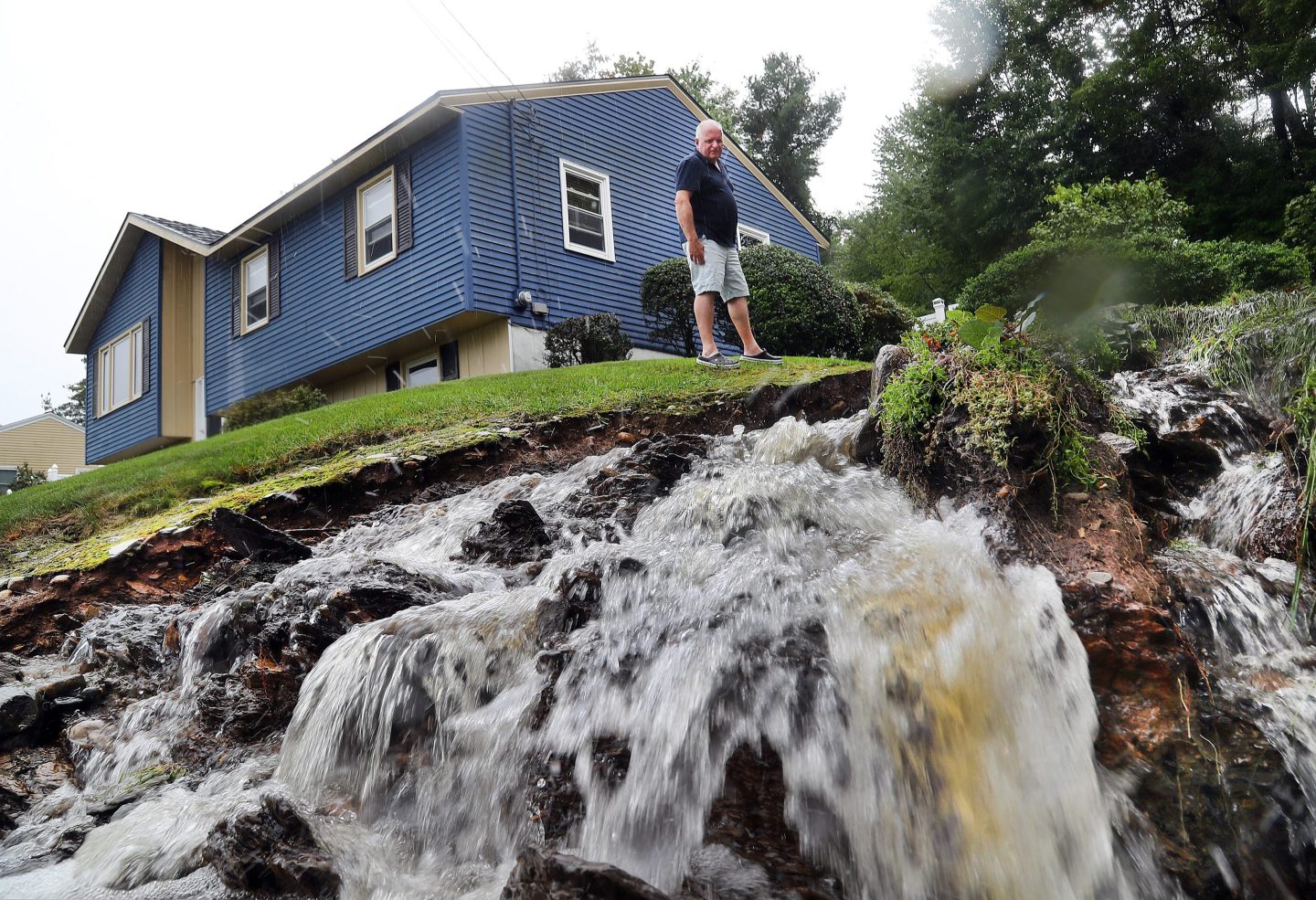
Flooding is driving millions of people to move out of their homes, limiting growth in some prospering communities and accelerating the decline of others, according to a new study that details how climate change and flooding are transforming where Americans live.
In the first two decades of the 21st century, the threat of flooding convinced more than 7 million people to avoid risky areas or abandon places that were risky, according to a paper Monday in the journal Nature Communications and research by the risk analysis organization First Street Foundation.
Climate change is making bad hurricanes more intense and increasing the amount of rain that storms dump on the Midwest. And in the coming decades, researchers say millions more people will decide it is too much to live with and leave.
First Street found that climate change is creating winners and losers at the neighborhood and block level. The group’s research considers an apparent paradox: Even as climate-change-induced natural disasters to become more severe and uproot more people, Americans seem to be ignoring the threat of climate change as they flock to Florida and fire- or flood-prone cities in the U.S. South.
But that misses an important way people behave locally. Most moves are short distance; people stay near family, friends, and jobs. “It’s been kind of sensationalized as everybody’s leaving New York and going to Florida,” Jeremy Porter, head of research at First Street, told Fortune.
“The climate and migration story really is more nuanced than what we see at the national level,” he said. “People want to live in Miami. People are moving there; the population’s increasing’ the job market’s booming. A little bit of flood risk may dampen growth, but it’s not going to stop growth,” he said.
But, while knowing the flood risk for a particular neighborhood won’t make someone change their moving plans from Miami to Denver, it will prompt people to look for relatively safer areas within a particular metro region, Porter said.
“They are going to say, ‘This property is a 9 [out of 10 for flood risk], but I want to live in Miami, so I’m going to look for a 6 or a 7 or a 5 in Miami.’ You are going to think about relative risk,” he told the Associated Press.
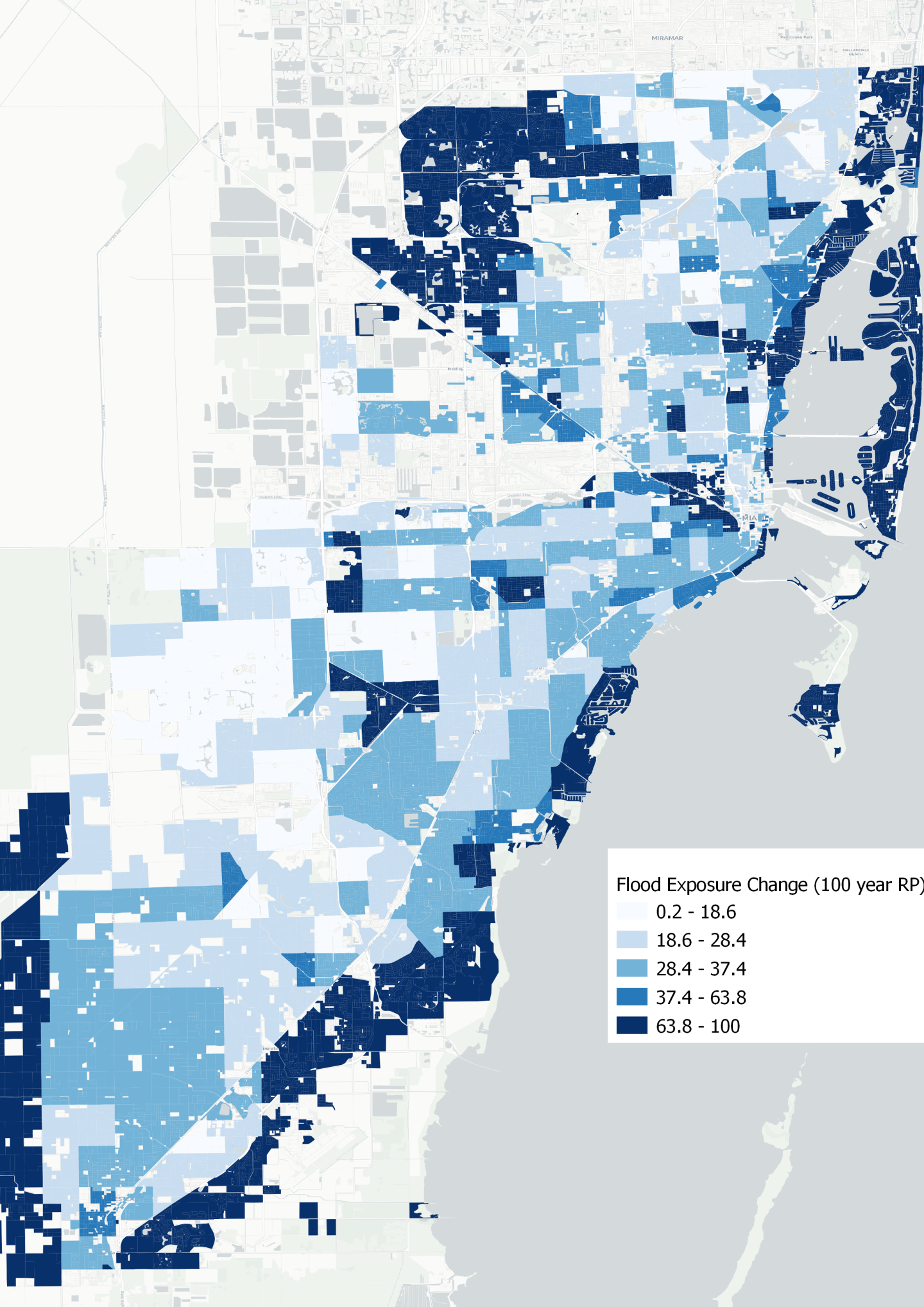
That’s what First Street projects over the next three decades: blocks in Miami with a high chance of getting hit by a bad storm are more likely to see their population drop even though a lot of the city is expected to absorb more people.
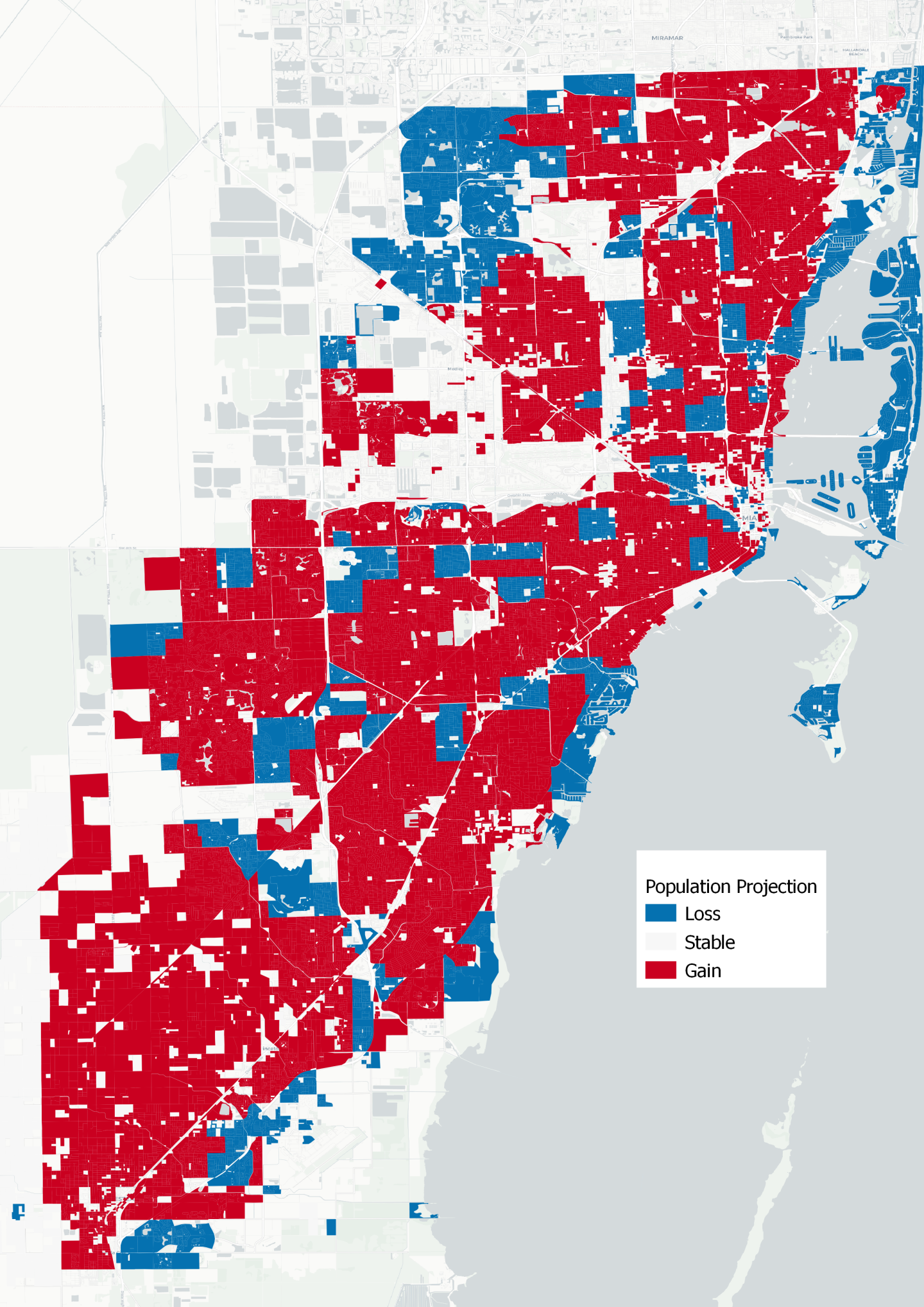
Behind these findings is very detailed data about flood risk, population trends and the reasons people move, allowing researchers to isolate the impact of flooding even though local economic conditions and other factors motivate families to pick up and live somewhere else. They analyzed population changes in very small areas, down to the census block.
Some blocks have grown fast and would have grown even faster if flooding wasn’t a problem, according to First Street. Expanding but flood-prone places could have grown nearly 25% more — attracting about 4.1 million more people — if that risk were lower. Researchers also identified areas where flood risk is driving or worsening population decline, which they called “climate abandonment areas.” By looking at migration patterns over the past two decades and controlling for known factors that affect migration—like local job growth, economic development, and the wealth or poverty of an area—they concluded that about 3.2 million people left these neighborhoods because of flood risk over a two-decade span.
Midwest at risk—but it won’t empty out
When First Street projected out to 2053, many of the new climate abandonment areas were in Michigan, Indiana, and other parts of the Midwest. Flood risk is just one factor driving this change and it doesn’t mean communities are emptying out, said Philip Mulder, a professor focused on risk and insurance at the University of Wisconsin-Madison.
“People can live in smarter places within those communities. That’s just as true for Detroit as it is for Miami,” he told the AP.
Porter noted that flood risk would have a magnifying effect, leading areas that already faced slowing growth to come to a standstill.
“There’s still going be people move into those areas in Miami. Whereas in the Midwest, you may see there’s not the same reason for people to be there. So flood risks become sort of a tipping point that pushes people out of communities,” he told Fortune.
When people know a home is prone to flooding, they are less likely to buy it. Some states, however, don’t require that flood history be disclosed, according to Joel Scata, a senior attorney on the Natural Resources Defense Council’s climate adaptation team.
“Access to good information is really important in the real estate market,” Scata told the AP.
Even for people who get assistance to move, the choice can be excruciating. Socastee, a community near Myrtle Beach, SC, flooded not only when hurricanes hit, but sometimes just when it rained hard and water would reach doorways and saturate yards. First Street’s data says Horry County won’t grow quite as fast over the next three decades because of flood risk.
One resident who endured repeated flooding said it “makes you sick” with worry whenever it storms and rips away your sense of security.
Terri Straka decided to move from the area but had a hard time convincing her parents to do the same. Eventually, she brought them to a house for sale and said it could be their dream home. They reluctantly agreed to move.
“Them being able to visualize what a future might look like is absolutely critical to people being able to move. They have to imagine a place and it needs to be a real place that they can afford,” said Harriet Festing, executive director of Anthropocene Alliance, which supports communities like Socastee hit by disaster and climate change.
Older people move less often and it takes money to move, so if people don’t get enough assistance and don’t have the means, they are more likely to stay in risky areas. When people do start to move, it can create momentum for others to depart, leaving behind fewer residents to support a shrinking local economy, according to Matt Hauer, a demographic expert and study author at Florida State University.
But there are also winners. Louisville, Kentucky, Detroit, and Chicago as well as several other big cities have a lot of space with little flood risk, which will be attractive in the future, First Street found.
The University of Wisconsin’s Mulder said of cities like Chicago: “They shouldn’t discount their relative benefits that will come from being a safer place in a warming world.”