• Home
  • Latest
  • Fortune 500
  • Finance
  • Tech
  • Leadership
  • Lifestyle
  • Rankings
  • Multimedia

Trendingnow

1

Pentagon accuses Alibaba, Baidu and BYD, three of China's biggest companies, of supporting the Chinese military

2

'We are rapidly running out of time': Watchdog sounds Social Security alarm after 22% cut confirmed for 2032

3

Costco CEO Ron Vachris rose from forklift driver to the C-suite without a college degree: ‘Don’t chase a title’ is the career advice that got him there

1

Pentagon accuses Alibaba, Baidu and BYD, three of China's biggest companies, of supporting the Chinese military

2

'We are rapidly running out of time': Watchdog sounds Social Security alarm after 22% cut confirmed for 2032

3

Costco CEO Ron Vachris rose from forklift driver to the C-suite without a college degree: ‘Don’t chase a title’ is the career advice that got him there
NewslettersThe Modern Board

Two geopolitical experts explain how boards should think about a more dangerous world: There’s ‘too much talk and too little action’

By
Lila MacLellan
Lila MacLellan
Former Senior Writer
Down Arrow Button Icon
By
Lila MacLellan
Lila MacLellan
Former Senior Writer
Down Arrow Button Icon
December 5, 2023, 7:45 AM ET
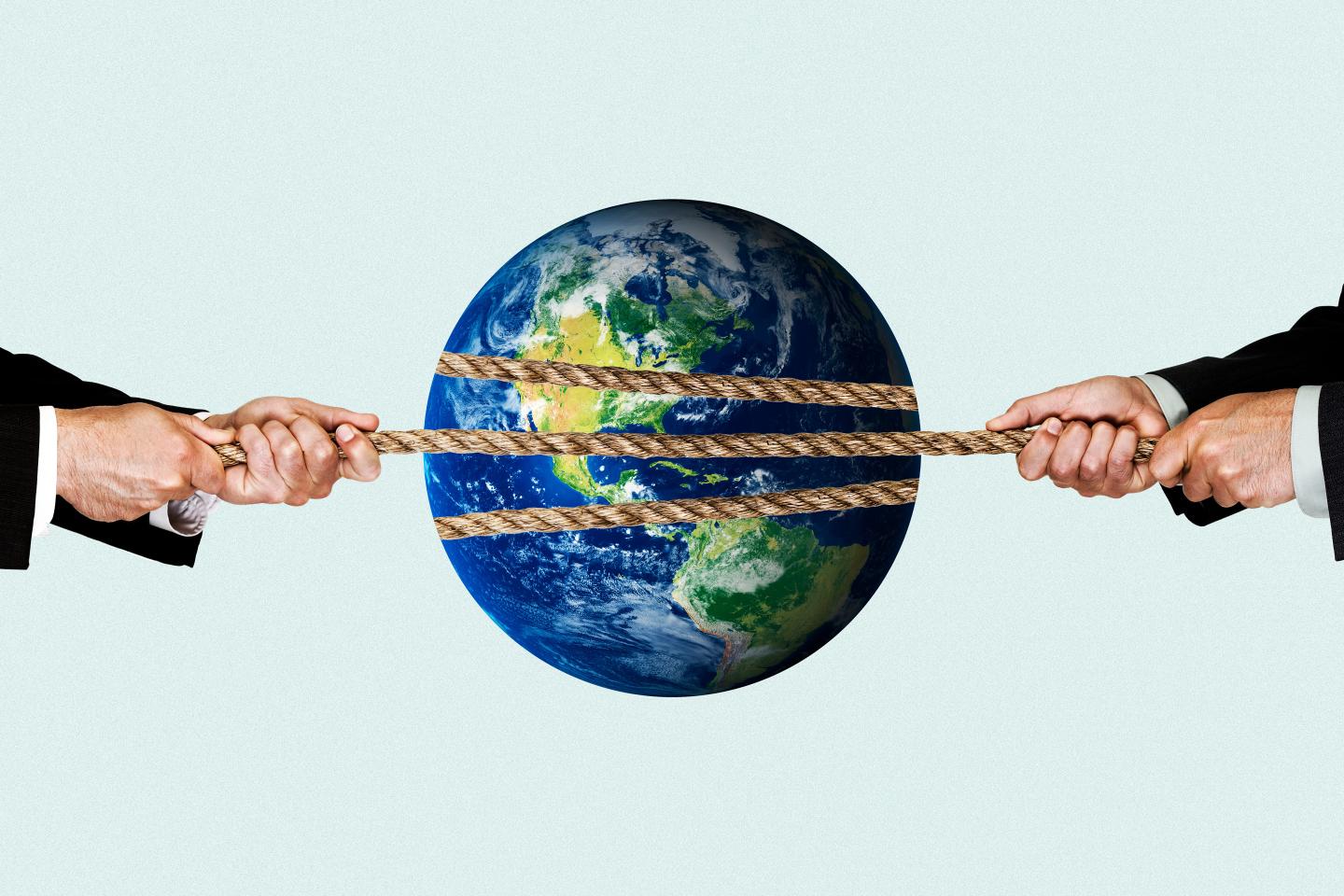
Businessmen having a tug of war with a globe in the middle of the rope.
Properly assessing geopolitical risk requires the board's constant attention. Photo Illustration by Alexandra Scimecca/Fortune; Getty Images (2)

Good morning,

Recommended Video

Not long ago, companies in only a few sectors—energy, mining, agriculture—assigned time and resources to minding geopolitics for signs of strife. But today, a war or political shift on the other side of the world has become just as important to manufacturers, tech companies, social media brands, and retailers.

Boards and CEOs from all kinds of companies now routinely rank geopolitical risks as among their top concerns. Still, says Johan Gott, cofounder of Prism, a consulting company specializing in political risk, boards are not engaged enough. It’s still “a little bit too much talk and too little action,” he says.

Rather than merely acknowledging geopolitical threats that affect their company, he says, corporate directors ought to be taking action: prioritizing their risks, tracking those vulnerabilities through a dashboard or another mechanism, and running crisis simulations that allow a company to map their contingency plans in the face of hypothetical political events that could harm their employees, operations, infrastructure, supply chains, or capital investments. Boards should also be curious about the potential problems they’re ignoring entirely, he adds.

“We’re really recommending the tracking aspect both of risks that you know well but that you’re not fully updating, as well as the unknown unknowns,” says Gott. “We do a lot of knocking on our clients’ doors to say, ‘Hey, look, are you tracking this?’” 

Many corporate boards allow their geopolitical agenda to be dictated by the media, while losing sight of ongoing lower-profile risks, Gott explains. “The media reflects a reality that is not 100% aligned to corporate interests,” he says. For example, most of the recent inquiries Prism has fielded are about the conflict in Israel and Gaza—“a human tragedy” that rightly deserves media attention, he says. But unless the conflict escalates regionally and comes to involve Iran or one of its proxies, putting the world’s oil supply at risk, the corporate impacts are actually relatively low outside of Israel.  

Another example: During Nancy Pelosi’s visit to Taiwan last year, when Beijing responded to Pelosi’s diplomatic trip by conducting military exercises off Taiwan’s coast, business leaders became concerned about possible blowback for their corporations. But the risk of Chinese forces invading Taiwan or enacting a blockade at that moment was low, says Gott, and the topic has since fallen off the radar of many business leaders even though that’s exactly the kind of issue that companies need to stay engaged with when the headlines around it have faded. 

Anecdotally, Gott adds, compared to U.S. companies, he sees more European corporations and boards being slightly more disciplined about looking at geopolitical risks three to five years out. 

John Rodi, who runs KPMG’s Board Leadership Center, agrees that rather than being entirely reactive to news events, boards ought to set up a framework to constantly assess risks. The largest U.S. companies are already doing so, he explains, but the importance of setting up a risk governance framework is still catching on at small and midsize businesses. Boards are “all over the map” in terms of the degrees of sophistication they bring to this issue. 

Here’s some of his specific advice for boards:

—While annual updates were once sufficient, geopolitical risks now loom so large that they warrant quarterly updates and may even be relevant at every board meeting.

—Bring in diverse views through outside advisors. Take stock of your own geopolitical acumen (and potential biases) and consider the value of this expertise when recruiting new board members.

—Remember to map how various risks, including those connected to politics, polarization, and conflicts, interact with one another. How does a change in your supply chain because of a global incident impact your environmental or social goals?

—Make sure that specific members of a company’s management team are made responsible for monitoring relevant geopolitical risks and periodically reporting on them to the board. The challenge is finding the right level of granularity, Rodi cautions: “If it’s too high-level an analysis, then that’s probably going to give you limited insights. If it’s too granular, then that could be an unwieldy risk-management process.”  

Lila MacLellan
lila.maclellan@fortune.com
@lilamaclellan

Noted

"For the first time, I feel non-exec directors really are an option I should be actively considering. They are no longer an afterthought."

—In an interview with the Financial Times, an FTSE chair said more boards now see independent directors as CEO contenders. "These so-called insider-outsider candidates,” the FT writes, “are separate enough from the leadership team that they can make changes but they understand the culture, strategy, and business model of a company and have had a front-row seat to any troubles it may be facing."

In Brief

—Yesterday, the Mozilla Foundation named four new directors to its board, introducing a slate that brings greater diversity to the table along with deep expertise in AI. That looks a lot different than OpenAI, which last week unveiled an all-white, all-male transitional board. 

—Anand Narasimhan, a professor at IMD in Switzerland, outlines several strategies to encourage more voices of dissent during board meetings in this Financial Times piece. For example, he suggests creating a sociogram, or “a visual representation illustrating the positioning and connections among individuals on the board.” Interpreting the graphic, he explains, can help “uncover hidden patterns within the group.”

—Facing pressure to say something meaningful about the Israel-Hamas conflict, most CEOs have found themselves at a loss. Board members looking to guide corporate leaders around this topic ought to bookmark this essay by Fortune executive editor Peter Vanham, who examines the approach taken by Citi CEO Jane Fraser.

—Brace yourself for at least two more years of debate about the virtues of remote work. Nick Bloom, the Stanford economist who has emerged as a leading voice in the discussion about work-from-home policies, says office occupancy rates have remained “flat as a pancake” in 2023 despite corporate attempts to normalize a return to the office. In 2026, he predicts, the number of people working remotely will begin to rise again, but we’ll stay in a holding pattern until then.

—Charlie Munger, who passed away last week just a few weeks shy of his 100th birthday, wasn’t a fan of excessive CEO pay. In the 2014 paper Corporate Governance According to Charles T. Munger, Stanford University researchers quoted Munger on the topic, writing: “I would argue that when you rise high enough in American business, you’ve got a moral duty to be underpaid—not to get all that you can, but to actually be underpaid.” Read more of Munger’s leadership advice, here.

This is the web version of The Modern Board, a newsletter focusing on mastering the new rules of corporate leadership. Sign up for free.

About the Author
By Lila MacLellanFormer Senior Writer
LinkedIn icon

Lila MacLellan is a former senior writer at Fortune, where she covered topics in leadership.

See full bioRight Arrow Button Icon

Latest in Newsletters

Finance
Lorem ipsum dolor sit amet, consectetur adipiscing elit, sed do eiusmod tempor incididunt ut labore et dolore magna aliqua. Ut enim ad minim veniam
By Fortune Editors
October 20, 2025
Finance
Lorem ipsum dolor sit amet, consectetur adipiscing elit, sed do eiusmod tempor incididunt ut labore et dolore magna aliqua. Ut enim ad minim veniam
By Fortune Editors
October 20, 2025
Finance
Lorem ipsum dolor sit amet, consectetur adipiscing elit, sed do eiusmod tempor incididunt ut labore et dolore magna aliqua. Ut enim ad minim veniam
By Fortune Editors
October 20, 2025
Finance
Lorem ipsum dolor sit amet, consectetur adipiscing elit, sed do eiusmod tempor incididunt ut labore et dolore magna aliqua. Ut enim ad minim veniam
By Fortune Editors
October 20, 2025
Finance
Lorem ipsum dolor sit amet, consectetur adipiscing elit, sed do eiusmod tempor incididunt ut labore et dolore magna aliqua. Ut enim ad minim veniam
By Fortune Editors
October 20, 2025
Finance
Lorem ipsum dolor sit amet, consectetur adipiscing elit, sed do eiusmod tempor incididunt ut labore et dolore magna aliqua. Ut enim ad minim veniam
By Fortune Editors
October 20, 2025

Most Popular

Finance
Lorem ipsum dolor sit amet, consectetur adipiscing elit, sed do eiusmod tempor incididunt ut labore et dolore magna aliqua. Ut enim ad minim veniam
By Fortune Editors
October 20, 2025
Finance
Lorem ipsum dolor sit amet, consectetur adipiscing elit, sed do eiusmod tempor incididunt ut labore et dolore magna aliqua. Ut enim ad minim veniam
By Fortune Editors
October 20, 2025
Finance
Lorem ipsum dolor sit amet, consectetur adipiscing elit, sed do eiusmod tempor incididunt ut labore et dolore magna aliqua. Ut enim ad minim veniam
By Fortune Editors
October 20, 2025
Finance
Lorem ipsum dolor sit amet, consectetur adipiscing elit, sed do eiusmod tempor incididunt ut labore et dolore magna aliqua. Ut enim ad minim veniam
By Fortune Editors
October 20, 2025
Finance
Lorem ipsum dolor sit amet, consectetur adipiscing elit, sed do eiusmod tempor incididunt ut labore et dolore magna aliqua. Ut enim ad minim veniam
By Fortune Editors
October 20, 2025
Finance
Lorem ipsum dolor sit amet, consectetur adipiscing elit, sed do eiusmod tempor incididunt ut labore et dolore magna aliqua. Ut enim ad minim veniam
By Fortune Editors
October 20, 2025
Fortune Secondary Logo
Rankings
  • 100 Best Companies
  • Fortune 500
  • Global 500
  • Fortune 500 Europe
  • Most Powerful Women
  • World's Most Admired Companies
  • See All Rankings
  • Lists Calendar
Sections
  • Finance
  • Fortune Crypto
  • Features
  • Leadership
  • Health
  • Commentary
  • Success
  • Retail
  • Mpw
  • Tech
  • Lifestyle
  • CEO Initiative
  • Asia
  • Politics
  • Conferences
  • Europe
  • Newsletters
  • Personal Finance
  • Environment
  • Magazine
  • Education
Customer Support
  • Frequently Asked Questions
  • Customer Service Portal
  • Privacy Policy
  • Terms Of Use
  • Single Issues For Purchase
  • International Print
Commercial Services
  • Advertising
  • Fortune Brand Studio
  • Fortune Analytics
  • Fortune Conferences
  • Business Development
  • Group Subscriptions
About Us
  • About Us
  • Press Center
  • Work At Fortune
  • Terms And Conditions
  • Site Map
  • About Us
  • Press Center
  • Work At Fortune
  • Terms And Conditions
  • Site Map
  • Facebook icon
  • Twitter icon
  • LinkedIn icon
  • Instagram icon
  • Pinterest icon

Latest in Newsletters

How the World Cup is a high-stakes stage for Big Tech’s AI push
NewslettersCIO Intelligence
How the World Cup is a high-stakes stage for Big Tech’s AI push
By John KellJune 10, 2026
6 hours ago
New York is going crazy for the Knicks in the NBA finals. Only one brand is advertising to women inside Madison Square Garden
NewslettersMPW Daily
New York is going crazy for the Knicks in the NBA finals. Only one brand is advertising to women inside Madison Square Garden
By Emma HinchliffeJune 10, 2026
8 hours ago
Businesswoman working at desk with laptop and documents in office
NewslettersCFO Daily
Finance teams can’t quit Excel. Workday wants to change that with AI
By Sheryl EstradaJune 10, 2026
12 hours ago
Health care’s AI dividend is real. The fight now is over who reaps the gains
NewslettersCEO Daily
Health care’s AI dividend is real. The fight now is over who reaps the gains
By Diane BradyJune 10, 2026
16 hours ago
JB Straubel, co-founder of Tesla and founder and CEO of Redwood Materials, speaking at Fortune Brainstorm Tech 2026 in Aspen, Colorado. (Photo: Michael Faas/Fortune)
NewslettersFortune Tech
Why China is outpacing the U.S. power grid
By Andrew NuscaJune 10, 2026
16 hours ago
Trump speaking into a mic.
NewslettersEye on AI
Should Americans get an equity stake in AI? Trump and progressive Democrats float public ownership of AI
By Beatrice NolanJune 9, 2026
1 day ago

Most Popular

Pentagon accuses Alibaba, Baidu and BYD, three of China's biggest companies, of supporting the Chinese military
Asia
Pentagon accuses Alibaba, Baidu and BYD, three of China's biggest companies, of supporting the Chinese military
By Kate O'Keeffe and BloombergJune 8, 2026
2 days ago
'We are rapidly running out of time': Watchdog sounds Social Security alarm after 22% cut confirmed for 2032
Economy
'We are rapidly running out of time': Watchdog sounds Social Security alarm after 22% cut confirmed for 2032
By Nick LichtenbergJune 9, 2026
1 day ago
Costco CEO Ron Vachris rose from forklift driver to the C-suite without a college degree: ‘Don’t chase a title’ is the career advice that got him there
Success
Costco CEO Ron Vachris rose from forklift driver to the C-suite without a college degree: ‘Don’t chase a title’ is the career advice that got him there
By Preston ForeJune 8, 2026
2 days ago
Current price of oil as of June 9, 2026
Personal Finance
Current price of oil as of June 9, 2026
By Joseph HostetlerJune 9, 2026
1 day ago
Wall Street dumped nearly $1 trillion in tech stocks by midday—then clawed it back and bought peanut butter and paint
Investing
Wall Street dumped nearly $1 trillion in tech stocks by midday—then clawed it back and bought peanut butter and paint
By Eva RoytburgJune 9, 2026
1 day ago
A ‘MAGA Warrior’ Texas ag chief is publicly blasting the USDA over a flesh-eating pest threatening America's beef supply
North America
A ‘MAGA Warrior’ Texas ag chief is publicly blasting the USDA over a flesh-eating pest threatening America's beef supply
By Marco Quiroz-GutierrezJune 10, 2026
15 hours ago

© 2026 Fortune Media IP Limited. All Rights Reserved. Use of this site constitutes acceptance of our Terms of Use and Privacy Policy | CA Notice at Collection and Privacy Notice | Do Not Sell/Share My Personal Information
FORTUNE is a trademark of Fortune Media IP Limited, registered in the U.S. and other countries. FORTUNE may receive compensation for some links to products and services on this website. Offers may be subject to change without notice.