• Home
  • Latest
  • Fortune 500
  • Finance
  • Tech
  • Leadership
  • Lifestyle
  • Rankings
  • Multimedia
U.S. economy

Goldman Sachs dismisses Deutsche Bank and UBS comparisons of the 2020s to other eras: The tactic is ‘too simple’ and likely to be wrong

Eleanor Pringle
By
Eleanor Pringle
Eleanor Pringle
Senior Reporter, Economics and Markets
Down Arrow Button Icon
Eleanor Pringle
By
Eleanor Pringle
Eleanor Pringle
Senior Reporter, Economics and Markets
Down Arrow Button Icon
November 17, 2023, 6:49 AM ET
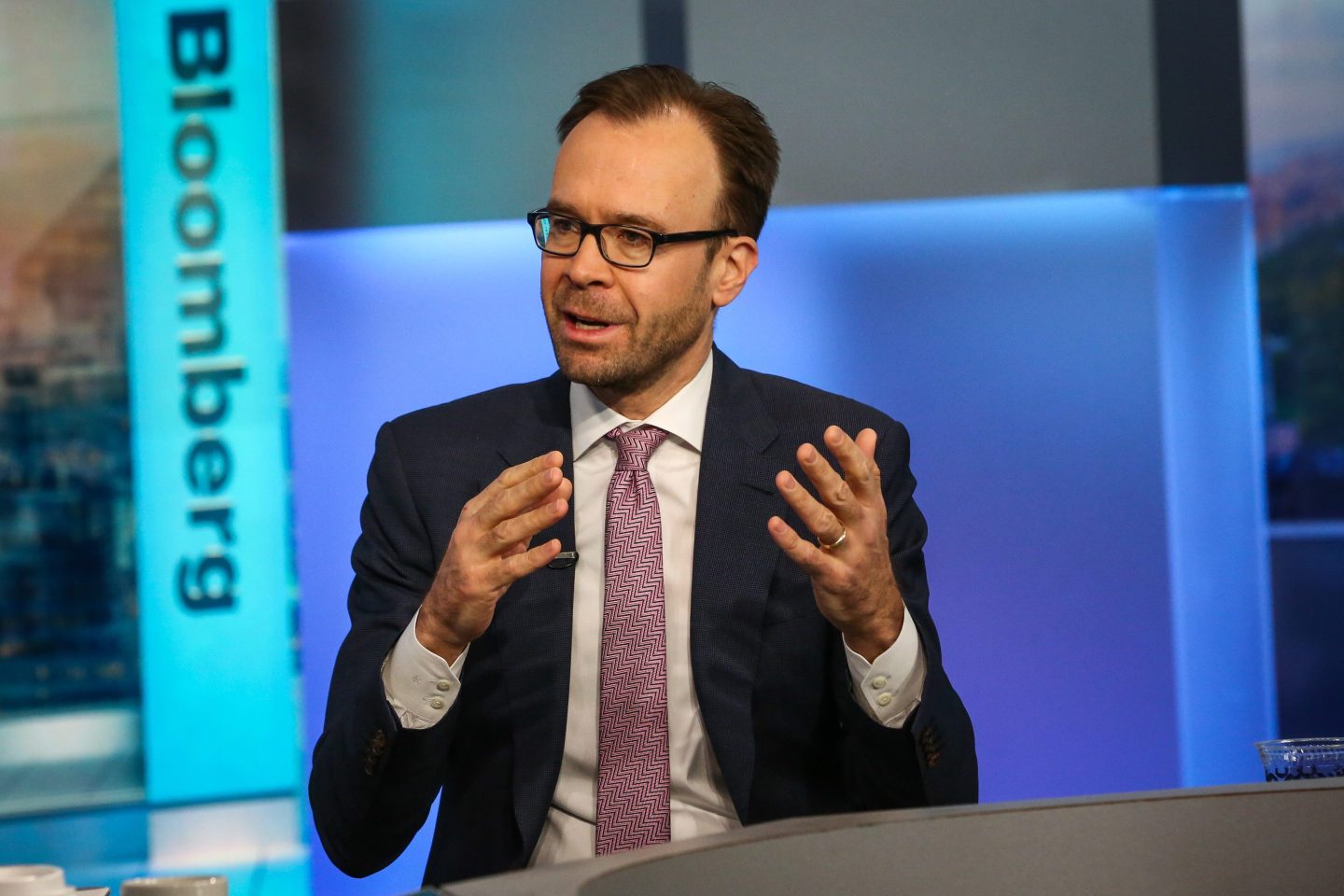
Jan Hatzius, chief economist at Goldman Sachs
Jan Hatzius, chief economist at Goldman Sachs, says economic comparisons to previous markets can only help so much.Christopher Goodney—Bloomberg/Getty Images

Some economists are convinced that the 1970s should act as a blueprint for how policymakers and investors should handle the 2020s. Others say the 1990s are more appropriate, or in a bull market even the “roaring” 1920s.

Recommended Video

Goldman Sachs says it’s time to scrap the tactic altogether and focus on the here and now.

Speaking during a Goldman roundtable focussed on the outlook for 2024, the firm’s chief economist Jan Hatzius said that although history provides useful context for the present day it’s rarely a roadmap to be replicated.

Responding to a question from Fortune, Hatzius said: “Historical analogy and saying ‘This is just like the 19XX’ has a long history [and] is almost always too simple. The reason is that history never repeats, but in some cases it rhymes, as the saying goes.”

Throughout 2023 experts have attempted to understand a cocktail of economic factors through the lens of previous markets. Deutsche Bank, for example, said the U.S. is currently seeing a return to the 1970s on account of geopolitical risks, rising inflation and a number of oil shocks.

UBS has a far more positive outlook, saying the economy is actually headed back to a Clinton-like era of the bustling 1990s.

In specific markets, experts are saying housing, for example, is returning to the 1980s while the tech industry has been warned to mind the lessons of the 1990s.

However, Hatzius warned against using such comparisons as a roadmap for investment or economic strategies moving forward: “Some periods are more helpful than others but I don’t think any [should be used] as a full blueprint.”

Welcome to 1918

Overall, Goldman Sachs’s outlook is significantly more optimistic than many of its Wall Street peers.

For example, while the rest of the market is predicting a recession next year at around a 50% likelihood, Goldman is standing firm that it will be just 15%.

The market will continue to be strengthened by strong performances in mega-cap tech stocks, and further stability will be brought about by eventual cuts to the base rate by the Fed.

On the call with members of the media, Hatzius and colleague David Kostin—the firm’s chief U.S. equity strategist—said they expect the Fed to cut rates next year following similar moves by other major central banks.

As a result, Hatzius rejects the doom and gloom narrative proposed by Deutsche Bank, saying: “I certainly don’t think that the 1970s are a great blueprint, that’s probably the period we’ve been arguing against the most. This is not like the 1970s [with] other serious overheating inflation expectations, getting out of control cycles.”

Hatzius, who is also head of Global Investment Research at Goldman Sachs, said if anything a late 1910s era could hold some useful inspiration.

“I think there’s some elements of post-war dislocations or post-pandemic dislocations,” he explained. “You can go back to the 1918 flu, there are some elements there. The problem with the post-1918 flu period is that there’s very little high-quality economic data but I think there are some elements there.”

In 1918 the Spanish flu pandemic killed anywhere between 20 million and 40 million—resulting in more deaths than the number of people who died in World War One.

Similarly to COVID, Spanish flu was more contagious than previous similar diseases and resulted in the average lifespan of U.S. adults decreasing by 10 years.

A 2020 study of the Spanish flu estimated—as best it could—that the impact of the outbreak was a reduction in real per capita GDP of 6% and a fall in private consumption of 8%.

Following this came the 1920s—a period of great social and cultural dynamism and a booming economy.

However, despite recognizing the relevant similarities between the periods, Hatzius added: “I would generally not overstate the extent to which you can use one period as a blueprint.”


Join us at the Fortune Workplace Innovation Summit May 19–20, 2026, in Atlanta. The next era of workplace innovation is here—and the old playbook is being rewritten. At this exclusive, high-energy event, the world’s most innovative leaders will convene to explore how AI, humanity, and strategy converge to redefine, again, the future of work. Register now.
About the Author
Eleanor Pringle
By Eleanor PringleSenior Reporter, Economics and Markets
LinkedIn icon

Eleanor Pringle is an award-winning senior reporter at Fortune covering news, the economy, and personal finance. Eleanor previously worked as a business correspondent and news editor in regional news in the U.K. She completed her journalism training with the Press Association after earning a degree from the University of East Anglia.

See full bioRight Arrow Button Icon

Latest in

Four men pose for photo
CryptoCryptocurrency
Exclusive: Surf, an AI platform just for crypto, raises $15 million
By Carlos GarciaDecember 10, 2025
2 minutes ago
A pile of gold coins and gold bars.
Personal Financegold prices
Current price of gold as of December 10, 2025
By Danny BakstDecember 10, 2025
1 hour ago
housing affordability
Real EstateHousing
America’s mobile housing affordability crisis reveals a system where income determines exposure to climate disasters
By Ivis Garcia and The ConversationDecember 10, 2025
1 hour ago
Zohran
PoliticsElections
Political communication scholar on how Zohran Mamdani hacked ‘slacktivism’ to appear on your phone, on your street and in your mind
By Stuart Soroka and The ConversationDecember 10, 2025
1 hour ago
student
CommentaryEducation
International students skipped campus this fall — and local economies lost $1 billion because of it
By Bjorn MarkesonDecember 10, 2025
1 hour ago
Goldman Sachs' logo seen displayed on a smartphone with an AI chip and symbol in the background.
NewslettersCFO Daily
Goldman Sachs CFO on the company’s AI reboot, talent, and growth
By Sheryl EstradaDecember 10, 2025
2 hours ago

Most Popular

placeholder alt text
Economy
‘Fodder for a recession’: Top economist Mark Zandi warns about so many Americans ‘already living on the financial edge’ in a K-shaped economy 
By Eva RoytburgDecember 9, 2025
18 hours ago
placeholder alt text
Success
When David Ellison was 13, his billionaire father Larry bought him a plane. He competed in air shows before leaving it to become a Hollywood executive
By Dave SmithDecember 9, 2025
1 day ago
placeholder alt text
Banking
Jamie Dimon taps Jeff Bezos, Michael Dell, and Ford CEO Jim Farley to advise JPMorgan's $1.5 trillion national security initiative
By Nino PaoliDecember 9, 2025
20 hours ago
placeholder alt text
Uncategorized
Transforming customer support through intelligent AI operations
By Lauren ChomiukNovember 26, 2025
14 days ago
placeholder alt text
Politics
Exclusive: U.S. businesses are getting throttled by the drop in tourism from Canada: 'I can count the number of Canadian visitors on one hand'
By Dave SmithDecember 10, 2025
4 hours ago
placeholder alt text
Economy
The 'forever layoffs' era hits a recession trigger as corporates sack 1.1 million workers through November
By Nick Lichtenberg and Eva RoytburgDecember 9, 2025
1 day ago
Rankings
  • 100 Best Companies
  • Fortune 500
  • Global 500
  • Fortune 500 Europe
  • Most Powerful Women
  • Future 50
  • World’s Most Admired Companies
  • See All Rankings
Sections
  • Finance
  • Leadership
  • Success
  • Tech
  • Asia
  • Europe
  • Environment
  • Fortune Crypto
  • Health
  • Retail
  • Lifestyle
  • Politics
  • Newsletters
  • Magazine
  • Features
  • Commentary
  • Mpw
  • CEO Initiative
  • Conferences
  • Personal Finance
  • Education
Customer Support
  • Frequently Asked Questions
  • Customer Service Portal
  • Privacy Policy
  • Terms Of Use
  • Single Issues For Purchase
  • International Print
Commercial Services
  • Advertising
  • Fortune Brand Studio
  • Fortune Analytics
  • Fortune Conferences
  • Business Development
About Us
  • About Us
  • Editorial Calendar
  • Press Center
  • Work At Fortune
  • Diversity And Inclusion
  • Terms And Conditions
  • Site Map

© 2025 Fortune Media IP Limited. All Rights Reserved. Use of this site constitutes acceptance of our Terms of Use and Privacy Policy | CA Notice at Collection and Privacy Notice | Do Not Sell/Share My Personal Information
FORTUNE is a trademark of Fortune Media IP Limited, registered in the U.S. and other countries. FORTUNE may receive compensation for some links to products and services on this website. Offers may be subject to change without notice.