• Home
  • News
  • Fortune 500
  • Tech
  • Finance
  • Leadership
  • Lifestyle
  • Rankings
  • Multimedia
Environmentbatteries

The U.S. Energy Department just funneled another $3.5 billion into the battery industry as it tries to wean cars and home off fossil fuels

By
Isabella O'Malley
Isabella O'Malley
and
The Associated Press
Down Arrow Button Icon
By
Isabella O'Malley
Isabella O'Malley
and
The Associated Press
Down Arrow Button Icon
November 15, 2023, 12:09 PM ET
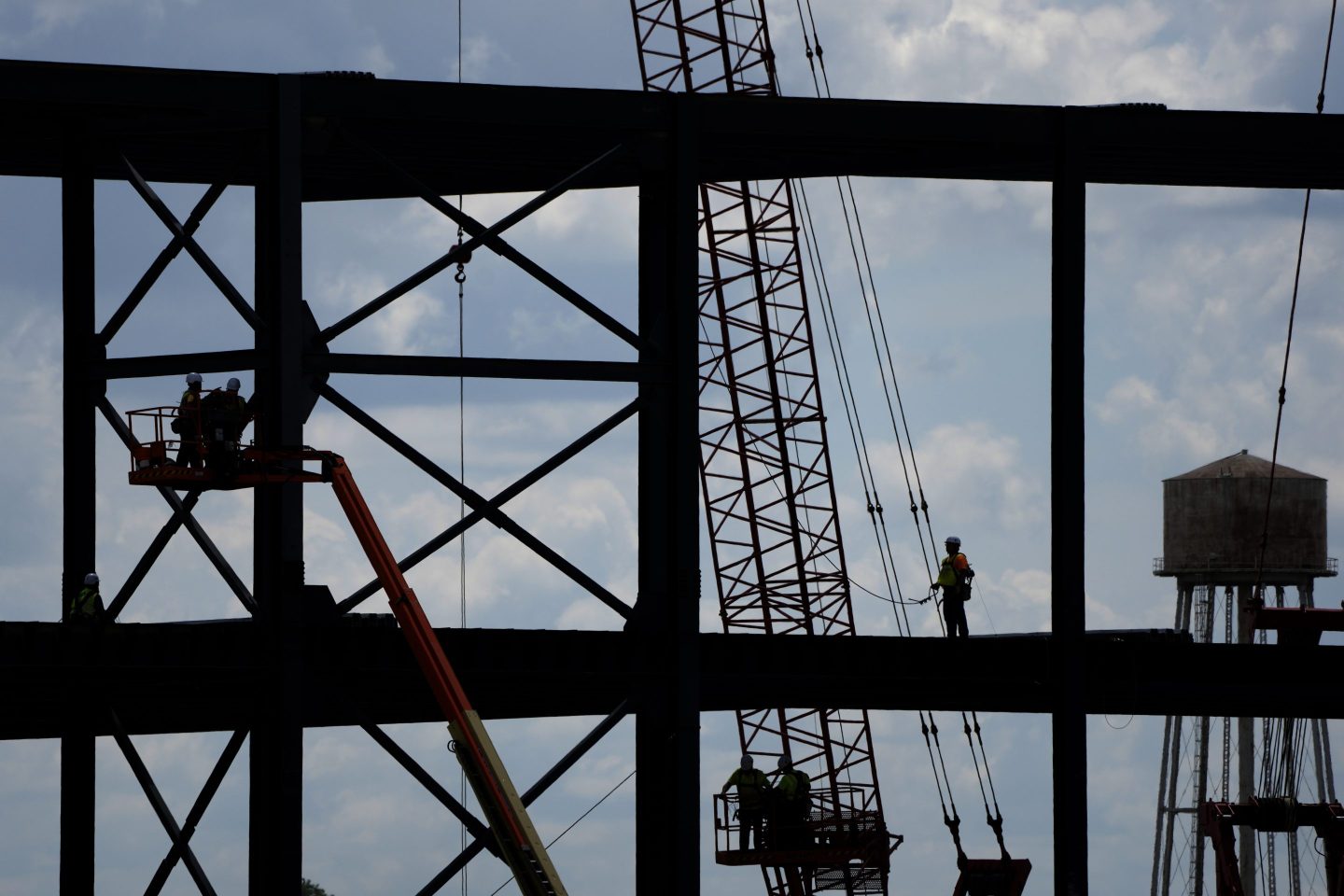
Iron workers construct the framework of a battery plant
Iron workers construct the framework of a $4 billion Panasonic EV battery plant, May 18, 2023, near DeSoto, Kan. The Energy Department is making a push to strengthen the U.S. battery supply chain, announcing Wednesday, Nov. 15, 2023, up to $3.5 billion for companies that produce batteries and the critical minerals that go into them.AP Photo/Charlie Riedel, File

The Energy Department is making a push to strengthen the U.S. battery supply chain, announcing up to $3.5 billion for companies that produce batteries and the critical minerals that go into them.

Recommended Video

Batteries are seen as an important climate solution because they can power cars, which are a major cause of climate change when they burn gasoline. They are also a solution when they store clean electricity made from solar panels or wind turbines, allowing gas or coal power plants that cause climate change to turn off.

Lithium ion is currently the dominant battery type both for electric vehicles and clean electricity storage. The DOE wants to strengthen the supply because even though there is plenty of work underway to develop alternatives, it estimates demand for lithium batteries will increase up to ten times by 2030.

The Biden-Harris administration has a goal of lowering the pollution that causes climate change to zero by 2050 and for half of all new cars sales to be electric in 2030.

Some officials, industry experts and others concerned about climate change uneasy supply of battery materials will not keep pace with demand. Others worry that too much of the industry is anchored in Asia.

A chip shortage redux?

Jodie Lutkenhaus, professor of chemical engineering at Texas A&M University, said she is closely watching U.S. battery production and manufacturing. “I’m worried that we may not catch up and end up in the same situation we’re in now with the semiconductor industry,” she said. When assembly lines stopped during the pandemic, it stalled manufacturing in Asia, resulting in a global microchip shortage that affected the availability of vehicles and electronics.

“The same thing can happen with batteries if we don’t diversify where batteries are made and where materials are sourced,” Lutkenhaus said. “It is essential that the U.S. participates in battery production and manufacturing so that we can avoid global shortages of batteries, should that ever happen.”

The Bipartisan Infrastructure Law assigned $6 billion in total funding for battery material processing and manufacturing. An initial round went to 15 projects including companies that mine critical minerals like graphite and nickel, used in lithium batteries. This second round will fund similar companies but also those that rely on alternative chemistries, such as flow and sodium batteries.

Here’s how it works: A company might want to build a factory to make cathode materials for electric cars. It determines the cost of building the facility, commits to covering half of the cost, and the government grant would cover the other half, if the company is selected.

Ablemarle, a major lithium producer, received funding in the first round for a facility in Kings Mountain, North Carolina that processes lithium from ore collected around the world. The company said that in addition to EVs, demand for lithium also comes electronics like medical devices and smartphones. Without the DOE funding, the project “would have likely progressed along a different time scale,” it said in an email.

While the funding may not have been make-or-break for them, Matthew McDowell, associate professor of engineering at Georgia Institute of Technology, said the Bipartisan Infrastructure Law and Inflation Reduction Act have “dramatically” transformed the U.S. battery manufacturing sector in the past three years. He is excited, he said, about the next generation of batteries for clean energy storage, including solid state batteries, which could potentially hold more energy than lithium ion.

Tom Moerenhout, a professor at Columbia University’s Center on Global Energy Policy, said it will be a big challenge to ramp up the global supply of critical minerals for the projected battery demand in 2030. “It’s pretty huge, it’s almost scary,” he said, noting that a new mine on average takes 16 years to begin commercial production.

But with the price of lithium rising, Moerenhout said, alternative battery types become more attractive. One he hopes to see scale up is sodium ion batteries to help bolster the electrical grid. “The potential is quite huge,” he said, because they are safe and affordable.

Companies can apply for funding through mid-March.

____

Associated Press climate and environmental coverage receives support from several private foundations. See more about AP’s climate initiative here. The AP is solely responsible for all content.

Fortune Brainstorm AI returns to San Francisco Dec. 8–9 to convene the smartest people we know—technologists, entrepreneurs, Fortune Global 500 executives, investors, policymakers, and the brilliant minds in between—to explore and interrogate the most pressing questions about AI at another pivotal moment. Register here.
About the Authors
By Isabella O'Malley
See full bioRight Arrow Button Icon
By The Associated Press
See full bioRight Arrow Button Icon

Latest in Environment

coal
EnvironmentCoal
‘You have an entire culture, an entire community that is also having that same crisis’: Colorado coal town looks anxiously to the future
By Brittany Peterson, Jennifer McDermott and The Associated PressDecember 6, 2025
1 day ago
data center
EnvironmentData centers
The rise of AI reasoning models comes with a big energy tradeoff
By Rachel Metz, Dina Bass and BloombergDecember 5, 2025
2 days ago
Jaguar
EnvironmentArizona
‘This species is recovering’: Jaguar spotted in Arizona, far from Central and South American core
By Susan Montoya Bryan and The Associated PressDecember 5, 2025
2 days ago
Steve Jobs holds up the first iPod Nano
Big TechApple
Apple is experiencing its biggest leadership shake-up since Steve Jobs died, with over half a dozen key executives headed for the exits
By Dave SmithDecember 5, 2025
2 days ago
Paul Atkins
CommentaryCorporate Governance
Turning public companies into private companies: the SEC’s retreat from transparency and accountability
By Andrew BeharDecember 5, 2025
2 days ago
Four years ago, BKV started buying up the two Temple power plants in Texas—located between Austin and Dallas—which now total 1.5 gigawatts of electricity generation capacity—enough to power more than 1.1 million homes, or a major data center campus. There is room to expand.
Energypower
How a Texas gas producer plans to exploit the ‘megatrend’ of power plants for AI hyperscalers
By Jordan BlumDecember 5, 2025
3 days ago

Most Popular

placeholder alt text
AI
Nvidia CEO says data centers take about 3 years to construct in the U.S., while in China 'they can build a hospital in a weekend'
By Nino PaoliDecember 6, 2025
1 day ago
placeholder alt text
Economy
The most likely solution to the U.S. debt crisis is severe austerity triggered by a fiscal calamity, former White House economic adviser says
By Jason MaDecember 6, 2025
1 day ago
placeholder alt text
Real Estate
The 'Great Housing Reset' is coming: Income growth will outpace home-price growth in 2026, Redfin forecasts
By Nino PaoliDecember 6, 2025
1 day ago
placeholder alt text
Big Tech
Mark Zuckerberg rebranded Facebook for the metaverse. Four years and $70 billion in losses later, he’s moving on
By Eva RoytburgDecember 5, 2025
2 days ago
placeholder alt text
Economy
JPMorgan CEO Jamie Dimon says Europe has a 'real problem’
By Katherine Chiglinsky and BloombergDecember 6, 2025
1 day ago
placeholder alt text
Uncategorized
Transforming customer support through intelligent AI operations
By Lauren ChomiukNovember 26, 2025
11 days ago
Rankings
  • 100 Best Companies
  • Fortune 500
  • Global 500
  • Fortune 500 Europe
  • Most Powerful Women
  • Future 50
  • World’s Most Admired Companies
  • See All Rankings
Sections
  • Finance
  • Leadership
  • Success
  • Tech
  • Asia
  • Europe
  • Environment
  • Fortune Crypto
  • Health
  • Retail
  • Lifestyle
  • Politics
  • Newsletters
  • Magazine
  • Features
  • Commentary
  • Mpw
  • CEO Initiative
  • Conferences
  • Personal Finance
  • Education
Customer Support
  • Frequently Asked Questions
  • Customer Service Portal
  • Privacy Policy
  • Terms Of Use
  • Single Issues For Purchase
  • International Print
Commercial Services
  • Advertising
  • Fortune Brand Studio
  • Fortune Analytics
  • Fortune Conferences
  • Business Development
About Us
  • About Us
  • Editorial Calendar
  • Press Center
  • Work At Fortune
  • Diversity And Inclusion
  • Terms And Conditions
  • Site Map

© 2025 Fortune Media IP Limited. All Rights Reserved. Use of this site constitutes acceptance of our Terms of Use and Privacy Policy | CA Notice at Collection and Privacy Notice | Do Not Sell/Share My Personal Information
FORTUNE is a trademark of Fortune Media IP Limited, registered in the U.S. and other countries. FORTUNE may receive compensation for some links to products and services on this website. Offers may be subject to change without notice.