A new federal rule that goes into effect next month could make it easier for millions of workers to form unions at big companies like McDonald’s. But it’s already facing significant pushback from businesses and some members of Congress.
The rule — announced late last month by the National Labor Relations Board — sets new standards for determining when two companies should be considered “joint employers” under the National Labor Relations Act.
It sounds wonky. But essentially, the rule could widen the number of companies that must participate in labor negotiations alongside their franchisees or independent contractors. For example, it might require Burger King to bargain with workers even though most of its U.S. restaurants are owned by franchisees. Or it could require Amazon to negotiate with delivery drivers who are technically employed as independent contractors.
“It’s trying to take in the realities of today’s workforce, when many employers subcontract out work and say, ‘Oh, we’re not the employer,'” said Cathy Creighton, director of the Buffalo Co-Lab at Cornell University’s School of Industrial and Labor Relations. “It’s the employer who is really calling the shots and has the money.”
The NLRB says the new rule changes a 2020 rule that made it too easy for joint employers to avoid their responsibility to negotiate with workers. The 88-year-old National Labor Relations Act guarantees the right of U.S. workers to form or join unions.
But critics say the new rule is an overreach by the labor-friendly Biden administration that undermines independent business owners. Some — including the American Hotel and Lodging Association — have already sued to block it.
U.S. Sens. Joe Manchin, a West Virginia Democrat, and Bill Cassidy, a Louisiana Republican, have introduced a Congressional Review Act resolution that would overturn the rule. The resolution must pass both houses of Congress and be signed by President Joe Biden.
Biden hasn’t said whether he supports the new joint employer rule, but he has cast himself as the most pro-union president in history. The new rule is scheduled to go into effect Dec. 26.
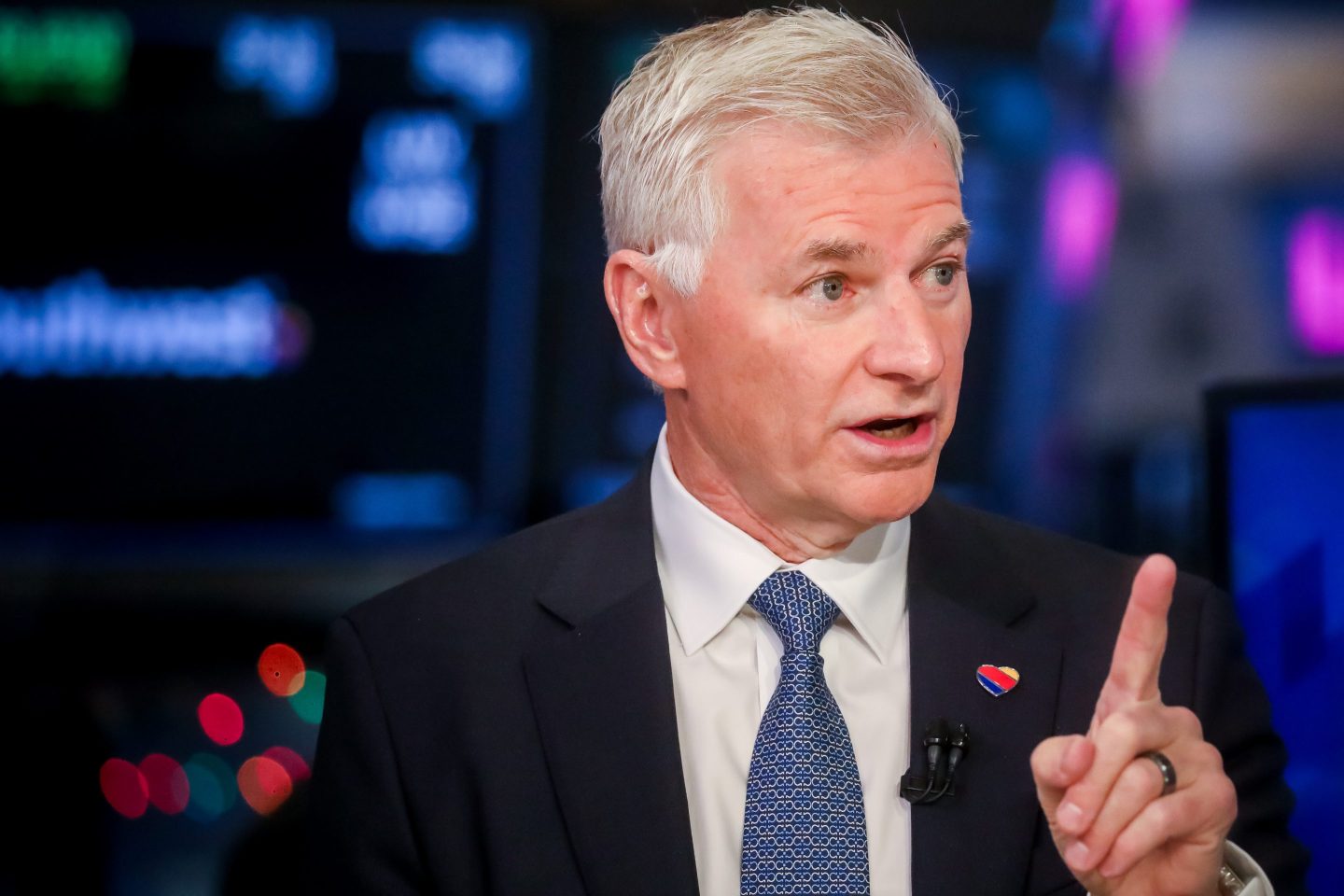
“The franchise business model is a really great American innovation. It’s created wealth for thousands, particularly underrepresented minorities and women,” said McDonald’s President and CEO Chris Kempczinski during a recent conference call with investors. “This is something we think needs to be supported, not attacked.”
‘They can certainly afford to treat us better’
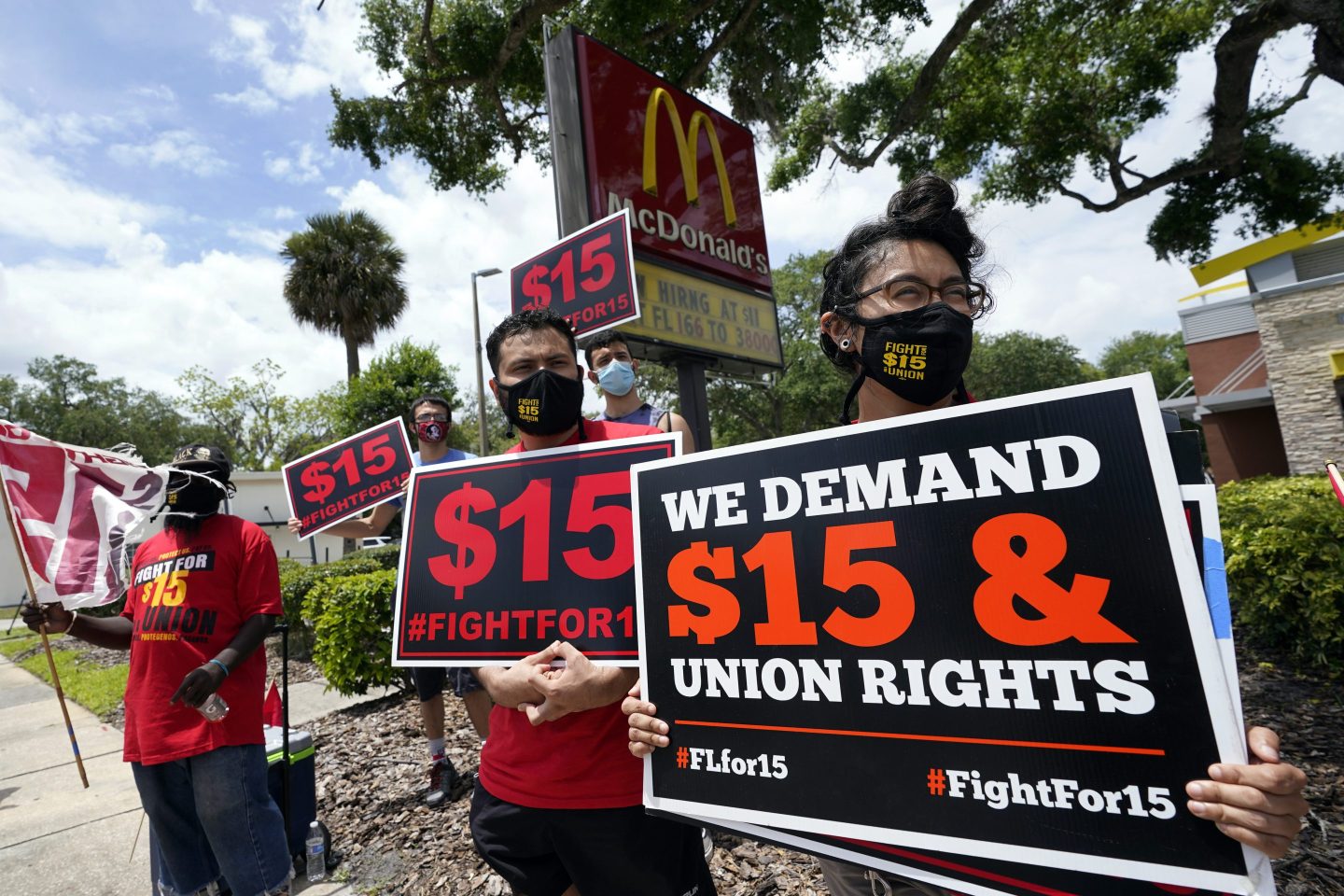
Richard Eiker, 54, has worked in fast food for 25 years and now works at a McDonald’s in Kansas City, Missouri. He said McDonald’s clearly controls its franchised stores and is sidestepping its responsibilities to workers.
Eiker, a leader in the pro-union group Stand Up KC, said unionizing could improve his pay, benefits and working conditions. Eiker has foot pain and high blood pressure, but said his job doesn’t offer affordable health care or paid time off to see a doctor. He often cuts his prescription medicines in half because he can’t afford to refill them.
“McDonald’s made almost $15 billion in profits over the last two years. They can certainly afford to treat us better, and with a union we could make them do right by us,” he said.
The new joint employer rule had its origins in the Obama administration. In 2015, the NLRB ruled that Browning-Ferris Industries, a waste management company, should be considered the joint employer of contract workers who were sorting its recycling because it had authority over their working conditions. A federal court upheld the NLRB’s decision in 2018.
But during the Trump administration, the Republican-controlled labor board narrowed the definition of a joint employer. Under the 2020 rule, companies could be considered a joint employer only if they had “substantial direct and immediate control” over employment conditions.
The latest rule – passed by a board now controlled by Democrats — more closely resembles the Browning-Ferris ruling from 2015. It says companies may be considered joint employers if they have the authority to control – directly or indirectly – at least one condition of employment. Conditions include wages and benefits, hours and scheduling, the assignment of duties, work rules and hiring.
The rule only applies to labor relations. The Department of Labor sets its own joint employment standards for issues like meeting minimum wage requirements.
Still, the new rule could have a major impact. Local franchise owners employ more than 8 million people in the U.S., according to the International Franchise Association. Millions more work for subcontractors or temporary agencies.’Still, the new rule could have a major impact. Local franchise owners employ more than 8 million people in the U.S., according to the International Franchise Association. Millions more work for subcontractors or temporary agencies.
‘Holding the wrong people accountable’
John Motta, who owns 32 Dunkin’ locations in New Hampshire and Virginia, said franchisees must meet certain brand standards and use Dunkin’ uniforms and signage. But beyond that, they want to run their businesses independently.
“We don’t want our corporate partners to be telling us, ‘You have to pay this much per hour,'” he said. “That’s not why I came into this business. I wanted to make all those decisions by myself.”
Motta leads the Coalition of Franchisee Associations, which represents around 46,000 franchisees. He’s worried the rule will prompt Dunkin’ and other companies to stop working with franchisees and run stores themselves so they won’t be held responsible if a franchisee commits labor violations.
Michael Kaufman, an attorney who represents companies in labor disputes, said the rule has other potential complications. If a business hires temporary workers through a contractor but then asks the contractor to fire a temporary worker for harassing someone, the new rule might allow the temporary worker to bring unfair labor charges against the business, Kaufman said.
“The NLRB thinks they are holding more people accountable, but they’re holding the wrong people accountable,” he said.
Labor unions say the NLRB will consider such circumstances on a case-by-case basis, but the rule is still necessary to ensure all workers can negotiate wages and working conditions.
“Workers’ right to collectively bargain cannot be realized if the entity that has the power to change terms and conditions of employment is absent from the bargaining table,” the AFL-CIO, the Teamsters and the Service Employees International Union wrote in a letter sent this month to members of Congress.