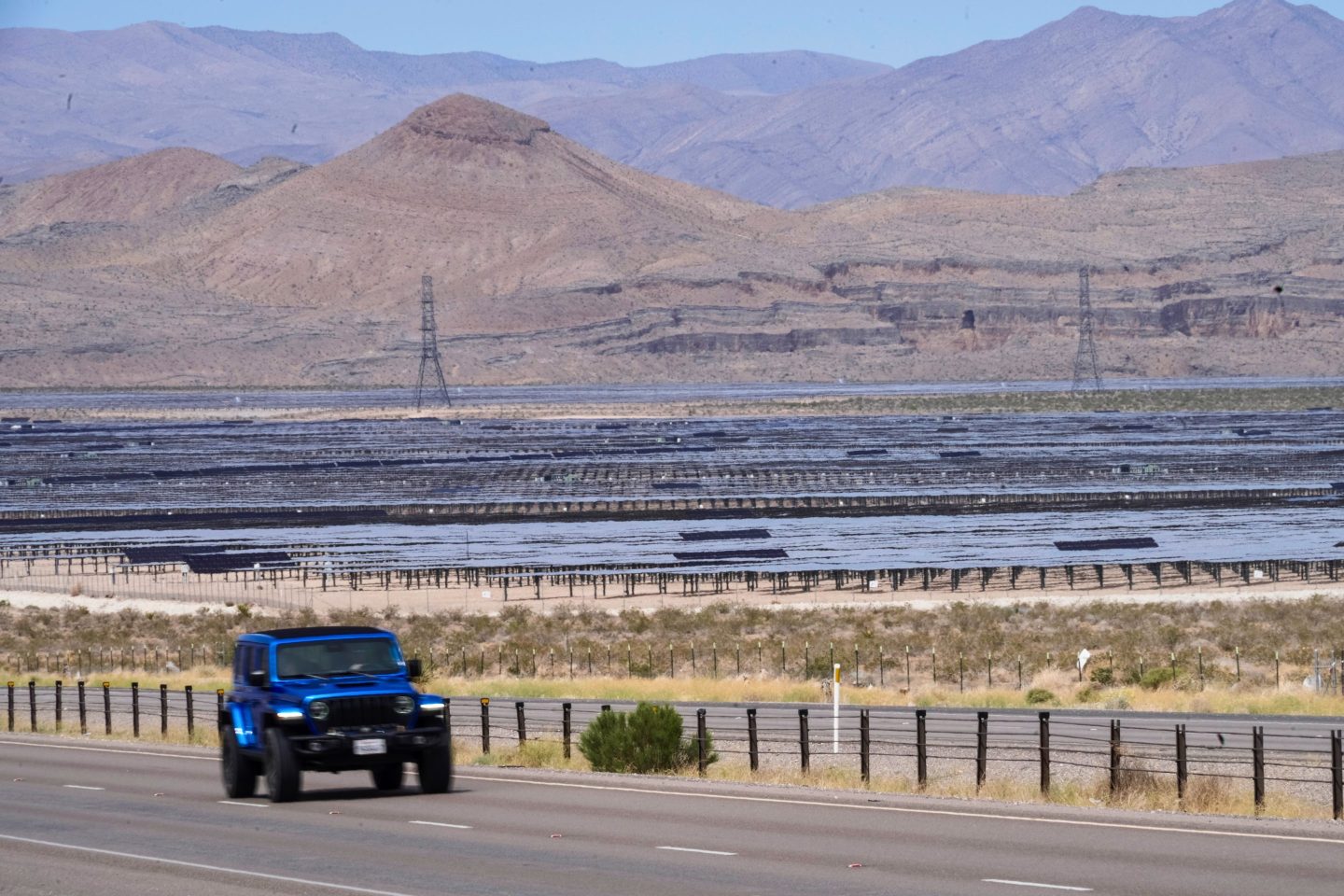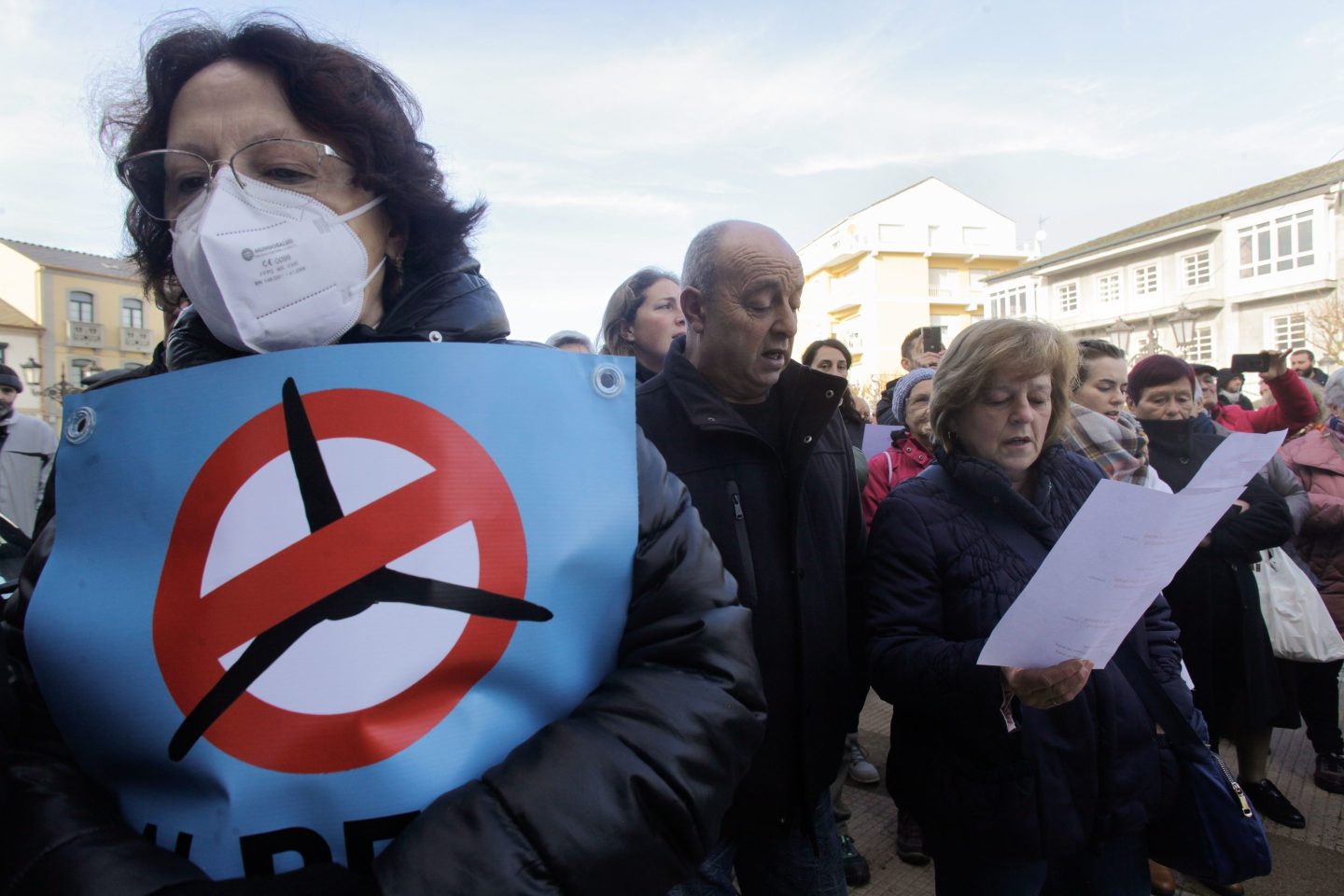
As the United States injects hundreds of billions of dollars into clean energy through its signature climate law, known as the Inflation Reduction Act, criticism is growing louder about where, how and whether new development should be allowed.
As opposition grows, once-routine regulatory processes are taking several years, if they are completed at all. Some communities are concerned about landscape changes, some property values and others wildlife preservation. Layered on top of these debates is misinformation, which sows doubt and mistrust among developers and communities.
A new class at the Massachusetts Institute of Technology offers a glimpse into a novel way of resolving these types of conflicts.
MIT is offering a first-of-its-kind course that trains students to be mediators in conflicts over clean energy projects. Supervised by a professional mediator, students work directly with developers, local officials and community members. Students get academic credit and hands-on experience addressing real-world dilemmas, while the community and developer get free help resolving conflict.
“Most coverage of clean-energy opposition sloppily reaches for the term NIMBYism,” said Larry Susskind, the MIT professor behind the course, during one recent class a reporter visited. He was referring to the common acronym for “not in my backyard” opposition. Ultimately, Susskind said, such framing delegitimatizes affected community members and stokes acrimony.
___
EDITOR’S NOTE: This story is a collaboration between Cipher News and The Associated Press.
___
Curbing climate change — and extreme weather for future generations — depends squarely on society’s ability to rapidly build new clean energy infrastructure despite the messy puzzle of local, state and federal reviews projects must overcome.
Today, the technologies being built are mostly wind and solar farms, storage facilities and powerlines. In the coming decades, new projects will include everything from carbon dioxide pipelines to facilities capturing CO2 directly from the sky to renewable hydrogen production.
There has been debate in Washington D.C. and elsewhere around the country about how to speed up project reviews. Most has focused on streamlining permitting processes, such as limiting the time local officials can spend on reviews and giving state and federal governments power to overrule local authorities. New York and California recently passed such laws and these could become models for the whole country.
But “this risks simply ignoring community concerns instead of finding ways to make the siting process more just in the eyes of those who are protesting,” Susskind and research colleagues write in an article set to be published in the January 2024 issue of the scientific journal Cell Reports Sustainability.
In Susskind’s class, dubbed the MIT Renewable Energy Clinic, he hopes to create collaboration that may slow down projects initially by incorporating more input but ultimately speed them up by avoiding later-stage conflicts.
In one recent Friday afternoon class, students debated everything from environmental justice concerns to misinformation to oil companies. Ultimately, several students said they will need to put their own opinions aside to assume the role of mediator.
“We must find a way to be fair and create equal conditions for all parties,” Leyla Uysal, a design school student from Harvard University with an urban planning background, said. “It’s going to be difficult, but I will educate myself not to take sides.”
The students, about two dozen across a range of disciplines, ages and other area schools, recently completed a certification exam. The certification prepares them to begin the real-world part of the class. The projects in this first course are two solar farms proposed by Chicago-based Ranger Power for counties in Michigan, which are already facing opposition.
“We’re not starting at the beginning,” Susskind said. “We’re coming in because they are stalled.”
It’s not Susskind’s first hands-on academic effort. He helped create the first student-led cybersecurity clinic in 2021 to help defend public infrastructure from hacking. It has since expanded to 15 universities and received $20 million from Google this summer.
He hopes to create a similar national consortium of universities serving communities and projects in their respective regions regarding clean energy.
A ‘Jeffersonian democracy approach’
Columbia University is already talking with Susskind. Abraham Silverman directs a new initiative at the university focused on permitting and other non-technical challenges in the clean energy transition, and said he favors processes that focus more on expediting permitting decisions, but that he’s “intrigued” by Susskind’s approach of more directly engaging communities.
“That is a very Jeffersonian democracy approach on siting and permitting,” said Silverman, a former top official at the New Jersey Board of Public Utilities. “It’s refreshing to have people like Larry take a look at these kinds of things.”
One foundational challenge Susskind faces is potential lack of trust from community members skeptical of outsiders.
“Some students may naively think that coming in as MIT is a good thing, but they may find out soon enough that’s a bad thing,” said Patrick Field, a senior mediator at the Consensus Building Institute who is supervising the class and recently visited Cambridge.
Undergraduate student Anushree Chaudhuri has a cautionary tale. She faced angry phone calls (or no callbacks at all) while studying projects this summer in California on behalf of research associated with the clinic. Part of the problem, she said, was wording on the webpage for the clinic that implied preference for development over engagement, which has since been changed, she said.
“For students who are new to this kind of engagement with communities, it can be hard to develop empathy unless you start having conversations,” Chaudhuri says. “And it can be hard to have empathy if everyone angrily hangs up on you.”
Students are seeking to engage with local company representatives, public regulators and community members in the two Michigan solar projects over the coming weeks, with the goal of making progress by mid-December.
Progress will be measured not by the projects moving forward, but instead by all stakeholders finding more understanding of the other side, Field said: “Did people walk away with emotions turned down and a sense of understanding and respect, even if an agreement doesn’t exist?”
Urban-rural divide
On the subject of trust, Sarah Mills, an urban and regional planning professor at the University of Michigan, who is not involved with the clinic, noted the rural-urban divide that exists in many states. Rural residents often trust schools with deeper rural ties more than universities like hers, she said. She is exploring the potential for agricultural extension programs to act as facilitators in renewable energy siting conflicts.
The next iteration of the MIT course, slated for spring, may engage with communities and developers on projects that are not (yet anyway) at loggerheads, according to Susskind.
“We’re not going to give up if we fail the first or second time,” Susskind said. “It may be a function of the places we choose to work. It may be easier to start with a place that isn’t already in a battle.”
___
Associated Press climate and environmental coverage receives support from several private foundations. See more about AP’s climate initiative here. The AP is solely responsible for all content.