• Home
  • Latest
  • Fortune 500
  • Finance
  • Tech
  • Leadership
  • Lifestyle
  • Rankings
  • Multimedia

Trendingnow

1

After forcing workers back to the office, Goldman Sachs and JPMorgan Chase are now letting their staff work remotely—but only for the World Cup

2

The Pentagon said Iran War costs $29 billion, but the real cost is closer to $200 billion—and counting

3

Markets tumble worldwide as Fed resets expectations: $400 billion wiped off SpaceX stock

1

After forcing workers back to the office, Goldman Sachs and JPMorgan Chase are now letting their staff work remotely—but only for the World Cup

2

The Pentagon said Iran War costs $29 billion, but the real cost is closer to $200 billion—and counting

3

Markets tumble worldwide as Fed resets expectations: $400 billion wiped off SpaceX stock
CommentaryRetail

Some politicians are waging a war on sustainability. New research shows U.S. consumers of all persuasions, from Gen Zers to boomers, are going in the opposite direction

By
Tensie Whelan
Tensie Whelan
and
Randi Kronthal-Sacco
Down Arrow Button Icon
By
Tensie Whelan
Tensie Whelan
and
Randi Kronthal-Sacco
Down Arrow Button Icon
October 17, 2023, 6:07 AM ET
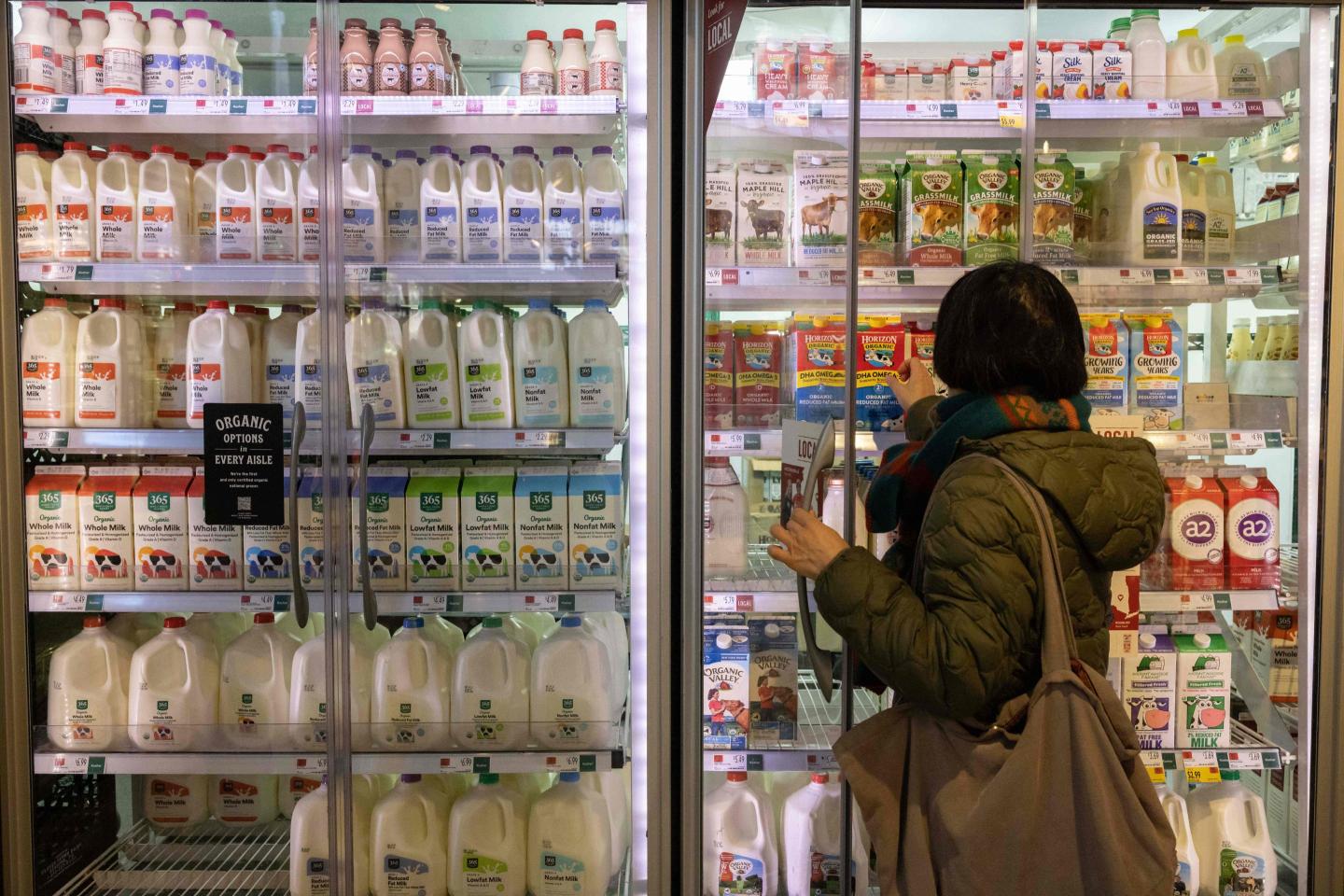
Women in a supermarket is selecting a dairy product
U.S. consumers are gravitating toward sustainable products regardless of party, age, or geography.Yuki Iwamura—AFP/Getty Images
Add Fortune on Google for similar content.

At a time when political factions are decrying corporate efforts to operate more sustainably by protecting the environment, it may come as a surprise to learn that most Americans, regardless of party, income level, geographic location, age, or gender, want to purchase sustainable products.

Our research at NYU Stern Center for Sustainable Business (CSB) has found that not only are sustainability-marketed products growing twice as fast as conventionally marketed products, but they are also selling at a premium of 28%, on average. We also found that certain sustainability messages will drive significant increases in purchase intent, across political parties, age, income level, and location.

The messaging that persuades American consumers

Partnering with Edelman and nine iconic brands, CSB tested messages across sectors on core product attributes as well as a host of environmental sustainability messages. We invited consumers to choose among the messages, highlighting which ones were more likely to drive purchase intent.

We found notably high ratings for messages about “my health, my wealth, my world.” Consumers from all demographics responded most positively to claims that directly referenced personal health benefits for themselves and their families, individual monetary savings, and impacts on their immediate world and communities around them. Other high-performing claims included animal welfare, supporting local farmers, and 100% sustainable sourcing.

Those claims worked best when aligned with core product attribute claims. Nobody wants to buy a laundry detergent that doesn’t clean well, even if it is sustainable. Consumers want to know first that the brand delivers the benefits for the category they are purchasing (whether it cleans clothes well, tastes good, moisturizes skin well, etc.).

While we found that an articulation of the core attribute alone would be appealing to 44% of the potential target audience, adding two additional sustainability claims tied to that core attribute drives increased appeal by 24 and 33 percentage points to an average of 74% across the nine brands. The most compelling claims could be “good for your skin and the planet,” or “tastes great because we partner with local farmers for 100% sustainable sourcing.”

In sum, consumers of all walks of life and political persuasions are interested in products that improve their quality of life from a sustainability perspective, especially when connected to themselves, their family, and their community.

Americans are voting with their wallets

This is what consumers say they will purchase, not what they’re actually purchasing. Is there a “green gap,” with consumers saying they plan to buy green products, but not actually doing it?

We tackled this question through a partnership with Circana (formerly IRI) to review the bar code data it has collected on the purchasing of consumer packaged goods across all stores going back to 2013. We looked at 250,000 products for on-pack claims in 36 of 40 consumer package goods (CPG) categories.

We found that while sustainability-marketed products make up only 17.3% of total sales, they are responsible for 30% of the growth in the sector. In fact, in 2021, one of every two new CPG products sold had one or more sustainability attributes. Some categories such as dairy, yogurt, and toilet paper have more than 60% of products sold with sustainable attributes. Sustainable market share continues to grow while conventional products are in deficit growth. For those categories that are widely available, we see that all demographics buy them, even at a premium, though people with lower education and lower incomes tend to buy fewer sustainable products (due to cost and availability). 

The growth in purchasing of sustainability-marketed products has been strong through the pandemic and the recent inflationary period. And since we issued our first report in 2019, those categories have continued to grow sustainable market share. We broke down the 36 categories into low share (underdeveloped at less than 5% sustainable share of their respective category), medium share (5% to 15% sustainable share), and highly developed (more than 20% share). In 2018, there were 14 of the 36 categories in the low bucket; now there are nine. Most moved to the medium grouping—and one category moved to the high designation in just four years. In the original study, only nine categories were considered highly developed, and now it’s 13—a third of all the categories we studied.

Younger consumers tend to over-index on sustainable purchasing, as do those with higher incomes and education, as well as those in urban areas. Generation X and boomers, as well as middle-income, suburban, and rural cohorts, also tend to purchase sustainable products. It is primarily the retirees, people with only a high school education, and low-income consumers who tend to under-index, primarily due to availability and price. As we see these products become more available and the premiums decrease, we are likely to see more purchasing from those groups as well.

Most Americans would like to purchase sustainable products that are healthier, drive savings (such as lower energy costs), protect their children’s future, improve animal welfare, support local farmers, and are 100% sustainably sourced. Consumers don’t see it as a political position, and our research finds that Americans are carrying through with that purchase intent.

Tensie Whelan is the founding director of the NYU Stern Center for Sustainable Business.

Randi Kronthal-Sacco is a senior scholar at NYU Stern Center for Sustainable Business.

More must-read commentary published by Fortune:

  • Return-to-office mandates: Why tax breaks are not a reason for companies in states such as Texas, Utah, and New Jersey to force employees back
  • Freakonomics author: ‘Objections to data science in K-12 education make no sense’
  • Burnout is attacking our brains and making it harder to excel at work. ‘Deliberate calm’ can help us adapt
  • The growing case for doing less: How harmless cancers are being overdiagnosed in America

The opinions expressed in Fortune.com commentary pieces are solely the views of their authors and do not necessarily reflect the opinions and beliefs of Fortune.

About the Authors
By Tensie Whelan
See full bioRight Arrow Button Icon
By Randi Kronthal-Sacco
See full bioRight Arrow Button Icon
Add Fortune on Google for similar content.

Latest in Commentary

Finance
Lorem ipsum dolor sit amet, consectetur adipiscing elit, sed do eiusmod tempor incididunt ut labore et dolore magna aliqua. Ut enim ad minim veniam
By Fortune Editors
October 20, 2025
Finance
Lorem ipsum dolor sit amet, consectetur adipiscing elit, sed do eiusmod tempor incididunt ut labore et dolore magna aliqua. Ut enim ad minim veniam
By Fortune Editors
October 20, 2025
Finance
Lorem ipsum dolor sit amet, consectetur adipiscing elit, sed do eiusmod tempor incididunt ut labore et dolore magna aliqua. Ut enim ad minim veniam
By Fortune Editors
October 20, 2025
Finance
Lorem ipsum dolor sit amet, consectetur adipiscing elit, sed do eiusmod tempor incididunt ut labore et dolore magna aliqua. Ut enim ad minim veniam
By Fortune Editors
October 20, 2025
Finance
Lorem ipsum dolor sit amet, consectetur adipiscing elit, sed do eiusmod tempor incididunt ut labore et dolore magna aliqua. Ut enim ad minim veniam
By Fortune Editors
October 20, 2025
Finance
Lorem ipsum dolor sit amet, consectetur adipiscing elit, sed do eiusmod tempor incididunt ut labore et dolore magna aliqua. Ut enim ad minim veniam
By Fortune Editors
October 20, 2025

Most Popular

Finance
Lorem ipsum dolor sit amet, consectetur adipiscing elit, sed do eiusmod tempor incididunt ut labore et dolore magna aliqua. Ut enim ad minim veniam
By Fortune Editors
October 20, 2025
Finance
Lorem ipsum dolor sit amet, consectetur adipiscing elit, sed do eiusmod tempor incididunt ut labore et dolore magna aliqua. Ut enim ad minim veniam
By Fortune Editors
October 20, 2025
Finance
Lorem ipsum dolor sit amet, consectetur adipiscing elit, sed do eiusmod tempor incididunt ut labore et dolore magna aliqua. Ut enim ad minim veniam
By Fortune Editors
October 20, 2025
Finance
Lorem ipsum dolor sit amet, consectetur adipiscing elit, sed do eiusmod tempor incididunt ut labore et dolore magna aliqua. Ut enim ad minim veniam
By Fortune Editors
October 20, 2025
Finance
Lorem ipsum dolor sit amet, consectetur adipiscing elit, sed do eiusmod tempor incididunt ut labore et dolore magna aliqua. Ut enim ad minim veniam
By Fortune Editors
October 20, 2025
Finance
Lorem ipsum dolor sit amet, consectetur adipiscing elit, sed do eiusmod tempor incididunt ut labore et dolore magna aliqua. Ut enim ad minim veniam
By Fortune Editors
October 20, 2025
Fortune Secondary Logo
Rankings
  • 100 Best Companies
  • Fortune 500
  • Global 500
  • Fortune 500 Europe
  • Most Powerful Women
  • World's Most Admired Companies
  • See All Rankings
  • Lists Calendar
Sections
  • Finance
  • Fortune Crypto
  • Features
  • Leadership
  • Health
  • Commentary
  • Success
  • Retail
  • Mpw
  • Tech
  • Lifestyle
  • CEO Initiative
  • Asia
  • Politics
  • Conferences
  • Europe
  • Newsletters
  • Personal Finance
  • Environment
  • Magazine
  • Education
Customer Support
  • Frequently Asked Questions
  • Customer Service Portal
  • Privacy Policy
  • Terms Of Use
  • Single Issues For Purchase
  • International Print
Commercial Services
  • Advertising
  • Fortune Brand Studio
  • Fortune Analytics
  • Fortune Conferences
  • Business Development
  • Group Subscriptions
About Us
  • About Us
  • Press Center
  • Work At Fortune
  • Terms And Conditions
  • Site Map
  • About Us
  • Press Center
  • Work At Fortune
  • Terms And Conditions
  • Site Map
  • Facebook icon
  • Twitter icon
  • LinkedIn icon
  • Instagram icon
  • Pinterest icon

Latest in Commentary

steve
Commentary250 Years of Innovation
Steve Case: America was built by entrepreneurs. Here’s how we keep that edge for the next 250 years
By Steve CaseJune 24, 2026
4 hours ago
t
CommentaryWhite House
Trump mistakes the bully pulpit for bullying leadership — history’s villains were never heroes
By Jeffrey Sonnenfeld and Steven TianJune 24, 2026
4 hours ago
mg
CommentaryHealth
The ‘tech neck’ time bomb: why 43 million young Americans could cripple U.S. health care within a generation
By Michael GerlingJune 24, 2026
5 hours ago
sb
Commentaryclimate change
The climate policy triangle: why leaders can no longer choose between growth, security and sustainability
By Sebastian BuckupJune 23, 2026
19 hours ago
brett
CommentaryManagement
Middle managers aren’t going extinct—they’re evolving into something more powerful
By Brett HurtJune 23, 2026
1 day ago
ravi
CommentaryAI agents
Yale School of Management: surveillance pricing is just the beginning. AI agents will be the real test of corporate trust
By Ravi Dhar and Jon IwataJune 23, 2026
1 day ago

Most Popular

After forcing workers back to the office, Goldman Sachs and JPMorgan Chase are now letting their staff work remotely—but only for the World Cup
Success
After forcing workers back to the office, Goldman Sachs and JPMorgan Chase are now letting their staff work remotely—but only for the World Cup
By Orianna Rosa RoyleJune 23, 2026
1 day ago
The Pentagon said Iran War costs $29 billion, but the real cost is closer to $200 billion—and counting
Economy
The Pentagon said Iran War costs $29 billion, but the real cost is closer to $200 billion—and counting
By Jacqueline MunisJune 24, 2026
9 hours ago
Markets tumble worldwide as Fed resets expectations: $400 billion wiped off SpaceX stock
Banking
Markets tumble worldwide as Fed resets expectations: $400 billion wiped off SpaceX stock
By Jim EdwardsJune 23, 2026
1 day ago
Current price of oil as of June 23, 2026
Personal Finance
Current price of oil as of June 23, 2026
By Joseph HostetlerJune 23, 2026
1 day ago
Current price of gold as of June 23, 2026
Personal Finance
Current price of gold as of June 23, 2026
By Danny BakstJune 23, 2026
1 day ago
Texas and Charlotte used to build huge McMansions—now they're copying the California design tricks they once mocked
Real Estate
Texas and Charlotte used to build huge McMansions—now they're copying the California design tricks they once mocked
By Sydney LakeJune 22, 2026
2 days ago

© 2026 Fortune Media IP Limited. All Rights Reserved. Use of this site constitutes acceptance of our Terms of Use and Privacy Policy | CA Notice at Collection and Privacy Notice | Do Not Sell/Share My Personal Information
FORTUNE is a trademark of Fortune Media IP Limited, registered in the U.S. and other countries. FORTUNE may receive compensation for some links to products and services on this website. Offers may be subject to change without notice.