
Good morning. On Fortune’s radar today:
- Markets: Down across the board; SpaceX takes heavy losses.
- The Fed will hike rates three times this year, BofA warns.
- Ship owners navigate confusion and threats in the Strait of Hormuz.
- The Iran war boosted electric vehicle sales.
- What companies are paying per worker for AI tokens.
- Alan Greenspan’s hot tub.
- Why men are giving up on work.
THE MARKETS
Warsh warning: Global selloff underway as Fed resets expectations
- S&P 500 futures were down 1.37% this morning. The index slipped 0.37% yesterday.
- In Europe, the Stoxx 600 was down 1.09% in early trading and the U.K.’s FTSE 100 was down 0.76% before lunch.
- Asia: South Korea’s KOSPI was down 9.99%. Japan’s Nikkei 225 was down 3.55%. India’s Nifty 50 was down 0.82%. China’s CSI 300 was down 2.77%.
- Brent crude was $77 per barrel this morning, down from $79 the day before.
- Bitcoin was $62K.
U.S. futures were sharply down this morning, before the opening in New York, after markets in Asia and Europe all lost ground today. The declines followed a down day in the U.S., in which the S&P 500 lost 0.37%.
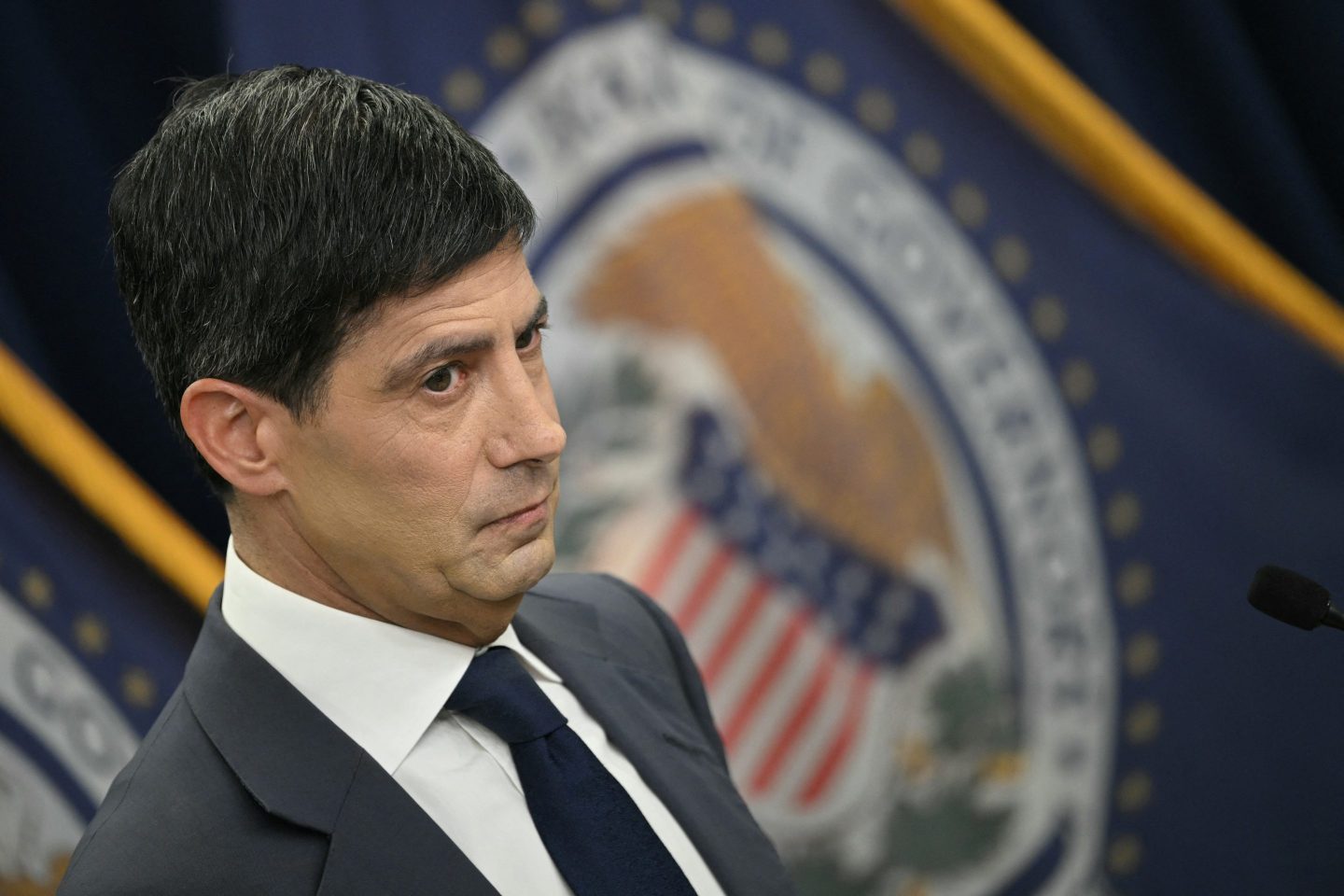
Tech stocks led the losses as investors reset their expectations around how the U.S. Federal Reserve might increase the future cost of money. Until recently, most analysts expected the Fed to hold interest rates where they are at the 3.5% level. However, new Fed chairman Kevin Warsh struck a surprisingly hawkish tone in his first rate-setting statement—and traders now suspect rates will rise later this year, making money more expensive to obtain in the future.
Higher interest rates are bad for tech stocks because AI hyperscalers have increasingly been using debt to fund their AI capex. Barclays estimates that $200 billion in new debt will be issued this year by hyperscalers.
SpaceX lost 16.43% yesterday, wiping $400 billion from its market cap, the FT noted. The stock fell to $154.60, still above its $135 initial offering price.
- The only good news for stocks came from the oil market, where prices continued to decline on expectations that Iran and the U.S. will be able to agree on a way to keep the Strait of Hormuz open. Brent crude was $77 per barrel this morning. "We suspect that crude prices could tumble further into the $50 to $60 per barrel range,” Alpine Macro’s Chen Zhao said in an email. "Crucially, declining crude prices may alter the Federal Reserve's ongoing calculus on structural inflation and, consequently, shift the trajectory of domestic monetary policy in due course."
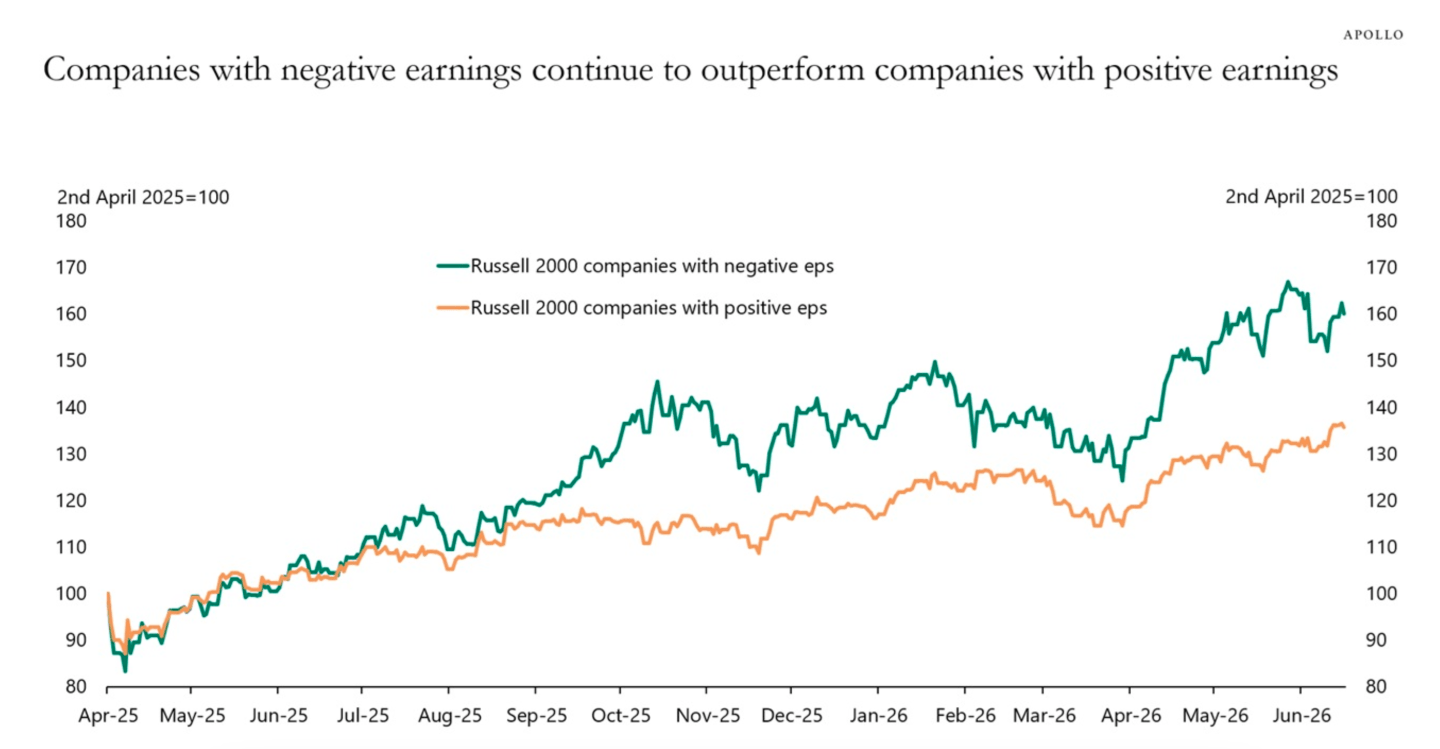
Heads up: There’s a questionable boom in stocks of companies that don’t make any money
This chart from Apollo Global Management’s Torsten Sløk shows a mystifying phenomenon that will surely unwind if the market goes into a correction: Shares in companies that lose money have done better over the last year than those of companies that have actually functioning businesses. “Something is broken in price discovery when companies with negative earnings keep outperforming companies with positive earnings,” he said on his blog.
THE FED
BofA: Brace for three rate hikes—yes, three
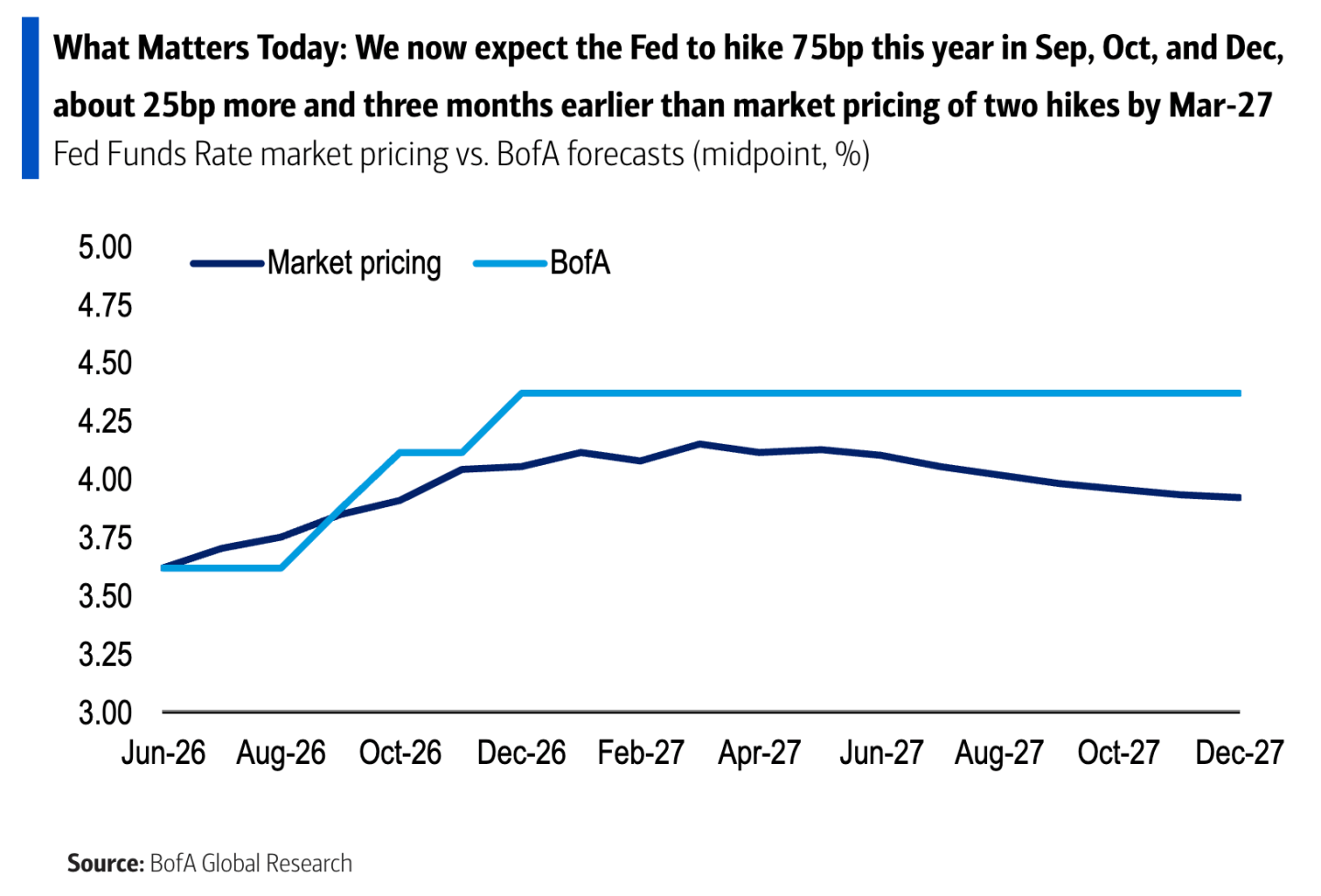
The futures market is pricing in a rise in interest rates from the Fed later this year, but there’s a wide range of opinions on Wall Street as to whether they will actually happen.
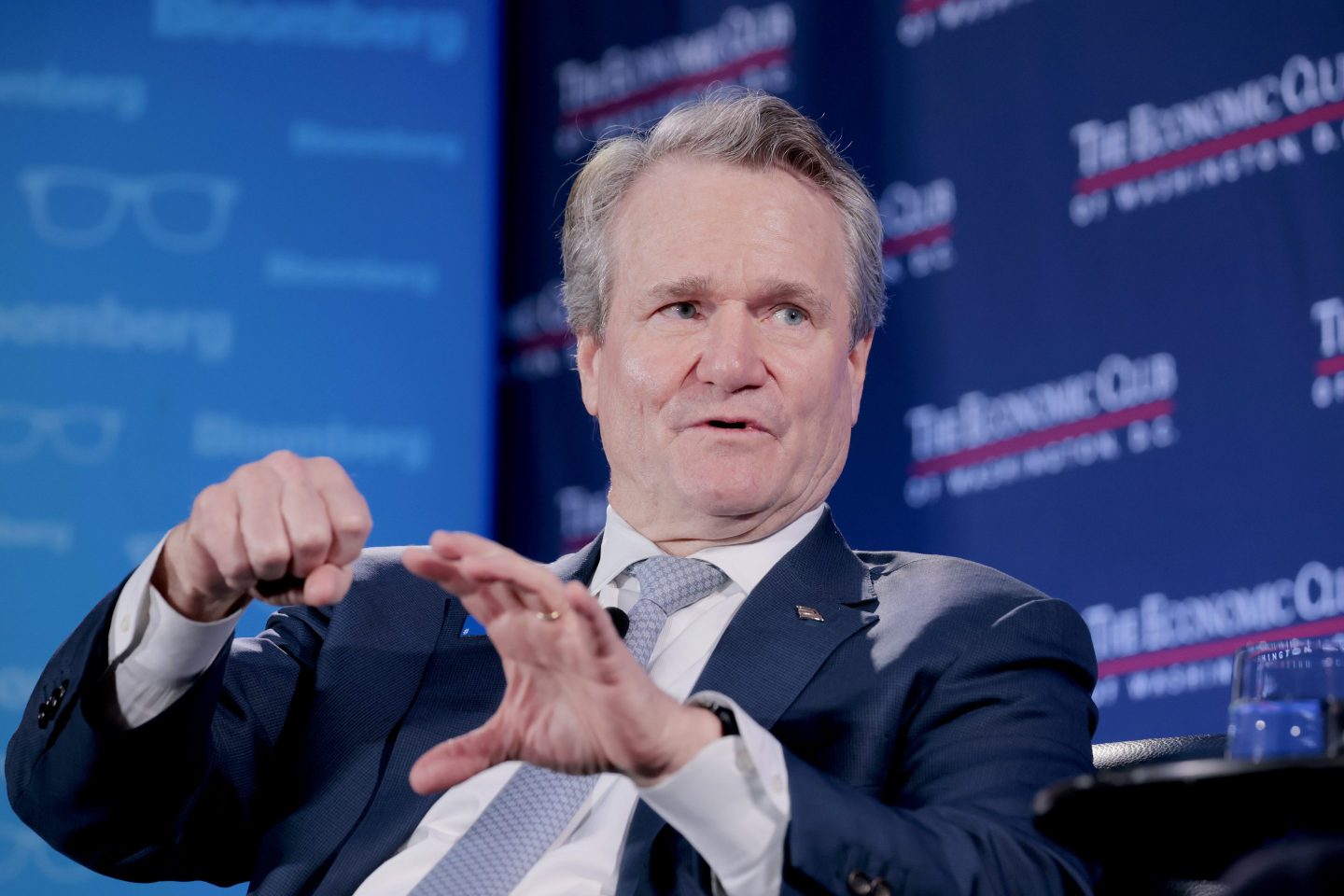
Bank of America U.S. economist Aditya Bhave made a big call yesterday. He thinks we’re going to see three(!) interest rate rises this year: “We now expect three 25 basis point Fed hikes this year, in Sep, Oct and Dec. This would take the policy rate to 4.25-4.5%.”
“Inflation is likely to remain sticky, keeping the real policy rate from becoming overly restrictive,” he told clients in a note. This chart shows what the futures market predicts vs. Bhave’s view:
IRAN
Confusion and threats reign over the Strait of Hormuz
Ships are starting to trickle through the Strait of Hormuz, but the passage remains fraught with threats and confusion coming from both the U.S. and Iran, the FT reports. More than 30 ships transited in a 24-hour period ending on Monday, according to U.K. Maritime Trade Operations, a monitoring agency. That’s the most since the start of the war. This chart from Deutsche Bank shows there is a long way to go before normality is restored:
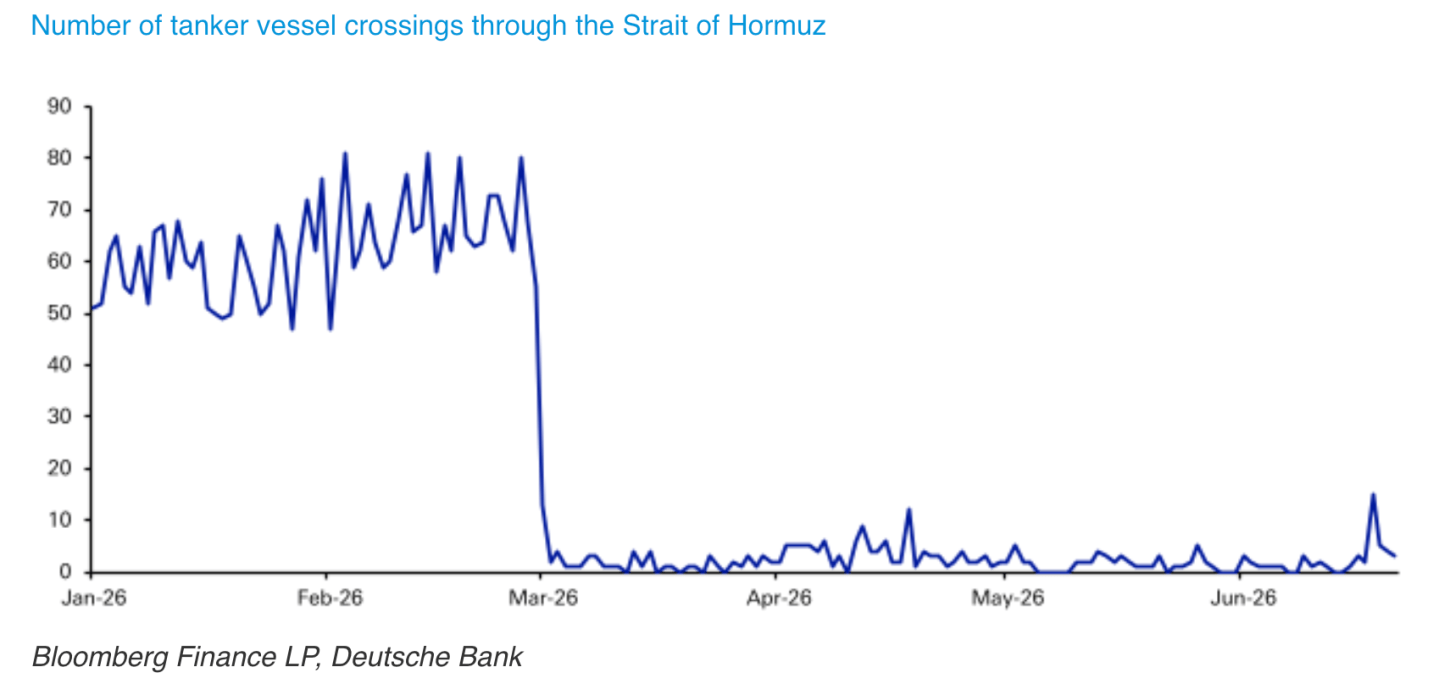
However, Iran is demanding that ships follow a route close to its coastline and boats that do not will face “penalties.” Meanwhile, the U.S. is urging captains to follow a course close to the Oman coastline.
At the same time, Iran has created a new agency, the Persian Gulf Strait Authority, and is insisting that all ships passing through the Strait must have insurance approved by the agency. Sources told the New York Post that this is completely unacceptable to the commercial shipping industry.
“The situation in the Strait of Hormuz is about as transparent as the Lincoln reflecting pool,” UBS economist Paul Donovan told clients this morning.
- Israel fears Trump is strengthening Iran's hand in Lebanon - Axios
- Iran says no new commitments on nuclear sites after Vance says inspectors to be invited back
MORE FROM FORTUNE
A decade on from the Brexit vote, the U.K. will have 7 prime ministers, hit a demographic trap, and taken a 6% hit to its economy - Tristan Bove
Insilico Medicine, SK Biopharmaceuticals strike $2.5B AI drug discovery deal targeting neuroimmune therapies - Nicholas Gordon
The World Cup’s biggest winner so far? Prediction markets, where a $5.4 billion betting frenzy has shattered previous records - Camila Grigera Naón
Elon Musk will get a billion shares of SpaceX if he can settle a million humans on Mars - Catherina Gioino
Kraft pounces on World Cup ranch craze with TSA-approved travel kits after the agency tells visitors to ‘avoid chugging’ the dressing - Catherina Gioino
Nvidia says its new data center design will fix AI’s water problem - Jacqueline Munis
Drowning in AI: Companies are launching hundreds of projects, and that’s a problem - Jeff John Roberts
Tech companies dealing with data center protests locally are fighting a losing battle: Only 8% of opponents actually live near one - Tristan Bove
QUOTE OF THE DAY
On Alan Greenspan, the former Fed chair who died yesterday: “Years later I asked him the secret of his remarkable longevity and productivity. His answer surprised me: soaking in a hot tub.”
—Peter Hooper, Deutsche Bank’s vice-chair of research, who worked with Greenspan at the Fed from 1987 onwards.
CHART OF THE DAY
Giving up on gasoline: Iran war boosted EV sales globally
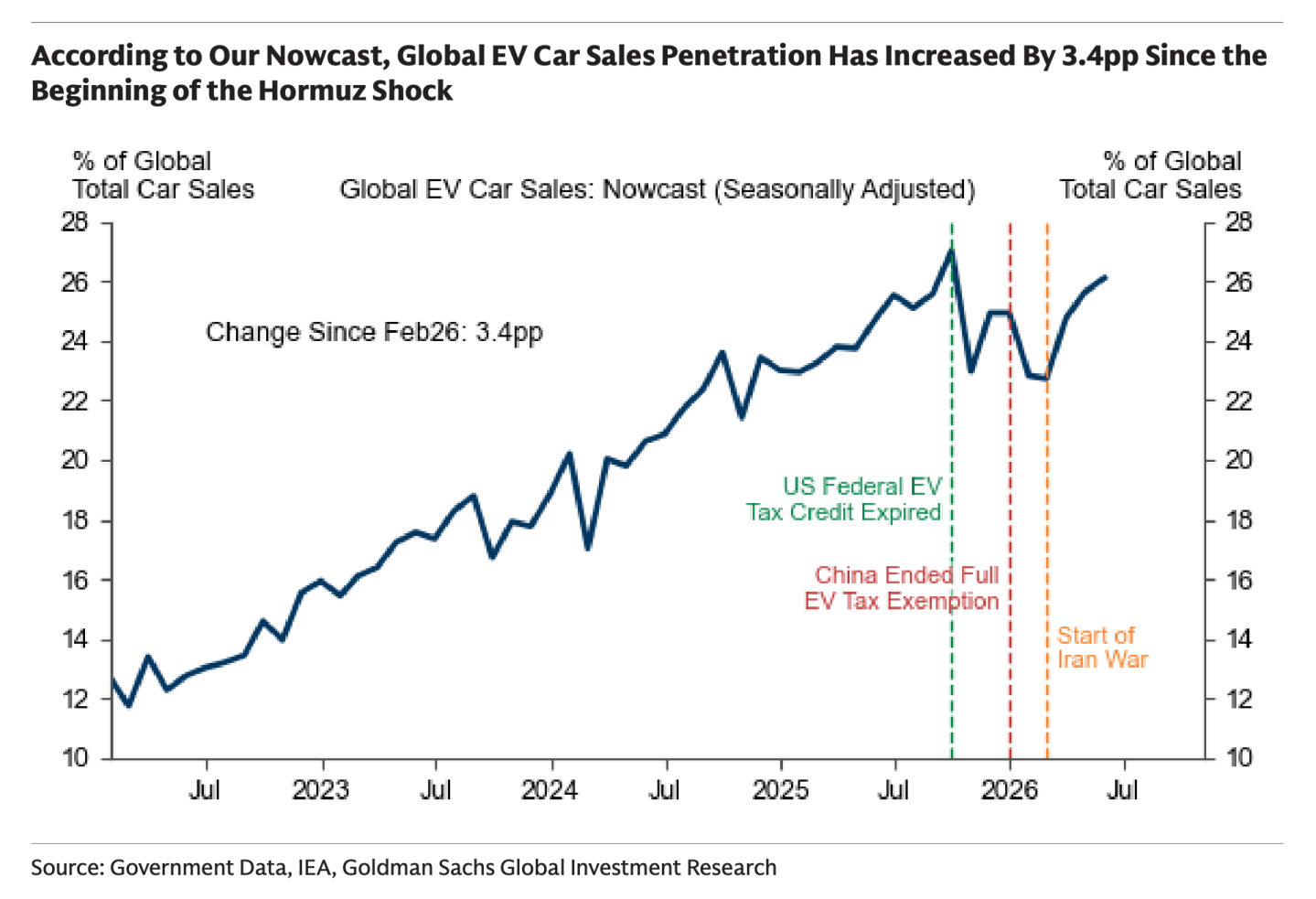
Consumers are losing their trust in gasoline following price hikes caused by the conflict in the Middle East, and they’re shifting toward electric vehicles instead, according to Alexandra Paulus and her team at Goldman Sachs. This chart shows that EV sales had stalled until the war kicked them back into gear. Every 1 million drivers who move from gas-powered cars to EVs lowers oil demand by 30,000 barrels per day in the U.S. and 20,000 in other countries, she estimates.
NUMBER OF THE DAY
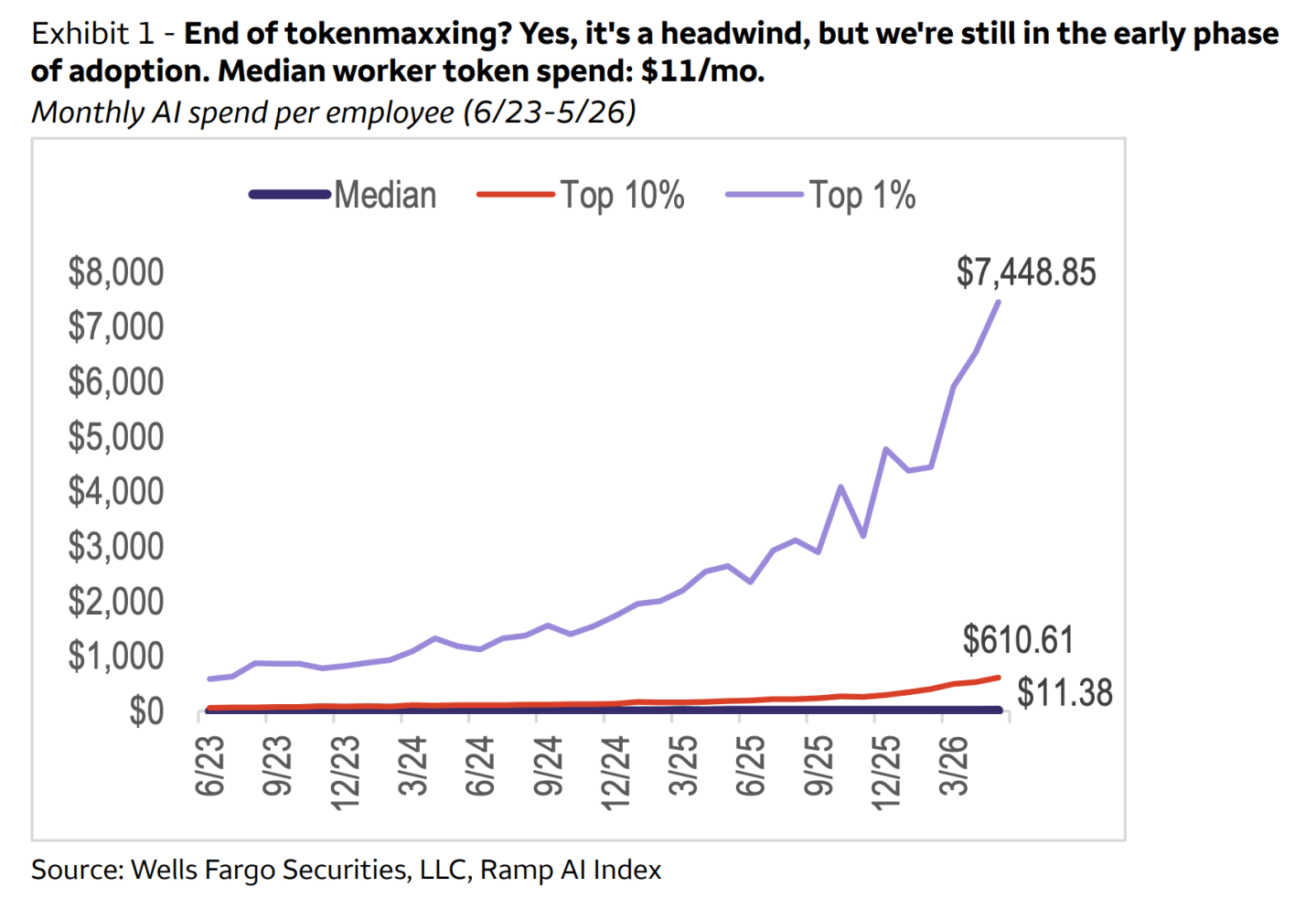
$7,448.85
The amount spent, on average, by the top 1% of corporate users of AI tokens. The average monthly spend of the top 10% is just $610.61 and the median is $11.28, according to data from Ohsung Kwon and his team at Wells Fargo. There will be downward price pressure on AI tokens, Kwon predicts, as companies ask how much bang they are getting for their bucks.
THE FRONT PAGES TODAY
Citadel: the hedge fund that became an energy giant - FT
‘I like their money’: Trump threatens lawsuits against ABC for reporting on Reflecting Pool - CNBC
"I'm out": Tucker Carlson says he's done with the GOP - Axios
Top-Paid CEOs Smash the $200 Million Payday - WSJ
Korean Stocks Tumble 10% as Soaring Volatility Rattles Investors - Bloomberg
The Secret Reason Bosses Want Everyone Back in the Office, Every Day of the Week - NYT
New details about Nancy Guthrie ransom note confirm grim claim about her fate - NY Post
ONE MORE THING
Boys who grew up watching their dads struggle are now giving up on work too
Why are men increasingly dropping out of the U.S. workforce? The male labor force participation rate peaked at 86.4% in 1950, but slid to 79.7% in 1970, 76.4% in 1990, 76% in May 2006, and is now just 69.5%, according to the Labor Department. A new paper from University of Connecticut economists Remy Levin and Daniela Vidart argues that men’s beliefs about the benefits of work are shaped by the labor market conditions they observed over their lifetimes, particularly during childhood.
When young males grow up seeing weak wages and high unemployment among men around them, they form pessimistic expectations about their own prospects in life, making them less likely to get jobs, the economists explained. “Our findings suggest that experience effects can turn short-run declines in labor demand into long-run declines in labor supply,” they wrote. Their paper said that generational childhood exposure explained nearly all of the labor force participation dynamics—and not macroeconomic conditions like national unemployment or inflation. Read the story here.