• Home
  • News
  • Fortune 500
  • Tech
  • Finance
  • Leadership
  • Lifestyle
  • Rankings
  • Multimedia
EnvironmentOil

‘We’re in a fossil trap’: U.S. oil production hits an all-time high despite the huge push for green energy

By
Seth Borenstein
Seth Borenstein
and
The Associated Press
Down Arrow Button Icon
By
Seth Borenstein
Seth Borenstein
and
The Associated Press
Down Arrow Button Icon
October 13, 2023, 3:21 PM ET
U.S. oil production is at an all-time high.
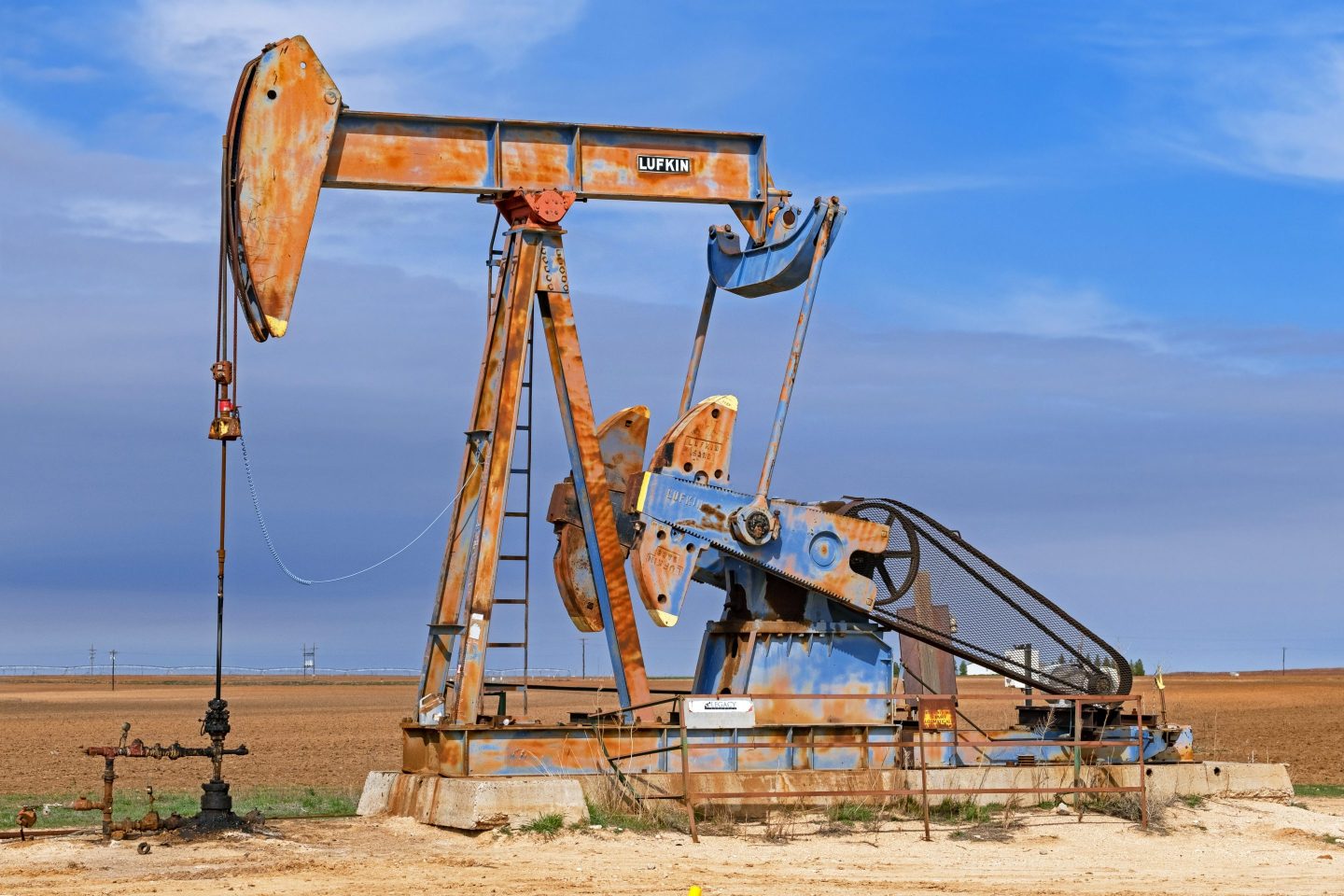
U.S. oil production is at an all-time high. Marica van der Meer/Arterra/Universal Images Group via Getty Images

United States domestic oil production hit an all-time high last week, contrasting with efforts to slice heat-trapping carbon emissions by the Biden administration and world leaders.

Recommended Video

And it conflicts with oft-repeated Republican talking points of a Biden “war on American energy.”

The U.S. Department of Energy’s Energy Information Administration reported that American oil production in the first week of October hit 13.2 million barrels per day, passing the previous record set in 2020 by 100,000 barrels. Weekly domestic oil production has doubled from the first week in October 2012 to now.

With the United Nations and scientists saying the world needs to cut carbon emissions — from burning coal, oil and natural gas — by 43% by 2030 and down to zero or close to it by 2050, several developed countries across the world are dangerously producing more, not less, fossil fuels, experts say.

“Continuing to expand oil and gas production is hypocritical and not at all consistent with the global call to phase down fossil fuels,” said climate scientist Bill Hare, CEO of Climate Analytics which helps track global actions and policies to curb climate change. “The U.S. support for expanded fossil fuel production will undermine global efforts to reduce emissions.”

But the U.S. isn’t alone in this. Hare pointed to Norway, Australia, the United Kingdom and Canada, adding France because of support of the company TotalEnergies. And the designated president of upcoming climate negotiations heads the United Arab Emirates national oil company, which has announced plans to boost drilling.

“From Exxon-Mobil to Shell, Guyana to Cote d’Ivorie, those with fossil resources seek to boost production and delay action to reduce our greenhouse gas emissions,” said MIT professor John Sterman, who founded Climate Interactive, an organization that models future warming based on countries’ proposed actions. He said that path will lead to “catastrophe.”

Stanford University climate scientist Rob Jackson, who heads the emissions-tallying group Global Carbon Project, said no country or company wants to cut oil and gas production if someone else is going to sell oil anyway.

“We’re in a fossil trap,” Jackson said.

White House officials have long considered increased oil production inside the United States as a bridge to help soften the transition to renewable energy sources. Officials have closely tracked domestic production, noting that output has risen by an average of more than one million barrels a day over the past year. It’s evidence that many of the oil price increases reflect the policy choices of other countries including Saudi Arabia on what is a globally priced commodity.

The Biden administration has committed several hundred billions of dollars in government incentives for moving away from fossil fuels to limit the damage from climate change.

Just because the United States is increasing oil production, that doesn’t mean it won’t phase down emissions, said Samantha Gross, director of energy security and climate at the centrist Brookings Institution. She said U.S. oil is less carbon-intensive than other oil, an argument the UAE’s oil company also makes.

“So long as oil is demanded,” Gross said. “Demand drives production — we need to change the whole system to reduce oil demand.”

“Replacing oil in power production is a lot easier than replacing oil in transportation,” Gross said in an email. “We need changes in the transportation sector, along with policies to reduce demand for transport — like teleworking, walkable neighborhoods and good public transportation.”

The Energy Department’s EIA in a separate document predicted global carbon emissions will rise, not plummet, through 2050.

“If the EIA is right, we’ll add another trillion tons of CO2 pollution to the atmosphere by 2050 and millions of people will die,” Stanford’s Jackson said. “There’s no other way to see it.”

Republican senators and congressmen, including the House Energy and Commerce Committee, this year have repeated the phrase “Biden’s War on American Energy.”

Jared Bernstein, chair of the White House Council of Economic Advisers, pushed back on that last month.

“There are thousands of available permits — places where oil companies could drill,” Bernstein said. “They’ve been highly profitable. They’ve been highly productive. So, I don’t think that’s the problem.”

Stanford’s Jackson said the Biden administration has swung back and forth on energy exploration, approving the Willow oil project in Alaska but cancelling drilling permits in the Arctic National Wildlife Refuge.

“It’s clear that the Biden administration is not running a war against fossil fuels, or if it is, it’s a very unsuccessful war,” Climate Analytics Hare said.


Fortune Brainstorm AI returns to San Francisco Dec. 8–9 to convene the smartest people we know—technologists, entrepreneurs, Fortune Global 500 executives, investors, policymakers, and the brilliant minds in between—to explore and interrogate the most pressing questions about AI at another pivotal moment. Register here.
About the Authors
By Seth Borenstein
See full bioRight Arrow Button Icon
By The Associated Press
See full bioRight Arrow Button Icon

Latest in Environment

coal
EnvironmentCoal
‘You have an entire culture, an entire community that is also having that same crisis’: Colorado coal town looks anxiously to the future
By Brittany Peterson, Jennifer McDermott and The Associated PressDecember 6, 2025
2 days ago
data center
EnvironmentData centers
The rise of AI reasoning models comes with a big energy tradeoff
By Rachel Metz, Dina Bass and BloombergDecember 5, 2025
2 days ago
Jaguar
EnvironmentArizona
‘This species is recovering’: Jaguar spotted in Arizona, far from Central and South American core
By Susan Montoya Bryan and The Associated PressDecember 5, 2025
3 days ago
Steve Jobs holds up the first iPod Nano
Big TechApple
Apple is experiencing its biggest leadership shake-up since Steve Jobs died, with over half a dozen key executives headed for the exits
By Dave SmithDecember 5, 2025
3 days ago
Paul Atkins
CommentaryCorporate Governance
Turning public companies into private companies: the SEC’s retreat from transparency and accountability
By Andrew BeharDecember 5, 2025
3 days ago
Four years ago, BKV started buying up the two Temple power plants in Texas—located between Austin and Dallas—which now total 1.5 gigawatts of electricity generation capacity—enough to power more than 1.1 million homes, or a major data center campus. There is room to expand.
Energypower
How a Texas gas producer plans to exploit the ‘megatrend’ of power plants for AI hyperscalers
By Jordan BlumDecember 5, 2025
3 days ago

Most Popular

placeholder alt text
Real Estate
The 'Great Housing Reset' is coming: Income growth will outpace home-price growth in 2026, Redfin forecasts
By Nino PaoliDecember 6, 2025
2 days ago
placeholder alt text
AI
Nvidia CEO says data centers take about 3 years to construct in the U.S., while in China 'they can build a hospital in a weekend'
By Nino PaoliDecember 6, 2025
2 days ago
placeholder alt text
Economy
The most likely solution to the U.S. debt crisis is severe austerity triggered by a fiscal calamity, former White House economic adviser says
By Jason MaDecember 6, 2025
1 day ago
placeholder alt text
Economy
JPMorgan CEO Jamie Dimon says Europe has a 'real problem’
By Katherine Chiglinsky and BloombergDecember 6, 2025
1 day ago
placeholder alt text
Big Tech
Mark Zuckerberg rebranded Facebook for the metaverse. Four years and $70 billion in losses later, he’s moving on
By Eva RoytburgDecember 5, 2025
3 days ago
placeholder alt text
Politics
Supreme Court to reconsider a 90-year-old unanimous ruling that limits presidential power on removing heads of independent agencies
By Mark Sherman and The Associated PressDecember 7, 2025
16 hours ago
Rankings
  • 100 Best Companies
  • Fortune 500
  • Global 500
  • Fortune 500 Europe
  • Most Powerful Women
  • Future 50
  • World’s Most Admired Companies
  • See All Rankings
Sections
  • Finance
  • Leadership
  • Success
  • Tech
  • Asia
  • Europe
  • Environment
  • Fortune Crypto
  • Health
  • Retail
  • Lifestyle
  • Politics
  • Newsletters
  • Magazine
  • Features
  • Commentary
  • Mpw
  • CEO Initiative
  • Conferences
  • Personal Finance
  • Education
Customer Support
  • Frequently Asked Questions
  • Customer Service Portal
  • Privacy Policy
  • Terms Of Use
  • Single Issues For Purchase
  • International Print
Commercial Services
  • Advertising
  • Fortune Brand Studio
  • Fortune Analytics
  • Fortune Conferences
  • Business Development
About Us
  • About Us
  • Editorial Calendar
  • Press Center
  • Work At Fortune
  • Diversity And Inclusion
  • Terms And Conditions
  • Site Map

© 2025 Fortune Media IP Limited. All Rights Reserved. Use of this site constitutes acceptance of our Terms of Use and Privacy Policy | CA Notice at Collection and Privacy Notice | Do Not Sell/Share My Personal Information
FORTUNE is a trademark of Fortune Media IP Limited, registered in the U.S. and other countries. FORTUNE may receive compensation for some links to products and services on this website. Offers may be subject to change without notice.