• Home
  • News
  • Fortune 500
  • Tech
  • Finance
  • Leadership
  • Lifestyle
  • Rankings
  • Multimedia
PoliticsIsrael

The Modern War Institute’s founding director says the Israeli military was just unprepared for Hamas’ sudden attack

By
Liam Collins
Liam Collins
and
The Conversation
The Conversation
Down Arrow Button Icon
By
Liam Collins
Liam Collins
and
The Conversation
The Conversation
Down Arrow Button Icon
October 13, 2023, 3:05 PM ET
Israeli military
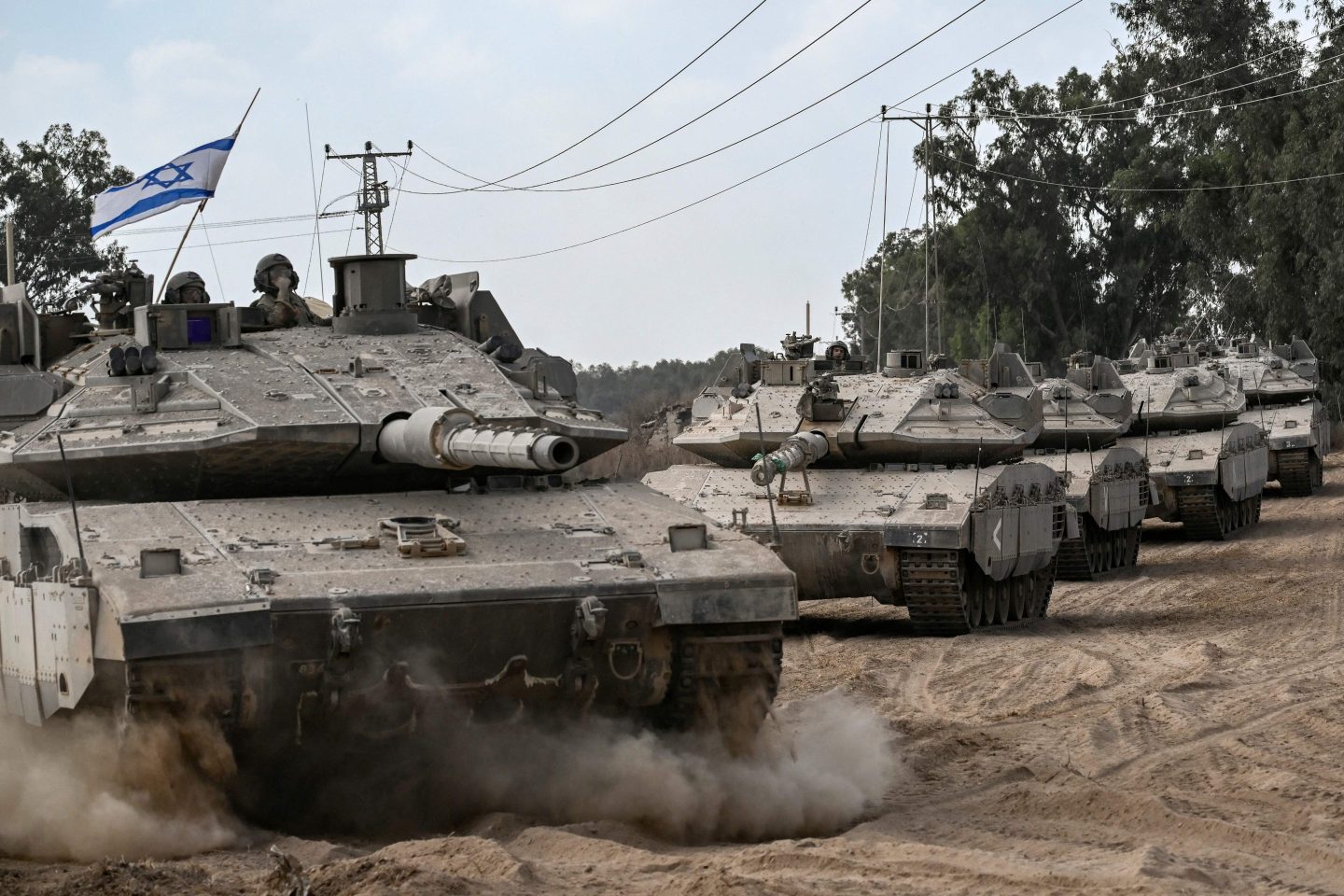
Israel's military was caught flat footed by Hamas' sudden attack.ARIS MESSINIS/AFP via Getty Images

As the Israeli army has stepped up its counteroffensive into the Gaza Strip, questions remain on how the Palestinian Islamist group Hamas was able to use bulldozers, hang gliders and motorbikes to conduct the largest attack in 50 years against the most powerful military in the Middle East.

Recommended Video

On Saturday, Oct. 7, 2023, around 6:30 a.m. local time, Hamas launched upward of 3,000 rockets and sent 1,000 fighters across the border from Gaza into Israel.

Despite the scale and scope of the attack, ABC News reported that Israeli defense officials claimed to have had no specific warning that Hamas “was preparing a sophisticated attack that required coordinated land, air and sea attacks.”

Many political and military analysts have criticized Israel for its intelligence failure to anticipate the attack, but the success of Hamas’ surprise attack was an operational failure as well.

Over the course of my military career in special operations, I conducted hundreds of tactical, operational and strategic missions based on intelligence. Never once did I expect intelligence to be perfect.

In fact, it rarely was. I based my plan on the best intelligence available, but I also thought of every possible scenario that I could in order to be ready for anything the enemy might throw at me. It seems the Israelis didn’t do that.

The limits of intelligence

If the definition of an intelligence failure is “when something bad happens to you and you didn’t know about it,” as former U.S. Sen. Warren Rudman once described it, then the Hamas surprise attack on Israel was clearly an intelligence failure.

At present, no one knows why the Israelis were unable to detect the Hamas attack, and it may be many months before the Israelis can answer the question.

Historically, Israel has been perhaps the best government in the world at penetrating terrorist organizations, which are arguably the most difficult to infiltrate with informants.

Israel built a defense plan that relies on preventing rocket attacks, border crossings and early warnings.

But intelligence can only do so much. The other key piece of defense is understanding how your enemy thinks and operates. And there the Israelis also appeared to struggle.

Known as the Iron Wall, the 40-mile-long security barrier that separates Gaza from Israel was completed in 2021 at a cost of US$1.1 billion. It includes a sensor-equipped, 20-foot-tall fence, hundreds of cameras and automated machine gun fire when sensors are tripped.

But the wall was not effective against the surprise Hamas attack. Hamas was able to breach the barrier in multiple locations around Gaza and continue its attacks without much initial resistance.

Likewise, Israel built its Iron Dome, an air defense system, to protect its citizens from rocket attacks emanating from Gaza. Completed in 2011, the dome cost the U.S. and Israeli governments $1.5 billion to develop and maintain. Before the surprise Hamas attack, the defense system had a success rate of between 90%-97% of striking down enemy rockets.

The Iron Dome worked well when militants launched relatively few rockets, but it was less effective against the Hamas attack. When Hamas launched as many as 3,000 rockets into Israel in just 20 minutes, the system was overwhelmed and not able to respond. The quantity “was simply too much for Iron Dome to manage,” according to an analysis by the Modern War Institute at West Point.

Beyond intelligence

In my view, the Hamas attack was not particularly sophisticated, nor particularly innovative. At its core, the attack was a textbook military operation involving ground, sea and air attacks launched by one group against another.

It’s my belief that this type of basic attack is something that the Israels could have and should have anticipated – even if not on the scale it was executed. Given that the basic goal of Hamas is “destroy the State of Israel,” Israel could have developed a defense plan that was not reliant on intelligence that is inherently unreliable.

Ancient Chinese military theorist Sun Tzu stressed the importance of “knowing the enemy.”

“If you know the enemy and know yourself, you need not fear the result of a hundred battles,” he wrote in “The Art of War.”

The problem for the Israelis, and many modern militaries, is that they have become too reliant on intelligence instead of knowing the goals of their enemy and developing a deeper understanding of how they think and operate.

That understanding may not prevent the next surprise attack, but it can help prepare the military defense.

Liam Collins is Founding Director, Modern War Institute, United States Military Academy West Point.

This article is republished from The Conversation under a Creative Commons license. Read the original article.

Fortune Brainstorm AI returns to San Francisco Dec. 8–9 to convene the smartest people we know—technologists, entrepreneurs, Fortune Global 500 executives, investors, policymakers, and the brilliant minds in between—to explore and interrogate the most pressing questions about AI at another pivotal moment. Register here.
About the Authors
By Liam Collins
See full bioRight Arrow Button Icon
By The Conversation
See full bioRight Arrow Button Icon

Latest in Politics

PoliticsRepublican Party
Republican lawmakers in Indiana face ‘a very dangerous and intimidating process’ as threats pile up while Trump pushes redistricting
By Thomas Beaumont, Isabella Volmert and The Associated PressDecember 7, 2025
2 hours ago
PoliticsSupreme Court
Supreme Court to reconsider a 90-year-old unanimous ruling that limits presidential power on removing heads of independent agencies
By Mark Sherman and The Associated PressDecember 7, 2025
3 hours ago
PoliticsVaccines
U.S. vaccine advisers end decades-long recommendation for all babies to get a hepatitis B shot at birth
By Mike Stobbe and The Associated PressDecember 7, 2025
3 hours ago
PoliticsDonald Trump
National Park Service drops free admission on Martin Luther King Jr. Day and Juneteenth while adding Trump’s birthday
By David Klepper and The Associated PressDecember 6, 2025
19 hours ago
PoliticsMilitary
Hegseth likens strikes on alleged drug boats to post-9/11 war on terror, saying Trump can order use of force ‘as he sees fit’
By David Klepper and The Associated PressDecember 6, 2025
19 hours ago
Trump
PoliticsWhite House
Trump finally meets Claudia Sheinbaum face to face at the FIFA World Cup draw
By Will Weissert and The Associated PressDecember 6, 2025
1 day ago

Most Popular

placeholder alt text
AI
Nvidia CEO says data centers take about 3 years to construct in the U.S., while in China 'they can build a hospital in a weekend'
By Nino PaoliDecember 6, 2025
1 day ago
placeholder alt text
Real Estate
The 'Great Housing Reset' is coming: Income growth will outpace home-price growth in 2026, Redfin forecasts
By Nino PaoliDecember 6, 2025
1 day ago
placeholder alt text
Economy
The most likely solution to the U.S. debt crisis is severe austerity triggered by a fiscal calamity, former White House economic adviser says
By Jason MaDecember 6, 2025
20 hours ago
placeholder alt text
Big Tech
Mark Zuckerberg rebranded Facebook for the metaverse. Four years and $70 billion in losses later, he’s moving on
By Eva RoytburgDecember 5, 2025
2 days ago
placeholder alt text
Asia
Despite their ‘no limits’ friendship, Russia is paying a nearly 90% markup on sanctioned goods from China—compared with 9% from other countries
By Jason MaNovember 29, 2025
8 days ago
placeholder alt text
Success
Nvidia CEO Jensen Huang admits he works 7 days a week, including holidays, in a constant 'state of anxiety' out of fear of going bankrupt
By Jessica CoacciDecember 4, 2025
3 days ago
Rankings
  • 100 Best Companies
  • Fortune 500
  • Global 500
  • Fortune 500 Europe
  • Most Powerful Women
  • Future 50
  • World’s Most Admired Companies
  • See All Rankings
Sections
  • Finance
  • Leadership
  • Success
  • Tech
  • Asia
  • Europe
  • Environment
  • Fortune Crypto
  • Health
  • Retail
  • Lifestyle
  • Politics
  • Newsletters
  • Magazine
  • Features
  • Commentary
  • Mpw
  • CEO Initiative
  • Conferences
  • Personal Finance
  • Education
Customer Support
  • Frequently Asked Questions
  • Customer Service Portal
  • Privacy Policy
  • Terms Of Use
  • Single Issues For Purchase
  • International Print
Commercial Services
  • Advertising
  • Fortune Brand Studio
  • Fortune Analytics
  • Fortune Conferences
  • Business Development
About Us
  • About Us
  • Editorial Calendar
  • Press Center
  • Work At Fortune
  • Diversity And Inclusion
  • Terms And Conditions
  • Site Map

© 2025 Fortune Media IP Limited. All Rights Reserved. Use of this site constitutes acceptance of our Terms of Use and Privacy Policy | CA Notice at Collection and Privacy Notice | Do Not Sell/Share My Personal Information
FORTUNE is a trademark of Fortune Media IP Limited, registered in the U.S. and other countries. FORTUNE may receive compensation for some links to products and services on this website. Offers may be subject to change without notice.