Before the COVID-19 pandemic, U.S. businesses were receiving an average of $30 billion annually in local and state tax incentives, much of it for creating jobs that directly benefit local economies. Those agreements typically required workers to work from a central office located in the tax-break-granting city or state.
The rather stunning sum leads to a series of questions that hang over regional economies, city budgets, downtowns, transit systems, and companies and their workforces.
Is your company forcing you to be in the office to avoid losing tax incentives?
It’s hard to say with precision, but probably not. Various kinds of contracts often have a force majeure clause regarding events beyond the control of the parties. A worldwide pandemic at an opportune moment in technological history has caused an irreversible change in the nature and location of work. Hammering employers over the effects it has had on them seems directly counterproductive to the original notion of economic development incentives in the first place.
Several states have been backtracking on early plans to aggressively enforce their old tax incentive rules–notably, Texas, which thought better of its plans after some initial tough talk and passed a bill to let remote workers count for certain tax benefits, as well as New Jersey. Payroll firm ADP recently alerted its customers that Michigan, Utah, and Arizona also had enacted similar changes.
There’s no centralized database tracking these changes to eligibility rules, but it does appear that state and local officials have reconsidered the optics of slamming employers who desperately would like employees back in the office themselves with penalties for not succeeding in getting them back there.
Those are big tax breaks. Why shouldn’t local and state governments go after companies for non-compliance?
First, it’s worth remembering that economic development is not a precise science. It’s always been about trying to offer incentives that drive good economic outcomes. Do economic development programs work? Sometimes, but often not in the way they were intended, and rarely in ways that confirm obvious causality.
Second, the combination of fast-emerging communication and collaboration technologies, when combined with what in retrospect may look like ill-advised, lockdown-driven work-from-home policies, appear to have broken the economic construct that was the workplace. And there’s no going back.
Do economic development incentives need to change?
They must. The way that workplaces function has changed forever–and it has profound implications for employers, employees, business districts, cities, and executives who make company investment decisions.
Much media coverage has been afforded to “urban doom loops” and the “death of downtowns.” However, the changes to workplaces and cities of all sizes will be so profound in the coming years that they also create massive opportunities for cities that embrace the future.
It’s no secret that many companies want their employees back together in the workplace as much as possible. It’s also no secret that most employees hate commuting–and wasting time and money in the process. However, the organizational benefits of in-person work are real: collaboration, mentorship, coaching, and camaraderie. Workers sitting at home alone eats away at organizational cultures and effectiveness over time, and full-time remote work likely has negative morale and mental health implications for many workers as well.
Governments would be smart to help employers start to define a new reality of work, one that helps bring people to workplaces for at least a significant amount of time, so that local commerce, sales taxes, and property values are buttressed. It won’t be a restoration of the old model with people sitting in cubicles for 50 and 60 hours per week–but a new one that emphasizes the productivity and social benefits of congregating centrally and regularly.
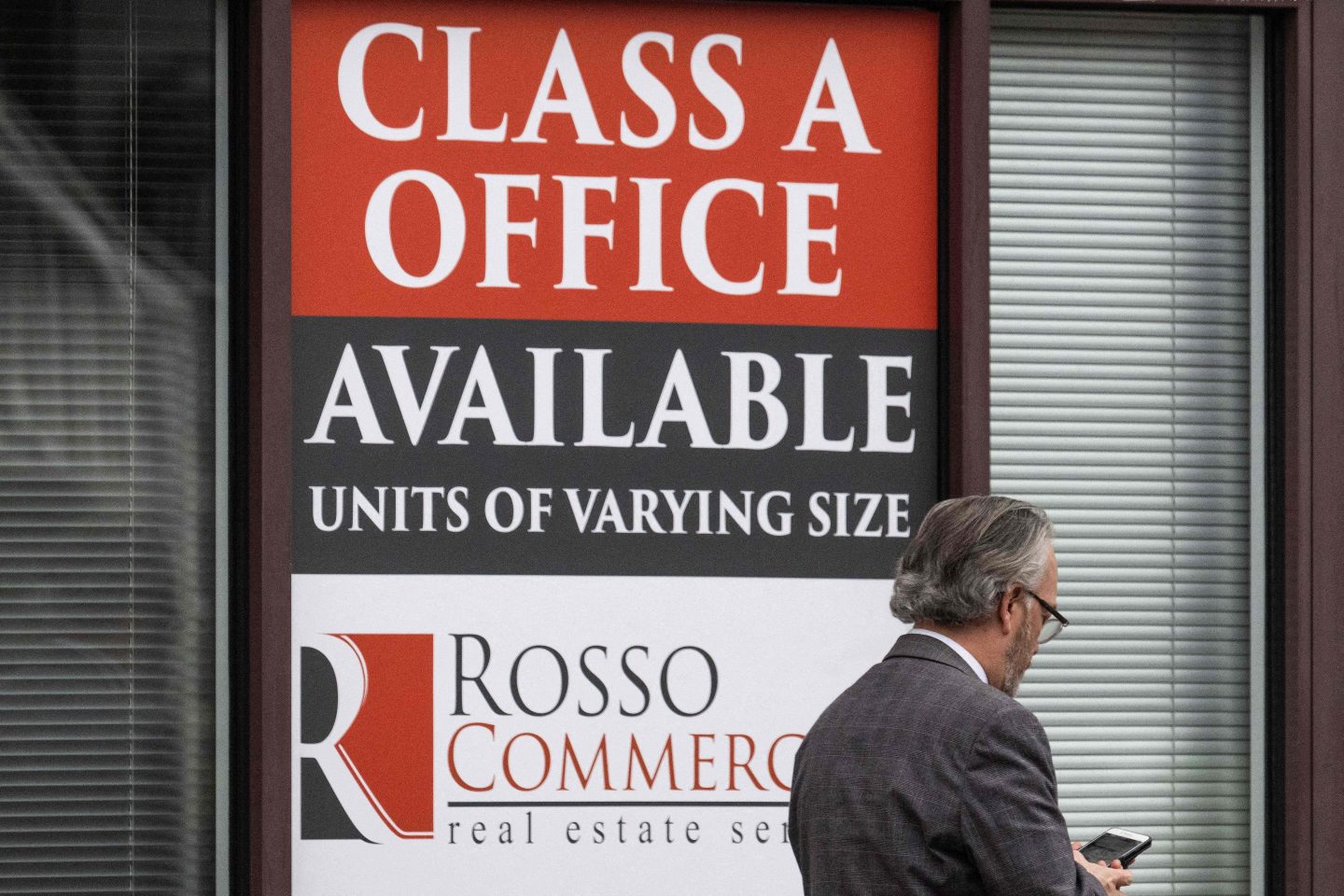
New economic development could mean re-thinking property tax systems entirely. Transit systems would likely have to change fundamentally. Public infrastructure built for the previous skyscraper era may turn out to be ill-designed for what’s needed tomorrow.
Perhaps economic development incentives for tomorrow might be more public amenity-oriented and less company-focused. Areas that were once paved plazas or parking lots for suited commuters could be turned into sheltered outdoor public spaces with places to sit and work, covered with the highest-speed wifi networks, and with safe and clean public restrooms at the ready.
Perhaps those tax incentives should be targeted at building owners and their tenants to help them drive the kinds of amenities that will help draw workers out of their homes at least some of the time: spaces to socialize, exercise, eat, and relax. Silicon Valley companies may have had it more right than wrong with their goofy game zones, beer tap refrigerators, and snacks on demand. Transforming drab 40-year-old office towers to open, human-friendly environs would be a lot easier with tax relief and regulatory assistance.
The world of work is undergoing wrenching change right before our eyes–and it’s a process that will continue for a decade or more to come. Local governments that want to foster a thriving economy would be well advised to emphasize innovation and out-of-the-box approaches over punitive reviews of contract clauses from an earlier pre-pandemic era.
Jim Small is the CEO of SANTÉ Realty Investments.
More must-read commentary published by Fortune:
- Return-to-office mandates: See where you fall on the employee disengagement spectrum
- We love bosses who brag about their accomplishments at work–and loathe colleagues who do the same, surprising new research by INSEAD shows
- Burnout is attacking our brains and making it harder to excel at work. ‘Deliberate calm’ can help us adapt
- The U.S.-China trade war is counterproductive–and the Huawei P60’s chip is just one of its many unforeseen ramifications
The opinions expressed in Fortune.com commentary pieces are solely the views of their authors and do not necessarily reflect the opinions and beliefs of Fortune.