There will be only one winner in the war that has broken out between Israel and the Palestinian militant group Hamas. And it is neither Israel nor Hamas.
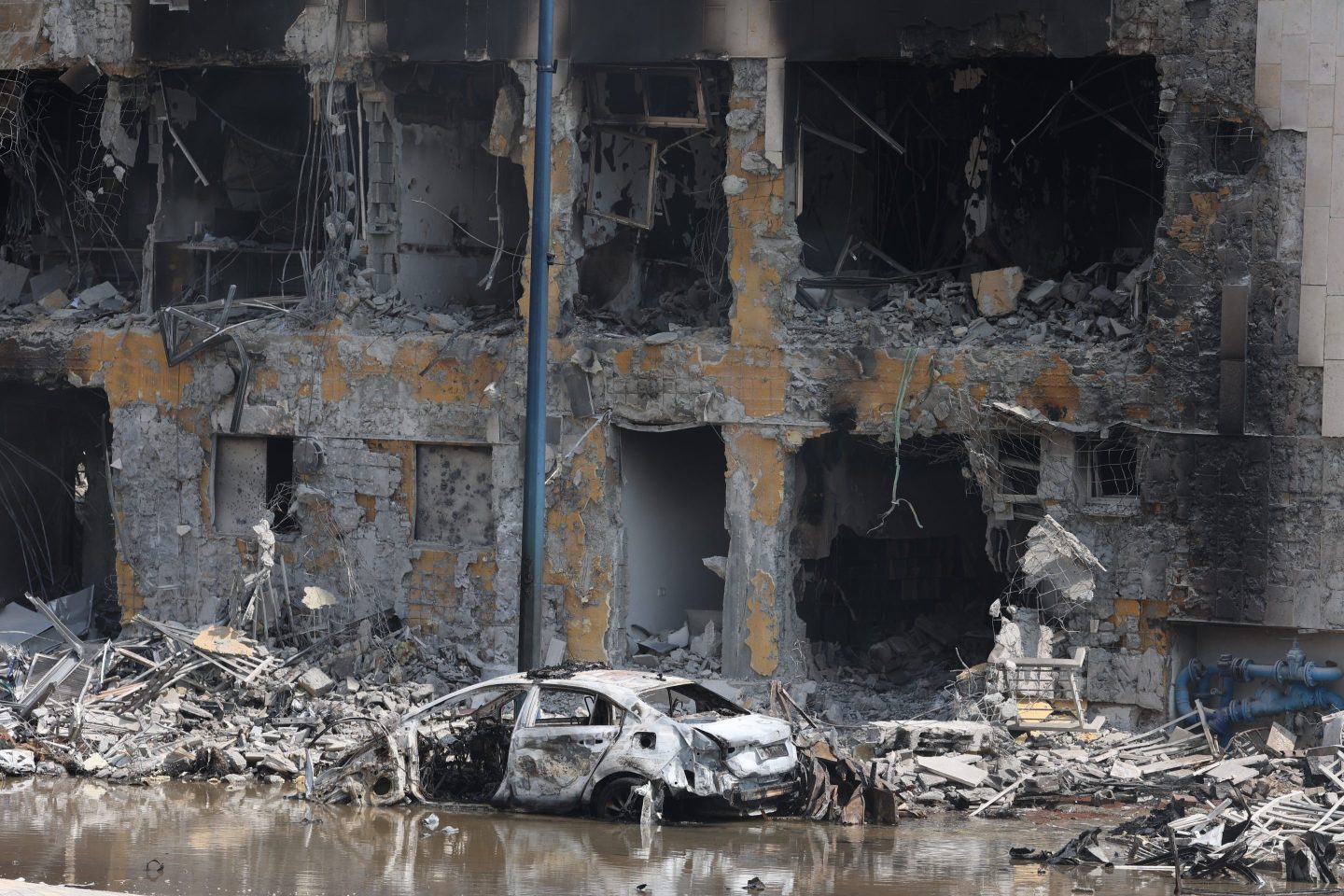
In an operation coined “the Al-Aqsa Storm,” Hamas, whose formal name is the Islamic Resistance Movement, fired thousands of rockets into Israel on Oct. 7, 2023. Hamas and Palestinian Islamic Jihad fighters infiltrated Israel by land, sea and air. Hundreds of Israelis have been killed, more than 2,000 injured, and many taken hostage.
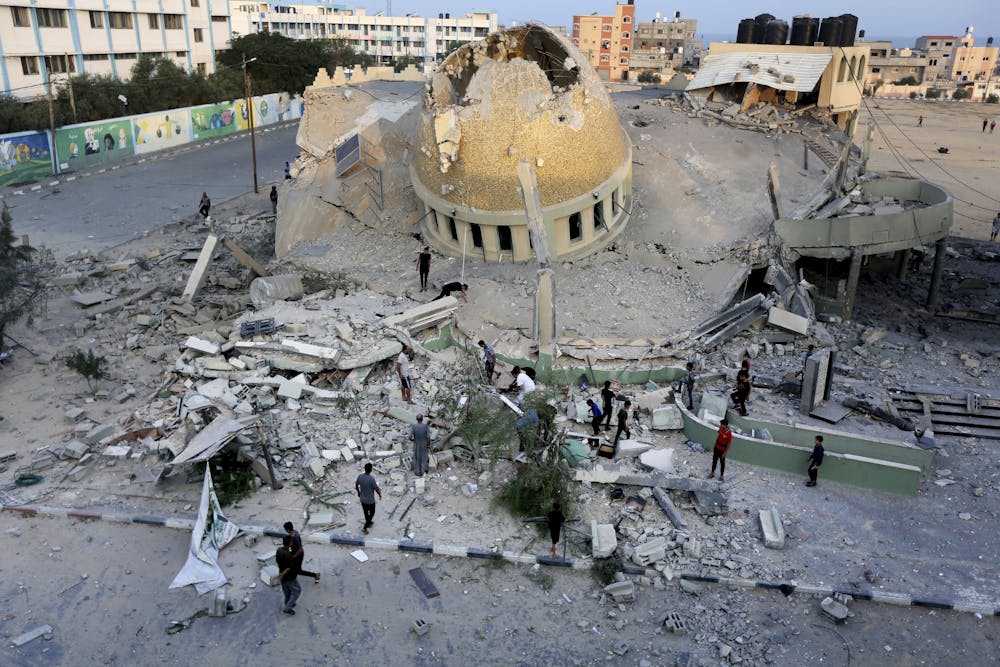
In response, Israeli Prime Minister Benjamin Netanyahu declared war on Hamas and launched airstrikes in Gaza. In the first day of reprisals, close to 400 Palestinians were killed, according to the Palestinian Health Ministry.
In the weeks ahead, the Israeli military will surely retaliate and kill hundreds more Palestinian militants and civilians. As an analyst of Middle East politics and security, I believe that thousands on both sides will suffer. But when the smoke settles, only one country’s interests will have been served: Iran’s.
Already, some analysts are suggesting that Tehran’s fingerprints can be seen on the surprise attack on Israel. At the very least, Iran’s leaders have reacted to the assault with encouragement and support.
The champion of Palestine
The decisive factor shaping Iran’s foreign policy was the 1979 overthrow of the U.S.-friendly, repressive Shah of Iran and the transfer of state power into the hands of a Shiite Muslim revolutionary regime. That regime was defined by stark anti-American imperialism and anti-Israeli Zionism.
The revolution, its leaders claimed, was not just against the corrupt Iranian monarchy; it was intended to confront oppression and injustice everywhere, and especially those governments backed by the United States – chief among them, Israel.
For Iran’s leaders, Israel and the United States represented immorality, injustice and the greatest threat to Muslim society and Iranian security. The enduring hostility felt toward Israel is in no small part due to its close ties with the shah and Israel’s role in his sustained oppression of the Iranian people. Together with the U.S. Central Intelligence Agency, Israel’s intelligence service, the Mossad, helped organize the shah’s secret police and intelligence service, the SAVAK. This organization relied on increasingly harsh tactics to put down dissenters during the shah’s last two decades in power, including mass imprisonment, torture, disappearances, forced exile and killing thousands of Iranians.
Support for Palestinian liberation was a central theme of Iran’s revolutionary message. The 1982 Israeli invasion of Lebanon – in retaliation for Lebanon-based Palestinian attacks against Israel – provided Iran an opportunity to live up to its anti-Zionist rhetoric by challenging Israeli soldiers in Lebanon and checking U.S. influence in the region.
Subsidizing conflict
To that end, Iran sent its Islamic Revolutionary Guard Corps – a branch of Iran’s military, usually known as the “Revolutionary Guard” – to Lebanon to organize and support Lebanese and Palestinian militants. In Lebanon’s Bekaa Valley, Revolutionary Guardsmen instructed Shiite resistance fighters in religion, revolutionary ideology and guerrilla tactics, and provided weapons, funds, training and encouragement. Iran’s leadership transformed these early trainees from a ragtag band of fighters into Lebanon’s most powerful political and military force today, and Iran’s greatest foreign policy success, Hezbollah.
Since the early 1980s, Iran has maintained support for anti-Israeli militant groups and operations. The Islamic Republic has publicly pledged millions of dollars of annual support to groups and provides advanced military training for thousands of Palestinian fighters at Revolutionary Guard and Hezbollah bases in Iran and Lebanon.
Iran runs a sophisticated smuggling network to funnel weapons into Gaza, which has long been cut off from the outside world by an Israeli blockade.
Via the Revolutionary Guard and Hezbollah, Iran has encouraged and enabled Palestinian Islamic Jihad and Hamas violence, and these Palestinian fighters now represent a crucial element in what foreign affairs analysts call Iran’s “Axis of Resistance” against Israel and the United States, which constitutes Iran’s chief purpose.
But Iran cannot risk confronting either state directly.
Iranian weapons, funds and training enable surges in Palestinian militant violence against Israel when frustrations boil over, including during the Palestinian uprisings known as the first and second intifadas.
Israeli-Palestinian conflicts and death tolls have escalated steadily since 2020. Palestinians are outraged by increased evictions and destruction of property, and how Israel allows Israeli nationalists and settlers to violate a long-standing agreement preventing Jewish prayer at the Al-Aqsa Mosque – a site holy to both Muslims and Jews. In fact, a recent incursion by settlers into Al-Aqsa was specifically cited by Hamas as a justification for the Oct. 7 attack.
Attacking normalization
That is not to say that Iran ordered Hamas’ attack on Israel, nor that Iran controls Palestinian militants – they are not Iranian puppets. Nevertheless, Iran’s leaders welcomed the attacks, the timing of which serendipitously works in Iran’s favor and plays into the Islamic republic’s regional battle for influence.
“What took place today is in line with the continuation of victories for the anti-Zionist resistance in different fields, including Syria, Lebanon and occupied lands,” according to Iranian foreign ministry spokesperson Nasser Kanani.
The week before the Hamas attack, Saudi Crown Prince Mohammed bin Salman denied reports that Saudi Arabia had paused its recent efforts to normalize relations with Israel, which includes a formal declaration of Israel’s right to exist and increased diplomatic engagement. “Every day we get closer,” he said, an assessment praised and echoed by Netanyahu.
Israeli-Saudi normalization would represent the pinnacle of achievement thus far in U.S. diplomatic efforts, including the Abraham Accords, signed by Israel, the United Arab Emirates, Bahrain and Morocco in 2020. The accords aimed to normalize and build peaceful relations between Israel and Arab countries across the Middle East and in Africa.
Iranian supreme leader Ali Khamenei lambasted Arab states for signing the Abraham Accords, accusing them of “treason against the global Islamic community.”
Hezbollah leader Hassan Nasrallah praised Saturday’s violence against Israel and echoed Khamenei’s sentiments, warning that the attacks sent a message, “especially to those seeking normalization with this enemy.”
Israel’s expected heavy-handed response is likely to complicate Saudi Arabia’s normalization with Israel in the near term, furthering Iran’s aims. Netanyahu said that Israel’s retaliatory operation seeks three objectives: to eliminate the threat of infiltrators and restore peace to attacked Israeli communities, to simultaneously “exact an immense price from the enemy” in Gaza, and to reinforce “other fronts so that nobody should mistakenly join this war.” This last objective is a subtle but clear warning to Hezbollah and Iran to stay out of the fight.
Israeli troops have already mobilized to secure its borders, and airstrikes have hit Gaza. In all likelihood, Palestinian attackers will be killed or arrested in a matter of days. Israeli troops and air forces will target known or suspected rocket launch, manufacturing, storage and transportation sites, along with the homes of Hamas and Palestinian Islamic Jihad members. But in the process, hundreds of civilians will likely also lose their lives.
I believe that Iran expects and welcomes all of this.
How Iran wins
There are at least three possible outcomes to the war, and they all play in Iran’s favor.
First, Israel’s heavy-handed response may turn off Saudi Arabia and other Arab states to U.S.-backed Israeli normalization efforts. Second, if Israel deems it necessary to push further into Gaza to eradicate the threat, this could provoke another Palestinian uprising in East Jerusalem or the West Bank, leading to a more widespread Israeli response and greater instability.
Lastly, Israel could achieve its first two objectives with the minimal amount of force necessary, foregoing usual heavy-handed tactics and reducing chances of escalation. But this is unlikely. And even if this occurred, the underlying causes that led to this latest outbreak of violence, and the enabling role Iran plays in that process, have not been addressed.
And when the next round of Israeli-Palestinian violence occurs – and it will – I believe Iran’s leaders will again congratulate themselves for a job well done.
Aaron Pilkington is a U.S. Air Force analyst of Middle East affairs now studying at the University of Denver, conducting research on Iranian national security strategy. He will later join the Military & Strategic Studies department at the U.S. Air Force Academy. The views expressed are those of the author and do not reflect the official position of the Department of Defense, Department of the Air Force, the United States Air Force Academy, or any other organizational affiliation
This article is republished from The Conversation under a Creative Commons license. Read the original article.