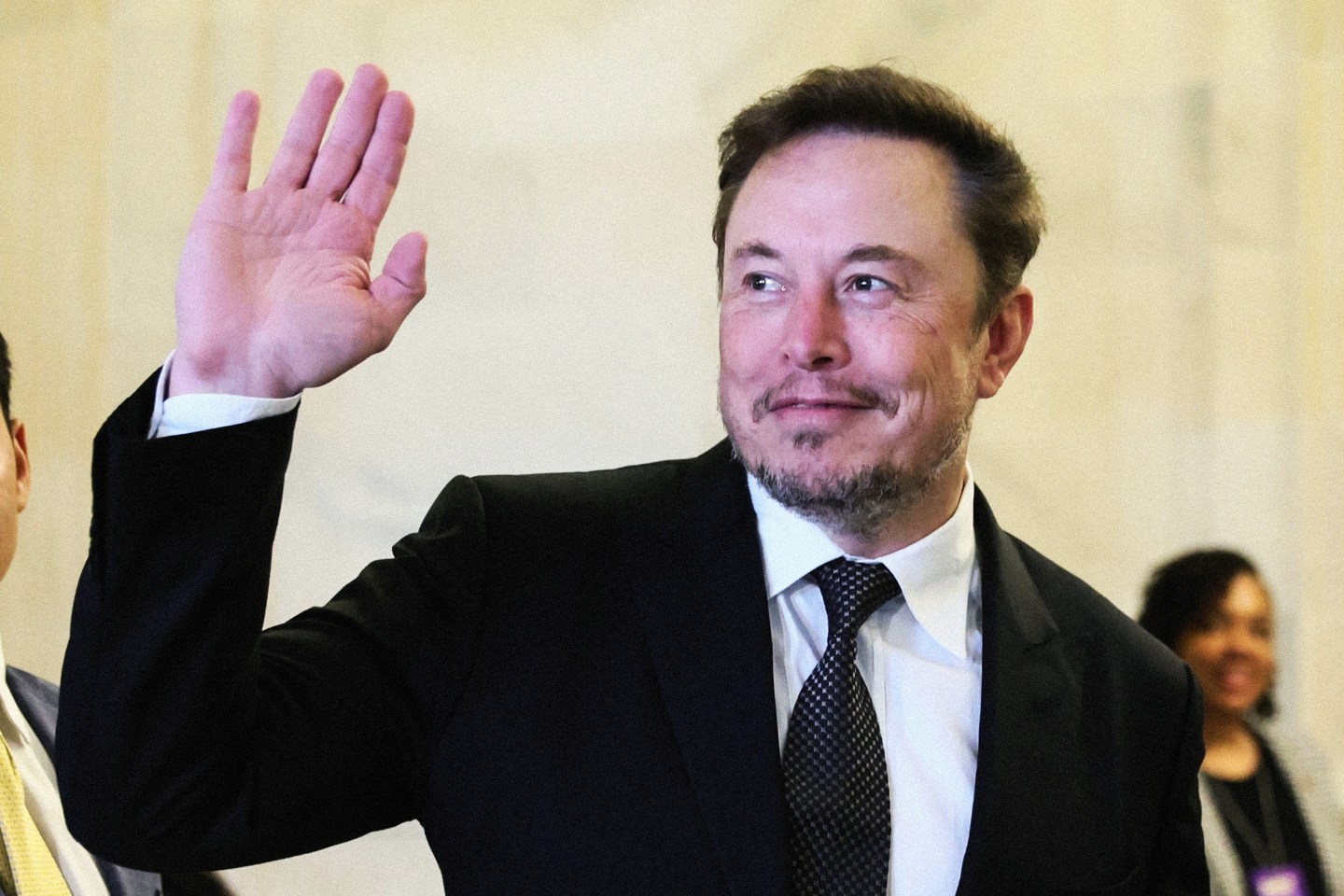
On Oct. 5, Linda Yaccarino, Elon Musk’s newly installed CEO of X (formerly Twitter) has a meeting on the books with the banks. These banks, you may recall, banded together in April of 2022 and, cajoled by Musk, agreed to lend Twitter $13 billion that was central to his campaign in taking the platform private.
Since the $44 billion deal closed last October, Musk has talked constantly about what a horrible investment he made. In July, he disclosed that ad revenue had dropped 50% since he bought the property, causing it to keep bleeding cash. A month later, he posted on X: “We may fail, as so many have predicted.” And in early September, Musk suggested that Twitter may be worth a mere $4 billion, a stunning 10% of the purchase price. In a CNBC interview on September 28, Yaccarino, who has served as CEO for 100 days, acknowledged that X is still cash-flow-negative, but claimed that “90 percent” of the many clients who had quit the platform have returned.
“Until now, we’ve been witnessing what would look like a slow-motion car wreck if it weren’t happening so fast,” says Eric Talley, a Columbia law professor and economist who’s an expert on M&A transactions.
But in the incredible tornado that is the world of Elon Musk, the company’s terrible performance may have, unbelievably, given him the upper hand going into the bank meeting.
The gigantic jump in interest rates is what has handed Musk the whip hand over the banks. Clearly they never expected market yields to jump to nearly their current almost two-decade highs. So on April 20 of last year, they agreed to cap X’s payments at a maximum that’s now much lower than what any alt asset manager or hedge fund would demand for backing a credit as shaky as X. Now, the banks are stuck with $13 billion in junk debt that they can’t sell at anywhere near full price, and that’s sitting on their balance sheets.
“With so many macro headwinds, we seem poised to enter an era of multiple restructurings, and X is high on that list,” says Talley, whose seen many similar stressed debtor-and-lender scenarios and provided valuable insights for this story. “If I were one of Musk’s advisors, I would be saying, ‘This is a great moment to restructure the debt. You’ve got the lenders in a corner.'”
How Musk financed the Twitter deal—and likely borrowed from SpaceX to do it
To win Twitter, Musk needed to assemble not the eventual $44 billion purchase price, but $46.5 billion. Why the difference? The acquisition’s terms required Musk to repay Twitter’s existing debt of $5.3 billion. To clinch the deal, the three sources of funding (Musk personally, the lenders, and his co-investors) paid roughly $41.2 billion for Twitter’s stock at $54.20 per share including assorted fees, plus the $5.3 billion to retire the loans, for the $46.5 billion total.
Of that number, the banks supplied $13 billion, and Musk raised approximately $8.140 billion by Fortune‘s estimates from 22 known equity co-investors, or around $1 billion more than the $7.1 billion that’s been widely reported. Leading the roster were Prince Al Waleed of Saudi Arabia and cofounder and former CEO Jack Dorsey, who rolled prior Twitter stakes worth around $3 billion into the Musk purchase. Among the other Oracle chief and former Tesla director Larry Ellison ($1 billion), venture fund Sequoia Capital ($800 million), and crypto exchange Binance ($500 million). Hence, the non-Musk funding accounted for $21.1 billion of the cash submitted at closing.
But we know that Musk initially provided $25.4 billion of his own money—$4 billion from putting shares he’d acquired into new Twitter stock, and $21 billion in fresh funds. It appears that to meet that $25.4 billion cash requirement, he had to raise billions more, and in a hurry, than he’d secured in the previous several months selling Tesla shares. The Wall Street Journal revealed that October, just before the deal closed near the month’s end, Musk borrowed $1 billion from SpaceX. Around the same time, the world’s richest person raised $3.95 billion from his Tesla holdings.
But it also appears that Musk recouped a big chunk of the $25.4 billion he’d paid on Oct. 27, shortly thereafter. Why does this follow the math? Neither Musk nor the banks have ever refuted the widespread news that he, the banks and co-investors expended, all-in, $44 billion for Twitter. Since the lenders and outside stockholders furnished $21.1 billion, Musk’s net investment accounted for the difference, or $22.9 billion. After the closing, Musk apparently tapped Twitter’s cash trove for $2.5 billion of the $5.3 billion used to pay off its pre-purchase debt, reducing his full investment from the original $25.4 billion to $22.9 billion.
In the final tally, Twitter’s capital profile comprises $13 billion in debt and $31 billion in equity. Musk’s $22.9 billion stake equates to an ownership stake of nearly 74%.
Twitter’s interest burden looked at first looked possibly manageable. Then rates exploded.
In the Twitter financing, Musk took a flyer that backfired by tying the debt to variable rates. But the banks also miscalculated by putting a limit on how high those rates could rise—the foot fault that gives Musk his leverage.
On April 20 of last year, the seven banks agreed to provide the $13 billion in four tranches, each charging a percentage consisting of a fixed base, plus a floating rate. Between them, Morgan Stanley, Bank of America, Barclays, and Mitsubishi UFJ provided 90% of the funding in portions from 27% to 21% for every loan, the remainder divided among BNP Paribas, SocGen and Mizuho. (Fortune called or emailed all of the seven lenders. Three didn’t respond, and four declined to comment. Michael Grimes of Morgan Stanley, the firm that led the consortium, wrote simply “That I cannot comment on work matters.” A spokesman for Mizuho Group stated that “Bankers are maintaining a strictly no-comment-on-active-deals policy.” I also reached out to almost all of Musk’s 22 reported co-investors, none of whom responded.)
The biggest credit is a $6.5 billion secured term loan that runs seven years and occupies the highest priority for repayment. It carries a base of 4.75%, plus the monthly average of the Secured Overnight Financing Rate, or SOFR—the benchmark for transactions in the “repo” market where banks lend to one another, typically overnight. The second facility is a “revolving credit” where X can draw up to $500 million depending on its need for liquidity. Its rate also floats over SOFR, but from a slightly lower floor of 4.5%.
The most expensive slices: Two “bridge loans” of $3 billion each. Bridge financings are a standard vehicle in leveraged buyouts. As the name implies, they provide what’s supposed to be temporary debt to fund the LBO that the buyer typically repays a few months of the closing.
The secured bridge loan that ranks behind the term facility, also fluctuates with SOFR, but starts at a fixed rate that’s two points higher at 6.75%. The unsecured bridge in the costliest component. As the riskiest tier for the creditors, its annual charge starts at 1000 basis points before tacking on SOFR. Both of the bridges are cast to extract an extra 0.5% in interest for every quarter they remain unpaid.
When the parties signed the lending agreement last April, it appeared that though Musk was heavily leveraging Twitter, he was facing an interest burden that was high but potentially manageable. That’s because the SOFR or floating rate stood at just 0.28%. Incredibly, by the time of the closing in late October, SOFR had leapt to 3.05%. And it kept chugging upwards, hitting 5.3% in late September, an almost 20-fold increase from the day Musk secured the debt financing.
X suffered something resembling the hit that families holding adjustable-rate mortgages are enduring today: a sudden explosion in the “nut” so big that it can rile their finances. But unlike the case for homeowners, Musk got essential, and unexpected, relief from the “caps” embedded in the conditions. The credit pact refers numerous times to interest “caps” on the two bridge loans totaling $6 billion, once again, the highest-rate and sans max, potentially most dangerous pieces.
But the agreement doesn’t specify those rate limits. It states that they’re disclosed in a “fee letter” not included in the document. In fact, the agreement mandates strict confidentiality, stipulating that the fee letter’s contents “shall be disclosed to any other person except” the investor group, or in the event of a court order.
Actual numbers, however, have emerged in the media, and they appear plausible, according to credit analysts interviewed by Fortune, including Jordan Chalfin of CreditSights. In January, Bloomberg reported that the cap on the unsecured bridge is 11.75%. In December, Enersection, a data analysis firm that normally covers the energy industry, expanded its reach to perform a detailed cash flow modeling on Twitter, and put the limit on the secured bridge loan at 9.75%.
To be sure, the historic surge in rates has billowed X’s interest expense from a headwind to a gale. Had SOFR remained at its ultra-slender range of last spring, Musk would currently be paying around $860 million a year in interest. Today, he’s sending lenders, by Fortune’s estimate, $1.45 billion, or almost $600 million a year more. That figure’s close to the $1.5 billion that Musk’s unveiled at an interview at Morgan Stanley in May. The rates on the un-capped term loan and revolving credit have doubled from 5% to just over 10%. But today’s daunting numbers would be far worse without the ceilings. Using the likely limits just cited, the secured bridge would now be costing around 13.5%, and its unsecured counterpart almost 17%. Instead, they’re held respectively at 9.75% and 11.75%.
Put simply, the limits are saving Musk an extra $280 million a year in interest. Were he paying that $280, it would be absorbing an additional 10% of X’s annual revenue, which he says is tracking at $3 billion.
X’s weak performance prevented the banks from unloading the debt, and blocked Musk from refinancing the costliest loans
Twitter was already ailing when Musk took charge. But even shrinking headcount over 80% from 8000 to 1500 and closing one of the three data centers didn’t stop the big drain. During the Morgan Stanley interview in May, Musk revealed that Twitter’s outlays were still running well above revenues that had dropped from a run-rate of $4.5 billion in the first six months of 2022, to $3 billion. The previous month, Fidelity funds that hold Twitter shares and are required to publicly value their stake, wrote down their holdings by 67%. The signal: Musk had vastly overpaid for Twitter, and its earnings outlook looked a lot weaker than in late 2022.
Due to its fragile position, X couldn’t repay or refinance the bridge loans. The poor results also made it impossible for the banks to syndicate the $6.5 billion term loan at anything like full price. According to Bloomberg, the banks shopped the $6.5 facility to hedge funds and other potential investors shortly after the closing, but received only low-ball offers of around 60 cents on the dollar that they declined. In recent months, says Steven Hunter of 9Fin, a data analytics firm that follows the LBO space, the banks have ceased actively seeking buyers, and are waiting for an improvement in X’s finances before re-testing the marketplace. “They’d struggle to sell the deal at the moment,” says Hunter.
Officially, the two $3 billion bridge loans come due on October 27, the closing’s one year anniversary. But if not repaid by that date, they both automatically change into “extended term loans” that mature respectively in seven and eight years. Both of the bridge loan replacements will charge a fixed rate of interest at the cap number, in effect, what X is paying now: an estimated 9.75% on the secured and 11.75% on the unsecured.
Musk big problem: Even though he’s paying “bargain,” below market rates on his deep junk debt, interest expense is killing X. That’s because X simply too many billions in debt that need servicing.
Talley speculates that to escape that trap, Musk may try to strengthen his hand by accentuating the negative. For Talley, this is “a magic moment for Musk to aggressively restructure portions of the debt.” The most likely course where Musk wins, Talley reckons, is an accord where the banks simply erase large portions of the borrowings, canceling for example either the $6.5 billion term loan or the $6 billion in bridges’ successors. Then, they could syndicate the remaining debt at something like full price, since X would be a far safer company. “That would be the cleanest, simplest solution, and the banks wouldn’t grouse much because Musk is a 600 pound gorilla that controls lots of future financings,” notes Talley.
But he also finds it highly possible that Musk’s seeking just the kind of swashbuckling coup he so relishes: A gambit where he buys part, or even all, of the debt at a steep discount. Then, he’d become both X’s biggest shareholder and potentially largest creditor. X would owe Musk gigantic interest payments. But his goal is reducing or eliminating that burden to help make X a profitable enterprise. Hence, in exchange for the billions paid for the debt, he’d demand a huge new slug of X shares, and secure another big discount by paying, say, half the purchase price of $54.20, diluting his co-investors but in the same motion saving X.
A Musk debt buyout would prove one of the most audacious moves in the annals of capital markets. “I’m skeptical he’d load so much more money in a sinking ship, that’s the opposite of diversification,” says Talley. “But Musk is a different bird. He’s supremely confident he can turn any company into a profitable company.”
As of this moment, the idea that Musk and his co-investors will ever get their money back, let alone take X public again at a home-run valuation, seems dim. But that doesn’t mean that the outrageous gambler won’t bet more billions that he can mint another miracle.