Good morning!
Instacart’s long-awaited initial public offering on Tuesday made it one of the largest companies to go public this year, marking a potential turning point in the recent lull of public listings. But the grocery delivery service’s employees could be the real victors of the stock market debut, as the company relies on sales from existing shareholders, including workers, to drive its stock price.
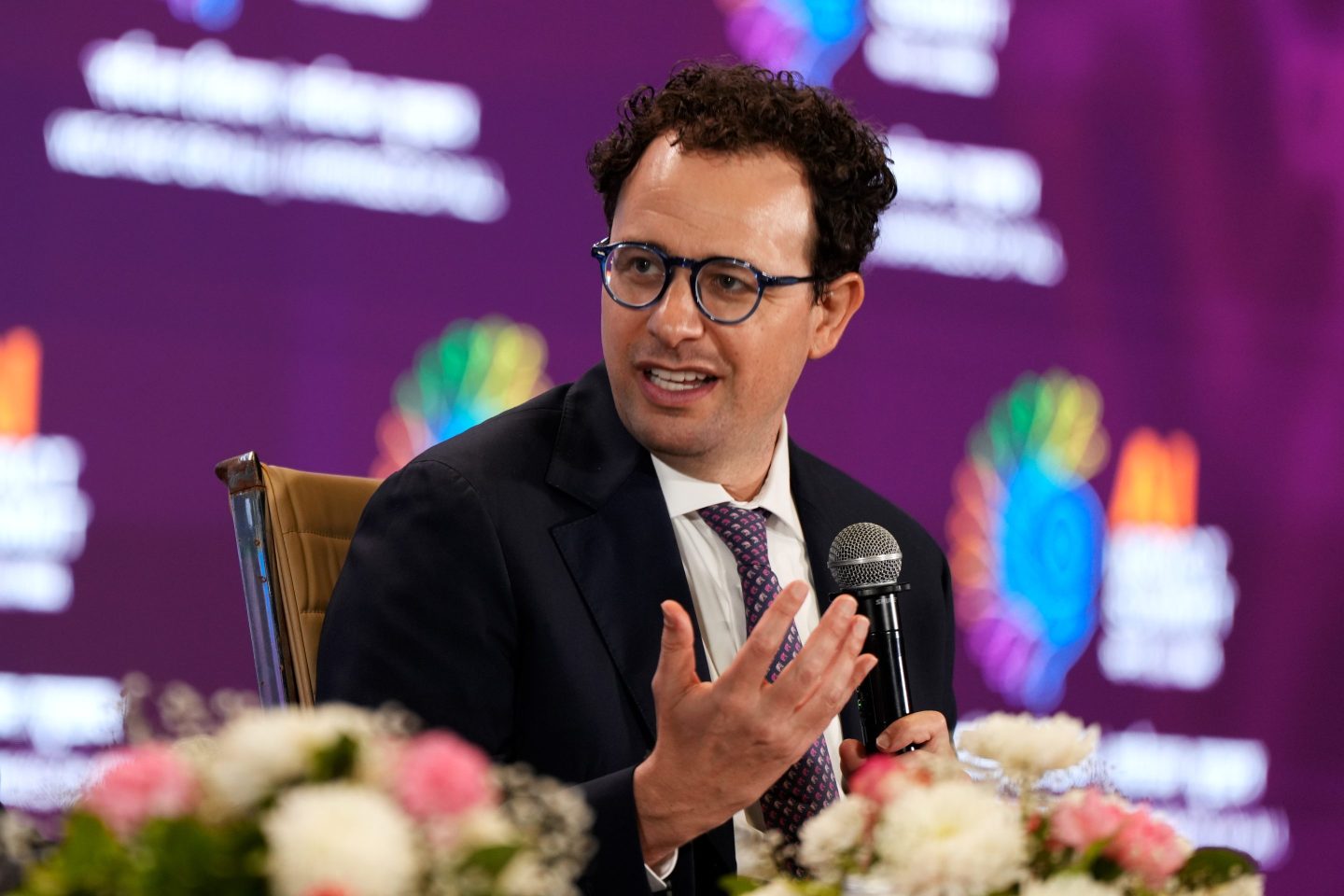
“This IPO is not about raising money for us. It’s really about making sure that all employees can have liquidity on stock that they worked very hard for,” Instacart CEO Fidji Simo told CNBC’s Dierdre Bosa on Tuesday.
Receiving an equity stake is a major sell to entice top talent to join a startup venture, with the promise that they could one day see a big payout if the company succeeds. Stock offerings are expecially popular in tech compensation, comprising about 86% of a Silicon Valley worker’s net worth, according to Secfi, a company that helps startup employees manage their equity.
Instacart employees certainly stand to benefit. The grocery delivery business opened trading at $42 per share on Tuesday, placing it at a $14 billion valuation, but closed at $33.70 per share the same day. The company included a provision in its S-1 filing where, if the stock trades at more than 120% of its IPO price for five of at least 10 consecutive trading days (one of which must be after Instacart’s quarterly earnings announcement), employees can sell their stock sooner than the 180-day lock-up period most companies opt for.
According to a September 2022 Wall Street Journal report, the company wasn’t planning to raise much capital from investors ahead of its IPO, instead relying on employees selling their shares. So far, 36% of shares sold were from existing shareholders—and former employees, including those in executive roles as well as product and engineering, sold a combined 3.2 million shares. The move could also make the company more attractive to new employees seeking stock-based compensation.
But the company’s finances are still far from their pandemic golden days. Following its peak valuation of $39 billion in early 2021, the company started seeing a decline as pandemic-driven demand for grocery delivery services waned. As such, the company slashed its valuation by 40% to $24 billion, laid off an undisclosed number of workers, and froze hiring for some positions in September 2022. It again lowered its valuation to $13 billion in October that same year.
Instacart’s delicate relationship with its gig workers could also impact its success post-IPO. In its S-1 filing, the company said that failure to attract or retain these workers could hurt its business, as workers may leave the platform for reasons like displeasure with the company’s pay structure, which was recently cut from a minimum base pay of $7 to $4 per order.
Gig workers went on strike in March 2020 and October 2021 over an alleged lack of COVID-19 protections and Instacart’s payment structure. And late last year, Instacart agreed to a $46 million settlement in response to a California lawsuit alleging the company misclassified over 300,000 individuals as independent contractors instead of workers.
Paige McGlauflin
paige.mcglauflin@fortune.com
@paidion
Reporter's Notebook
The most compelling data, quotes, and insights from the field.
If asked to bet which generation is most in favor of remote work, would you say Gen Z or millennials? Neither.
A new survey of more than 9,000 workers from the freelancing platform Fiverr found that baby boomers are most interested in working from home. Forty percent of boomers surveyed say they prefer flexible or remote work, compared to just 32% of Gen X and 29% of millennial respondents.
Around the Table
A round-up of the most important HR headlines.
- Christmas will bring gifts for new and existing Amazon employees: The company plans to hire 250,000 workers during the holiday season and slightly increase wages for logistics personnel to an average of $20.50 per hour. Bloomberg
- Peter Brown, the CEO of New York City-based hedge fund Renaissance Technologies, almost exclusively hires candidates without a finance background. And he once gave an employee a raise so he could call him at 1 a.m. Insider
- Once a female educational haven, Vassar College is being sued for consistently underpaying women professors compared to their male colleagues. New York Times
- The exorbitant worker-CEO pay discrepancy is central to America’s largest ongoing strikes. CNN
Watercooler
Everything you need to know from Fortune.
Everyone eats. According to data from Great Place To Work, companies with people-first cultures significantly outperform their counterparts on talent retention and profitability. Sharing profits fairly, giving all workers the same level of attention, and imbuing employees with a sense of purpose are the best ways companies can lean into a people-first culture. —Roula Amire
Four-day buzz. Bernie Sanders praised the United Auto Workers union for their push to secure a 32-hour work week, especially as AI capabilities improve. The Vermont senator stated that as AI makes workers more efficient, “we should begin a serious discussion—and the UAW is doing that—about substantially lowering the work week.” —Chloe Berger
Bad boss, bad health. Heart disease is the leading cause of death in the U.S., and toxic workplaces could put men at greater risk. Men who feel they aren’t properly rewarded for their work or are employed in a stressful environment have a 49% increased chance of developing heart disease. —Alexa Mikhail
Top bots. CEOs probably thought they were safe from job automation, but Polish beverage company Dictador has already put a robot in its top spot. Mika, the AI-powered robot CEO, will mostly focus on design choices while human employees handle personnel affairs. —Chris Morris
This is the web version of CHRO Daily, a newsletter focusing on helping HR executives navigate the needs of the workplace. Sign up to get it delivered free to your inbox.