
• Home
  • Latest
  • Fortune 500
  • Finance
  • Tech
  • Leadership
  • Lifestyle
  • Rankings
  • Multimedia
Environmentclimate change

People are literally dying because it’s so hot outside—turns out machines aren’t doing so great either

By
Matthew T. Hughes
Matthew T. Hughes
,
Srinivas Garimella
Srinivas Garimella
and
The Conversation
The Conversation
Down Arrow Button Icon
By
Matthew T. Hughes
Matthew T. Hughes
,
Srinivas Garimella
Srinivas Garimella
and
The Conversation
The Conversation
Down Arrow Button Icon
August 29, 2023, 3:29 PM ET
Three firefighters rest in the shade of a truck
Firefighters rest while combatting a wildfire during an excessive heat warning in Hays County, Texas, on August 08, 2023, in the midst of a heat wave gripping Austin and surrounding areas.Brandon Bell—Getty Images

Not only people need to stay cool, especially in a summer of record-breaking heat waves. Many machines, including cellphones, data centers, cars and airplanes, become less efficient and degrade more quickly in extreme heat. Machines generate their own heat, too, which can make hot temperatures around them even hotter.

Recommended Video

We are engineering researchers who study how machines manage heat and ways to effectively recover and reuse heat that is otherwise wasted. There are several ways extreme heat affects machines.

No machine is perfectly efficient – all machines face some internal friction during operation. This friction causes machines to dissipate some heat, so the hotter it is outside, the hotter the machine will be.

Cellphones and similar devices with lithium ion batteries stop working as well when operating in climates above 95 degrees Fahrenheit (35 degrees Celsius)—this is to avoid overheating and increased stress on the electronics.

Cooling designs that use innovative phase-changing fluids can help keep machines cool, but in most cases heat is still ultimately dissipated into the air. So, the hotter the air, the harder it is to keep a machine cool enough to function efficiently.

Plus, the closer together machines are, the more dissipated heat there will be in the surrounding area.

Deforming materials

Higher temperatures, either from the weather or the excess heat radiated from machinery, can cause materials in machinery to deform. To understand this, consider what temperature means at the molecular level.

At the molecular scale, temperature is a measure of how much molecules are vibrating. So the hotter it is, the more the molecules that make up everything from the air to the ground to materials in machinery vibrate. When metal is heated, the molecules in it vibrate faster and the space between them moves farther apart. This leads the metal to expand.

As the temperature increases and the molecules vibrate more, the average space between them grows, causing most materials to expand as they heat up. Roads are one place to see this – hot concrete expands, gets constricted and eventually cracks. This phenomenon can happen to machinery, too, and thermal stresses are just the beginning of the problem.

Workers inspect railway tracks at China’s Chongqing South Railway Station. High heat can buckle rails, crack asphalt and overload power lines, leading to outages.
He Penglei—China News Service/Getty Images

Travel delays and safety risks

High temperatures can also change the way oils in your car’s engine behave, leading to potential engine failures. For example, if a heat wave makes it 30 degrees F (16.7 degrees C) hotter than normal, the viscosity—or thickness—of typical car engine oils can change by a factor of three.

Fluids like engine oils become thinner as they heat up, so if it gets too hot, the oil may not be thick enough to properly lubricate and protect engine parts from increased wear and tear.

Additionally, a hot day will cause the air inside your tires to expand and increases the tire pressure, which could increase wear and the risk of skidding.

Airplanes are also not designed to take off at extreme temperatures. As it gets hotter outside, air starts to expand and takes up more space than before, making it thinner or less dense. This reduction in air density decreases the amount of weight the plane can support during flight, which can cause significant travel delays or flight cancellations.

Battery degradation

In general, the electronics contained in devices like cellphones, personal computers and data centers consist of many kinds of materials that all respond differently to temperature changes. These materials are all located next to each other in tight spaces. So as the temperature increases, different kinds of materials deform differently, potentially leading to premature wear and failure.

Lithium ion batteries in cars and general electronics degrade faster at higher operating temperatures. This is because higher temperatures increase the rate of reactions within the battery, including corrosion reactions that deplete the lithium in the battery. This process wears down its storage capacity. Recent research shows that electric vehicles can lose about 20% of their range when exposed to sustained 90-degree Fahrenheit weather.

Data centers, which are buildings full of servers that store data, dissipate significant amounts of heat to keep their components cool. On very hot days, fans must work harder to ensure chips do not overheat. In some cases, powerful fans are not enough to cool the electronics.

To keep the centers cool, incoming dry air from the outside is often first sent through a moist pad. The water from the pad evaporates into the air and absorbs heat, which cools the air. This technique, called evaporative cooling, is usually an economical and effective way to keep chips at a reasonable operating temperature.

However, evaporative cooling can require a significant amount of water. This issue is problematic in regions where water is scarce. Water for cooling can add to the already intense resource footprint associated with data centers.
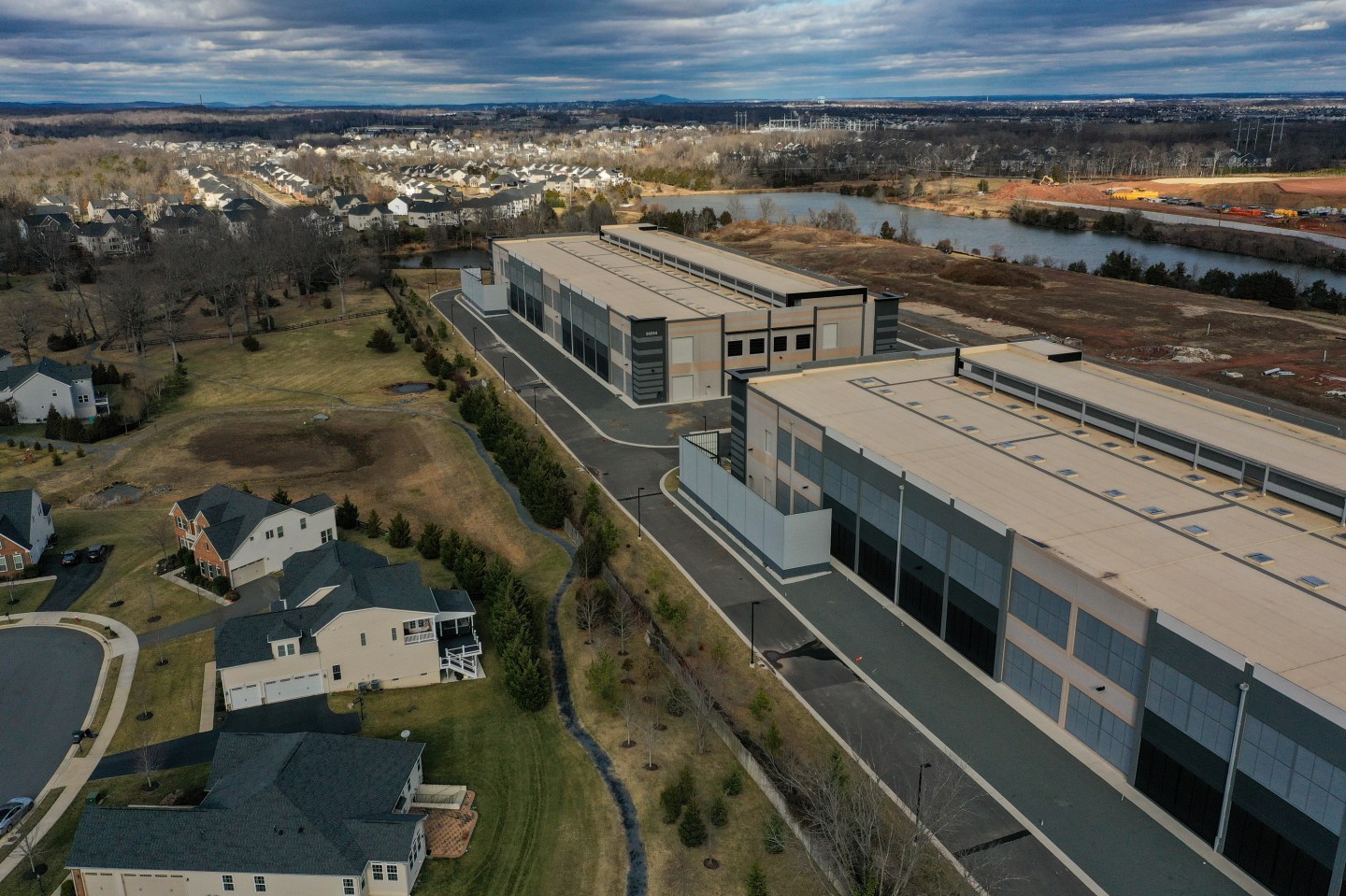
Aerial view of <a href="https://fortune.com/company/amazon-com/" target="_blank">Amazon</a> data centers near homes in northern Virginia
Data centers, like these Amazon facilities in Aldie, Va., sometimes require large amounts of energy to cool their equipment.
Jahi Chikwendiu—The Washington Post/Getty Images

Struggling air conditioners

Air conditioners struggle to perform effectively as it gets hotter outside—just when they’re needed the most. On hot days, air conditioner compressors have to work harder to send the heat from homes outside, which in turn disproportionally increases electricity consumption and overall electricity demand.

For example, in Texas, every increase of 1.8 degrees F (1 degree C) creates a rise of about 4% in electricity demand.

Heat leads to a staggering 50% increase in electricity demand during the summer in hotter countries, posing serious threats of electricity shortages or blackouts, coupled with higher greenhouse gas emissions.

How to prevent heat damage

Heat waves and warming temperatures around the globe pose significant short- and long-term problems for people and machines alike. Fortunately, there are things you can do to minimize the damage.

First, ensure that your machines are kept in an air-conditioned, well-insulated space or out of direct sunlight.

Second, consider using high-energy devices like air conditioners or charging your electric vehicle during off-peak hours when fewer people are using electricity. This can help avoid local electricity shortages.

Reusing heat

Scientists and engineers are developing ways to use and recycle the vast amounts of heat dissipated from machines. One simple example is using the waste heat from data centers to heat water.

Waste heat could also drive other kinds of air-conditioning systems, such as absorption chillers, which can actually use heat as energy to support coolers through a series of chemical- and heat-transferring processes.

In either case, the energy needed to heat or cool something comes from heat that is otherwise wasted. In fact, waste heat from power plants could hypothetically support 27% of residential air-conditioning needs, which would reduce overall energy consumption and carbon emissions.

Extreme heat can affect every aspect of modern life, and heat waves aren’t going away in the coming years. However, there are opportunities to harness extreme heat and make it work for us.


Srinivas Garimella, Professor of Mechanical Engineering, Georgia Institute of Technology and Matthew T. Hughes, Postdoctoral Associate, Massachusetts Institute of Technology (MIT)

This article is republished from The Conversation under a Creative Commons license. Read the original article.


Join us at the Fortune Workplace Innovation Summit May 19–20, 2026, in Atlanta. The next era of workplace innovation is here—and the old playbook is being rewritten. At this exclusive, high-energy event, the world’s most innovative leaders will convene to explore how AI, humanity, and strategy converge to redefine, again, the future of work. Register now.
About the Authors
By Matthew T. Hughes
See full bioRight Arrow Button Icon
By Srinivas Garimella
See full bioRight Arrow Button Icon
By The Conversation
See full bioRight Arrow Button Icon

Latest in Environment

Finance
Lorem ipsum dolor sit amet, consectetur adipiscing elit, sed do eiusmod tempor incididunt ut labore et dolore magna aliqua. Ut enim ad minim veniam
By Fortune Editors
October 20, 2025
Finance
Lorem ipsum dolor sit amet, consectetur adipiscing elit, sed do eiusmod tempor incididunt ut labore et dolore magna aliqua. Ut enim ad minim veniam
By Fortune Editors
October 20, 2025
Finance
Lorem ipsum dolor sit amet, consectetur adipiscing elit, sed do eiusmod tempor incididunt ut labore et dolore magna aliqua. Ut enim ad minim veniam
By Fortune Editors
October 20, 2025
Finance
Lorem ipsum dolor sit amet, consectetur adipiscing elit, sed do eiusmod tempor incididunt ut labore et dolore magna aliqua. Ut enim ad minim veniam
By Fortune Editors
October 20, 2025
Finance
Lorem ipsum dolor sit amet, consectetur adipiscing elit, sed do eiusmod tempor incididunt ut labore et dolore magna aliqua. Ut enim ad minim veniam
By Fortune Editors
October 20, 2025
Finance
Lorem ipsum dolor sit amet, consectetur adipiscing elit, sed do eiusmod tempor incididunt ut labore et dolore magna aliqua. Ut enim ad minim veniam
By Fortune Editors
October 20, 2025

Most Popular

Finance
Lorem ipsum dolor sit amet, consectetur adipiscing elit, sed do eiusmod tempor incididunt ut labore et dolore magna aliqua. Ut enim ad minim veniam
By Fortune Editors
October 20, 2025
Finance
Lorem ipsum dolor sit amet, consectetur adipiscing elit, sed do eiusmod tempor incididunt ut labore et dolore magna aliqua. Ut enim ad minim veniam
By Fortune Editors
October 20, 2025
Finance
Lorem ipsum dolor sit amet, consectetur adipiscing elit, sed do eiusmod tempor incididunt ut labore et dolore magna aliqua. Ut enim ad minim veniam
By Fortune Editors
October 20, 2025
Finance
Lorem ipsum dolor sit amet, consectetur adipiscing elit, sed do eiusmod tempor incididunt ut labore et dolore magna aliqua. Ut enim ad minim veniam
By Fortune Editors
October 20, 2025
Finance
Lorem ipsum dolor sit amet, consectetur adipiscing elit, sed do eiusmod tempor incididunt ut labore et dolore magna aliqua. Ut enim ad minim veniam
By Fortune Editors
October 20, 2025
Finance
Lorem ipsum dolor sit amet, consectetur adipiscing elit, sed do eiusmod tempor incididunt ut labore et dolore magna aliqua. Ut enim ad minim veniam
By Fortune Editors
October 20, 2025
Rankings
  • 100 Best Companies
  • Fortune 500
  • Global 500
  • Fortune 500 Europe
  • Most Powerful Women
  • Future 50
  • World’s Most Admired Companies
  • See All Rankings
Sections
  • Finance
  • Leadership
  • Success
  • Tech
  • Asia
  • Europe
  • Environment
  • Fortune Crypto
  • Health
  • Retail
  • Lifestyle
  • Politics
  • Newsletters
  • Magazine
  • Features
  • Commentary
  • Mpw
  • CEO Initiative
  • Conferences
  • Personal Finance
  • Education
Customer Support
  • Frequently Asked Questions
  • Customer Service Portal
  • Privacy Policy
  • Terms Of Use
  • Single Issues For Purchase
  • International Print
Commercial Services
  • Advertising
  • Fortune Brand Studio
  • Fortune Analytics
  • Fortune Conferences
  • Business Development
About Us
  • About Us
  • Editorial Calendar
  • Press Center
  • Work At Fortune
  • Diversity And Inclusion
  • Terms And Conditions
  • Site Map
  • Facebook icon
  • Twitter icon
  • LinkedIn icon
  • Instagram icon
  • Pinterest icon

Latest in Environment

greenland
EuropeGreenland
Americans have been quietly plundering Greenland for over 100 years, since a Navy officer chipped fragments off the Cape York iron meteorite
By Paul Bierman and The ConversationJanuary 14, 2026
10 hours ago
Greenland
PoliticsGreenland
Greenland’s 1.5 million tons of rare earths might never get mined because there just aren’t any roads to them
By Josh Funk, Suman Naishadham and The Associated PressJanuary 11, 2026
4 days ago
Elicker
LawCrime
New Haven mayor says police chief admitted to stealing money from department, accepts retirement
By The Associated PressJanuary 6, 2026
9 days ago
trump
PoliticsRare Earth Metal
Why Greenland appeals to Trump’s real-estate investor heart: location, location, location
By Danica Kirka and The Associated PressJanuary 6, 2026
9 days ago
data center
AIData centers
Angry town halls nationwide find a new villain: the data center driving up your electricity bill while fueling job-killing AI
By Marc Levy and The Associated PressJanuary 3, 2026
12 days ago
EnvironmentWhite House
‘I want nice, thin blood pouring through my heart'”: Trump talks health concerns, saying he takes more aspirin than recommended
By Michelle L. Price and The Associated PressJanuary 2, 2026
13 days ago

Most Popular

placeholder alt text
Personal Finance
Peter Thiel makes his biggest donation in years to help defeat California’s billionaire wealth tax
By Nick LichtenbergJanuary 14, 2026
15 hours ago
placeholder alt text
Success
Despite his $2.6 billion net worth, MrBeast says he’s having to borrow cash and doesn’t even have enough money in his bank account to buy McDonald’s
By Emma BurleighJanuary 13, 2026
2 days ago
placeholder alt text
AI
'Godfather of AI' says the technology will create massive unemployment and send profits soaring — 'that is the capitalist system'
By Jason MaJanuary 12, 2026
3 days ago
placeholder alt text
AI
Being mean to ChatGPT can boost its accuracy, but scientists warn you may regret it
By Marco Quiroz-GutierrezJanuary 13, 2026
2 days ago
placeholder alt text
Future of Work
'Microshifting,' an extreme form of hybrid working that breaks work into short, non-continuous blocks, is on the rise
By Nick LichtenbergJanuary 13, 2026
2 days ago
placeholder alt text
Economy
Goldman Sachs top economist says Powell probe won’t change the Fed: 'Decisions are going to be made based on employment and inflation'
By Sasha RogelbergJanuary 12, 2026
3 days ago

© 2025 Fortune Media IP Limited. All Rights Reserved. Use of this site constitutes acceptance of our Terms of Use and Privacy Policy | CA Notice at Collection and Privacy Notice | Do Not Sell/Share My Personal Information
FORTUNE is a trademark of Fortune Media IP Limited, registered in the U.S. and other countries. FORTUNE may receive compensation for some links to products and services on this website. Offers may be subject to change without notice.