• Home
  • Latest
  • Fortune 500
  • Finance
  • Tech
  • Leadership
  • Lifestyle
  • Rankings
  • Multimedia
EnvironmentEnergy

Governments pledged to end fossil fuel subsidies. Instead, they’ve doubled down since 2020, hitting record $1.3 trillion

By
Bloomberg
Bloomberg
and
Leslie Kaufman
Leslie Kaufman
Down Arrow Button Icon
By
Bloomberg
Bloomberg
and
Leslie Kaufman
Leslie Kaufman
Down Arrow Button Icon
August 24, 2023, 2:03 PM ET
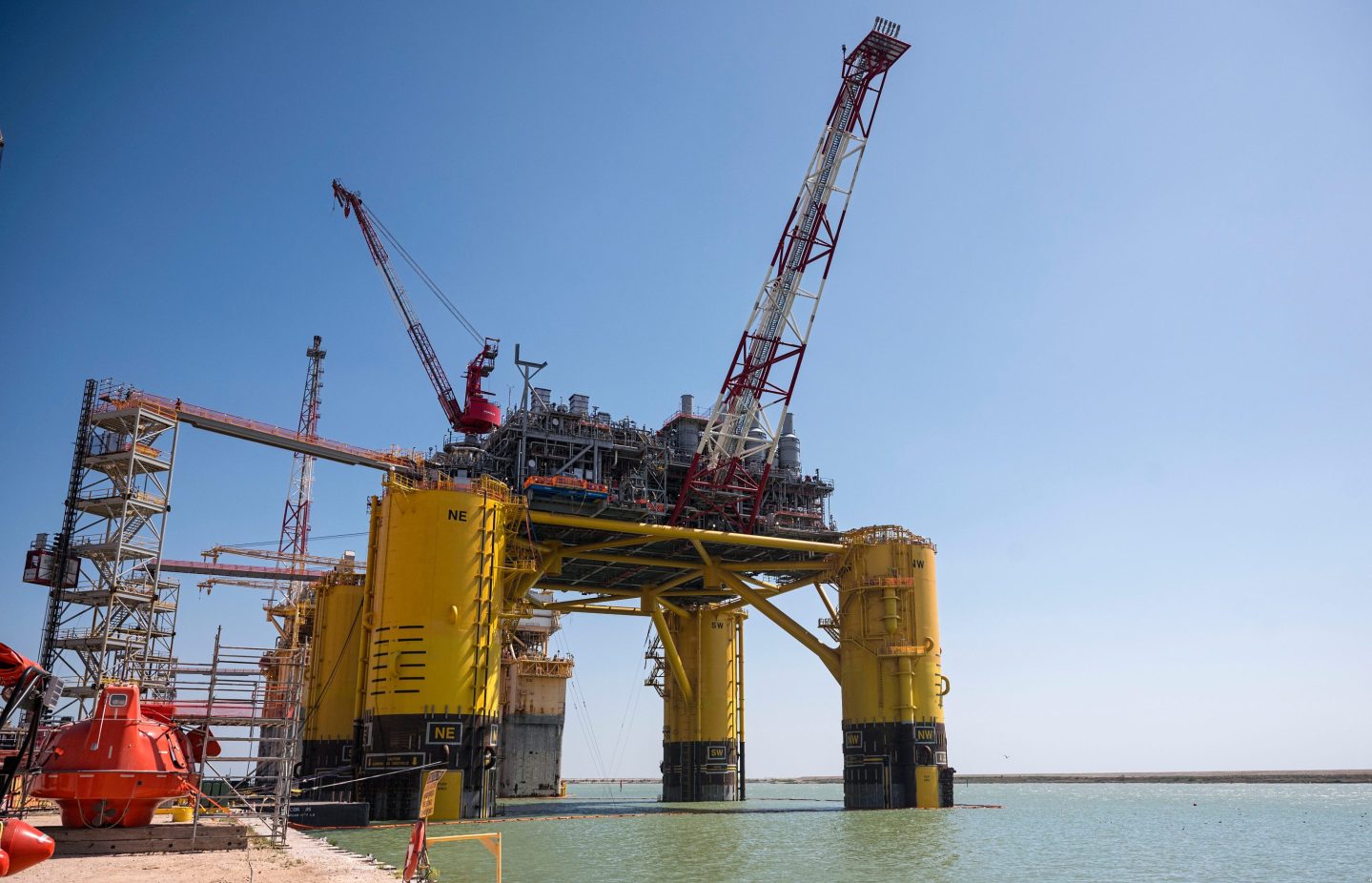
A Shell offshore oil platform under construction in Ingleside, Texas.
A Shell offshore oil platform under construction in Ingleside, Texas.Eddie Seal/Bloomberg

Despite repeated government pledges to cut back on fossil fuel subsidies, a new report found such subsidies surged to a record $1.3 trillion last year.

Recommended Video

The report by the International Monetary Fund (IMF) looked at both explicit and implicit subsidies for fossil fuels across 170 countries. It found explicit subsidies alone have more than doubled since the previous IMF assessment, rising from $500 billion in 2020 to $1.3 trillion in 2022 as governments rushed to mitigate the inflationary impact of Russia’s invasion of Ukraine and the spike in demand caused by the economic recovery from Covid-19. Those subsidies are direct monetary support for fossil fuels through activities like regulated prices set below international levels and energy bill rebates.

IMF also calculates implicit fossil fuel subsidies, which include the cost of things such as undercharging for environmental costs and failing to levy taxes on consumption. Adding those in and the total subsidies ballooned to $7 trillion in 2022. That’s an increase of $2 trillion compared to 2020.

The findings dovetail with a report that came out earlier in the week by the International Institute for Sustainable Development (IISD), a Canada-based think tank, which found that public monies in G-20 countries alone going to explicit fossil fuel subsidies more than quadrupled to $1 trillion in 2022 compared to a year ago.

The two reports put into stark relief the chasm between nations’ stated goals on the urgency of cutting back on fossil fuels and their actions. In 2015, the world’s nations signed onto 17 United Nations’ Sustainable Development Goals, which included a commitment to phase out fossil fuel subsidies. That commitment was made more explicit at COP26 in 2021, when 197 countries agreed to accelerate the phaseout of what the pact dubbed “inefficient subsidies.”

“We are overflowing with government commitments to phase out support for fossil fuels, but there is a serious drought in implementation,” said Christopher Beaton, who researches sustainable energy consumption for IISD. “During the last two years, at the international level, we have gone backwards.”

Going backwards has serious implications for the world’s efforts to hold global warming to within 1.5C of pre-industrial levels. Even at just 1.2C (2.2F) of warming, the world is experiencing devastating heat and disasters that have been worsened by climate change. This past July was the hottest month the globe has ever recorded, coming amid a summer of deadly wildfires, heat waves and floods. 

The climate will only become more volatile if humans keep pouring greenhouse gasses into the atmosphere, and continuing to subsidize fossil fuels raises that risk.

“Fossil fuel subsidies keep the prices low, which increases consumption, and they are encouraging new projects that would never otherwise take place,” Beaton noted.

The IMF authors said that removing explicit fuel subsidies and imposing taxes on environmental costs, including carbon dioxide and other air pollutants, would reduce global carbon dioxide emissions by 34% below 2019 levels by 2030.


Join us at the Fortune Workplace Innovation Summit May 19–20, 2026, in Atlanta. The next era of workplace innovation is here—and the old playbook is being rewritten. At this exclusive, high-energy event, the world’s most innovative leaders will convene to explore how AI, humanity, and strategy converge to redefine, again, the future of work. Register now.
About the Authors
By Bloomberg
See full bioRight Arrow Button Icon
By Leslie Kaufman
See full bioRight Arrow Button Icon

Latest in Environment

carbon
Commentaryclimate change
Banking on carbon markets 2.0: why financial institutions should engage with carbon credits
By Usha Rao-MonariDecember 13, 2025
5 hours ago
mackenzie
Personal Financephilanthropy
‘This year, I really see education and climate’: Patterns in billionaire MacKenzie Scott’s massive giving emerge with time
By Thalia Beaty and The Associated PressDecember 11, 2025
2 days ago
Google DeepMind cofounder and CEO Demis Hassabis
AIU.K.
Google DeepMind agrees to sweeping partnership with U.K. government focused on science and clean energy
By Jeremy KahnDecember 10, 2025
3 days ago
InnovationBrainstorm AI
Rivian CEO says buying an EV isn’t a political choice, pointing out that R1 buyers are split evenly between Republicans and Democrats
By Jason MaDecember 10, 2025
3 days ago
AIBrainstorm AI
Google Cloud CEO lays out 3-part strategy to meet AI’s energy demands, after identifying it as ‘the most problematic thing’
By Jason MaDecember 8, 2025
5 days ago
Apple CEO Tim Cook wearing a white polo shirt and throwing up a peace sign
Big TechApple
Apple won’t be the same in 2026. Meet the company’s next generation of leaders and rising stars after its biggest executive exodus in years
By Dave SmithDecember 8, 2025
5 days ago

Most Popular

placeholder alt text
Economy
Tariffs are taxes and they were used to finance the federal government until the 1913 income tax. A top economist breaks it down
By Kent JonesDecember 12, 2025
1 day ago
placeholder alt text
Success
Apple cofounder Ronald Wayne sold his 10% stake for $800 in 1976—today it’d be worth up to $400 billion
By Preston ForeDecember 12, 2025
1 day ago
placeholder alt text
Success
40% of Stanford undergrads receive disability accommodations—but it’s become a college-wide phenomenon as Gen Z try to succeed in the current climate
By Preston ForeDecember 12, 2025
1 day ago
placeholder alt text
Economy
The Fed just ‘Trump-proofed’ itself with a unanimous move to preempt a potential leadership shake-up
By Jason MaDecember 12, 2025
21 hours ago
placeholder alt text
Economy
For the first time since Trump’s tariff rollout, import tax revenue has fallen, threatening his lofty plans to slash the $38 trillion national debt
By Sasha RogelbergDecember 12, 2025
23 hours ago
placeholder alt text
Success
At 18, doctors gave him three hours to live. He played video games from his hospital bed—and now, he’s built a $10 million-a-year video game studio
By Preston ForeDecember 10, 2025
3 days ago
Rankings
  • 100 Best Companies
  • Fortune 500
  • Global 500
  • Fortune 500 Europe
  • Most Powerful Women
  • Future 50
  • World’s Most Admired Companies
  • See All Rankings
Sections
  • Finance
  • Leadership
  • Success
  • Tech
  • Asia
  • Europe
  • Environment
  • Fortune Crypto
  • Health
  • Retail
  • Lifestyle
  • Politics
  • Newsletters
  • Magazine
  • Features
  • Commentary
  • Mpw
  • CEO Initiative
  • Conferences
  • Personal Finance
  • Education
Customer Support
  • Frequently Asked Questions
  • Customer Service Portal
  • Privacy Policy
  • Terms Of Use
  • Single Issues For Purchase
  • International Print
Commercial Services
  • Advertising
  • Fortune Brand Studio
  • Fortune Analytics
  • Fortune Conferences
  • Business Development
About Us
  • About Us
  • Editorial Calendar
  • Press Center
  • Work At Fortune
  • Diversity And Inclusion
  • Terms And Conditions
  • Site Map

© 2025 Fortune Media IP Limited. All Rights Reserved. Use of this site constitutes acceptance of our Terms of Use and Privacy Policy | CA Notice at Collection and Privacy Notice | Do Not Sell/Share My Personal Information
FORTUNE is a trademark of Fortune Media IP Limited, registered in the U.S. and other countries. FORTUNE may receive compensation for some links to products and services on this website. Offers may be subject to change without notice.