Every person has a story to tell, it’s been said. But these days, it seems, every company has a movie to make.
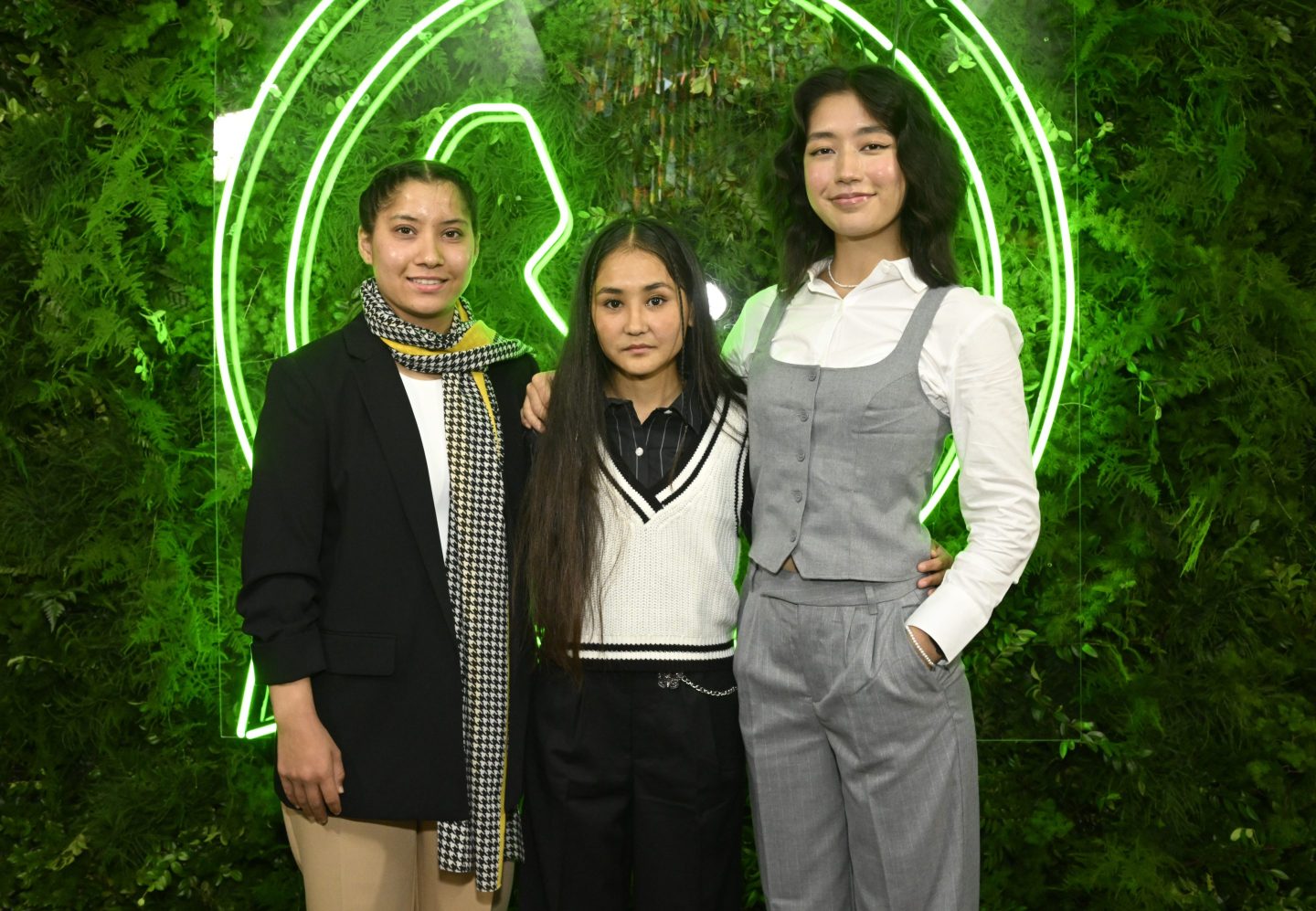
Last week, WhatsApp, the popular messaging app, released a short film following girls from Afghanistan’s youth national soccer team fleeing the country as the Taliban took control in 2021. The 26-minute documentary-style film We Are Ayenda—which shows the girls relying on WhatsApp’s messaging service to organize their escape—incorporates a mix of interviews, videos the girls filmed at the time, and screen recordings of WhatsApp’s interface.
“That group chat was like a candle,” said Fatima Zarbi, an Afghan youth national team member, in the film. “It was our life, our hope.”
The film, released on Amazon Prime and YouTube, comes amid a wave of other long-form films with corporate pedigree, from Nintendo’s The Super Marios Bros Movie to Mattel’s box office blockbuster Barbie. Compared to those big-budget titles, produced for theatrical release, the WhatsApp film has more modest ambitions. But its creation underscores how brands are increasingly turning to long-form storytelling to spread their messages, after a period where short, TikTok-length videos appeared to be king, according to experts.
“This was somewhat taboo years ago and now feels like every brand is going to have their very own mini-movie,” said Jamie Cohen, assistant professor of media studies at Queens College and former television producer.
Long-form sponsored content isn’t completely new. In 2008, Johnson & Johnson produced a 13-minute film about the role of nurses following Hurricane Katrina. In 2014, Chevrolet made a 16-minute documentary about a young, female baseball player. WhatsApp is doing something different with We Are Ayenda, because in a digital age, it is reverting back to traditional media, Cohen said.
“We in the West, and potentially globally, are a television-based society,” he said. WhatsApp could have released its documentary in the form of short videos on TikTok, which has become a key marketing tool for companies in recent years. But those pieces of media aren’t as memorable as long-form content, and WhatsApp recognizes that, he said.
“It’s wildly unoriginal, and at the same time completely unique,” he told Fortune.
WhatsApp’s gravitation towards television-like content isn’t happening in a vacuum. YouTube is increasingly positioning itself as a television service rather than a social media platform. TikTok continues to increase the length of videos users can post, and Twitter, now called X, doubled the length of videos it can host to two hours. Not only has it gotten easier to make high quality content with the technology available, but traditional gatekeepers like movie studios and television networks aren’t as strong as in the past, said Jeffrey Kaloski, managing director at L.E.K. Consulting with specialties in media and entertainment. While this type of advertising isn’t new, it will become more prevalent in the coming years, he said.
WhatsApp’s film could help address its regulatory problems
For Meta, the parent company of WhatsApp, the film provides a way to align itself with social justice and human interest initiatives at a time when it’s facing regulatory and public relations challenges across the globe.
European and U.S. government bodies are increasingly cracking down on Big Tech companies and their encryption technologies, which they say let criminals and terrorists hide their tracks. Regulation threatening end-to-end encryption could make it more difficult for WhatsApp to function in some of its most lucrative markets. By showing the importance of WhatsApp in narrative form, the film is a way for the company to reframe the conversation and help sway public opinion. The company can use We Are Ayenda “as a bit of a rallying cry,” Kaloski told Fortune.
Yet while politicians have the ability to make regulatory change, the film appears to be geared towards general audiences because it is distributed by streaming services, said Brian Wieser, a media analyst at his own firm and former executive at media buyer GroupM. If the goal was to change politicians’ minds, WhatsApp might have run trade campaigns or screened the film in Brussels, an E.U. regulatory hotspot, he told Fortune. But WhatsApp has targeted politicians in other ways. The app’s chief Will Cathcart traveled to the U.K. earlier this year, where he spoke with journalists and threatened to pull its services from the territory.
Is WhatsApp copying Barbie?
Last month, Warner Bros. Discovery released Barbie, a comedy about the Mattel doll produced in part by the toy maker. It quickly broke records at the box office, garnering more than $1 billion in revenue. The release reflects a larger trend towards product-related movies, including Amazon’s Air, Apple’s Tetris, and Netflix’s upcoming Unfrosted: The Pop-Tart Story.
Telling stories about commodities isn’t always smooth sailing. The Tetris Company and its CEO are defendants, along with Apple, in a new lawsuit from Daniel Ackerman, the Gizmodo editor-in-chief and author of a 2016 book about Tetris. He claims the movie makers poached various sections of his book and its general style for the movie. Still, these films have massive commercial appeal. Mattel is capitalizing on this style with plans to release 45 movies about its toys, the New Yorker reported.
While WhatsApp similarly made a film starring its product, it isn’t doing the same thing as these other releases, experts agreed. Mattel appears to be leaning on nostalgia and play to sell products, while WhatsApp is positioning its film to have a discussion on regulatory matters, said Kaloski.
We Are Ayenda does not explicitly mention end-to-end encryption, but the technology is present throughout the film. “The stakes were extremely high for secure communication,” Farkhunda Muhtaj, captain of the Afghan women’s national team, says in the film. The teammates not only communicated plans to escape Afghanistan through WhatsApp, but they also sent identification documents that if intercepted, could put their lives at risk, Muhtaj says. The film also staged basic tools WhatsApp offers, like the ability to add someone to a group chat and send voice memos.
Whether this kind of corporate storytelling clicks with audiences the same way that Barbie has remains to be seen. In its first week, We Are Ayenda doesn’t appear to have sparked much conversation online. Discussions on social media are driven by parties that participated in the film, including WhatsApp, the teammates, and Anonymous Content, the production company behind 13 Reasons Why and Schitt’s Creek that partnered with Meta on the film. Social media users are interacting with WhatsApp’s posts about the film, but the majority of comments are spam-like and not about the movie. YouTube shows 64,000 views on the film, but it is unclear how many users watched the film in full. We Are Ayenda only has three ratings on Amazon and does not have a page on IMDb.