• Home
  • Latest
  • Fortune 500
  • Finance
  • Tech
  • Leadership
  • Lifestyle
  • Rankings
  • Multimedia
FinanceEconomy

The Fed may have saved the economy by hiking rates for 18 months—and may have guaranteed crisis for emerging markets

By
Cristina Bodea
Cristina Bodea
and
The Conversation
The Conversation
Down Arrow Button Icon
By
Cristina Bodea
Cristina Bodea
and
The Conversation
The Conversation
Down Arrow Button Icon
August 5, 2023, 3:48 PM ET
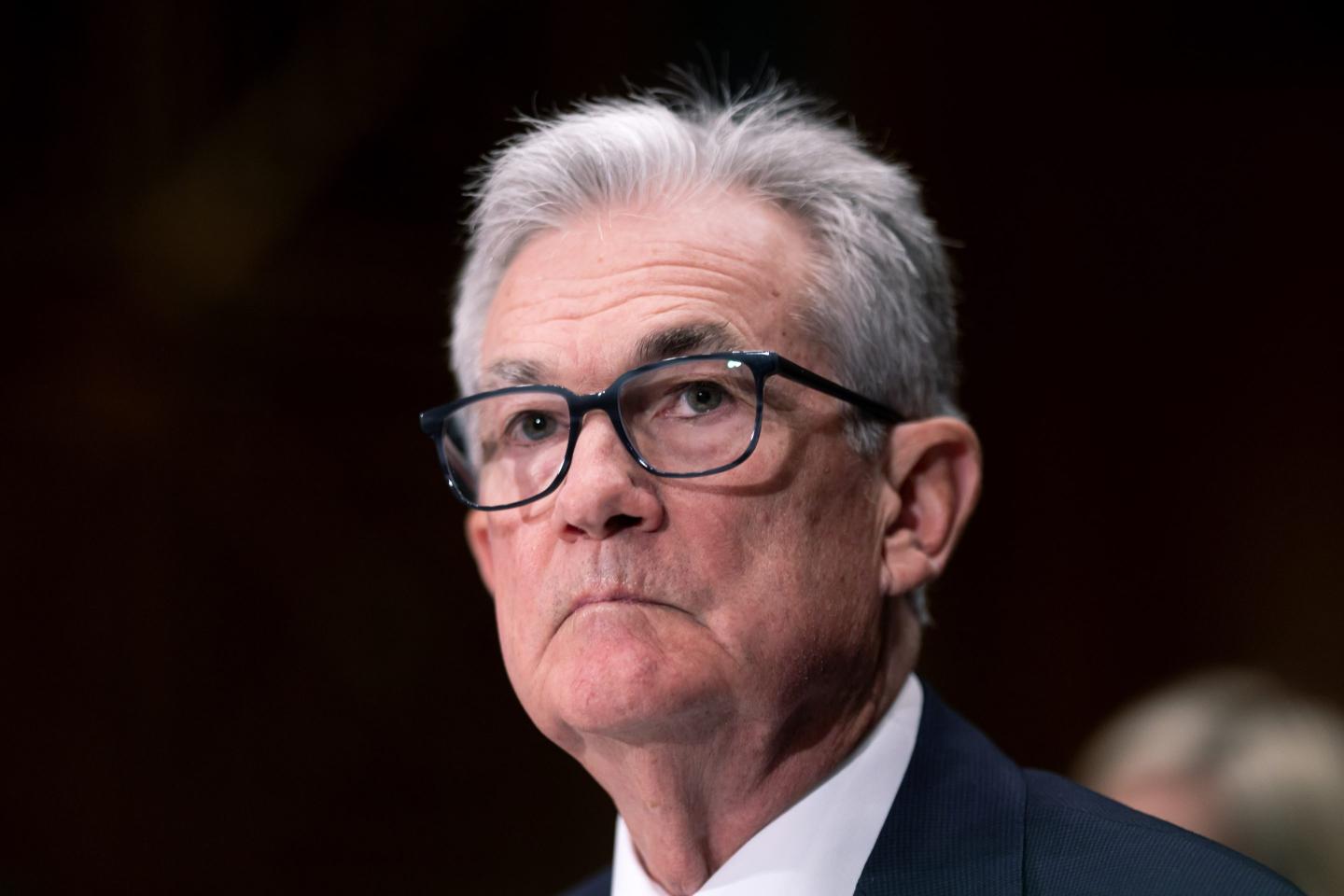
Jerome Powell
Federal Reserve chair Jerome Powell.Nathan Howard/Bloomberg via Getty Images

The campaign to fight U.S. inflation by upping interest rates has been going on for a year and a half – and its impacts are being felt around the world.

Recommended Video

On July 26, 2023, the Federal Reserve announced another quarter-point hike. That means U.S. rates have now gone up 5.25 percentage points over the past 18 months. While inflation is now coming down in the U.S., the aggressive monetary policy may also be having significant longer-term impact on countries across the world, especially in developing countries. And that isn’t good.

I study how economic phenomena such as banking crises, periods of high inflation and soaring rates affect countries around the world and believe this prolonged period of higher U.S. interest rates has increased the risk of economic and social instability, especially in lower-income nations.

Ripples around the world

Monetary policy decisions in the U.S., such as raising interest rates, have a ripple effect in low-income countries – not least because of the central role of the dollar in the global economy. Many emerging economies rely on the dollar for trade, and most borrow in the U.S. dollar – all at rates influenced by the Federal Reserve. And when U.S. interest rates go up, many countries – and especially developing ones – tend to follow suit.

This is largely out of concern for currency depreciation. Raising U.S. interest rates has the effect of making American government and corporate bonds look more attractive to investors. The result is footloose foreign capital flows out of emerging markets that are deemed riskier. This pushes down the currencies of those nations and prompts governments in lower-income nations to scramble to mirror U.S. Federal Reserve policy. The problem is, many of these countries already have high interest rates, and further hikes limit how much governments can lend to expand their own economies – heightening the risk of recession.

Then there is the impact that raising rates in the U.S. has had on countries with large debts. When rates were lower, a lot of lower-income nations took on high levels of international debt to offset the financial impact of the COVID-19 pandemic and then later the effect of higher prices caused by war in Ukraine. But the rising cost of borrowing makes it more difficult for governments to cover repayments that are coming due now. This condition, called “debt distress,” is affecting an increasing number of countries. Writing in May 2023, when he was still president of the World Bank, David Malpass estimated that some 60% of lower-income countries are in or high risk of entering debt distress.

More broadly, any attempt to slow down growth to lower inflation in the U.S. – which is the intended aim of raising interest rates – will have a knock-on effect on the economies of smaller nations. As borrowing costs in the U.S. increase, businesses and consumers will find themselves with less cheap money for all goods – domestic or international. Meanwhile, any fears that the Fed has pulled on the brakes too quickly and is risking recession will suppress consumer spending further.

The risk of spillover

This isn’t just theory – history has shown that in practice it is true.

When then-Fed Chair Paul Volcker fought domestic inflation in the late 1970s and early 1980s, he did so with aggressive interest rate hikes that pushed up the cost of borrowing around the world. It contributed to debt crises for 16 Latin American countries and led to what became known in the region as the “lost decade” – a period of economic stagnation and soaring poverty.

The current rate increases are not of the same order as those of the early 1980s, when rates rose to nearly 20%. But rates are high enough to prompt fears among economists. The World Bank’s most recent Global Economic Prospects report included a whole section on the spillover from U.S. interest rates to developing nations. It noted: “The rapid rise in interest rates in the United States poses a significant challenge to [emerging markets and developing economies],” adding that the result was “higher likelihood” of financial crises among vulnerable economies.

Widening the wealth gap

Research I conducted with others suggests that the kind of financial crises hinted at by the World Bank – currency depreciation and debt distress – can rip the social fabric of developing countries by increasing poverty and income inequality.

Income inequality is at an all-time high – both within individual countries and between the richer and developing countries. The 2022 World Inequality Report notes that, currently, the richest 10% of individuals globally take home 52% of all global income, while the poorest half of the global population receives a mere 8.5%. And such a wealth gap is deeply corrosive for societies: Inequality of income and wealth has been shown to both harm democracy and reduce popular support for democratic institutions. It has also been linked to political violence and corruption.

Financial crises – such as the kind that higher interest rates in the U.S. may spark – increase the chance of economic slowdowns or even recessions. Worryingly, the World Bank has warned that developing nations face a “multi-year period of slow growth” that will only increase rates of poverty. And history has shown that the impact of such economic conditions fall hardest on lower-skilled low-income people.

These effects are compounded by government policies, such as cuts in spending and government services, which, again, disproportionately hit the less well-off. And if a country is struggling to pay back sovereign debt as a result of higher global interest rates, then it also has less cash to help its poorest citizens.

So in a very real sense, a period of higher interest rates in the U.S. can have a detrimental effect on the economic, political and social well-being of developing nations.

There is a caveat, however. With inflation in the U.S. slowing, further interest rate increases may be limited. It could be the case that regardless of whether Fed policy has threaded the needle of slowing the U.S. economy but not by too much, it has nonetheless sown the seeds of more potentially severe economic – and social – woes in poorer nations.

Cristina Bodea is Professor of Political Science, Michigan State University.

This article is republished from The Conversation under a Creative Commons license. Read the original article.

Join us at the Fortune Workplace Innovation Summit May 19–20, 2026, in Atlanta. The next era of workplace innovation is here—and the old playbook is being rewritten. At this exclusive, high-energy event, the world’s most innovative leaders will convene to explore how AI, humanity, and strategy converge to redefine, again, the future of work. Register now.
About the Authors
By Cristina Bodea
See full bioRight Arrow Button Icon
By The Conversation
See full bioRight Arrow Button Icon

Latest in Finance

Finance
Lorem ipsum dolor sit amet, consectetur adipiscing elit, sed do eiusmod tempor incididunt ut labore et dolore magna aliqua. Ut enim ad minim veniam
By Fortune Editors
October 20, 2025
Finance
Lorem ipsum dolor sit amet, consectetur adipiscing elit, sed do eiusmod tempor incididunt ut labore et dolore magna aliqua. Ut enim ad minim veniam
By Fortune Editors
October 20, 2025
Finance
Lorem ipsum dolor sit amet, consectetur adipiscing elit, sed do eiusmod tempor incididunt ut labore et dolore magna aliqua. Ut enim ad minim veniam
By Fortune Editors
October 20, 2025
Finance
Lorem ipsum dolor sit amet, consectetur adipiscing elit, sed do eiusmod tempor incididunt ut labore et dolore magna aliqua. Ut enim ad minim veniam
By Fortune Editors
October 20, 2025
Finance
Lorem ipsum dolor sit amet, consectetur adipiscing elit, sed do eiusmod tempor incididunt ut labore et dolore magna aliqua. Ut enim ad minim veniam
By Fortune Editors
October 20, 2025
Finance
Lorem ipsum dolor sit amet, consectetur adipiscing elit, sed do eiusmod tempor incididunt ut labore et dolore magna aliqua. Ut enim ad minim veniam
By Fortune Editors
October 20, 2025

Most Popular

Finance
Lorem ipsum dolor sit amet, consectetur adipiscing elit, sed do eiusmod tempor incididunt ut labore et dolore magna aliqua. Ut enim ad minim veniam
By Fortune Editors
October 20, 2025
Finance
Lorem ipsum dolor sit amet, consectetur adipiscing elit, sed do eiusmod tempor incididunt ut labore et dolore magna aliqua. Ut enim ad minim veniam
By Fortune Editors
October 20, 2025
Finance
Lorem ipsum dolor sit amet, consectetur adipiscing elit, sed do eiusmod tempor incididunt ut labore et dolore magna aliqua. Ut enim ad minim veniam
By Fortune Editors
October 20, 2025
Finance
Lorem ipsum dolor sit amet, consectetur adipiscing elit, sed do eiusmod tempor incididunt ut labore et dolore magna aliqua. Ut enim ad minim veniam
By Fortune Editors
October 20, 2025
Finance
Lorem ipsum dolor sit amet, consectetur adipiscing elit, sed do eiusmod tempor incididunt ut labore et dolore magna aliqua. Ut enim ad minim veniam
By Fortune Editors
October 20, 2025
Finance
Lorem ipsum dolor sit amet, consectetur adipiscing elit, sed do eiusmod tempor incididunt ut labore et dolore magna aliqua. Ut enim ad minim veniam
By Fortune Editors
October 20, 2025
Fortune Secondary Logo
Rankings
  • 100 Best Companies
  • Fortune 500
  • Global 500
  • Fortune 500 Europe
  • Most Powerful Women
  • Future 50
  • World’s Most Admired Companies
  • See All Rankings
Sections
  • Finance
  • Fortune Crypto
  • Features
  • Leadership
  • Health
  • Commentary
  • Success
  • Retail
  • Mpw
  • Tech
  • Lifestyle
  • CEO Initiative
  • Asia
  • Politics
  • Conferences
  • Europe
  • Newsletters
  • Personal Finance
  • Environment
  • Magazine
  • Education
Customer Support
  • Frequently Asked Questions
  • Customer Service Portal
  • Privacy Policy
  • Terms Of Use
  • Single Issues For Purchase
  • International Print
Commercial Services
  • Advertising
  • Fortune Brand Studio
  • Fortune Analytics
  • Fortune Conferences
  • Business Development
  • Group Subscriptions
About Us
  • About Us
  • Editorial Calendar
  • Press Center
  • Work At Fortune
  • Diversity And Inclusion
  • Terms And Conditions
  • Site Map
  • About Us
  • Editorial Calendar
  • Press Center
  • Work At Fortune
  • Diversity And Inclusion
  • Terms And Conditions
  • Site Map
  • Facebook icon
  • Twitter icon
  • LinkedIn icon
  • Instagram icon
  • Pinterest icon

Latest in Finance

United CEO has pitched possible combination with rival American
PoliticsAirline industry
United CEO has pitched possible combination with rival American
By Siddharth Philip, Allyson Versprille, Sri Taylor and BloombergApril 13, 2026
3 hours ago
NEW YORK, NEW YORK - DECEMBER 12: President-elect Donald Trump rings the opening bell on the trading floor of the New York Stock Exchange (NYSE) on December 12, 2024 in New York City. Trump was invited to the Exchange after being named TIME’s “Person of the Year” for the second time. (Photo by Spencer Platt/Getty Images)
EnergyIran
Wall Street is the biggest winner of the Iran war—and the S&P 500 just turned positive for the year
By Eva RoytburgApril 13, 2026
4 hours ago
iran
EnergyIran
With the U.S. now blockading the Strait of Hormuz, the focus is on who has ‘the guts to go through first’
By Jordan BlumApril 13, 2026
5 hours ago
U.S. President Donald Trump salutes as a U.S. Army carry team moves a flag-draped transfer case containing the remains of Sgt. Declan J. Coady at Dover Air Force Base on March 07, 2026 in Dover, Delaware.
PoliticsIran
Trump has wanted to humble Iran since 1980. He may be humbling the American empire instead
By Eva Roytburg and Nick LichtenbergApril 13, 2026
6 hours ago
Credit cards in a row
Personal FinanceTaxes
Americans are credit-card-maxing tax season with sign-up bonuses while half the country relies on their refund to catch up on bills
By Catherina GioinoApril 13, 2026
6 hours ago
A person holding a blue piggy bank
Personal FinanceSavings
Best savings account bonuses for April 2026
By Joseph HostetlerApril 13, 2026
8 hours ago

Most Popular

'This is the last warning.' Iran threatens U.S. warships after they throw down the gauntlet for winner-take-all Strait of Hormuz
Politics
'This is the last warning.' Iran threatens U.S. warships after they throw down the gauntlet for winner-take-all Strait of Hormuz
By Fortune EditorsApril 11, 2026
2 days ago
'People are trying to be creative': Tariff-battered American companies are so cash-starved they are using refund claims as collateral for loans
Economy
'People are trying to be creative': Tariff-battered American companies are so cash-starved they are using refund claims as collateral for loans
By Fortune EditorsApril 12, 2026
2 days ago
Billionaire philanthropist MacKenzie Scott has donated again—a week after gifting millions to a college, she's just given $70 million to Meals on Wheels America
Success
Billionaire philanthropist MacKenzie Scott has donated again—a week after gifting millions to a college, she's just given $70 million to Meals on Wheels America
By Fortune EditorsApril 13, 2026
11 hours ago
As the U.S. Navy attempts to take control of the Strait of Hormuz today, Trump asks the Pope to shut up
Politics
As the U.S. Navy attempts to take control of the Strait of Hormuz today, Trump asks the Pope to shut up
By Fortune EditorsApril 13, 2026
16 hours ago
The 'affordability economy' has created a housing market nobody predicted: Prices collapsing in the Sunbelt, soaring in the Rust Belt
Real Estate
The 'affordability economy' has created a housing market nobody predicted: Prices collapsing in the Sunbelt, soaring in the Rust Belt
By Fortune EditorsApril 11, 2026
3 days ago
Here’s how a U.S. naval blockade of the Strait of Hormuz could work. ‘This is a big task, and it’s a big gamble’
Politics
Here’s how a U.S. naval blockade of the Strait of Hormuz could work. ‘This is a big task, and it’s a big gamble’
By Fortune EditorsApril 12, 2026
1 day ago

© 2026 Fortune Media IP Limited. All Rights Reserved. Use of this site constitutes acceptance of our Terms of Use and Privacy Policy | CA Notice at Collection and Privacy Notice | Do Not Sell/Share My Personal Information
FORTUNE is a trademark of Fortune Media IP Limited, registered in the U.S. and other countries. FORTUNE may receive compensation for some links to products and services on this website. Offers may be subject to change without notice.