
• Home
  • News
  • Fortune 500
  • Tech
  • Finance
  • Leadership
  • Lifestyle
  • Rankings
  • Multimedia
TechTaiwan Semiconductor Manufacturing

TSMC complains it can’t find enough skilled workers to get its Arizona chip plants ready in time, delaying mass production to 2025

Nicholas Gordon
By
Nicholas Gordon
Nicholas Gordon
Asia Editor
Down Arrow Button Icon
Nicholas Gordon
By
Nicholas Gordon
Nicholas Gordon
Asia Editor
Down Arrow Button Icon
July 21, 2023, 6:01 AM ET
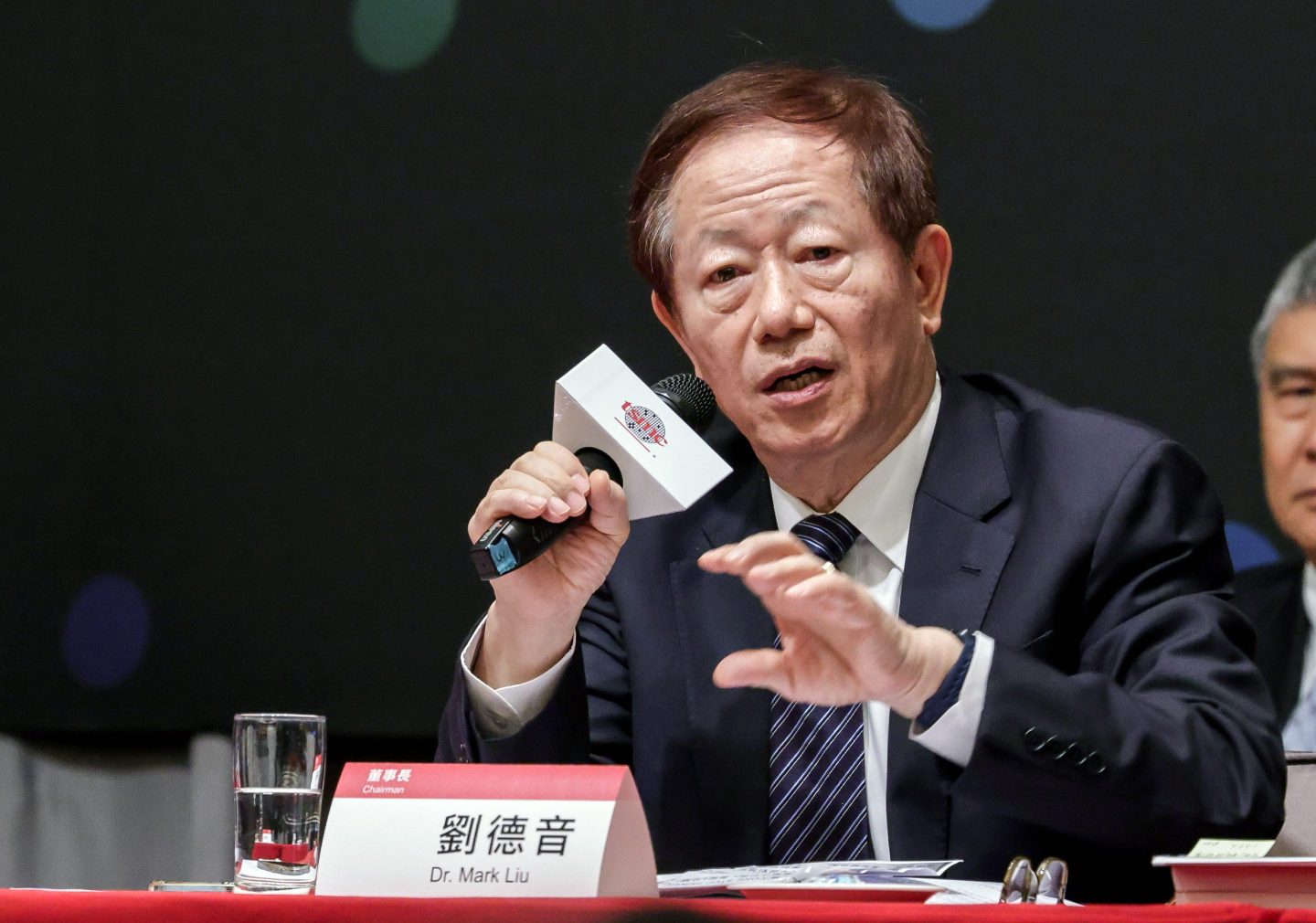
TSMC chairman Mark Liu said he may have to fly in engineers from Taiwan to help with construction.
TSMC chairman Mark Liu said he may have to fly in engineers from Taiwan to help with construction.I-Hwa Cheng—Bloomberg via Getty Images

Taiwan Semiconductor Manufacturing Company is finding it harder to make chips in the U.S. than it anticipated.

Recommended Video

The chipmaker will likely delay the production start date of its Arizona plants to 2025, the company announced on Thursday during its second quarter earnings call. TSMC had originally hoped to start manufacturing chips in Arizona by late 2024.

“There is an insufficient amount of skilled workers” with the expertise to build a chip factory, TSMC chairman Mark Liu complained during a call with analysts. The executive warned the company might have to fly in “experienced technicians from Taiwan to train the local skilled workers for a short period of time.”

TSMC is currently negotiating with the U.S. government to offer accelerated non-immigrant visas to about 500 Taiwanese engineers, Nikkei Asiareported in late June citing chip supply chain executives.

“We require skilled expertise for specific TSMC Arizona construction activities and are temporarily bringing to Arizona select specialized talent with strong experience,” a spokesperson for TSMC said, noting that all would be E-2 visa holders. While the total number of workers to be brought over has not been determined, “they will only be in Arizona for a limited timeframe for this specific project and will not impact the 12,000 workers currently on-site every day nor our U.S. hiring,” the spokesperson continued.

The Arizona factories are key to both TSMC and the Biden administration’s plan to expand chip manufacturing in the U.S. The CHIPS and Science Act, passed last August, puts aside $52 billion in government subsidies for U.S. chip manufacturing. Last December, TSMC announced that it was doubling its investment in Arizona to $40 billion, in a blockbuster event that featured U.S. President Joe Biden, Apple CEO Tim Cook and Nvidia CEO Jensen Huang.

The Taiwanese chipmaker hopes to receive a total of $15 billion in government support for the plants, the Wall Street Journalreported in April. Yet the chipmaker is uneasy about some of the conditions for funding, including profit-sharing agreements. (Other chip companies have complained about other provisions, including a requirement to provide childcare and constraints on expanding chip manufacturing in China.)

Working culture

TSMC needs to hire thousands of workers to help build and operate its Arizona plants. Yet the company is known for a tough and domineering working culture. While the attitude perhaps works in Taiwan, where TSMC pays above-market rates among a workforce with lots of STEM graduates, it’s proven less effective in the U.S., where competitors like Intel are willing to pay top dollar for more scarce talent. 

“Twelve-hour days are standard, weekend shifts are common,” one TSMC engineer wrote on employer review website Glassdoor, Fortune previously reported. Another employee warned that TSMC “is about obedience” and is “not ready for America.”

TSMC also requires engineers to spend as much as 18 months in Taiwan for training. Inbound trainees have clashed with TSMC’s veteran staff and their top-down management culture upon arrival. 

The company’s executives dismiss concerns about tough working conditions. Liu, in response to an article from Fortune, told shareholders in June that “those who are unwilling to be on duty should not be in this industry,” according to Central News Agency, a Taiwanese wire service.

And at a July conference, TSMC founder Morris Chang said he found President Biden’s pledge to build the Arizona factories with union labor to be “painful.” Chang is not a fan of unions, previously crediting the success of companies like Microsoft and Google to their non-unionized workforces.

Chip sluggishness

A sluggish chip market may be another reason for the delay.

Consumers are buying fewer consumer electronics, while retailers and manufacturers are still working through excess inventory built up during the disruptions of the COVID pandemic. That’s created a glut in chips that’s dragging down the revenues of chipmakers.

TSMC forecast its sales in 2023 will drop by 10%, which is a more pessimistic outlook than what it gave earlier this year, when it projected a drop in the low-to-mid single digits. TSMC’s Taiwan shares fell by over 3% in Friday trading.

TSMC’s warning dragged down the entire chip sector. The Philadelphia Semiconductor Index, which tracks several dozen chip companies including Intel, Nvidia, and TSMC, fell by 3.6% on Thursday. 

Investors have flocked to some chip stocks thanks to the rise of A.I., however. Nvidia, a market leader in producing the processors that train A.I. models, broke one trillion in market capitalization earlier this year after forecasting bumper sales thanks to A.I.

Yet TSMC doesn’t think the A.I. boom will be enough to offset broader weakness in the industry. A “short-term frenzy” about A.I. can’t be extrapolated long-term, Liu warned during Thursday’s analyst call. 

Update, July 21, 2023: This article has been updated with a response from Taiwan Semiconductor Manufacturing Company.


Fortune Brainstorm AI returns to San Francisco Dec. 8–9 to convene the smartest people we know—technologists, entrepreneurs, Fortune Global 500 executives, investors, policymakers, and the brilliant minds in between—to explore and interrogate the most pressing questions about AI at another pivotal moment. Register here.
About the Author
Nicholas Gordon
By Nicholas GordonAsia Editor
LinkedIn iconTwitter icon

Nicholas Gordon is an Asia editor based in Hong Kong, where he helps to drive Fortune’s coverage of Asian business and economics news.

See full bioRight Arrow Button Icon

Latest in Tech

AIMeta
It’s ‘kind of jarring’: AI labs like Meta, Deepseek, and Xai earned some of the worst grades possible on an existential safety index
By Patrick Kulp and Tech BrewDecember 5, 2025
3 hours ago
Elon Musk
Big TechSpaceX
Musk’s SpaceX discusses record valuation, IPO as soon as 2026
By Edward Ludlow, Loren Grush, Lizette Chapman, Eric Johnson and BloombergDecember 5, 2025
4 hours ago
data center
EnvironmentData centers
The rise of AI reasoning models comes with a big energy tradeoff
By Rachel Metz, Dina Bass and BloombergDecember 5, 2025
4 hours ago
netflix
Arts & EntertainmentAntitrust
Hollywood writers say Warner takeover ‘must be blocked’
By Thomas Buckley and BloombergDecember 5, 2025
4 hours ago
person
CybersecurityDigital
Dictionaries’ words of the year are trying to tell us something about being online in 2025
By Roger J. KreuzDecember 5, 2025
5 hours ago
Greg Peters
Big TechMedia
Top analyst says Netflix’s $72 billion bet on Warner Bros. isn’t about the ‘death of Hollywood’ at all. It’s really about Google
By Nick LichtenbergDecember 5, 2025
6 hours ago

Most Popular

placeholder alt text
Economy
Two months into the new fiscal year and the U.S. government is already spending more than $10 billion a week servicing national debt
By Eleanor PringleDecember 4, 2025
2 days ago
placeholder alt text
Success
‘Godfather of AI’ says Bill Gates and Elon Musk are right about the future of work—but he predicts mass unemployment is on its way
By Preston ForeDecember 4, 2025
1 day ago
placeholder alt text
Success
Nearly 4 million new manufacturing jobs are coming to America as boomers retire—but it's the one trade job Gen Z doesn't want
By Emma BurleighDecember 4, 2025
1 day ago
placeholder alt text
Success
Nvidia CEO Jensen Huang admits he works 7 days a week, including holidays, in a constant 'state of anxiety' out of fear of going bankrupt
By Jessica CoacciDecember 4, 2025
1 day ago
placeholder alt text
Real Estate
‘There is no Mamdani effect’: Manhattan luxury home sales surge after mayoral election, undercutting predictions of doom and escape to Florida
By Sasha RogelbergDecember 4, 2025
1 day ago
placeholder alt text
Economy
Tariffs and the $38 trillion national debt: Kevin Hassett sees ’big reductions’ in deficit while Scott Bessent sees a ‘shrinking ice cube’
By Nick LichtenbergDecember 4, 2025
1 day ago
Rankings
  • 100 Best Companies
  • Fortune 500
  • Global 500
  • Fortune 500 Europe
  • Most Powerful Women
  • Future 50
  • World’s Most Admired Companies
  • See All Rankings
Sections
  • Finance
  • Leadership
  • Success
  • Tech
  • Asia
  • Europe
  • Environment
  • Fortune Crypto
  • Health
  • Retail
  • Lifestyle
  • Politics
  • Newsletters
  • Magazine
  • Features
  • Commentary
  • Mpw
  • CEO Initiative
  • Conferences
  • Personal Finance
  • Education
Customer Support
  • Frequently Asked Questions
  • Customer Service Portal
  • Privacy Policy
  • Terms Of Use
  • Single Issues For Purchase
  • International Print
Commercial Services
  • Advertising
  • Fortune Brand Studio
  • Fortune Analytics
  • Fortune Conferences
  • Business Development
About Us
  • About Us
  • Editorial Calendar
  • Press Center
  • Work At Fortune
  • Diversity And Inclusion
  • Terms And Conditions
  • Site Map

© 2025 Fortune Media IP Limited. All Rights Reserved. Use of this site constitutes acceptance of our Terms of Use and Privacy Policy | CA Notice at Collection and Privacy Notice | Do Not Sell/Share My Personal Information
FORTUNE is a trademark of Fortune Media IP Limited, registered in the U.S. and other countries. FORTUNE may receive compensation for some links to products and services on this website. Offers may be subject to change without notice.