Sustainable value creation. Sustainability impact. Circular economy. ESG. Though I spend quite a bit of time talking about all these concepts, trying to truly understand them and how they relate to one another, I sometimes feel like I’m scratching the surface. I know many of you feel the same.
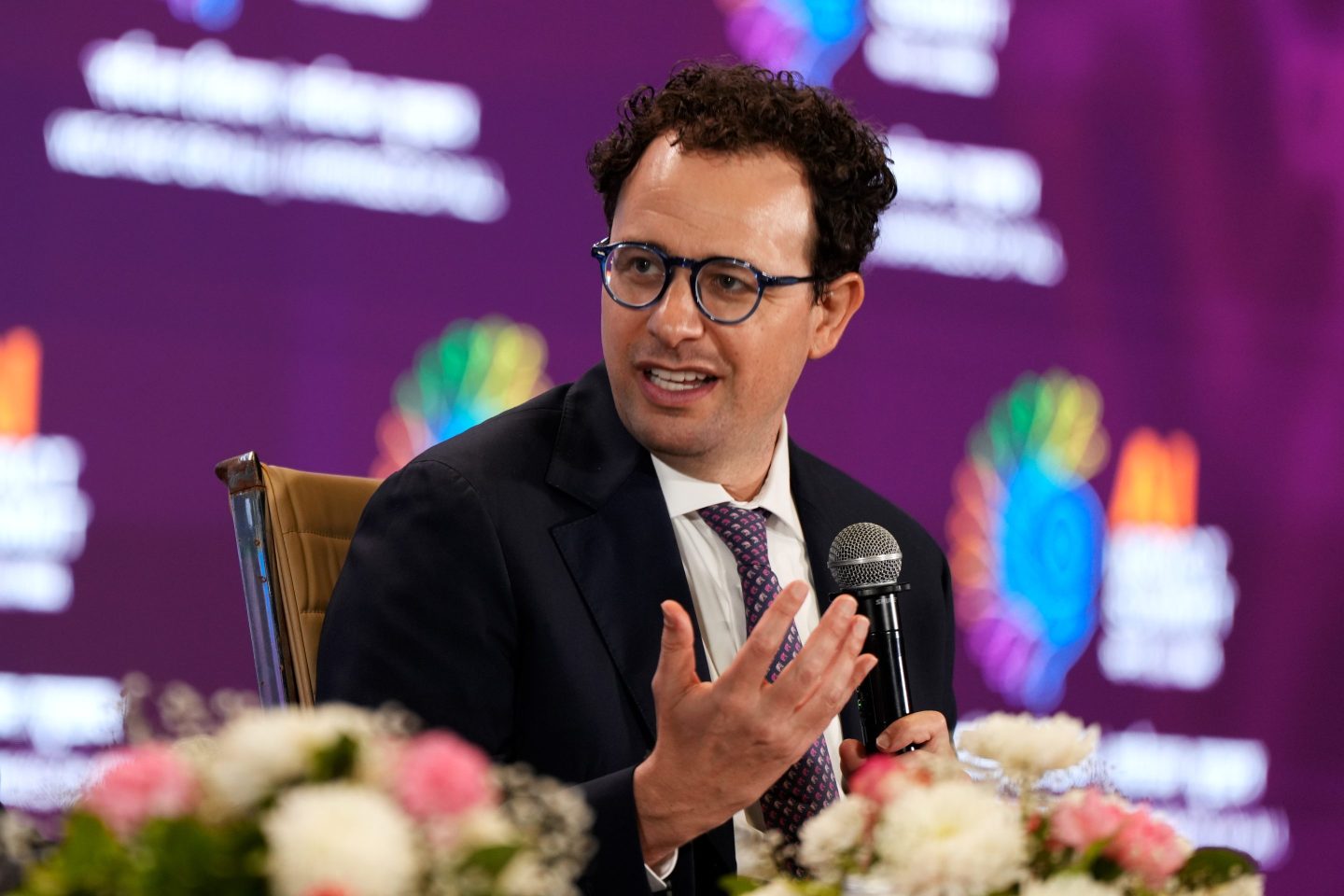
So if there’s any cause I’m sympathetic to this summer, it’s one I recently heard while speaking to academic Florian Lüdeke-Freund at ESCP Business School: Everyone working in sustainability needs to start speaking a common language and stop using terms inaccurately.
“My call to action is: Next time you use the word impact or sustainability, be sure you use it right,” Lüdeke-Freund, who specializes in corporate sustainability, told me on the phone from Maastricht, Netherlands. So far, he says, most chief sustainability officers haven’t met that challenge, which damages their credibility.
To make his point, he gives an example of a company using renewable energy. If it sourced energy from a renewable source, he said, but the overall energy mix remained the same, “you don’t have any sustainability impact” because the system hasn’t changed. So what would have an impact? “If you help the share of renewable energy grow,” he said.
This analogy applies to almost every corporate sustainability report. “If a company wants to make true statements [in its sustainability report], it first has to clean up its language,” Lüdeke-Freund said. Many CSOs still want to “sound big and impactful” in their reports, he says. But often, the impact examples cited are merely performance metrics.
The model he proposes is based on distinguishing clearly between three metrics: company performance, stakeholder value, and system-wide impact.
For example, a company using 100% recycled bottles is part of performance but not impact. Why? Because bottles are an output. The fact that they are recycled is merely the result of using 100% recycled plastic as input. Sure, you can brag about being better than your competitors using 50% recycled plastic. But it’s a performance metric, not an impact metric.
Value, which is one step up from performance, emerges not from the use of 100% plastic itself, but from the value stakeholders, like customers and suppliers, give to the practice. It’s here where many companies fall short. “Although in all their brochures they pretend to know what’s good for their stakeholders, I don’t see evidence that they do real stakeholder analysis,” Lüdeke-Freund said, adding that impact goals and measurement are “completely absent” at many companies today.
Impact, the Holy Grail, comes down to measuring how the packaging chain has changed for the better—shifted away from producing virgin plastic (or plastic at all), for example, or improved at turning plastic into a circular resource.
Evian, the water bottling company, for example, says it wants to do its part to accelerate the transition to a circular economy of sustainable packaging. As part of this effort, the company says it will (a) eliminate packaging where possible (makes sense), and (b) “make all our bottles from 100% recycled PET by 2025.” The recycling effort would be where Lüdeke-Freund objects.
The company, a subsidiary of Danone, is not completely off when it comes to sustainability impact. Evian, it says, is partnering with a company that is pioneering recycling, Loop Industries, and “enables large scale plastic bottle recycling.” It also touts its role in The Interceptor, a technology that intercepts plastic from the world’s most polluted rivers, and the Closed Loop Fund, which collects plastic in North America—projects that certainly sound like they may indeed have value-chain impact.
Stories like this can be powerful. But they are, by definition, narrative, rather than part of a standardized report based on numbers and standards. And they tend to fall into the traditional corporate social responsibility camp rather than capturing true impact.
When you gather all the sustainability stories of companies, they often don’t add up to much that moves the needle. Lüdeke-Freund insists this is a problem. The solution, perhaps, is a little less conversation, and a little more accountability.
More news below.
Peter Vanham
Executive Editor, Fortune
peter.vanham@fortune.com
This edition of Impact Report was edited by Holly Ojalvo.
ALSO ON OUR RADAR
INBOX Developing countries face $4 trillion investment gap in SDGs (United Nations)
According to a new UNCTAD report, developing countries face a staggering $4 trillion gap in sustainable development investments. The largest holes lie in energy, water, and transport infrastructure, according to the organization.
My take: Reports like these reveal the discrepancy between investments the finance sector labels as “sustainable finance,” and those that actually advance sustainable development. The mismatch, Fiona Stewart of the World Bank told me on a Building Bridges panel this week, is why there are simultaneously $50 trillion in ESG-related investments and a $2 trillion to $4 trillion sustainable finance gap.
The sustainable finance community is becoming an “echo chamber,” according to Andrea Webster of the World Benchmarking Alliance. “Finance can’t carry on business as usual,” she told me, reflecting on the sustainable development goals financing gap. Sustainability financiers "are the masters of innovation. They have to work the market.”