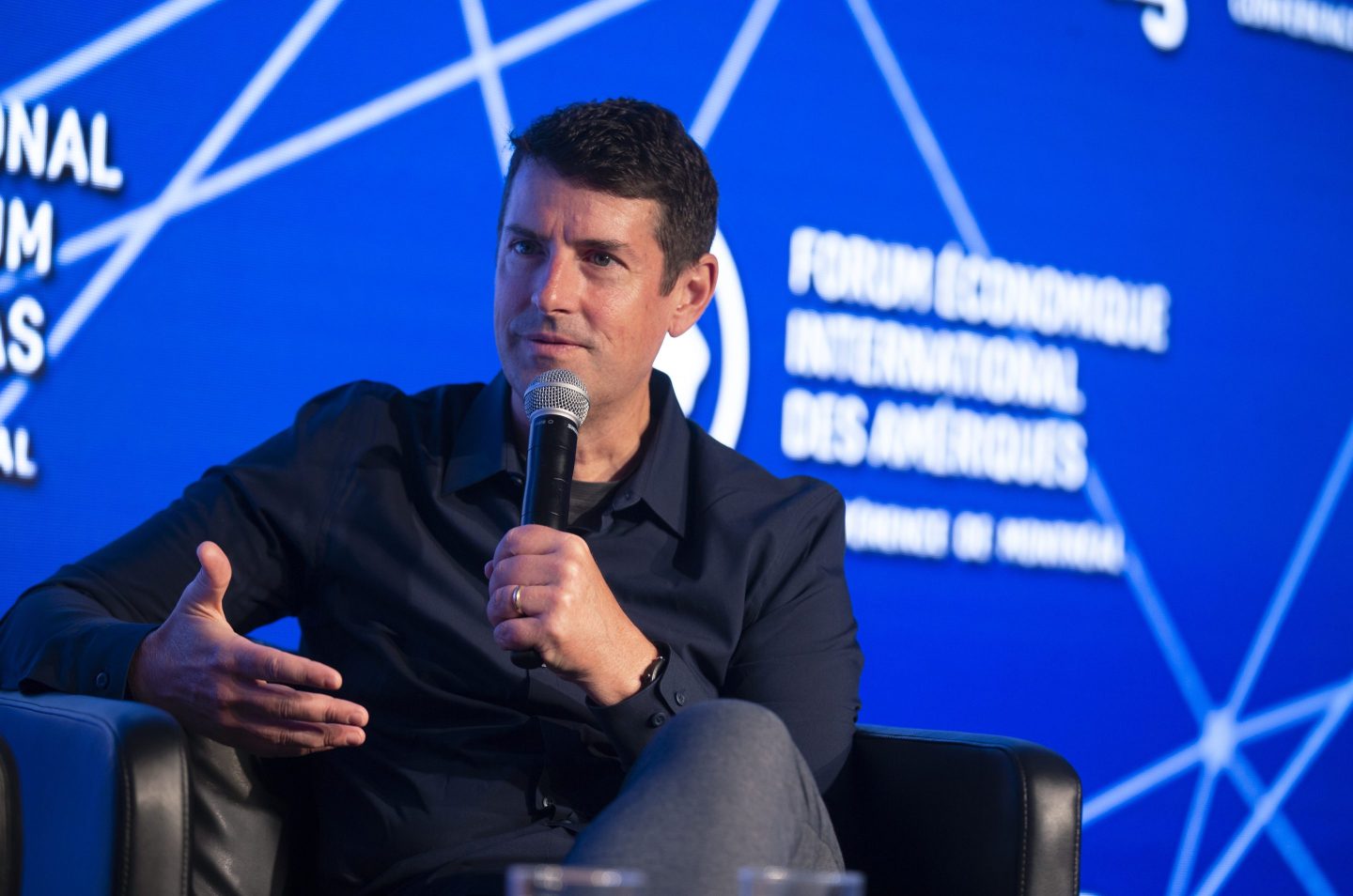
When Peter Gleason was named CEO of the National Association of Corporate Directors, he met with his board, and after his successor had left the room, the first question he was asked was: What is your immediate succession plan?
“That’s the way boards need to think about it,” says Gleason, leader of a nonprofit who helps educate and network with over 23,000 members. “You can’t wait.”
Industry experts agree: It’s never too soon to start planning for your next CEO. Most say boards should retain an executive recruiter, not only to help with immediate succession needs, but to stay attuned to external talent. CEO succession is one of the key responsibilities of a board, and with an average tenure of just shy of seven years, boards must select a leader who is able to lead a company not only today but in the future when market dynamics and the company’s competitive position may drastically shift.
“They have the responsibility to seat the CEO that will set the management team that ultimately runs the company,” says Carey Oven, national managing partner of Deloitte’s Center for Board Effectiveness.
In 2022, 56 S&P 500 companies appointed a new CEO, up from 48 in 2021 and bringing the pace of transitions back in line with pre-pandemic levels, according to consulting firm Spencer Stuart. The environment these new leaders face is dicey. The pandemic has changed the world, shareholder activism has become easier to pressure companies and boards, and CEOs are increasingly expected to take positions on divisive social issues.
“The right leadership at the right time of an organization can do wonders,” says Gleason. “The wrong leadership at the wrong time can be a disaster.”
Some high-profile CEO transitions show it is a delicate dance to get right. At Disney, former CEO Bob Iger returned to run the Mouse House after his pick as successor, Bob Chapek, was ousted in November 2022. Howard Schultz has returned to lead Starbucks twice, in 2008 and again in 2022, ceding the reins for a third time to the latest CEO, Laxman Narasimhan.
During Starbucks’ executive search, the coffee giant prioritized a look at external candidates. Most CEO succession experts say that internal candidates are a better way to go. “The evidence would strongly support the notion that internal candidates are more likely to be successful than candidates brought in from the outside,” says Wendell L. Willkie II, adjunct professor of law in corporate governance at New York University. Jane Stevenson, vice chair, board and CEO Services at Korn Ferry, agrees. “If it’s a tie or close, our official stance is to go internal,” she says.
Nancy May, founder and president of the BoardBench Companies, runs a governance consulting group that focuses on board quality, continuity, and director placement. She says there are risks to both internal and external candidates—the former might be good at functional roles, but can they lead? The latter may try to retrofit the culture and experience of their prior company, which can be a recipe for disaster.
“Boards make the mistake, all too often, that if we’ve got financial issues, we will just bring the CFO up. Or if we have legal issues, we will bring the legal counsel up,” says May.
May says a successful CEO knows what the future is for the company and where the pitfalls may be, all in pursuit of the sole role of a corporation: to “acquire and retain customers, profitably. Period. It is pretty simple,” says May. She adds that not only should CEO succession always be top of mind, but that boards should be willing to drop the hammer more often than they tend to.
“Boards hang onto their CEOs for far too long,” says May. “Boards shouldn’t be afraid to make shifts in where they need to go.”
Deloitte advises boards to not only seat the CEO, but also support them once they are in that role. “The board should be leaning in to support development, counsel, mentorship of the CEO—overall supporting that success of the CEO that they seat,” says Oven. “That is all part of their responsibility and fiduciary duties to the shareholders.”
She says succession planning should focus on a few key themes: understanding the attributes and skills a successful leader should have, a clear sense of the playbook the board will follow if a CEO succession is needed, making sure they have all the competitive marketplace and benchmark information, and finally, the board’s clear ownership of finding and then mentoring a new CEO.
And while studies show that 32% of directors say it is “very important” to improve their practices with respect to CEO succession planning, mistrust lingers in the ranks. A survey by PwC of around 800 directors found that nearly half would fire a colleague. Experts say the relationship between CEO and their boards is more challenged today than in prior years, and part of that could do with the fact that the average tenure of a director is close to nine years, indicating that they are more comfortable firing a CEO than a peer.
Lyndon A. Taylor, a partner at executive search and management consulting firm Heidrick & Struggles, says that when things go wrong, there’s often a gap of where directors and CEOs see the company’s standing today and what it will be in the future. “When we’ve seen it not go well, there’s a gap in the alignment,” says Taylor.
Heidrick & Struggles tracks CEO data across the largest companies in 25 markets, analyzing the profiles of 1,169 CEOs. The firm’s 2022 report showed 64% of CEO appointments between the summers of 2022 and 2021 were internal appointments, up from 61% the prior year period. 69% were first-time CEOs, the highest share in three years, and 13% were women, above 2021 and 2020.
Historically, shareholders prioritized financial performance alone, but responsibilities have broadened. Experts say the shift started in 2019, when nearly 200 CEOs said companies shouldn’t just advocate for the interests of shareholders alone, but also consider other key stakeholders like employees and bigger picture issues like the environment.
That’s led companies to think about new judgment skills required for CEOs beyond a strategic vision. Leaders need to understand when it is beneficial to express an opinion about a culture issue, and also just as importantly, when it is wise to not be involved. Those are different skills than determining if an acquisition should be signed or how many millions to pour into a brand campaign.
“You are very much a public figure,” says Willkie of the more modern CEO. “And the demands of a broad range of constituents are greater than ever before.”
Korn Ferry advises clients to think multigenerationally, determining which leaders could be slotted into the CEO role immediately, as well as those who could be cultivated with more time. “It is looking at a continuum of what is going to be important to build that success and to avoid derailment,” says Stevenson. “And then building a suite of skills of which they’ll have optionality for a leader whenever they need it.”
Stevenson points to the experience of a client Korn Ferry worked with a few years ago, a pharmaceutical company that didn’t know the status of their patent expirations or if the Food and Drug Administration would approve their new drug pipeline. The board developed three different leadership options, ultimately selecting a leader that was most commercially focused. That was a prudent decision, because the patents did expire and the critical FDA approvals were obtained.
“It is a chessboard, it is not a game of checkers,” says Stevenson. “You have to have the right pieces on the board and you have to make the right moves to have the right moves to play. It is not just about one person. It is about a team.”