The headlines were everywhere. Mattress, sofa, luggage, and shoe companies raised millions. Led by Ivy League grads, these startups promised to revolutionize the consumer goods industry. It was the middle of the 2010s, and the party was raging. Venture capitalists were pouring money into these companies. Their ads ran on subway and bus terminals in the world’s biggest cities. I launched my luxury clothing business in 2017. I wasn’t sold on attending the VC party, but like anyone who’s worked hard and feels accomplished, I expected an invitation. It never came. Were the other founders smarter? Did they work harder? Were their ideas better? Or did money make their companies shine–with bigger ads to make more noise, and deep-pocketed investors aiming to make returns?
Less than one percent of venture capital went toward minority businesses then, an embarrassingly low figure that still holds true today. People say grit is the key to entrepreneurial success. But it’s money that keeps this party going–and Black founders have been left off the guest list.
As the founder of apparel brand Baobab Clothing, I’ve been invited to multiple accelerator programs. While I usually reject invitations for various reasons, I decided to join one focused on Black businesses created by a multinational consulting firm. The company’s cachet led me to believe that this would be a valuable opportunity. This segregated program offered small business education and access to a business coach for 10 weeks. However, the program did not offer much-needed capital, facilitate key mentorship, or give access to selling opportunities. It became just another instance of a well-intended waste of time.
Without capital or mentorship, who was the program designed to benefit–the entrepreneurs or the consulting company’s brand value? These programs and the companies that support them must commit actual dollars in the form of purchases, legal support, advisory services, etc–and look beyond their segregated nature by pairing Black founders with successful mentors regardless of race. In business, the only color that matters is green.
Without adequate financial resources, mentorship, and viable yet affordable locations to operate, Black entrepreneurs struggle to grow and scale. The stats are clear: Only 4% of Black businesses are still running after three-and-a-half years, compared to 55% of their peers. These inequalities affect not just the success of these businesses, but also the communities they serve and the economy as a whole.
Never before has there been more awareness of this disparity or more desire to balance the scales. According to a McKinsey survey, 45% of consumers say they want corporations to support Black brands, vendors, and suppliers. And, for the last few years, supporting Black businesses has meant retailers cordoning off digital and physical space for 28 days during Black History Month to inspire consumers to direct their dollars accordingly.
As well-intentioned as these annual marketing campaigns are, they have the unintended consequence of exacerbating the isolation Black businesses already experience. When the marketing dollars dry up, these businesses are often faced with uncertainty for the rest of the year, bloated with inventory and battling for attention. It signals to consumers that they can buy products from Black businesses in this timeframe and then be absolved of their duty until the next year rolls around, keeping Black businesses on a perpetual plateau.
Don’t get me wrong. Increasing awareness of Black businesses has been a leap forward for society. Still, to ensure Black businesses don’t simply tread water year after year, we need sustained attention. The rest of the year, systemic issues suppress our ability to make significant strides. What can we do to change it?
Consider Richelieu Dennis, founder of Sundial and SheaMoisture. When Target decided to carry his products in the ethnic hair-care aisle of the store, his business grew–but plateaued. He petitioned Target to integrate his brands into the mainstream beauty section, a move that was expensive, risky–and it paid off when Unilever bought his business for a reported $ 850 million in 2017. Black businesses shouldn’t have to fight for crossover into mainstream markets. Retailers have a responsibility to seek out and showcase their products in a way that maximizes mutual success. Simply putting Black-made products in a separate section labeled as such isn’t enough.
It’s not only pricey shelf space and separate sections that box in Black businesses. Words do, too. The language surrounding marketing campaigns shrinks the world for Black business owners. Take the word support. You hear it all the time in campaigns that encourage consumers to buy from Black-owned businesses. Support positions buying from Black businesses as a chore and charity. It inadvertently robs customers of joy and minimizes the power and potential of the Black entrepreneur.
What long-term progress looks like
Big Business and consumers need a sustainable mindset to grow Black businesses well into the future. When trying to inspire change, words matter. Instead of suggesting consumers support Black businesses, use the term shop. Shopping solves a need and is meant to be fun. Encourage consumers to experience that enjoyment time and again, not once a year, with direct language.
With less access to traditional sources of capital, cash sales are essential for generating the income needed to purchase new inventory and the tenure required to borrow capital for scaling. Shopping Black brands year-round really does matter. Successes like the 15% Pledge, where big businesses commit to dedicating 15% of store shelves to Black businesses, will help consumers discover new Black-owned brands and shop consciously. Other tools can help too. The Shopify Shop App allows users to search by area or product. The Official Black Wall Street app, BlackOwned.com, and Blacked Owned Everything platform provide customers with a wide selection of items from around the world created by Black entrepreneurs. Sephora even offers its own curated page showcasing skincare and cosmetics by Black business owners.
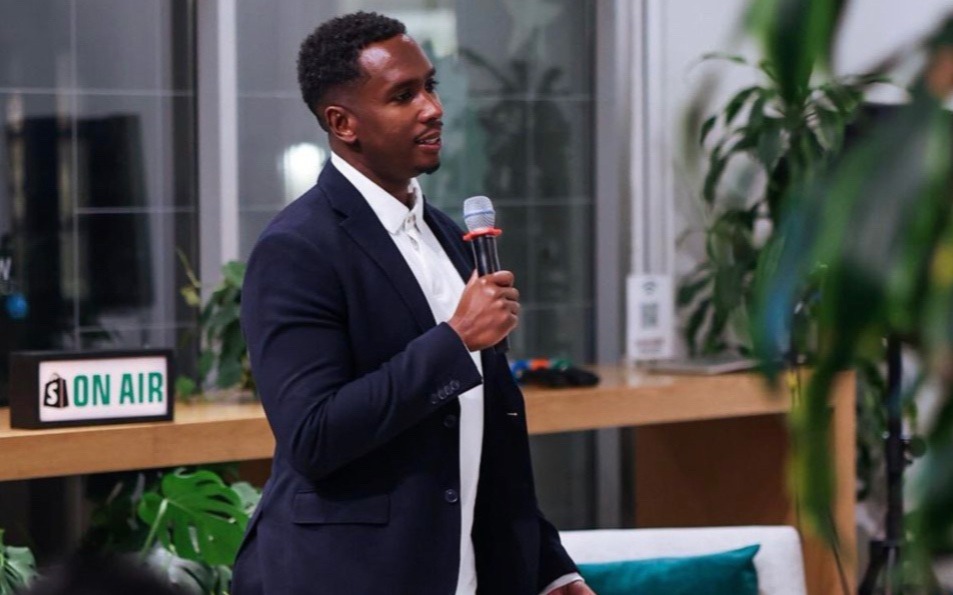
As the head of Equitable Commerce for Shopify, along with my team, I aim to lower barriers that stifle growth for Black and Indigenous business owners. For corporations, this means providing the kind of opportunities–such as supplier diversity programs–that will mean the difference between breaking even and breaking through.
We believe in “growing the pie” so when minority businesses make more money, the economy expands, and we all win. Shining a spotlight on Black businesses was a necessary first step and a tremendous stride. Now, we need to market them as prominently and consistently as any other business.
Black businesses are just like any other businesses in America. They are an integral part of the American dream. They have always been and will always be a beautiful aspect of this great nation, and we should recognize the shared experience of small business owners regardless of race while also acknowledging the unique systematic barriers that black and other minority founders face.
We should work toward a future where all entrepreneurs are given an equal chance to succeed. If there is a genuine desire to stimulate economic growth and achieve the American dream, then individuals, investors, and corporations must wield their economic might to advance Black businesses by shopping, providing access to business networks, and investing without bias or discrimination. After all, the American dream is not just for some–it’s for everyone. So why is it taking so long for us to make it a reality for all?
Brandon Davenport is Shopify’s head of equitable commerce.
The opinions expressed in Fortune.com commentary pieces are solely the views of their authors and do not necessarily reflect the opinions and beliefs of Fortune.
More must-read commentary published by Fortune:
- The ‘Elon Paradox’: He sells Teslas–but you’d expect him to drive a Ram. Here’s what your car says about your politics
- The alt-right economy is failing. Here’s the real performance of anti-woke entrepreneurs
- The debt ceiling deal has reduced access to supplemental food plans. Here’s why that’s a false economy
- E-bike injuries: ‘We’re only seeing the tip of the iceberg,’ trauma experts warn