• Home
  • Latest
  • Fortune 500
  • Finance
  • Tech
  • Leadership
  • Lifestyle
  • Rankings
  • Multimedia
EnvironmentSupreme Court

Supreme Court curbs U.S. government regulation of wetlands, making them easier to develop

By
John Flesher
John Flesher
,
Michael Phillis
and
The Associated Press
Down Arrow Button Icon
May 26, 2023, 5:20 AM ET
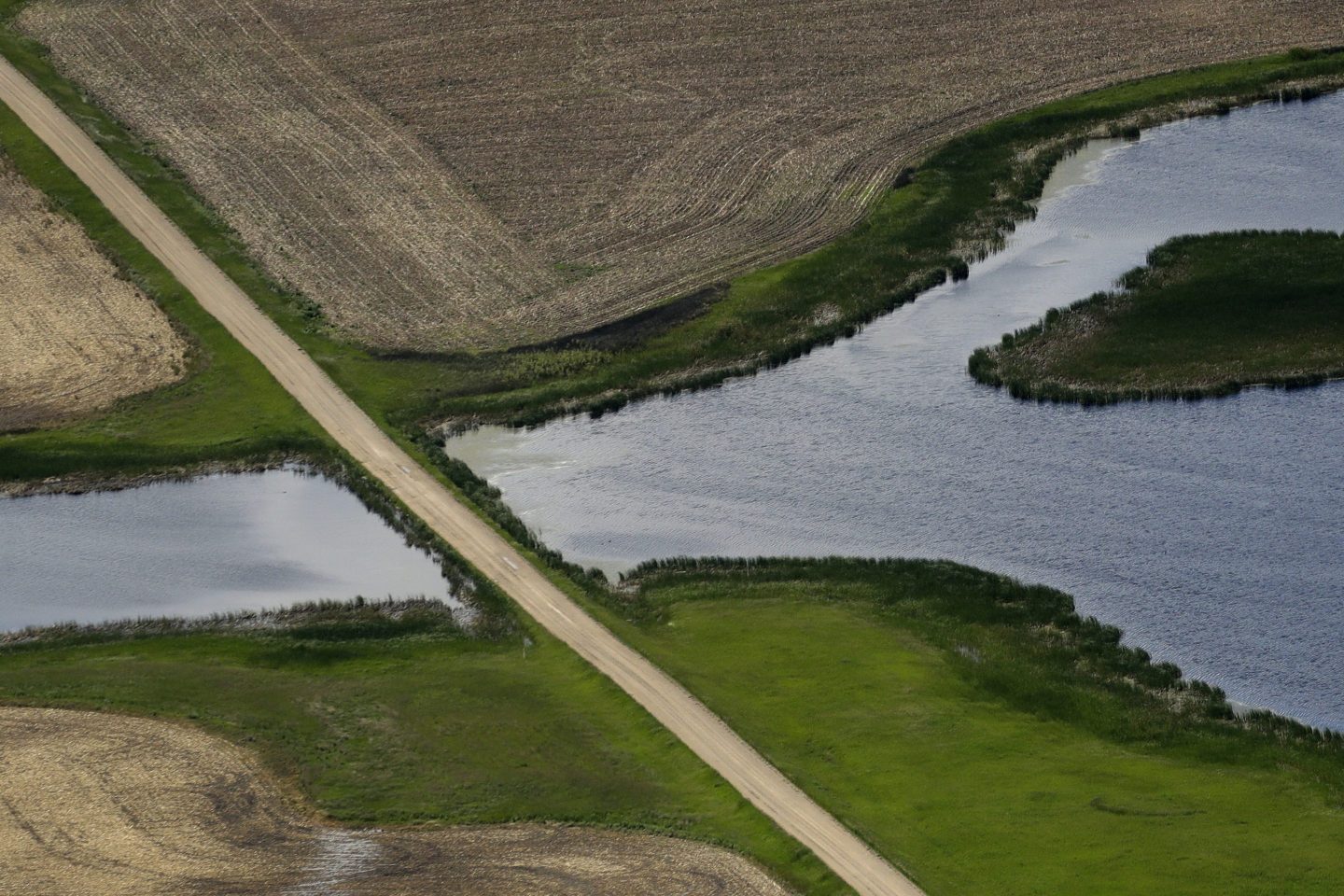
A road bisects a wetland on June 20, 2019, near Kulm, N.D.
A road bisects a wetland on June 20, 2019, near Kulm, N.D.Charlie Riedel—AP

The U.S. Supreme Court has stripped federal agencies of authority over millions of acres of wetlands, weakening a bedrock environmental law enacted a half-century ago to cleanse the country’s badly polluted waters.

Recommended Video

A 5-4 majority significantly expanded the ability of farmers, homebuilders and other developers to dig up or fill wetlands near rivers, lakes and streams, finding the government had long overreached in limiting such activities.

The ruling Thursday may nullify key parts of a rule the Biden administration imposed in December, which two federal judges already had blocked from being enforced in 26 states. It’s the latest turn in a decades-old struggle by courts and regulators to determine which waters are subject to protection under the Clean Water Act.

Some experts say the battle over wetlands now may shift to states, with red and blue states writing laws that take dramatically different approaches.

The high court’s decision follows one in 2022 curtailing federal power to reduce carbon emissions from power plants and indicates a willingness by the court’s emboldened conservatives to limit environmental laws and agency powers.

“This is one of the saddest chapters in the 50-year history of the Clean Water Act,” said Jim Murphy, an attorney with the National Wildlife Federation.

Industry and farm groups praised the ruling.

“We’re absolutely thrilled with the results,” said Travis Cushman, deputy general counsel for the American Farm Bureau Federation. “This is the exact answer that we’ve been asking for for a long time.”

The court’s majority sided with an Idaho couple who sought to build a house near Priest Lake in the state’s panhandle. Chantell and Michael Sackett objected when federal officials identified a soggy portion of the property as a wetland requiring them to get a permit before filling it with rocks and soil.

“Now that the case is finally over … they’ll be able to make reasonable use of their property,” said Damien Schiff of the Pacific Legal Foundation, which represented the couple.

While all nine justices agreed the Sacketts’ property was not covered by the law, they disagreed over the definition of “waters of the United States” and which wetlands it includes.

The majority opinion, written by Justice Samuel Alito, echoed a 2006 opinion by the late Justice Antonin Scalia. It said federally protected wetlands must be directly adjacent to a “relatively permanent” waterway “connected to traditional interstate navigable waters” such as a river or ocean.

They also must have a “continuous surface connection with that water, making it difficult to determine where the ‘water’ ends and the ‘wetland’ begins,” Alito wrote.

The court jettisoned a 17-year-old opinion by their former colleague, Anthony Kennedy, describing covered wetlands as having a “significant nexus” to larger bodies of water. It had been the standard for evaluating whether permits were required for discharges under the 1972 landmark environmental law. Opponents had objected that the standard was vague and unworkable.

Justice Elena Kagan, one of three liberals on the court, said the majority rewrote the law to reach the political decision it wanted by coming up with new ways to curtail environmental protection powers Congress gave the Environmental Protection Agency.

“The court will not allow the Clean (Water) Act to work as Congress instructed,” Kagan wrote. “The court, rather than Congress, will decide how much regulation is too much.”

EPA Administrator Michael Regan said the decision “erodes longstanding clean water protections” and the agency was considering its options.

The Biden administration regulations replaced a Trump-era rule that federal courts had thrown out and environmentalists said left waterways vulnerable to pollution.

Even after the latest court ruling, some experts said ambiguities remain – and likely will persist as the EPA and the Army Corps of Engineers craft yet more regulations tailored to the court’s edicts.

Landowners wishing to develop property near waterways will still need to hire consultants, “walk the land and figure out whether you’re in or out” of federal reach, Boston real estate attorney Peter Alpert said. “There’s still going to be a lot of doubt about what’s in the gray area.”

The ruling could scuttle protections for at least 45 million acres of wetlands, an area roughly the size of Florida, according to the Southern Environmental Law Center.

“They just put huge swaths of wetlands at risk,” said Kelly Moser, an attorney with the center.

Justice Brett Kavanaugh said the majority likely stripped protections from wetlands that were long considered regulated, including those behind levees along the flood-prone Mississippi River.

Despite their vital role in blocking flood waters and filtering out pollutants, those wetlands may lose protection because they aren’t directly connected to the river, he said in an opinion that concurred on the Sackett case but disagreed significantly with the majority on the broader issues.

The ruling will have a big impact in the arid Southwest, where some rivers and streams dry up between infrequent rainstorms, experts said. The court majority said the Clean Water Act protects only wetlands connected to rivers and streams that are “relatively permanent” or “continuous.”

“Continuous is a big deal because we don’t have water, really, for 10 months of the year,” said Maureen Gorsen, a California environment and regulatory attorney.

The ruling might lead some developers to decide they don’t need to seek permits for projects that could disturb wetlands, said Jim Murphy, director of legal advocacy for the National Wildlife Federation.

And those who are discussing settlements for wetland damage or building new ones to compensate for losses might back out, said Alpert, the Boston attorney.

“Everybody involved in enforcement actions … is going to hit the pause button on negotiations with agencies right now and question with their consultants whether under this decision there is a reason to even be talking with the government,” he said.

Environmental advocates will prod Congress and states to “plug some of the gaps that have been created by this decision,” Murphy of the National Wildlife Federation said.

But Congress showed in March it is in no mood to do so, voting to overturn the administration’s wetlands rules and prompting a veto from President Joe Biden.

State governments may become another battleground. More than a dozen prohibit environmental regulations tougher than federal ones.

“You’re going to see a patchwork of regulation depending on what state you are in,” said Ashley Peck, an environmental attorney in Salt Lake City.

The Supreme Court ruling will likely create “‘red state’ and ‘blue state’ approaches to water protection,” said Cara Horowitz of the UCLA School of Law.

Join us at the Fortune Workplace Innovation Summit May 19–20, 2026, in Atlanta. The next era of workplace innovation is here—and the old playbook is being rewritten. At this exclusive, high-energy event, the world’s most innovative leaders will convene to explore how AI, humanity, and strategy converge to redefine, again, the future of work. Register now.
About the Authors
By John Flesher
See full bioRight Arrow Button Icon
By Michael Phillis
See full bioRight Arrow Button Icon
By The Associated Press
See full bioRight Arrow Button Icon

Latest in Environment

Finance
Lorem ipsum dolor sit amet, consectetur adipiscing elit, sed do eiusmod tempor incididunt ut labore et dolore magna aliqua. Ut enim ad minim veniam
By Fortune Editors
October 20, 2025
Finance
Lorem ipsum dolor sit amet, consectetur adipiscing elit, sed do eiusmod tempor incididunt ut labore et dolore magna aliqua. Ut enim ad minim veniam
By Fortune Editors
October 20, 2025
Finance
Lorem ipsum dolor sit amet, consectetur adipiscing elit, sed do eiusmod tempor incididunt ut labore et dolore magna aliqua. Ut enim ad minim veniam
By Fortune Editors
October 20, 2025
Finance
Lorem ipsum dolor sit amet, consectetur adipiscing elit, sed do eiusmod tempor incididunt ut labore et dolore magna aliqua. Ut enim ad minim veniam
By Fortune Editors
October 20, 2025
Finance
Lorem ipsum dolor sit amet, consectetur adipiscing elit, sed do eiusmod tempor incididunt ut labore et dolore magna aliqua. Ut enim ad minim veniam
By Fortune Editors
October 20, 2025
Finance
Lorem ipsum dolor sit amet, consectetur adipiscing elit, sed do eiusmod tempor incididunt ut labore et dolore magna aliqua. Ut enim ad minim veniam
By Fortune Editors
October 20, 2025

Most Popular

Finance
Lorem ipsum dolor sit amet, consectetur adipiscing elit, sed do eiusmod tempor incididunt ut labore et dolore magna aliqua. Ut enim ad minim veniam
By Fortune Editors
October 20, 2025
Finance
Lorem ipsum dolor sit amet, consectetur adipiscing elit, sed do eiusmod tempor incididunt ut labore et dolore magna aliqua. Ut enim ad minim veniam
By Fortune Editors
October 20, 2025
Finance
Lorem ipsum dolor sit amet, consectetur adipiscing elit, sed do eiusmod tempor incididunt ut labore et dolore magna aliqua. Ut enim ad minim veniam
By Fortune Editors
October 20, 2025
Finance
Lorem ipsum dolor sit amet, consectetur adipiscing elit, sed do eiusmod tempor incididunt ut labore et dolore magna aliqua. Ut enim ad minim veniam
By Fortune Editors
October 20, 2025
Finance
Lorem ipsum dolor sit amet, consectetur adipiscing elit, sed do eiusmod tempor incididunt ut labore et dolore magna aliqua. Ut enim ad minim veniam
By Fortune Editors
October 20, 2025
Finance
Lorem ipsum dolor sit amet, consectetur adipiscing elit, sed do eiusmod tempor incididunt ut labore et dolore magna aliqua. Ut enim ad minim veniam
By Fortune Editors
October 20, 2025
Rankings
  • 100 Best Companies
  • Fortune 500
  • Global 500
  • Fortune 500 Europe
  • Most Powerful Women
  • Future 50
  • World’s Most Admired Companies
  • See All Rankings
Sections
  • Finance
  • Leadership
  • Success
  • Tech
  • Asia
  • Europe
  • Environment
  • Fortune Crypto
  • Health
  • Retail
  • Lifestyle
  • Politics
  • Newsletters
  • Magazine
  • Features
  • Commentary
  • Mpw
  • CEO Initiative
  • Conferences
  • Personal Finance
  • Education
Customer Support
  • Frequently Asked Questions
  • Customer Service Portal
  • Privacy Policy
  • Terms Of Use
  • Single Issues For Purchase
  • International Print
Commercial Services
  • Advertising
  • Fortune Brand Studio
  • Fortune Analytics
  • Fortune Conferences
  • Business Development
About Us
  • About Us
  • Editorial Calendar
  • Press Center
  • Work At Fortune
  • Diversity And Inclusion
  • Terms And Conditions
  • Site Map

Latest in Environment

Detroit, Michigan, Residents picket DTE Energy, opposing the electric utility's plan to provide power for a proposed $7 billion data center in rural Michigan.
EnvironmentData centers
A grassroots NIMBY revolt is turning voters in Republican strongholds against the AI data-center boom
By Eva RoytburgDecember 16, 2025
3 hours ago
loon
EnvironmentMaine
Maine is getting Loony again as population of beloved bird doubles since 1983
By Patrick Whittle and The Associated PressDecember 14, 2025
2 days ago
North AmericaMexico
U.S., Mexico strike deal to settle Rio Grande water dispute
By Fabiola Zerpa and BloombergDecember 13, 2025
3 days ago
carbon
Commentaryclimate change
Banking on carbon markets 2.0: why financial institutions should engage with carbon credits
By Usha Rao-MonariDecember 13, 2025
3 days ago
mackenzie
Personal Financephilanthropy
‘This year, I really see education and climate’: Patterns in billionaire MacKenzie Scott’s massive giving emerge with time
By Thalia Beaty and The Associated PressDecember 11, 2025
5 days ago
Google DeepMind cofounder and CEO Demis Hassabis
AIU.K.
Google DeepMind agrees to sweeping partnership with U.K. government focused on science and clean energy
By Jeremy KahnDecember 10, 2025
5 days ago

Most Popular

placeholder alt text
Success
'I had to take 60 meetings': Jeff Bezos says 'the hardest thing I've ever done' was raising the first million dollars of seed capital for Amazon
By Dave SmithDecember 15, 2025
18 hours ago
placeholder alt text
Success
Meetings are not work, says Southwest Airlines CEO—and he’s taking action, by blocking his calendar every afternoon from Wednesday to Friday 
By Preston ForeDecember 15, 2025
20 hours ago
placeholder alt text
Success
Sorry, six-figure earners: Elon Musk says that money will 'disappear' in the future as AI makes work (and salaries) irrelevant
By Orianna Rosa RoyleDecember 15, 2025
22 hours ago
placeholder alt text
AI
Deloitte's CTO on a stunning AI transformation stat: Companies are spending 93% on tech and only 7% on people
By Nick LichtenbergDecember 15, 2025
1 day ago
placeholder alt text
Personal Finance
Current price of silver as of Monday, December 15, 2025
By Joseph HostetlerDecember 15, 2025
22 hours ago
placeholder alt text
North America
Ford writes down $19.5 billion as it pivots electric Lighting line of vehicles
By Sasha RogelbergDecember 15, 2025
14 hours ago

© 2025 Fortune Media IP Limited. All Rights Reserved. Use of this site constitutes acceptance of our Terms of Use and Privacy Policy | CA Notice at Collection and Privacy Notice | Do Not Sell/Share My Personal Information
FORTUNE is a trademark of Fortune Media IP Limited, registered in the U.S. and other countries. FORTUNE may receive compensation for some links to products and services on this website. Offers may be subject to change without notice.