• Home
  • Latest
  • Fortune 500
  • Finance
  • Tech
  • Leadership
  • Lifestyle
  • Rankings
  • Multimedia
Techsmartphones and mobile devices

Google and Samsung are wasting a golden opportunity with their foldable phones

By
Dave Smith
Dave Smith
Former Editor, U.S. News
Down Arrow Button Icon
By
Dave Smith
Dave Smith
Former Editor, U.S. News
Down Arrow Button Icon
May 19, 2023, 2:20 PM ET
ROBYN BECK/AFP via Getty Images

Big slabs of glass on the front, chunky camera systems on the back. Smartphones have generally revolved around the same basic design since their inception.

Recommended Video

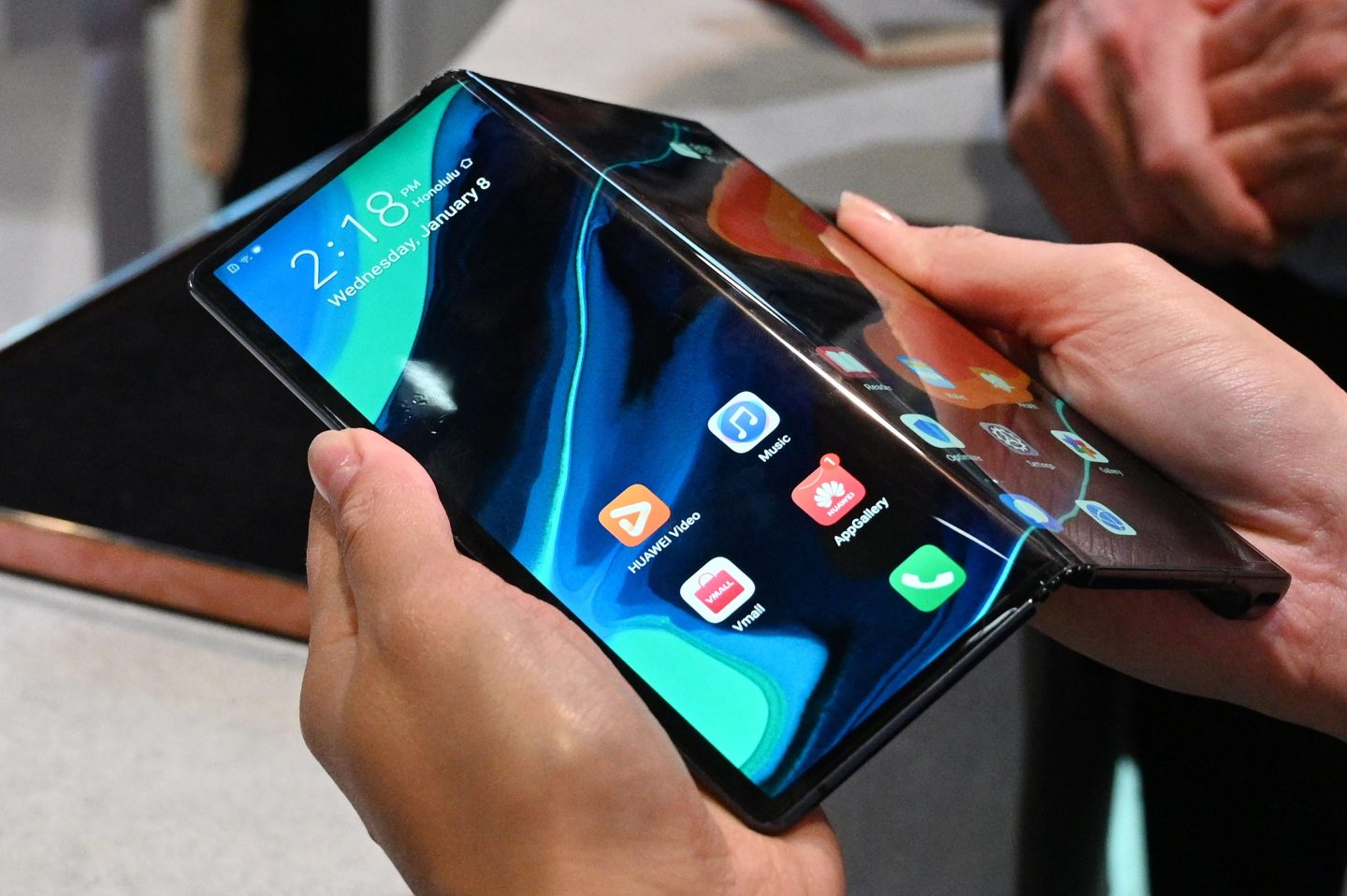
The closest approximation to a next-generation phone design is the foldable phone: a device that behaves like a normal smartphone and fits in your pocket, but opens like a book to reveal a bigger display when you need it. 

It’s an obvious advance in form and and function. Unfortunately, foldable phones are simply not attainable for most people.

Some of the wealthiest tech companies in the world, including Samsung, Microsoft, and now Google (as of last week, with its first-generation Pixel Fold) are in this space. But despite vast technical improvements over the last four years—Samsung, for instance, has gotten much better at making foldable phones after its rocky start—they’re still a status symbol at best.

It’s not their designs, or their performance. The one major aspect holding back foldable phones is their price. 

It’s not about margins

The first major foldable smartphone on the scene, Galaxy Fold was priced around $2,000 back in 2019, and unfortunately, not much has changed. 

Samsung’s latest foldable, the Galaxy Z Fold 4, costs $1,800. Google’s Pixel Fold unveiled last week? Also $1,800. To be clear, $1,800 is rent or mortgage for a lot of people.

Sure, foldable phones are based on novel technology and are expensive to make. An independent analysis from Nikkei shows Samsung’s new Galaxy Z Fold 4 contains about $670 in components, which equates to around 38% of the phone’s sales price. But that leaves 62% of potential gross profit margin (although we don’t know Samsung’s costs to assemble the devices). As a comparison, Apple’s top-tier iPhone, the 14 Pro Max, costs up to $474 to make, according to Counterpoint Research – which translates to a 58% of potential gross margin for Apple. In other words, Samsung may be making more money from its foldable phones (at least, on a gross-margin basis, which doesn’t include marketing costs) than Apple is making from smartphones based on the standard design. These gadgets could be priced lower.

How much would you pay for this foldable phone? Google hardware boss Rick Osterloh shows off the new Pixel Fold.
David Paul Morris/Bloomberg via Getty Images

The lesson of the iPhone

There’s an argument to be made that you can make a nice little business with expensive gadgets by aiming them squarely at early adopters and hobbyists. But one thing we’ve learned in the smartphone’s roughly 16-year history is that new categories of tech products need lower pricing in order to go mainstream.

The very first iPhone cost $499 for 4 GB of storage and $599 for 8 GB — which was a ton of money for a cell phone back in 2007. Getting the sense its price was limiting the market for these phones, Apple tried a new strategy with its second-generation phone, the iPhone 3G, and renegotiated its carrier deal to have AT&T subsidize the upfront cost of the phone (AT&T would recoup most of the losses over the course of a two-year contract). This allowed consumers to buy the iPhone 3G with 8 GB of storage for just $199, and a 16 GB version for $299. As a result, Apple’s iPhone unit sales in the U.S. increased by more than 1,100% between 2008 and 2015, with the iPhone reigning supreme as the top selling smartphone in the U.S.

Carrier subsidies clearly made a huge difference because for many years, the iPhone struggled in Europe, where many carriers did not subsidize phones. This led to a jump in Android phone adoption in the region because, compared to a $680 iPhone, you could buy an Android phone for under $200. 

Apple leaned on carrier subsidies for about a decade — the death of the $199 iPhone came in 2016, where Apple instead let you buy the phone outright or pay for it through a monthly plan. And it wasn’t until 2017 when Apple introduced its first $1,000 phone. So raising the price of the iPhone was a gradual effort — and the same should be done for foldables if their makers want them to succeed. 

Room to grow

Lower prices for foldable phones could prove to be a huge benefit to a company like Google or Samsung, which for many years have tried to convert customers away from Apple’s walled-garden ecosystem. And Android phones clearly need some help: The rate of Android users switching to iPhone is at a five-year high. Given that Apple doesn’t currently offer a foldable phone though, these bending-screened devices could provide a reason for people to stay on Android, or even switch to Android. 

For what it’s worth, people are buying foldables, even at these nosebleed-worthy prices. But sales are still a drop in the bucket compared to the total smartphone market. 

Why companies aren’t pricing foldables lower is hard to know. Perhaps the components necessary to make foldable phones are still limited. If that’s the case, then lowering the price could be counterproductive, since there would not be enough supply to meet the demand. 

Keeping foldable phones in the premium tier could also be important for any number of strategic corporate reasons. But when you consider the history of smartphones, and how they succeeded when they became more affordable, it’s clear that if Google, Samsung, or others want their foldables to win, or at least become widely-used, there’s one simple solution: Lower the price.


Join us at the Fortune Workplace Innovation Summit May 19–20, 2026, in Atlanta. The next era of workplace innovation is here—and the old playbook is being rewritten. At this exclusive, high-energy event, the world’s most innovative leaders will convene to explore how AI, humanity, and strategy converge to redefine, again, the future of work. Register now.
About the Author
By Dave SmithFormer Editor, U.S. News

Dave Smith is a writer and editor who also has been published in Business Insider, Newsweek, ABC News, and USA Today.

See full bioRight Arrow Button Icon

Latest in Tech

Finance
Lorem ipsum dolor sit amet, consectetur adipiscing elit, sed do eiusmod tempor incididunt ut labore et dolore magna aliqua. Ut enim ad minim veniam
By Fortune Editors
October 20, 2025
Finance
Lorem ipsum dolor sit amet, consectetur adipiscing elit, sed do eiusmod tempor incididunt ut labore et dolore magna aliqua. Ut enim ad minim veniam
By Fortune Editors
October 20, 2025
Finance
Lorem ipsum dolor sit amet, consectetur adipiscing elit, sed do eiusmod tempor incididunt ut labore et dolore magna aliqua. Ut enim ad minim veniam
By Fortune Editors
October 20, 2025
Finance
Lorem ipsum dolor sit amet, consectetur adipiscing elit, sed do eiusmod tempor incididunt ut labore et dolore magna aliqua. Ut enim ad minim veniam
By Fortune Editors
October 20, 2025
Finance
Lorem ipsum dolor sit amet, consectetur adipiscing elit, sed do eiusmod tempor incididunt ut labore et dolore magna aliqua. Ut enim ad minim veniam
By Fortune Editors
October 20, 2025
Finance
Lorem ipsum dolor sit amet, consectetur adipiscing elit, sed do eiusmod tempor incididunt ut labore et dolore magna aliqua. Ut enim ad minim veniam
By Fortune Editors
October 20, 2025

Most Popular

Finance
Lorem ipsum dolor sit amet, consectetur adipiscing elit, sed do eiusmod tempor incididunt ut labore et dolore magna aliqua. Ut enim ad minim veniam
By Fortune Editors
October 20, 2025
Finance
Lorem ipsum dolor sit amet, consectetur adipiscing elit, sed do eiusmod tempor incididunt ut labore et dolore magna aliqua. Ut enim ad minim veniam
By Fortune Editors
October 20, 2025
Finance
Lorem ipsum dolor sit amet, consectetur adipiscing elit, sed do eiusmod tempor incididunt ut labore et dolore magna aliqua. Ut enim ad minim veniam
By Fortune Editors
October 20, 2025
Finance
Lorem ipsum dolor sit amet, consectetur adipiscing elit, sed do eiusmod tempor incididunt ut labore et dolore magna aliqua. Ut enim ad minim veniam
By Fortune Editors
October 20, 2025
Finance
Lorem ipsum dolor sit amet, consectetur adipiscing elit, sed do eiusmod tempor incididunt ut labore et dolore magna aliqua. Ut enim ad minim veniam
By Fortune Editors
October 20, 2025
Finance
Lorem ipsum dolor sit amet, consectetur adipiscing elit, sed do eiusmod tempor incididunt ut labore et dolore magna aliqua. Ut enim ad minim veniam
By Fortune Editors
October 20, 2025
Rankings
  • 100 Best Companies
  • Fortune 500
  • Global 500
  • Fortune 500 Europe
  • Most Powerful Women
  • Future 50
  • World’s Most Admired Companies
  • See All Rankings
Sections
  • Finance
  • Leadership
  • Success
  • Tech
  • Asia
  • Europe
  • Environment
  • Fortune Crypto
  • Health
  • Retail
  • Lifestyle
  • Politics
  • Newsletters
  • Magazine
  • Features
  • Commentary
  • Mpw
  • CEO Initiative
  • Conferences
  • Personal Finance
  • Education
Customer Support
  • Frequently Asked Questions
  • Customer Service Portal
  • Privacy Policy
  • Terms Of Use
  • Single Issues For Purchase
  • International Print
Commercial Services
  • Advertising
  • Fortune Brand Studio
  • Fortune Analytics
  • Fortune Conferences
  • Business Development
About Us
  • About Us
  • Editorial Calendar
  • Press Center
  • Work At Fortune
  • Diversity And Inclusion
  • Terms And Conditions
  • Site Map
  • Facebook icon
  • Twitter icon
  • LinkedIn icon
  • Instagram icon
  • Pinterest icon

Latest in Tech

man with glasses stares into camera
CryptoCryptocurrency
Meld raises $7 million to integrate stablecoin networks, build the ‘Visa for crypto’
By Carlos GarciaJanuary 14, 2026
3 hours ago
newsom
PoliticsTaxes
‘You are really playing with fire with this one’: California billionaires tax ignites, pitting labor unions and voters against tech execs
By MIchael R. Blood, Michael Liedtke and The Associated PressJanuary 14, 2026
3 hours ago
engineer
Commentaryengineering
China graduates 1.3 million engineers per year, versus just 130,000 in the U.S. We need AI to bridge the gap
By Paul Eremenko and Ashish SrivastavaJanuary 14, 2026
4 hours ago
NewslettersTerm Sheet
What 2026 holds for the future of work
By Allie GarfinkleJanuary 14, 2026
5 hours ago
Photo: Meta chief Mark Zuckerberg
InvestingMarkets
The ‘Magnificent 7’ stocks are dying, and Wall Street is pretty happy about it
By Jim EdwardsJanuary 14, 2026
6 hours ago
OnePlus CEO Pete Lau in Mumbai on June 22, 2017. (Photo: Punit Paranjpe/AFP/Getty Images)
NewslettersFortune Tech
Taiwan issues arrest warrant for OnePlus CEO
By Andrew NuscaJanuary 14, 2026
6 hours ago

Most Popular

placeholder alt text
Success
Despite his $2.6 billion net worth, MrBeast says he’s having to borrow cash and doesn’t even have enough money in his bank account to buy McDonald’s
By Emma BurleighJanuary 13, 2026
1 day ago
placeholder alt text
Tech
Elon Musk asked people to upload their medical data to X so his AI company could learn to interpret MRIs and CT scans
By Sasha RogelbergJanuary 11, 2026
3 days ago
placeholder alt text
AI
'Godfather of AI' says the technology will create massive unemployment and send profits soaring — 'that is the capitalist system'
By Jason MaJanuary 12, 2026
2 days ago
placeholder alt text
Economy
The longer the Supreme Court delays its tariff decision, the better it is for President Trump
By Jim EdwardsJanuary 13, 2026
1 day ago
placeholder alt text
Future of Work
'Microshifting,' an extreme form of hybrid working that breaks work into short, non-continuous blocks, is on the rise
By Nick LichtenbergJanuary 13, 2026
1 day ago
placeholder alt text
Success
Google's Sergey Brin admits he's hiring 'tons' of workers without degrees: 'They just figure things out on their own in some weird corner'
By Preston ForeJanuary 12, 2026
2 days ago

© 2025 Fortune Media IP Limited. All Rights Reserved. Use of this site constitutes acceptance of our Terms of Use and Privacy Policy | CA Notice at Collection and Privacy Notice | Do Not Sell/Share My Personal Information
FORTUNE is a trademark of Fortune Media IP Limited, registered in the U.S. and other countries. FORTUNE may receive compensation for some links to products and services on this website. Offers may be subject to change without notice.