Artificial intelligence is the latest battlefront for U.S. and Chinese companies as they fight to dominate the disruptive technology. The contest is likely still in its opening stages, but early signs suggest the race might be for U.S. companies to lose.
Investors are more excited about the U.S. businesses leading the charge on A.I.—including Microsoft, Google, and Apple—than their Chinese rivals, suggesting U.S. tech stocks are in a stronger position to benefit as interest in the new technology grows, according to an analyst note Friday by investment firm Wedbush.
The A.I. race is a “heavily U.S.-dominated theme for now,” Wedbush managing director and tech analyst Dan Ives wrote in the note, sharing his impressions after meeting hundreds of investors in South and East Asia recently. Ives wrote that he witnessed a “dramatic difference in positive tone and ramped-up client interest” in Asia during his visit.
In China, meanwhile, “geopolitical tensions and regulatory surprises from Beijing” are dampening investor interest in the country’s A.I. scene, Ives wrote.
Interest in A.I. in the U.S. has exploded over the past six months, as tech companies like Google and Microsoft have tried to play catch up to startup OpenAI, the creator of ChatGPT, one of the fastest-growing applications in history. Both giants have already released new A.I. tools, including enhanced search engines and office assistants, and are locked in a “Game of Thrones battle,” Ives told CNBC in February.
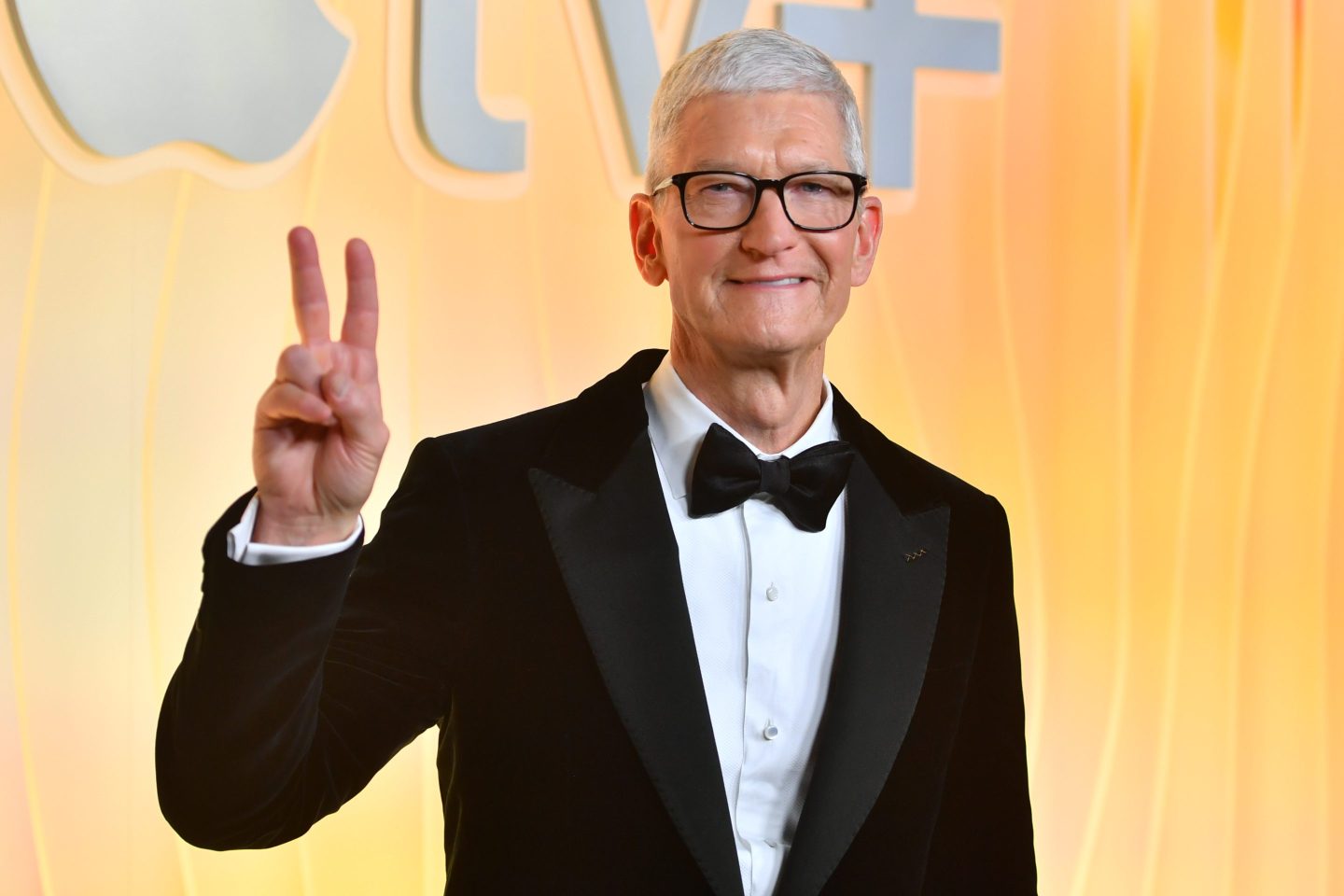
Apple is less invested in the race given its smaller presence in the search engine market, but the company is working to integrate A.I. software with its devices, including a recently announced feature that taps machine learning to create a synthesized digital copy of users’ voices. Amazon and Meta have also been working on their own large language models (LLMs) and A.I. software. Corporate executives mentioned A.I. nearly 1,100 times during second quarter earnings calls last month, more than double from the same period last year, as companies of all kinds talked up their A.I. efforts.
Chinese companies are also scrambling to develop better A.I., but investor interest has been more muted. Baidu, China’s leading search engine, has its own equivalent of ChatGPT, while large tech companies including e-commerce titan Alibaba and telecommunications giant Huawei are among the top 10 companies worldwide in terms of driving A.I. research.
In recent years, China has arguably dedicated more resources than the U.S. towards developing A.I. China’s government has long been a big sponsor of A.I. research, including a $2.1 billion plan in 2018 to build a technology park dedicated to A.I. near Beijing. China’s research community also published around twice as many A.I.-related research papers than the U.S. in 2021, according to a January study by Nikkei, a Tokyo-based financial news outlet. China’s research was deemed to be of higher quality by the study, as citations of U.S. A.I.-related papers trailed China’s by around 70%.
But despite China’s resources, the country’s early attempts at commercializing A.I. have fallen flat with investors. In March, when Baidu unveiled its A.I.-powered chatbot, Ernie Bot, investors were disappointed that the presentation didn’t include a live demo. That translated into a 6.4% drop in Baidu’s Hong Kong-listed stock by market close the day of the launch, wiping out $3 billion in the company’s value.
While China’s government moved fast to create rules for A.I. this year, strict data privacy and censorship requirements have hampered research. Companies developing A.I. must ensure their systems do not promote the “subversion of state power” or behave in ways that might “split the country” and “undermine national unity,” according to the new A.I. rules, announced in April.
The limits risk putting China’s A.I. at a disadvantage and therefore may not measure up to foreign rivals, some say. After all, A.I. systems are only as good as the data they’re trained on. China’s government has also cracked down on large tech companies in recent years by requiring new public listings be approved by the state first, raising fears that the country is sacrificing innovation in favor of gaining more control over its tech sector.
“We are seeing discernibly more clients in Asia spending their time and resources around owning US tech stocks over the coming year with more rotation away from China Big Tech,” Ives wrote.
To be sure, lax U.S. regulation of A.I. has come with downsides. Current domestic A.I. models are still prone to making misleading and inaccurate statements, and risk accelerating the spread of misinformation just in time for an election year. The Biden administration unveiled rules this month, which are not yet legally binding, to direct responsible A.I. research, but even executives have said that more regulation of A.I. is “essential.”
But if the U.S. can regulate A.I. without damaging innovation in the industry, and exploit the shortcomings of China’s, it would be a lucrative technology to corner. Ives estimated A.I. will grow to become an $800 billion market opportunity over the next decade, calling the technology “one of the most transformational we have seen in 22 years of covering tech stocks.”