The film “Air,” which tells the story of Nike’s signing of Michael Jordan, isn’t actually about Michael Jordan at all.
It’s about the beauty of design and the seduction of marketing. It’s about power suits, purple Porsches and Rolexes. It’s about white men languishing through midlife crises who salivate over the branding potential of a star basketball player.
As for Jordan? Audiences just see his back as he strolls into the Nike offices and his hands as he admires the Air Jordan prototype – but never his face. In the entire film, he utters only three words.
Much has been made about Michael Jordan’s representation or lack thereof in “Air.”
How could a film about one of the most famous Black men in the world obscure his presence?
The film’s true power is its ability to convey an unnerving truth about the sneakers’ mystique: Jordan’s athletic ability was crucial to the success of Nike and Air Jordan; not so much his face – and definitely not his words.
In this way, “Air” becomes the story of how a struggling company created one of the most successful brands in the world on the back of a Black body, a tale as old as the nation itself.
Liftoff
In 1983, Nike’s marketing director, Rob Strasser, wrote an internal memo explaining the importance of using star athletes to sell their products: “Individual athletes, even more than teams, will be the heroes; symbols more and more of what real people can’t do anymore – risk and win.”
This memo appeared during a turbulent period for Nike. The company had gone public in 1980 with a listless opening. In 1984, the company posted its first losing quarter and initiated a monthlong wave of layoffs employees called the “St. Valentine’s Day Massacre.”
Who would be that hero? The ailing shoe company sought a body brimming with transcendent talent, a superhuman athlete.
Enter the Chicago Bulls’ Michael Jordan, of whom Boston Celtics legend Larry Bird once said, “I think he’s God disguised as Michael Jordan.”
During the summer of 1984, Nike shoe designer Peter Moore and Strasser gathered in the Washington, D.C., office of Jordan’s agent, David Falk.
In a scene authors Rodrigo Corral, Alex French and Howie Kahn detail in their 2017 book, “Sneakers,” Falk, after exchanging pleasantries, looked to Strasser and said, “Rob, I’ve got an idea. I want to marry Michael to your airbag technology.”
Nike had developed its air cushions in 1977. It involved infusing the midsoles of shoes with pockets of pressurized gas to absorb shock, but the company was having a difficult time marketing it.
Falk then paused for dramatic effect, before uttering, “Air Jordan.”
In 1985, Nike released the first Air Jordan sneaker. A year later, Nike sold US$100 million worth of Air Jordan shoes and apparel, boosting the company’s profits to $59 million from only $10 million the year before.
After 38 years and 37 iterations of their flagship line of basketball shoes, Jordans have become a transcendent cultural talisman memorializing Michael Jordan’s career and basketball’s influence on American life – but also, his labor.
Today, Nike is worth a staggering $200 billion. Meanwhile, the Jordan brand, which was spun off into its own company in 1997, brings in billions of dollars per year, of which Jordan pockets 5%.
Buying a piece of Blackness
I’m writing a book that explores the intimate connections between sneakers and Blackness. In it, I argue that the Black body’s long history of objectification and commodification undergirds the branding, mass consumption and culture of sneakers.
What “Air” does better than anything else is to unbox a provocative, sobering truth about Jordans’ meteoric rise: They are cast as literal extensions of Black bodies. They represent the literal molding of a Black man’s feet, with their vulcanized rubber, leather and laces encapsulating Black athletic greatness and cool.
Finally figuring out how to sell Nike’s airbag technology was the other side of Air’s recipe for success.
In truth, Nike Air was a curiosity. It was unstable and unreliable. But runners became enamored with the idea of a cushioning technology they couldn’t see and much less understand. People knew they loved the sensation of Air even though the “how” remained a mystery.
The seemingly simple concept of explaining Air had eluded the company. In an interview with journalist Scoop Jackson, Bruce Kilgore, Nike designer responsible for the Air Force 1, articulated the difficulty of taking the air midsole from idea to execution to market: “How do you take something inherently unstable and put [it] into [a basketball shoe] that is all about stability?”
But six years after the development of the air midsole, David Falk cracked the code of Nike’s transparent, little black box: Don’t market the technology. Market the body that wears it. https://www.youtube.com/embed/QpWFtG07MME?wmode=transparent&start=0 The first TV ad for Air Jordans features the iconic line, ‘Who says man was not meant to fly?’
This marketing ploy to shift the attention of consumers from mundane pockets of polyurethane to on-court performances, while indeed innovative, centers an incredibly old tradition of Americans seeing Black bodies as being spectacularly convertible to profit.
Air Jordans romanticize an American wistfulness for the stoic and branded Black workhorse. John Henry, the legendary steel driver, was a hero, and so, too, is Jordan. For Black bodies – Jordan and Henry, but also athletes like Damar Hamlin, who suffered a near-fatal injury during an NFL game in early 2023 – heroism is articulated through the hypnotizing anthem of toil and exhaustion.
Sports provide an easy cover for the perpetuation of this myth. Disgraced sports commentator Jimmy “The Greek” Snyder once said, “The Black is a better athlete to begin with … They can jump higher and run faster.”
How far removed is the marketing of Air Jordans from the words of Jimmy the Greek?
As the voiceover in the first Air Jordan television ad proclaims, “Who says man was not meant to fly?”
Bodies ripe for the picking
Before Nike’s dominance, brands like Pony, Converse and Adidas were popular on street corners and basketball courts around the country – a history told by DJ and author Bobbito Garcia in his 2003 book, “Where’d You Get Those?”
Nike and the Air Jordan, however, represented a watershed moment in which this bubbling market of “sneaker fiends,” as Garcia calls them, went mainstream. Through artful placement in Black films – specifically Spike Lee’s “Do the Right Thing” – with an assist from Michael Jackson and hip-hop culture and music, the Air Jordan line transformed sneakers into one of the most important footwear items and fashion brands the world has ever witnessed.
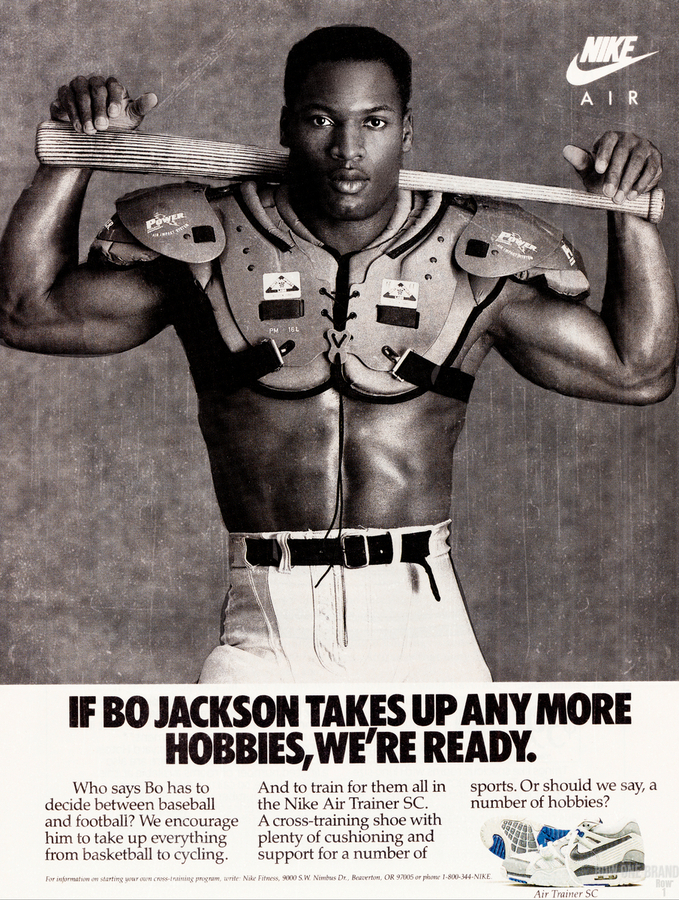
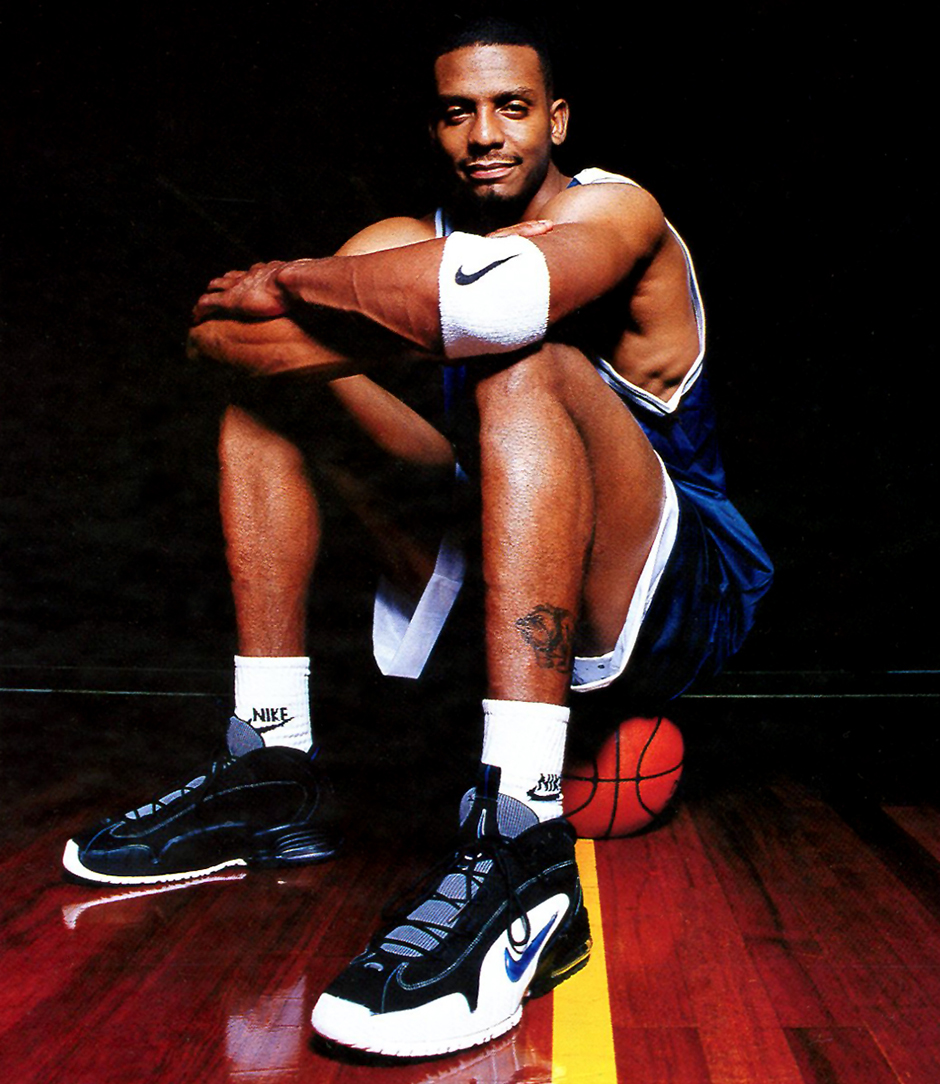
Nike would go on to feature scores of other Black athletes in its ad campaigns, and the names of these heroes ring off the tongue sharp and proud like a trumpet’s blare: Bo Jackson, Penny Hardaway, Kobe Bryant, Venus and Serena Williams, Lebron James. https://www.youtube.com/embed/9sz6xhPkGJ4?wmode=transparent&start=0 An ad from Nike’s iconic ‘Bo Knows’ campaign, featuring star athlete Bo Jackson.
None of this would be possible without Nike’s big bet on Jordan.
So why does a film give Michael Jordan, the man who had so much to do with Nike’s success, so little to say?
I believe the answer is as uncomfortable as it is simple: Michael Jordan isn’t the film’s subject, but its object.
In one of the film’s more memorable scenes, Nike marketing executive Sonny Vaccaro, played by Matt Damon, goes to visit the Jordan family in Wilmington, North Carolina.
When he arrives, he greets James, Michael’s father, before being passed off to the real decision-maker: Deloris Jordan, the matriarch of the Jordan clan. Viola Davis portrays Deloris with a drowning depth. Every utterance and glance simmers.
“Five generations of Jordans are buried in these forests,” she announces as she sits with Vaccaro in their backyard. She’s polite but distant. Her piercing eyes know to be wary of unannounced visits from white men in shiny cars. Everyone wants a piece of her son, and it’s her job to keep him whole.
In the film, before unveiling the Air Jordan 1 to Vaccaro and Strasser, Peter Moore, played by Matthew Maher, describes the shoe: “It has the logic of water, like shoe was always here, like it always existed.”
What Moore cannot know is how right he really is. Deloris Jordan and those five buried generations have always been here.
The Black body, from America’s inception, has always been there, as cotton and as sugar, ripe for the picking.
A. Joseph Dial is Disco Network Postdoctoral Research Fellow, Purdue University.
This article is republished from The Conversation under a Creative Commons license. Read the original article.