About two-thirds of all U.S. residents who file federal income taxes typically get a refund. Unfortunately, this year I am among the other third who owe the Internal Revenue Service money.
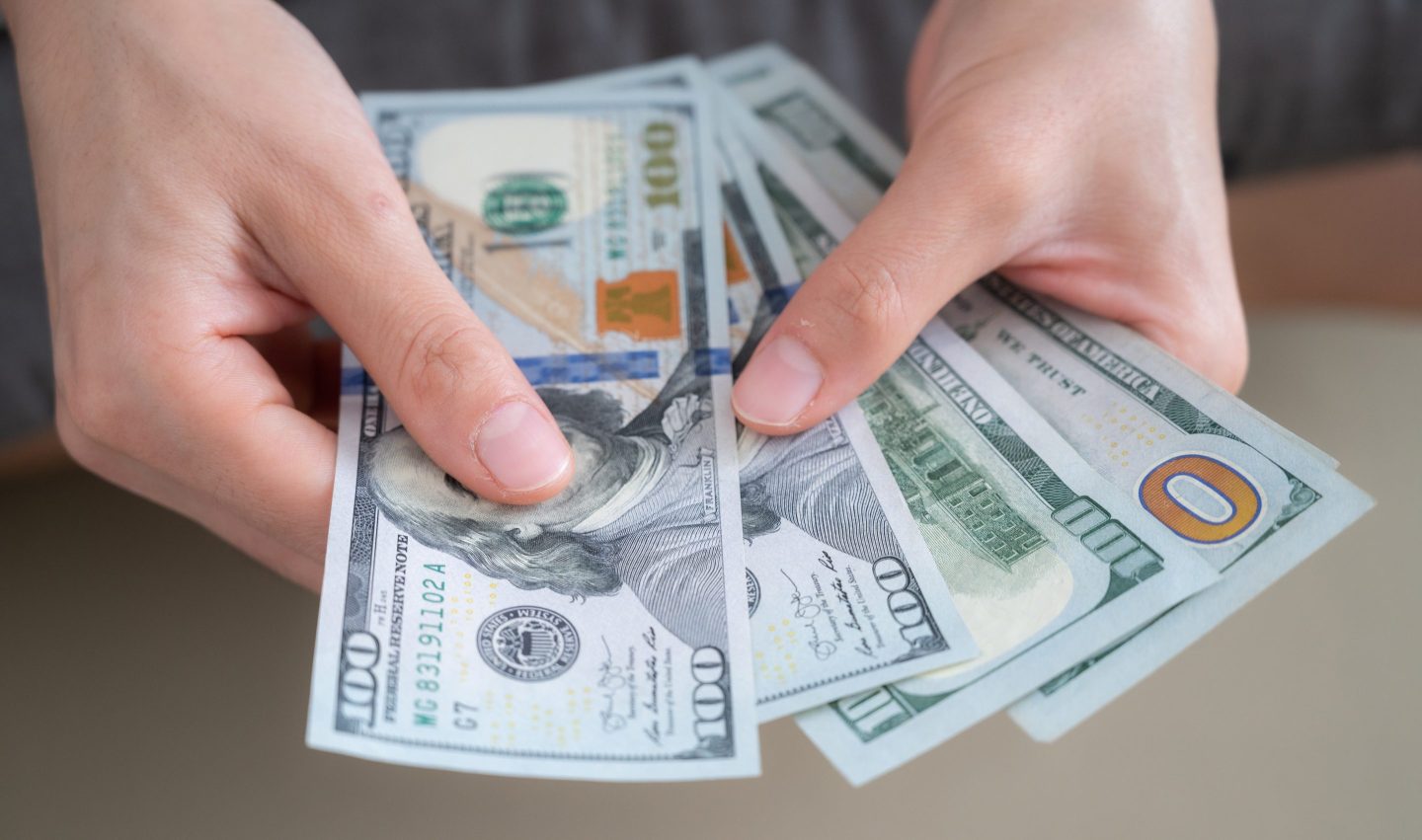
So I tried something I’ve never done before and few people do: I wanted to pay my tax bill in cash—that is, with real paper currency.
In our nearly cashless society, this might sound like a hassle.
Why pay taxes in cash
For one thing, I’m an economist writing a book explaining the advantages of using cash, and I was simply curious what might happen.
But beyond my own book-related interest in paying taxes in cash, I had other reasons for wanting to do so. For years while teaching students about money, I noted the front of every piece of U.S. currency declares: “This note is legal tender for all debts public and private.”
The statement seemed ironic since I couldn’t figure out how to pay income taxes, one of people’s most significant public debts, with currency.
I also wondered how difficult it is for the unbanked to pay taxes. Federal Deposit Insurance Corp. data shows about 6 million households have no connection to the formal banking system.
The IRS does not publish data on the methods people use to pay their taxes, but several IRS employees I spoke with told me almost no one pays the IRS in cash.
How to pay in cash
The IRS certainly doesn’t make it easy to do so.
Recently, a student of mine pointed out where the instructions for paying the government with paper money are buried, so I gave it a try. The five-step set of instructions hinted that paying cash directly is a time-consuming process and that I needed to start a month or two before taxes are due.
Following the instructions, I completed my taxes early and learned I owed a bit more than $1,000. Then I called on the phone to schedule a face-to-face appointment with the IRS to see when and where I could pay.
The operator, who told me her name was “Ms. Johnson,” was cheerful and helpful but tried her very best to dissuade me from paying in cash. She offered to walk me through the steps on the phone so that I could pay online and not have to come into my local IRS office.
Alternative ways to pay “in cash”
For example, the IRS suggests cash payers can “buy a prepaid credit card and pay online.”
This sounds easy but turns out to be costly. For example, Walmart, one of the largest U.S. retailers, offers a reloadable basic debit card. The card costs $1 to buy, $6 per month in fees, and $3 to load with cash. Once the card is loaded with money, the businesses the IRS uses to accept debit card payments charge around $2.50 for each payment, with payments limited to two per year.
The IRS also has partnered with national chains like CVS, Walgreens, 7-Eleven, and Family Dollar to accept cash on its behalf. Their service fees are less, either $1.50 or $2.50 per payment. However, the steps needed to navigate the online program before you can show up at a retailer seemed almost as difficult as filling in the tax forms.
More importantly, this program has a $500 per payment limit and a $1,000 maximum amount accepted per year. This made the method impractical for me and for most people who owe the IRS money. The latest IRS figures show people who owe income taxes on average pay over $6,000.
Or, I could use a credit or debit card, but these methods charged around 2.5% more for the convenience.
After I declined all of Ms. Johnson’s alternative payment offers, she told me I was lucky. There was an appointment available at the downtown Boston taxpayer assistance center in a few days. Her schedule showed many other centers around the country were booked until May, long after taxes were due.
An arduous process—but a successful one
I had cash at home, but not enough. I went to the bank and made sure I got exact change in crisp new bills to make the transaction as easy as possible.
My goal was not to cause pain like the Virginia man who used 300,000 coins to pay his motor vehicle bill or the California man who pushed in wheelbarrows filled with $1 coins to pay his $13,000 property tax bill. Nor was I interested in recreating the famous but fictional British case of Board of Inland Revenue v. Haddock, in which Haddock tried paying his tax bill by writing a check on the side of a cow. Although it never happened, the case is still cited in legal circles.
I made it to the IRS building, went through airport-style screening, and checked in on time. The receptionist was polite and again told me all the ways to pay without cash. After I declined, he asked me to take a seat in the waiting area filled with people clutching paperwork. As I walked away, the receptionist did a face-palm while shaking his head, which was not a positive sign.
After a 30-minute wait, another polite IRS worker came out and told me they could not accept cash that day because no courier was scheduled. Current IRS rules require that a courier take all cash immediately to the bank because they said “holding cash was not safe.” This is surprising given the federal office building was swarming with armed guards and required screening to enter.
I came back a week later when another cash payer was showing up. This time I had more success. It took 30 minutes, but after completing a multipart carbon form by hand, I got a receipt that said my taxes were paid.
A simple solution
Paying the IRS with cash is possible, but it turned out to be onerous and time-consuming.
I believe there is a simple solution. The Code of Federal Regulations, which governs the IRS and other agencies, allows authorized banks to accept tax payments. The law doesn’t specify payment only by check or other methods. This means if procedures existed, taxpayers could walk into major banks, hand the teller cash, and have the bank inform the IRS of the amount paid.
For people without bank accounts, their only option for paying taxes shouldn’t require paying fees to credit card processors or retailers—especially since they are likely among the poorest taxpayers.
If the government wants everyone to pay their taxes, why doesn’t it make it as easy as possible?