Two trailblazing ride-hailing services are heading toward uncharted territory as they seek regulatory approval to transport passengers around the clock throughout one of the most densely populated U.S. cities in vehicles that will have no one sitting in the driver’s seat.
If Cruise, a subsidiary of General Motors, and Waymo, a spinoff from Google, reach their goal before year’s end, San Francisco would become the first U.S. city with two totally driverless services competing against Uber, Lyft and traditional taxis — all of which depend on people to control the automobiles.
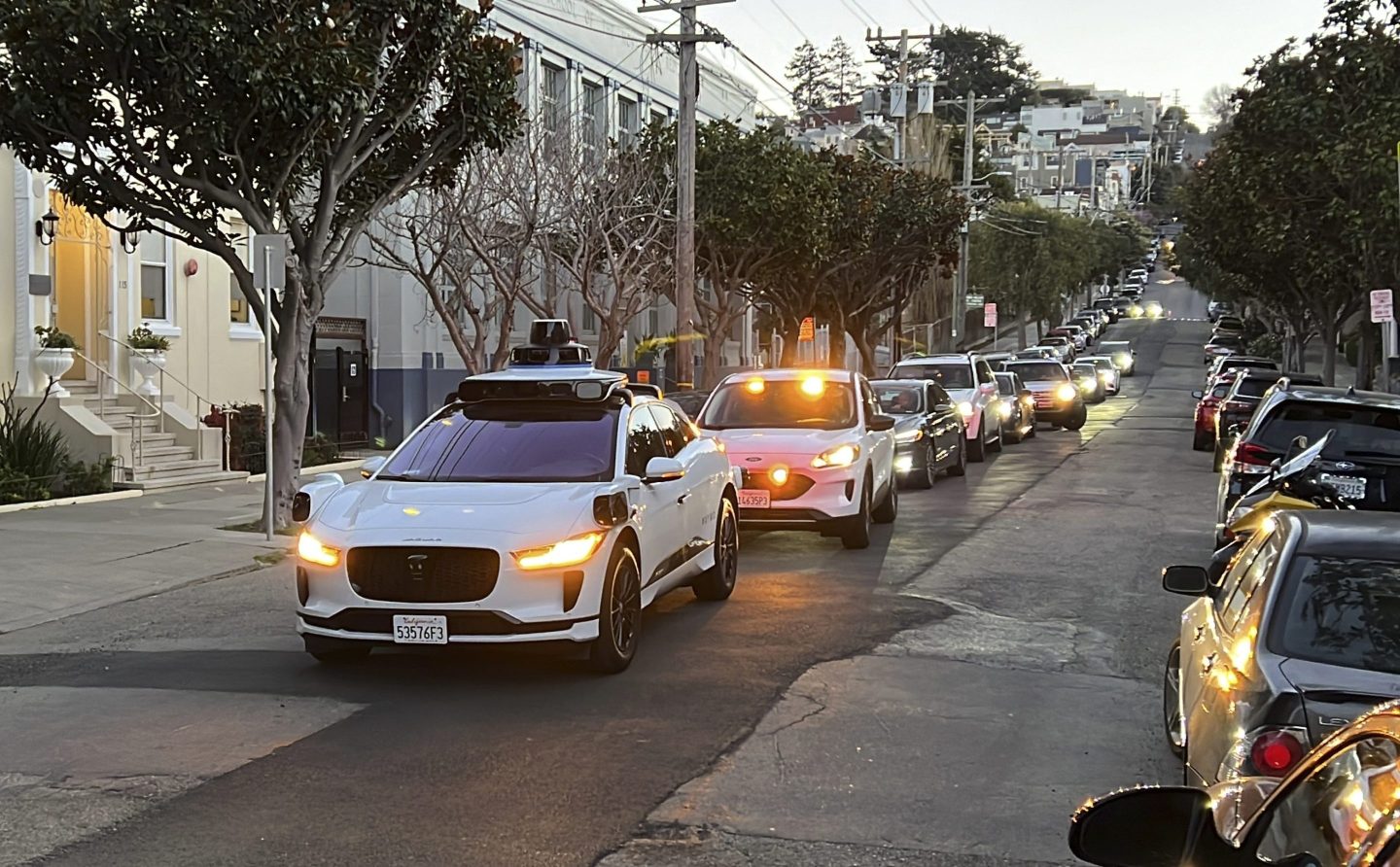
But Cruise and Waymo still must navigate around potential roadblocks, including complaints about their vehicles making unexpected, traffic-clogging stops that threaten to inconvenience other travelers and imperil public safety.
Cruise already has been charging people for driverless rides in less congested parts of San Francisco during night-time hours since last June. Waymo has been giving free driverless rides in a broader swath of the city while awaiting clearance to begin charging passengers in robotic vehicles that Google secretly began working on 14 years ago.
The effort to unleash dueling driverless services throughout San Francisco is shaping up to be just the first step in a far more ambitious expansion centered in California — a state where more than 35 million vehicles driven by humans are currently registered.
Cruise recently applied for permission to begin testing its robotic vehicles throughout California at speeds of up to 55 miles per hour (88 kilometers per hour) — 25 miles per hour (40 kilometers per hour) above the maximum speed for its robotaxis in San Francisco. Waymo is already testing its driverless cars in Los Angeles — the second largest U.S. city.
The California push comes on top of Cruise starting to test its robotaxis in Austin, Texas, as well as Phoenix, where since 2020 Waymo’s driverless ride-hailing service has been carrying passengers on Arizona roads that are far less congested and challenging than the streets of San Francisco.
″We still have work to do, but it’s improving at a pretty rapid rate,” Cruise CEO Kyle Vogt told The Associated Press. “As it gets fine-tuned, it will get really elegant over time, but also the safety continues to improve.”
Saswat Panigrahi, Waymo’s chief product officer, expects the company’s past experience to pay off as it transplants what it has learned from operating a driverless ride-hailing service in Phoenix to more heavily trafficked cities like San Francisco and Los Angeles.
“The uncertainty is definitely now far lower, having operated a fully autonomous service with real riders,” Panigrahi said.
Both Cruise and Waymo recently announced their driverless fleets each have covered more than 1 million miles without a major accident. But their robotaxis also have experienced nagging problems in San Francisco that have caused traffic headaches and other nuisances that threaten to inconvenience people or, worse, block emergency vehicles rushing to a fire or other urgent calls for help.
“The expected things are easy, but it’s the unexpected things that humans react to in real time that are a concern,” said transportation expert Nico Larco, who is director of the Urbanism Next Center at the University of Oregon. “Best case, it will just causes confusion, havoc, congestion if the cars stop in the middle of the road. But the worst cases could actually be harmful to someone.”
Meanwhile, dozens of other technology companies and automakers have joined in a race to develop self-driving car technology at a collective cost of more than $100 billion. Their ultimate goal is to make money off robotic drivers that are safer and less expensive than human drivers. Robotaxis could also lower prices for passengers, although Vogt believes consumers may be willing to pay more for rides without a stranger behind the wheel.
The investments so far have produced a mixed bag of successes, flops and hyperbole from the likes of Tesla CEO Elon Musk, who predicted nearly four years ago that the electric automaker would be running a huge robotaxi service by the end of 2020 but still hasn’t come close to realizing that ambition.
Concerns about robotaxis operating in ways that cause headaches for the people outside the vehicle was raised in a cautionary letter sent to California regulators in January by the San Francisco County Transportation Authority.
The letter cited at least 92 reported incidents of Cruise robotaxis making sudden stops in the street through Dec. 31. At least three of the incidents blocked the right of ways for public transportation for periods ranging from nine to 18 minutes.
Within the past year, driverless Cruise vehicles have also obstructed firefighters rushing to a three-alarm fire and or illegally entered into areas where there were ongoing efforts to douse a fire, according to the authority, which is asking regulators to hold off on unleashing robotaxis throughout San Francisco at all hours until there is more information about why and how often the cars periodically clog traffic. The abrupt braking and stops by Cruise’s robotaxis have also been under investigation by federal regulators since late last year.
“We are just very wary,” said Tilly Chang, the executive director for the San Francisco transportation authority. “We want to be supporters and help facilitate (driverless rides), but we have to make sure it’s safe.”
A pair of Associated Press reporters witnessed the the potential problems that robotaxis can cause in mid-February after a Waymo vehicle safely transported them on a trip through San Francisco that required navigating hilly terrain, turning in rush-hour traffic and yielding to pedestrians darting out into the crosswalks.
During one ride, the robotaxi stopped in the middle of the street after the AP reporters got out, and remained there for several minutes while a line of human-operated cars stacked up behind it. It turned out that a back door on the driver’s side hadn’t completely closed. In another glitch involving Cruise last September, an AP reporter took a roughly five-mile ride in a robotaxi nicknamed “Peaches,” which repeatedly bypassed the designated destination. The reporter finally had to use the Cruise app to contact a dispatcher in a remote center so the car could be stopped — in the middle of the street.
Vogt noted that a number of improvements have been made since then, and indeed two different Cruise robotaxis — one named “Cherry” and the other named “Hollandaise” — dropped off the same reporter and his colleague at their designated designations on a follow-up trip, although Cherry stopped at a bus stop that briefly prevented the arrival of an oncoming bus.
Cruise’s owner, the nearly 125-year-old General Motors, is nonetheless so confident robotaxis will drive more responsibly than humans and be able to expand its driverless service into more U.S. markets that it made the bold prediction last fall that Cruise would generate $1 billion in revenue by 2025 — a big jump from Cruise’s revenue of $106 million last year when it also lost nearly $2 billion.
That optimism is in sharp contrast to the disheartening experience of another storied automaker, Ford Motor, which paid $1 billion in 2017 to acquire driverless startup Argo AI, only to shut down the division last October and swallow a $2.7 billion loss after failing to find a buyer for the technology.