• Home
  • News
  • Fortune 500
  • Tech
  • Finance
  • Leadership
  • Lifestyle
  • Rankings
  • Multimedia
TechAerospace

A group of college students are sending a rover the size of a shoebox to the moon

Prarthana Prakash
By
Prarthana Prakash
Prarthana Prakash
Europe Business News Reporter
Down Arrow Button Icon
Prarthana Prakash
By
Prarthana Prakash
Prarthana Prakash
Europe Business News Reporter
Down Arrow Button Icon
March 29, 2023, 1:32 PM ET
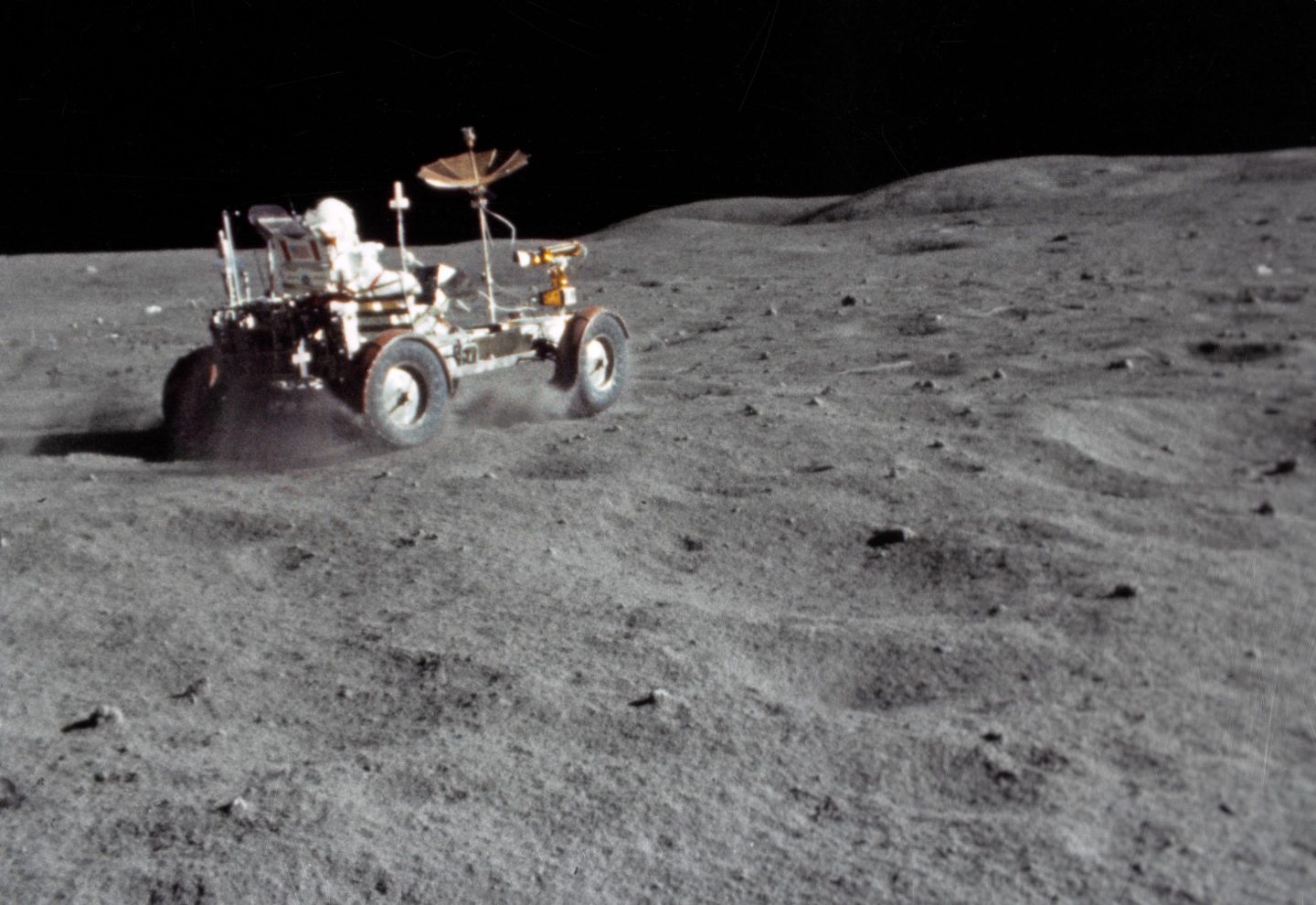
A rover on Moon's surface with an astronaut driving it
A Lunar Roving Vehicle from 1972.HUM Images/Universal Images Group—Getty Images

The U.S., Soviet Union, and Japan have all sent robots to the moon over the past 50 years. Now, a group of college students is joining in by building a shoebox-sized rover that they plan to launch in May, Bloomberg reported Wednesday.

The lunar rover, called Iris, will be the first privately-made American robot to explore the surface of the moon, according to the project’s website. But that’s not all—it would also be the first student-built rover, and the smallest and lightest one yet.  Around 300 students from Carnegie Mellon University have all pitched in on the project.

“Hundreds of students have poured thousands of hours into Iris. We’ve worked for years toward this mission, and to have a launch date on the calendar is an exciting step,” Raewyn Duvall, the program manager for Iris told CMU. 

The Iris Lunar Rover team did not immediately return Fortune’s request for comment. 

Iris is tiny and weighs 2 kgs (4.4 lbs)—but the design is deliberately small. The rover will fly on a private rocket carrying 14 payloads to the moon, which includes Iris, projects for the National Aeronautics and Space Administration as well as some humans. The project involved around 300 students, who will also control and operate Moonshot Mission Control, the control center for Iris based in CMU’s campus in Pittsburgh.

Look at @CMU_Robotics‘s Iris Lunar Rover on Peregrine, ready to be on our way #ToTheMoon! 🚀🌔#studentsuccess#Moonshothttps://t.co/AI5sURol6z

— Iris Lunar Rover (by Carnegie Mellon University) (@cmu_iris) October 14, 2022

Iris will spend a total of 50 hours on the moon’s surface before it runs out of battery, after which it will be left on the moon. It has two cameras that will help it capture images of dust on the moon’s surface. 

Launching a university-led moon mission

Going to space isn’t cheap. Some (rich) civilians paid $55 million each to fly to a space station in 2022. In Iris’ case, the project cost about $800,000 which was funded partly by CMU while the rest came from private donors and crowdsourced fundraisers.  

Later this year, the university is planning to send another student-developed rover called MoonRanger, which is funded by NASA and will explore the south pole of the moon which is believed to have ice formations. “If ice is sufficiently concentrated, and if its water can be processed, water becomes the key resource for living and working on the moon,” MoonRanger’s website says. 

NASA launched a moon-orbiting rocket last year for the first time in several decades. Many of their other projects have focussed on exploring Mars.

The space race has sparked turf wars between major world powers for decades now. But in recent years, private players have played an active part of developing space missions. Elon Musk’s SpaceX has sent astronauts to space in the past, with NASA’s blessing. It first sent a crew of four in November 2020. Earlier this month, SpaceX sent its seventh group to the International Space Station for NASA. The company will also be helping NASA in its 2025 rocket launch as part of the Artemis mission. 

Subscribe to Well Adjusted, our newsletter full of simple strategies to work smarter and live better, from the Fortune Well team. Sign up today.
About the Author
Prarthana Prakash
By Prarthana PrakashEurope Business News Reporter
LinkedIn icon

Prarthana Prakash was a Europe business reporter at Fortune.

See full bioRight Arrow Button Icon

Latest in Tech

AIMeta
It’s ‘kind of jarring’: AI labs like Meta, Deepseek, and Xai earned some of the worst grades possible on an existential safety index
By Patrick Kulp and Tech BrewDecember 5, 2025
5 hours ago
Elon Musk
Big TechSpaceX
Musk’s SpaceX discusses record valuation, IPO as soon as 2026
By Edward Ludlow, Loren Grush, Lizette Chapman, Eric Johnson and BloombergDecember 5, 2025
5 hours ago
data center
EnvironmentData centers
The rise of AI reasoning models comes with a big energy tradeoff
By Rachel Metz, Dina Bass and BloombergDecember 5, 2025
5 hours ago
netflix
Arts & EntertainmentAntitrust
Hollywood writers say Warner takeover ‘must be blocked’
By Thomas Buckley and BloombergDecember 5, 2025
6 hours ago
person
CybersecurityDigital
Dictionaries’ words of the year are trying to tell us something about being online in 2025
By Roger J. KreuzDecember 5, 2025
6 hours ago
Greg Peters
Big TechMedia
Top analyst says Netflix’s $72 billion bet on Warner Bros. isn’t about the ‘death of Hollywood’ at all. It’s really about Google
By Nick LichtenbergDecember 5, 2025
8 hours ago

Most Popular

placeholder alt text
Economy
Two months into the new fiscal year and the U.S. government is already spending more than $10 billion a week servicing national debt
By Eleanor PringleDecember 4, 2025
2 days ago
placeholder alt text
Success
‘Godfather of AI’ says Bill Gates and Elon Musk are right about the future of work—but he predicts mass unemployment is on its way
By Preston ForeDecember 4, 2025
1 day ago
placeholder alt text
Success
Nearly 4 million new manufacturing jobs are coming to America as boomers retire—but it's the one trade job Gen Z doesn't want
By Emma BurleighDecember 4, 2025
1 day ago
placeholder alt text
Success
Nvidia CEO Jensen Huang admits he works 7 days a week, including holidays, in a constant 'state of anxiety' out of fear of going bankrupt
By Jessica CoacciDecember 4, 2025
1 day ago
placeholder alt text
Real Estate
‘There is no Mamdani effect’: Manhattan luxury home sales surge after mayoral election, undercutting predictions of doom and escape to Florida
By Sasha RogelbergDecember 4, 2025
1 day ago
placeholder alt text
Economy
Tariffs and the $38 trillion national debt: Kevin Hassett sees ’big reductions’ in deficit while Scott Bessent sees a ‘shrinking ice cube’
By Nick LichtenbergDecember 4, 2025
1 day ago
Rankings
  • 100 Best Companies
  • Fortune 500
  • Global 500
  • Fortune 500 Europe
  • Most Powerful Women
  • Future 50
  • World’s Most Admired Companies
  • See All Rankings
Sections
  • Finance
  • Leadership
  • Success
  • Tech
  • Asia
  • Europe
  • Environment
  • Fortune Crypto
  • Health
  • Retail
  • Lifestyle
  • Politics
  • Newsletters
  • Magazine
  • Features
  • Commentary
  • Mpw
  • CEO Initiative
  • Conferences
  • Personal Finance
  • Education
Customer Support
  • Frequently Asked Questions
  • Customer Service Portal
  • Privacy Policy
  • Terms Of Use
  • Single Issues For Purchase
  • International Print
Commercial Services
  • Advertising
  • Fortune Brand Studio
  • Fortune Analytics
  • Fortune Conferences
  • Business Development
About Us
  • About Us
  • Editorial Calendar
  • Press Center
  • Work At Fortune
  • Diversity And Inclusion
  • Terms And Conditions
  • Site Map

© 2025 Fortune Media IP Limited. All Rights Reserved. Use of this site constitutes acceptance of our Terms of Use and Privacy Policy | CA Notice at Collection and Privacy Notice | Do Not Sell/Share My Personal Information
FORTUNE is a trademark of Fortune Media IP Limited, registered in the U.S. and other countries. FORTUNE may receive compensation for some links to products and services on this website. Offers may be subject to change without notice.