
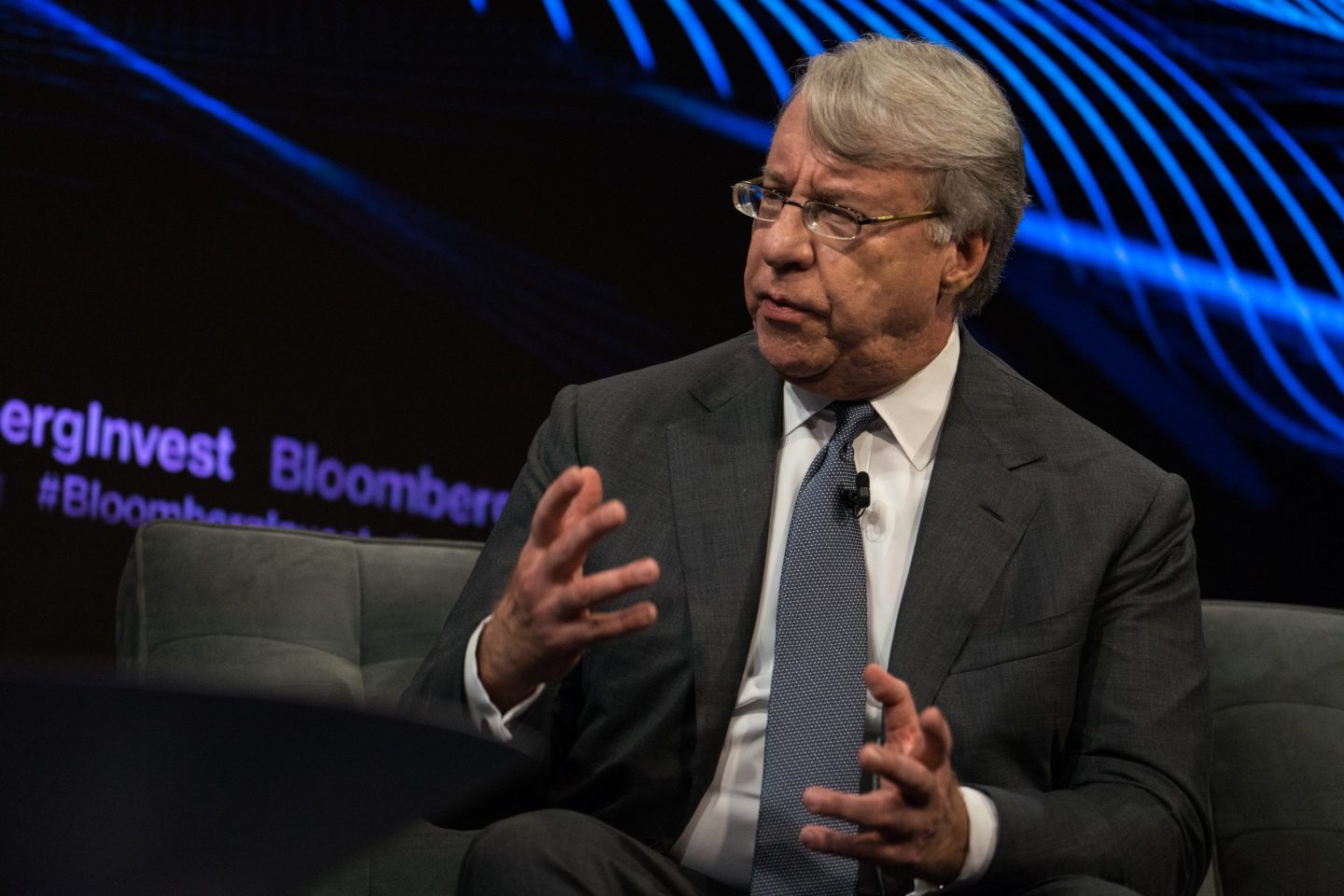
In less than a month, three U.S. banks—Silicon Valley Bank, Signature Bank, and Silvergate Bank—have failed. But oddly enough, the famed short seller Jim Chanos isn’t worried.
“This was NOT a systemic event,” Chanos, who rose to prominence after his highly profitable bet against Enron nearly 20 years ago, told Insider Wednesday. “This was a duration-mismatch problem. It only affects a few really dumb, greedy institutions.”
Chanos, who now runs the investment manager Chanos & Co., formerly known as Kynikos Associates, believes that the issues at Silicon Valley Bank and other regional lenders appear to result from a failure to manage the most classic of banking risks—changes in interest rates. And he argues that this mismanagement was likely spurred on by bankers’ desire for bigger bonuses.
To understand his point here, we have to explain how banks work on a basic level. When someone deposits money into a bank, that money doesn’t just go into a vault like it once did. Instead, it’s loaned out to businesses that want to expand, consumers who want to buy homes, or invested in typically safe assets like U.S. treasuries. Then, banks receive interest on those loans or investments, enabling them to turn a profit and offer services to clients.
Consumers are compensated in the form of interest for allowing their money to be used in this way and, normally, it all works just fine. But on occasion, as exemplified by the collapse of SVB, banks can get caught in what Chanos calls a “duration mismatch” when their assets don’t pay out enough to cover the interest on their customers’ deposits.
Duration is a measure of the price sensitivity of debt holdings, like corporate bonds or U.S. treasuries, to changes in interest rates.
“It’s a weird piece of financial lingo,” Gregory Miller, a chartered financial analyst and the lead research assistant at Colorado State University’s economic research enterprise, the Regional Economic Development Institute, told Fortune. “But the key idea is that high duration means you have high interest rate sensitivity, and low duration means you have low interest rate sensitivity.”
Not accounting for this interest rate sensitivity when investing is where SVB made its mistake. It started when the bank was flooded with deposits in 2020 and 2021 from tech startups, which accounted for a large number of its clients. SVB’s executives decided to park most of that money in long-term U.S. treasury bonds and mortgage-backed securities, which offered a better return than short-term treasuries (and higher returns for bankers equal bigger bonuses). The problem was these investments also had a higher duration, or sensitivity to higher interest rates, which left SVB at risk if interest rates rose.
Miller explained with the Federal Reserve jacking rates up at an unprecedented pace over the past year, SVB’s holdings lost a lot of their value, leaving it with billions in unrealized losses. That’s because of the inverse relationship between interest rates and bond prices (when interest rates rise, bond prices fall.) But these holdings still paid out an average yield of under 2% because they were bought when rates were so low. And on top of that, SVB was forced to pay higher interest rates on customer deposits to better compete for their money, creating a duration mismatch.
“As that mismatch got worse the losses started to become unavoidable, and it was those losses that concerned the venture capital investors and then led to the bank run that happened at SVB,” Miller explained, referring to the venture capitalists who advised their portfolio companies to move their funds out of SVB.
Chanos isn’t the only one pinning the blame for SVB’s issues squarely on executives ignoring interest rate risk either.
“SVB’s failure is a textbook case of mismanagement,” Fed Vice Chair for Supervision Michael S. Barr said during a U.S. Senate Committee on Banking, Housing, and Urban Affairs hearing on Tuesday. “The picture that has emerged thus far shows SVB had inadequate risk management and internal controls that struggled to keep pace with the growth of the bank.”
University of Chicago economics professor Douglas Diamond, who won the Nobel Prize last year for his work on the banking system’s fragility alongside Philip H. Dybvig, then of Yale University and now of Washington University in St. Louis, also told Fortune last month that he believes SVB’s collapse was a case of mismanaged risks amid aggressive expansion, rather than a systemic issue.
But despite the consensus among experts that SVB’s issues are isolated and not a problem at prudently run banks, nor a “systemic event” for the financial system, Chanos still worries about the stock market.
“The basic problems financial markets have today, particularly in the U.S., is that they continue to be priced for everything to go right,” he told Insider. “The Silicon Valley Bank run may have been a two-day preview of what can happen when that belief is shaken.”