• Home
  • Latest
  • Fortune 500
  • Finance
  • Tech
  • Leadership
  • Lifestyle
  • Rankings
  • Multimedia
FinanceMarkets

A famous market watcher who called the subprime mortgage crisis is warning that stocks are about to crash: ‘It’s the highest probability since COVID’

Will Daniel
By
Will Daniel
Will Daniel
Down Arrow Button Icon
Will Daniel
By
Will Daniel
Will Daniel
Down Arrow Button Icon
March 28, 2023, 3:31 PM ET
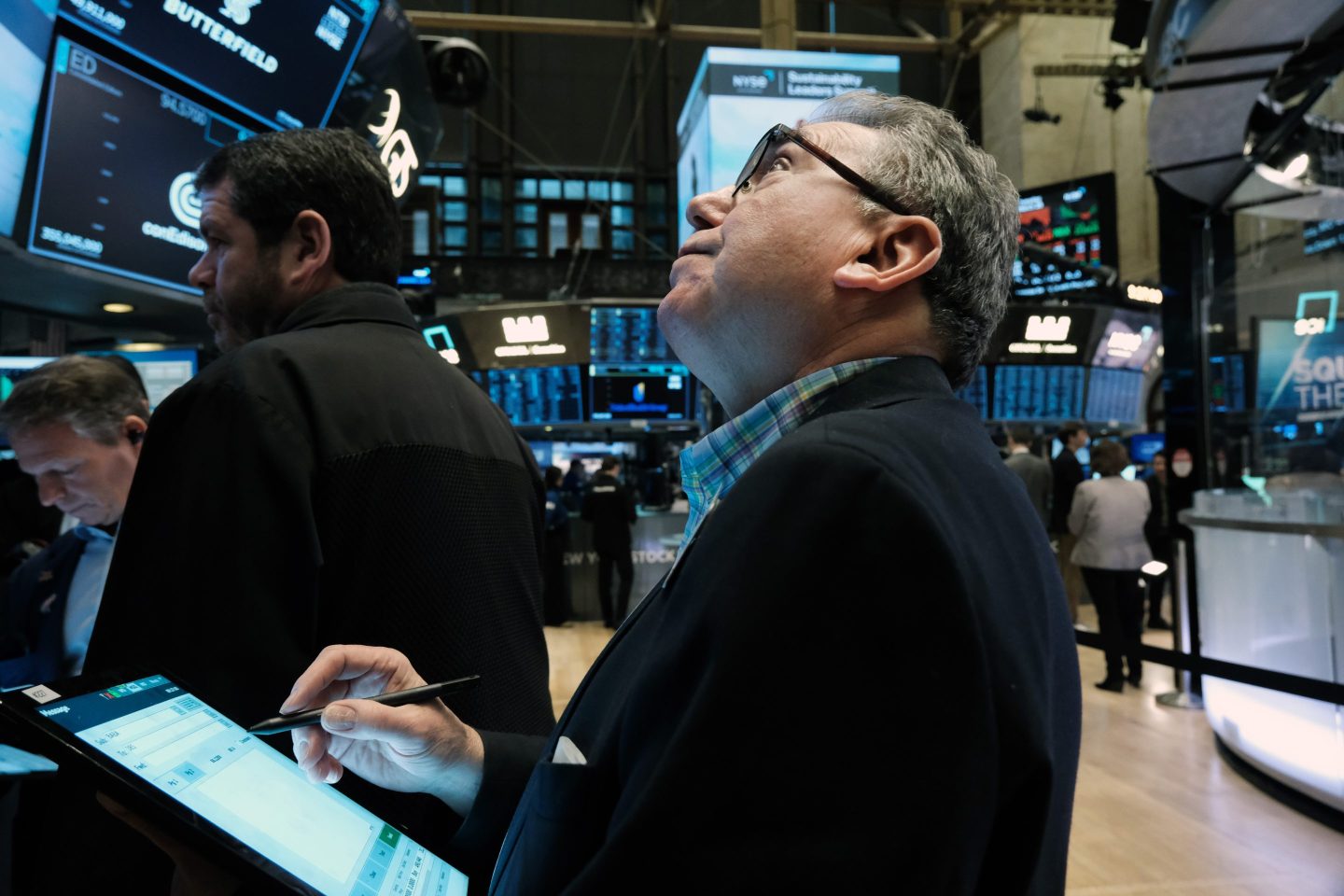
Is a stock crash coming?
Is a stock crash coming?Spencer Platt—Getty Images

In 2005, years before the subprime mortgage crisis kicked off the Great Recession and led millions of Americans to lose their homes, Larry McDonald was a vice president at the infamous now-defunct global financial services firm Lehman Brothers. As a young trader he, along with many of his peers, warned that something was wrong in the real estate market that year. It “was living on borrowed time,” he would explain years later in a 2009 New York Timesarticle, and Lehman Brothers “was headed directly for the biggest subprime iceberg ever seen.” 

But McDonald’s bosses ignored his warnings, and the 158-year-old institution that was Lehman eventually went under in 2008 after the housing bubble cracked. The S&P 500 would go on to lose roughly 50% of its value in the 17-month bear market that ended in March 2009.

Now, McDonald, the editor and founder of the widely read investing newsletter The Bear Traps Report, is warning that another stock market crash is on the way. He says the “Lehman systemic risk indicators” that he developed after the subprime mortgage crisis—which include things like the corporate default rate, stock market short-interest ratios, and investor sentiment surveys—are all flashing warning signs.

“[O]ur 21 Lehman systemic risk indicators are pointing at the highest probability of a crash or a sharp drawdown in the next 60 days—the highest probability since COVID,” he told CNBC Tuesday, referencing the COVID-induced market drop of March 2020.

McDonald believes investors are ignoring the risk of a “rolling credit crisis” after the failure of Silicon Valley Bank and Signature Bank as well as the unexpected demise of the Swiss lender Credit Suisse, and focusing too much on the rise of new technologies like artificial intelligence and robotics. 

“We saw this before with Lehman, what happens is a shock comes in, credit markets start pricing the risk, but equities don’t. They focus on things like A.I. or things like the dotcom revolution in the ’90s,” he warned, giving a nod to the errors investors made before the dotcom bubble’s blowup sent stocks tumbling in 2001.

McDonald noted that even after the Federal Deposit Insurance Corporation (FDIC) stepped in to save both uninsured and insured depositors at SVB and Signature Bank this month, U.S. banks are still sitting on hundreds of billions of dollars in unrealized losses. The mortgage-backed securities and U.S. Treasuries that make up a majority of many banks’ holdings have seen their value slashed after a series of aggressive Federal Reserve interest rate hikes this past year. These losses have led to significant instability at some banks, forcing many of their peers to tighten lending standards and prepare for potential bank runs. 

McDonald said banks’ issues are beginning to spread to the commercial real estate market now as a result of the lending slowdown, and he worries they could infect other sectors of the economy as the Fed raises rates to fight inflation. 

The good news is this is “not a Lehman event” that will cause a devastating recession, “it’s just a rolling, slow-moving credit crisis, because the Fed is fighting it behind the scenes,” McDonald said. But that doesn’t mean stocks are safe—a sharp drawdown is on its way, he warned.


Subscribe to Well Adjusted, our newsletter full of simple strategies to work smarter and live better, from the Fortune Well team. Sign up today.
About the Author
Will Daniel
By Will Daniel
LinkedIn iconTwitter icon
See full bioRight Arrow Button Icon

Latest in Finance

EconomyAgriculture
More financially distressed farmers are expected to lose their property soon as loan repayments and incomes continue to falter
By Jason MaDecember 13, 2025
3 minutes ago
InvestingStock
There have been head fakes before, but this time may be different as the latest stock rotation out of AI is just getting started, analysts say
By Jason MaDecember 13, 2025
3 hours ago
Politicsdavid sacks
Can there be competency without conflict in Washington?
By Alyson ShontellDecember 13, 2025
4 hours ago
Investingspace
SpaceX sets $800 billion valuation, confirms 2026 IPO plans
By Loren Grush, Edward Ludlow and BloombergDecember 13, 2025
5 hours ago
PoliticsAffordable Care Act (ACA)
With just days to go before ACA subsidies expire, Congress is about to wrap up its work with no consensus solution in sight
By Kevin Freking, Lisa Mascaro and The Associated PressDecember 13, 2025
5 hours ago
InnovationRobots
Even in Silicon Valley, skepticism looms over robots, while ‘China has certainly a lot more momentum on humanoids’
By Matt O'Brien and The Associated PressDecember 13, 2025
5 hours ago

Most Popular

placeholder alt text
Economy
Tariffs are taxes and they were used to finance the federal government until the 1913 income tax. A top economist breaks it down
By Kent JonesDecember 12, 2025
1 day ago
placeholder alt text
Success
Apple cofounder Ronald Wayne sold his 10% stake for $800 in 1976—today it’d be worth up to $400 billion
By Preston ForeDecember 12, 2025
1 day ago
placeholder alt text
Success
40% of Stanford undergrads receive disability accommodations—but it’s become a college-wide phenomenon as Gen Z try to succeed in the current climate
By Preston ForeDecember 12, 2025
1 day ago
placeholder alt text
Economy
The Fed just ‘Trump-proofed’ itself with a unanimous move to preempt a potential leadership shake-up
By Jason MaDecember 12, 2025
23 hours ago
placeholder alt text
Economy
For the first time since Trump’s tariff rollout, import tax revenue has fallen, threatening his lofty plans to slash the $38 trillion national debt
By Sasha RogelbergDecember 12, 2025
1 day ago
placeholder alt text
Success
Apple CEO Tim Cook out-earns the average American’s salary in just 7 hours—to put that into context, he could buy a new $439,000 home in just 2 days
By Emma BurleighDecember 12, 2025
1 day ago
Rankings
  • 100 Best Companies
  • Fortune 500
  • Global 500
  • Fortune 500 Europe
  • Most Powerful Women
  • Future 50
  • World’s Most Admired Companies
  • See All Rankings
Sections
  • Finance
  • Leadership
  • Success
  • Tech
  • Asia
  • Europe
  • Environment
  • Fortune Crypto
  • Health
  • Retail
  • Lifestyle
  • Politics
  • Newsletters
  • Magazine
  • Features
  • Commentary
  • Mpw
  • CEO Initiative
  • Conferences
  • Personal Finance
  • Education
Customer Support
  • Frequently Asked Questions
  • Customer Service Portal
  • Privacy Policy
  • Terms Of Use
  • Single Issues For Purchase
  • International Print
Commercial Services
  • Advertising
  • Fortune Brand Studio
  • Fortune Analytics
  • Fortune Conferences
  • Business Development
About Us
  • About Us
  • Editorial Calendar
  • Press Center
  • Work At Fortune
  • Diversity And Inclusion
  • Terms And Conditions
  • Site Map

© 2025 Fortune Media IP Limited. All Rights Reserved. Use of this site constitutes acceptance of our Terms of Use and Privacy Policy | CA Notice at Collection and Privacy Notice | Do Not Sell/Share My Personal Information
FORTUNE is a trademark of Fortune Media IP Limited, registered in the U.S. and other countries. FORTUNE may receive compensation for some links to products and services on this website. Offers may be subject to change without notice.