• Home
  • Latest
  • Fortune 500
  • Finance
  • Tech
  • Leadership
  • Lifestyle
  • Rankings
  • Multimedia
LeadershipSilicon Valley Bank

SVB wanted to ease customer worries but fueled a fire instead. The saga offers 6 lessons about communicating in a crisis

By
Lila MacLellan
Lila MacLellan
Former Senior Writer
Down Arrow Button Icon
By
Lila MacLellan
Lila MacLellan
Former Senior Writer
Down Arrow Button Icon
March 21, 2023, 11:38 AM ET
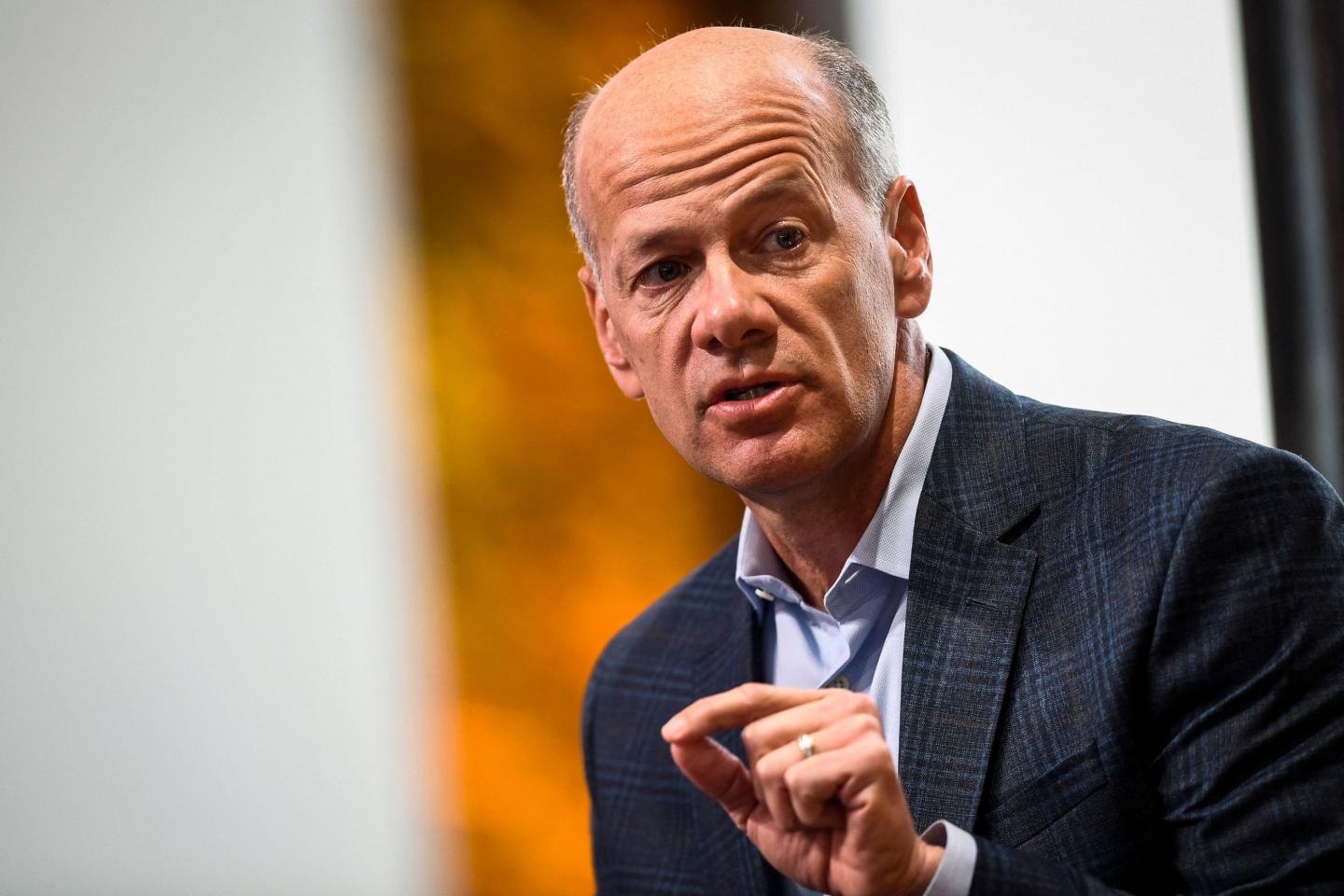
Greg Becker, President and CEO of Silicon Valley Bank (SVB), speaks during the Milken Institute Global Conference on May 3, 2022 in Beverly Hills, California. (Photo by Patrick T. Fallon / AFP) (Photo by PATRICK T. FALLON/AFP via Getty Images)
Greg Becker, CEO of Silicon Valley Bank, urged clients not to panic. That backfired.Getty Images—AFP/Patrick T. Fallon

Silicon Valley Bank is now past tense, but the crisis kicked off by its collapse is not.

Financial leaders are working around the clock to shore up deposits, stave off additional bank runs, and arrange quick deals so that sturdier firms can absorb at-risk competitors. Their efforts to reinforce the global system will be closely scrutinized.

But one of the key takeaways from SVB’s unwinding is that how weak banks communicate in the coming days and weeks may become just as crucial to maintaining stability. Sure, SVB was going to take a financial hit under any circumstance, but profound missteps in its messaging strategy seem to have made a bad situation worse, possibly fueling the massive bank run that saw its clients attempt to pull $42 billion in a single day.

Here’s what business leaders tell Fortune about communicating during a fast-moving, high-stakes situation.

Focus on your stakeholders from the beginning

In its letter to customers and investors on March 8, SVB opened with this line: “Today we took strategic actions to strengthen our financial position—repositioning SVB’s balance sheet to increase asset sensitivity to take advantage of the potential for higher short-term rates, partially lock in funding costs, better protect net interest income (NII) and net interest margin (NIM), and enhance profitability.”

The line may be detailed, but it doesn’t directly address shareholders’ and customers’ chief concern: What are you doing for me?

Andy Gilman, CEO of CommCore, would have opened with a different missive. “I would start with something that says we are taking some actions to strengthen our financial position and also to make sure that you—as investors and customers—are protected.” By contrast, SVB’s letter references ongoing support for “clients, employees, and investors” in the last line.

Similarly, Will Chabot, a managing director at communication firm Stu Loeser & Co., says corporate talking points about actions taken should be both clear and dominant, which isn’t his impression of SVB’s message. The message circulated after the former CEO’s now infamous Zoom call with venture capitalists on March 9 was to “stay calm,” he says. “[But] you don’t want some throwaway line, or a line that doesn’t address the situation completely, to be the one circulating on Twitter.”

Don’t lean on your past

Kelcey Kintner, a senior vice president at the international crisis PR firm Red Banyan, argues that the bank spilled too much ink painting “a rosy picture touting its credentials and experience” in its stakeholder letter.

One section reminds readers that “SVB is a trusted financial partner of the global innovation economy,” and several others are dedicated to the bank’s history. To be sure, the bank’s track record as a partner to entrepreneurs is meaningful, but that kind of goodwill and trust from clients can quickly evaporate in a crisis, according to experts.

“As opposed to reassuring us with facts, SVB took the ‘you owe us your loyalty’ route—and in a panic situation, that messaging doesn’t work,” an unnamed venture capitalist told Axios. “While VC firms do deals together frequently, we also compete. And the idea that we all trust each other enough in a prisoner’s dilemma is wrong.”

Chabot urges business leaders to focus on the present moment, be clear, and explain what the company is doing when in a tough spot. “The best message isn’t going to be a flowery inspirational rallying cry meant to rejuvenate tired supporters and win over your detractors,” he explains. “Crisis communication should not look like a campaign speech.”

Be clear and overshare

The best, most reassuring communication is honest and transparent—a rule that’s somewhat obvious in theory but easily overlooked during a crisis. Kintner says to look no further than the recent meltdown at Southwest Airlines, when the company blamed the weather for nearly a week of cancellations in December, even though other airlines only suffered single-day delays. “SVB had an opportunity to be more forthcoming and transparent with shareholders, which might have helped ease panic somewhat,” she says.

Instead, SVB’s first announcement about the crisis, a press release published on March 8, was woefully “convoluted,” TechCrunch wrote. Its timing was also questionable: SVB’s news appeared just after the California-based crypto bank Silvergate collapsed.

Generally speaking, companies too often fear oversharing in crises, Chabot says: “They think the more they share, the more attention that will bring to themselves, or the worse their problem looks.” But when companies say that “everything is cool,” whereas the prevailing narrative is that something has gone terribly wrong, the mismatch forces people to make ill-informed opinions, he says. For SVB, that created additional turmoil, especially since its audience—entrepreneurs, venture capitalists, and tech investors—is chronically online. “When people are not getting the full picture, they can tell, and they’re really going to turn up the volume,” Chabot says.

Don’t call attention to the wrong things

Companies should feel compelled to give customers and investors context about their own situation, but Gilman suspects that SVB made a mistake in highlighting factors outside its control.

He zeroes in on a paragraph in the letter to clients: “While VC deployment has tracked our expectations, client cash burn has remained elevated and increased further in February, resulting in lower deposits than forecasted. The related shift in our funding mix to more, higher-cost deposits and short-term borrowings, coupled with higher interest rates, continues to pressure [net interest income] and [net interest margin].”

“That kind of screams, ‘We’re in trouble,’” Gilman says. “Given what people were saying about them, that note probably added fuel to the fire and caused more people to say, ‘We’re not comfortable with our money in here.’”

Be fast, not flowery

While companies have to reflect on how a message will come across, time is of the essence in a crisis, says Red Banyan’s Kintner: “A company must capitalize on its window of opportunity when the audience is going to be the most receptive.” 

Don’t waste time trying to be a poet, says Chabot. “Crisis communication is not about a clever turn of phrase. It’s about relaying context and specific, clear information as quickly as possible.”

In an age when news spreads quickly on social media platforms, speedy circulation of corporate statements takes on heightened importance. It’s tough to regain authority when online chatter takes control of the story.

It would behoove companies facing a crisis to remember that information travels well beyond their intended audience, says Chabot. A letter to one group will be posted online and decoded by scores of others, including people who have no connection with or interest in the firm. Your single message should be unambiguous because reporters, Redditors, customers, and investors can respond very differently to the same message, Chabot says.

Your audience is not who you think it is

“Asking folks on a quote-unquote private investor call to remain calm means one thing to the person you’ve worked with for 20 years, whose trust you’ve earned,” says Chabot. But a random person on Twitter or Reddit may read “remain calm” as an admission that the company has lost control.

To spot potential pitfalls, companies should include multiple players in the room when crafting a message, says Gilman. Crisis communication is a team sport.

He notes that companies often work with their legal or finance teams to craft a public message but forget that “there are two courts to think about.” Lawyers may not consider the impact of certain types of language in the court of public opinion, and that needs to be balanced with the very real threat of lawsuits.

Join us at the Fortune Workplace Innovation Summit May 19–20, 2026, in Atlanta. The next era of workplace innovation is here—and the old playbook is being rewritten. At this exclusive, high-energy event, the world’s most innovative leaders will convene to explore how AI, humanity, and strategy converge to redefine, again, the future of work. Register now.
About the Author
By Lila MacLellanFormer Senior Writer
LinkedIn icon

Lila MacLellan is a former senior writer at Fortune, where she covered topics in leadership.

See full bioRight Arrow Button Icon

Latest in Leadership

Finance
Lorem ipsum dolor sit amet, consectetur adipiscing elit, sed do eiusmod tempor incididunt ut labore et dolore magna aliqua. Ut enim ad minim veniam
By Fortune Editors
October 20, 2025
Finance
Lorem ipsum dolor sit amet, consectetur adipiscing elit, sed do eiusmod tempor incididunt ut labore et dolore magna aliqua. Ut enim ad minim veniam
By Fortune Editors
October 20, 2025
Finance
Lorem ipsum dolor sit amet, consectetur adipiscing elit, sed do eiusmod tempor incididunt ut labore et dolore magna aliqua. Ut enim ad minim veniam
By Fortune Editors
October 20, 2025
Finance
Lorem ipsum dolor sit amet, consectetur adipiscing elit, sed do eiusmod tempor incididunt ut labore et dolore magna aliqua. Ut enim ad minim veniam
By Fortune Editors
October 20, 2025
Finance
Lorem ipsum dolor sit amet, consectetur adipiscing elit, sed do eiusmod tempor incididunt ut labore et dolore magna aliqua. Ut enim ad minim veniam
By Fortune Editors
October 20, 2025
Finance
Lorem ipsum dolor sit amet, consectetur adipiscing elit, sed do eiusmod tempor incididunt ut labore et dolore magna aliqua. Ut enim ad minim veniam
By Fortune Editors
October 20, 2025

Most Popular

Finance
Lorem ipsum dolor sit amet, consectetur adipiscing elit, sed do eiusmod tempor incididunt ut labore et dolore magna aliqua. Ut enim ad minim veniam
By Fortune Editors
October 20, 2025
Finance
Lorem ipsum dolor sit amet, consectetur adipiscing elit, sed do eiusmod tempor incididunt ut labore et dolore magna aliqua. Ut enim ad minim veniam
By Fortune Editors
October 20, 2025
Finance
Lorem ipsum dolor sit amet, consectetur adipiscing elit, sed do eiusmod tempor incididunt ut labore et dolore magna aliqua. Ut enim ad minim veniam
By Fortune Editors
October 20, 2025
Finance
Lorem ipsum dolor sit amet, consectetur adipiscing elit, sed do eiusmod tempor incididunt ut labore et dolore magna aliqua. Ut enim ad minim veniam
By Fortune Editors
October 20, 2025
Finance
Lorem ipsum dolor sit amet, consectetur adipiscing elit, sed do eiusmod tempor incididunt ut labore et dolore magna aliqua. Ut enim ad minim veniam
By Fortune Editors
October 20, 2025
Finance
Lorem ipsum dolor sit amet, consectetur adipiscing elit, sed do eiusmod tempor incididunt ut labore et dolore magna aliqua. Ut enim ad minim veniam
By Fortune Editors
October 20, 2025
Fortune Secondary Logo
Rankings
  • 100 Best Companies
  • Fortune 500
  • Global 500
  • Fortune 500 Europe
  • Most Powerful Women
  • World's Most Admired Companies
  • See All Rankings
  • Lists Calendar
Sections
  • Finance
  • Fortune Crypto
  • Features
  • Leadership
  • Health
  • Commentary
  • Success
  • Retail
  • Mpw
  • Tech
  • Lifestyle
  • CEO Initiative
  • Asia
  • Politics
  • Conferences
  • Europe
  • Newsletters
  • Personal Finance
  • Environment
  • Magazine
  • Education
Customer Support
  • Frequently Asked Questions
  • Customer Service Portal
  • Privacy Policy
  • Terms Of Use
  • Single Issues For Purchase
  • International Print
Commercial Services
  • Advertising
  • Fortune Brand Studio
  • Fortune Analytics
  • Fortune Conferences
  • Business Development
  • Group Subscriptions
About Us
  • About Us
  • Press Center
  • Work At Fortune
  • Terms And Conditions
  • Site Map
  • About Us
  • Press Center
  • Work At Fortune
  • Terms And Conditions
  • Site Map
  • Facebook icon
  • Twitter icon
  • LinkedIn icon
  • Instagram icon
  • Pinterest icon

Latest in Leadership

gm
North AmericaAutos
GM just boosted its U.S. manufacturing spend to $6 billion in one year—and it may be returning to the idea that made it great
By Nick LichtenbergApril 30, 2026
3 hours ago
Premium card perks are ‘designed to create a win-win-win for everyone’ but customers are paying with heavy annual fees and data
Personal FinancePersonal Finance Evergreen
Premium card perks are ‘designed to create a win-win-win for everyone’ but customers are paying with heavy annual fees and data
By Catherina GioinoApril 30, 2026
4 hours ago
Girl reading in a library
SuccessEducation
Public schools in Texas banned cellphones. One district has already seen 200,000 more library books checked out
By Preston ForeApril 30, 2026
4 hours ago
Bill Perkins, founder of Skylar Capital
SuccessWealth
Multimillionaire hedge fund manager Bill Perkins says money should ‘drive your fulfillment while you’re alive’—so he’s spending it all before he dies
By Emma BurleighApril 30, 2026
4 hours ago
capuano
C-SuiteHospitality
Marriott CEO on why you have to defend both DEI and ICE’s right to a hotel room: Dictating values is a ‘bad place for the country’
By Nick LichtenbergApril 30, 2026
5 hours ago
AstraZeneca CFO Aradhana Sarin
BankingCFO Daily
How AstraZeneca’s 17,000 AI-certified employees are helping it reach a ‘stretch goal’ of $80 billion in revenue
By Sheryl EstradaApril 30, 2026
8 hours ago

Most Popular

Apple cofounder Ronald Wayne—whose stake would be worth up to $400 billion had he not sold it in 1976—says that at 91, he has no regrets
Success
Apple cofounder Ronald Wayne—whose stake would be worth up to $400 billion had he not sold it in 1976—says that at 91, he has no regrets
By Preston ForeApril 27, 2026
3 days ago
‘They left me no choice’: Powell isn’t going anywhere—blocking Trump from another Fed appointee
Banking
‘They left me no choice’: Powell isn’t going anywhere—blocking Trump from another Fed appointee
By Eva RoytburgApril 29, 2026
1 day ago
Google Cloud revenue is now 18% of Alphabet's business. Is this the beginning of the end of Google's search identity?
Big Tech
Google Cloud revenue is now 18% of Alphabet's business. Is this the beginning of the end of Google's search identity?
By Alexei OreskovicApril 29, 2026
19 hours ago
Jamie Dimon gets candid about national debt: ‘There will be a bond crisis, and then we’ll have to deal with it’
Economy
Jamie Dimon gets candid about national debt: ‘There will be a bond crisis, and then we’ll have to deal with it’
By Eleanor PringleApril 29, 2026
1 day ago
‘The cost of compute is far beyond the costs of the employees’: Nvidia executive says right now AI is more expensive than paying human workers
AI
‘The cost of compute is far beyond the costs of the employees’: Nvidia executive says right now AI is more expensive than paying human workers
By Sasha RogelbergApril 28, 2026
3 days ago
Elon Musk says saving for retirement is irrelevant because AI is going to create a world of abundance: 'It won't matter'
Future of Work
Elon Musk says saving for retirement is irrelevant because AI is going to create a world of abundance: 'It won't matter'
By Marco Quiroz-GutierrezApril 26, 2026
4 days ago

© 2026 Fortune Media IP Limited. All Rights Reserved. Use of this site constitutes acceptance of our Terms of Use and Privacy Policy | CA Notice at Collection and Privacy Notice | Do Not Sell/Share My Personal Information
FORTUNE is a trademark of Fortune Media IP Limited, registered in the U.S. and other countries. FORTUNE may receive compensation for some links to products and services on this website. Offers may be subject to change without notice.