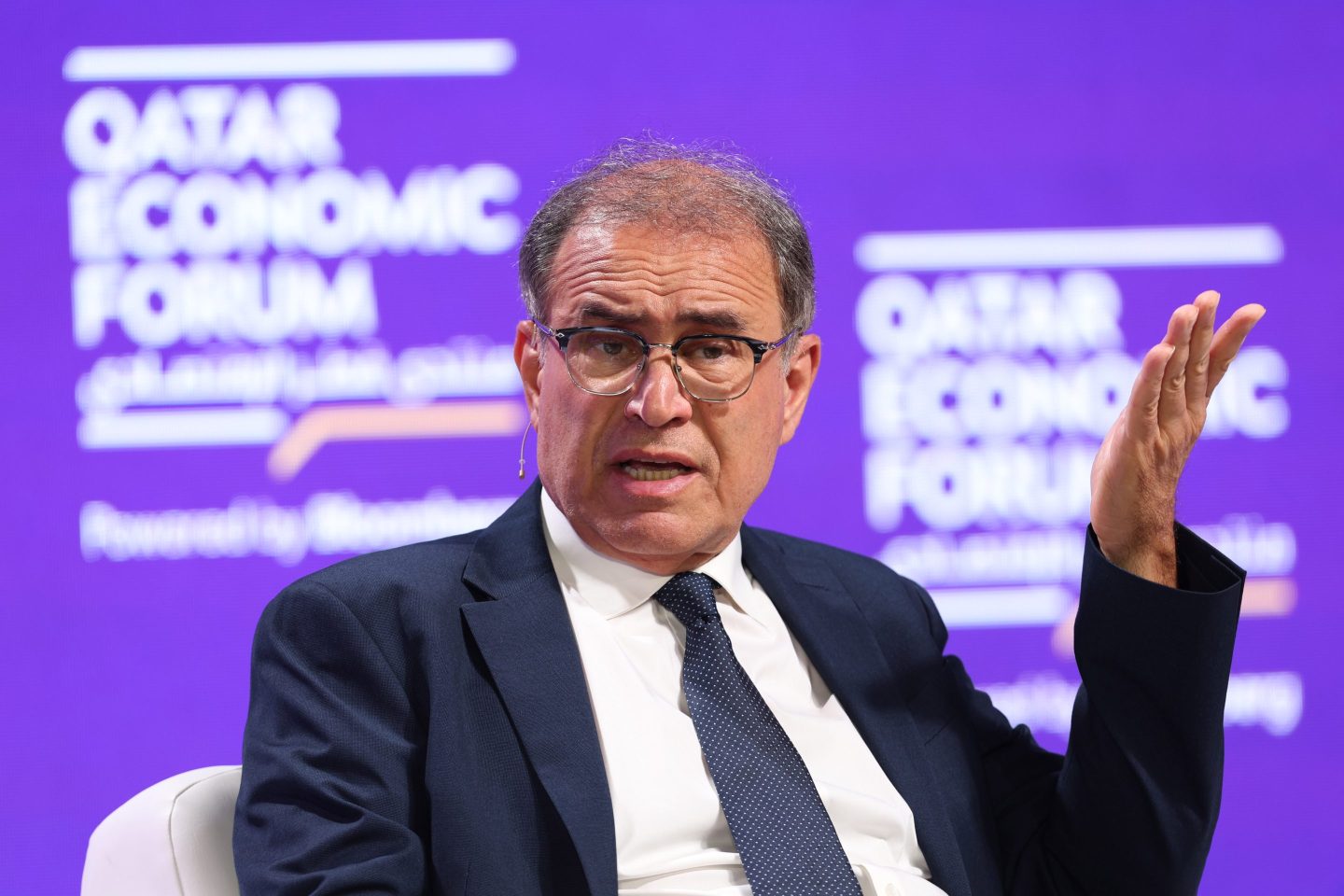
In November, Nouriel Roubini, CEO of Roubini Macro Associates, lived up to his nickname in an interview with Fortune. “Dr. Doom” warned that the global economy was facing a “variant of another Great Depression” due to rising public and private debts, stubborn inflation, aggressive interest rate hikes, and a number of other “mega threats.”
A key excerpt from the more than hour-long interview that didn’t make the final edit seems relevant today. Roubini warned that when one sector of the economy has problems with debt and profitability, those problems “can morph into a banking crisis.”
After Silicon Valley Bank (SVB) and Signature Bank—which were both heavily exposed to the now struggling tech startup and crypto ecosystems—collapsed last week, his words seem prescient. And despite regulators stepping in to save depositors at both banks over the weekend, Roubini still believes the banking crisis is far from over.
The Federal Reserve announced Sunday that the Federal Deposit Insurance Corporation (FDIC) will “fully protect all depositors, both insured and uninsured” at SVB and Signature, citing the “systemic risk exception” as the reason for their actions in a separate statement. But Roubini warned in a Newsweek interview Monday that there is a “natural lag” to “global contagion,” and regulators can’t always save the day.
Just a regional bank issue?
Roubini, who is also a professor emeritus at NYU’s Stern School of Business, said Monday that SVB and Signature’s problems could spread to U.S. regional banks that have smaller depositor bases and securities that have lost value. He noted that if these banks are forced to sell their holdings at the current market value as depositors request their money back, it could be a disaster—just like it was for SVB and Signature. “The run may continue,” he argued. “The crisis is not over.”
Roubini added that he doesn’t foresee regional banks’ issues spreading to large U.S. banks or the wider financial system for now, however, and he isn’t alone in this view. David Trainer, the CEO of the investment research firm New Constructs, told Fortune Friday that he doesn’t see “contagion risk” for the entire banking sector after SVB’s collapse, adding that the “deposit base from the major banks is much more diversified than SVB and the big banks are in good financial health.”
A number of experts have argued that some larger banks are actually benefiting from regional bank issues as depositors flock to safer pastures. Bank of America, for example, raked in over $15 billion in deposits amid SVB and Signature’s downfall.
But Roubini made another prescient prediction Monday that doesn’t paint such a rosy picture for banks globally. A large European bank may face issues as interest rates rise, he said. And again, it looks like he was right.
A new threat and that risks global ‘contagion’
On Wednesday, shares of the Swiss bank Credit Suisse tanked more than 20% after its largest shareholder—the Saudi National Bank—said it wouldn’t inject more money into the bank. Credit Suisse’s issues sent shares of European banks down sharply on Wednesday, with the Euro Stoxx Bank Index dropping 8.3%. It’s exactly what Roubini feared might happen, although he played coy about the exact bank he was talking about.
“There is at least one financial institution in Europe that has been historically undercapitalized, have had problems of recapitalizing, might have some bad assets, some exposures to long-term securities and unrealized losses,” he told Newsweek Monday. “If something were to happen with this institution…that will be much more systemically important—we’re speaking about institutions with trillions of dollars of assets, not $400 billion like SVB.”
Credit Suisse faced issues long before the collapse of SVB and Signature. Clients pulled $119 billion in assets from the bank’s wealth management business profit center during the final quarter in 2022, and execs were forced to book a $5.5 billion loss tied to the hedge fund Archegos, which collapsed last year. Now, after a second major investor, Harris Associates’ David Herro, sold his shares earlier this month, Credit Suisse is on the verge of failure, according to Roubini. And unlike in the U.S., regulators might not be able to help.
“The problem is that Credit Suisse, by some standards, might be too big to fail, but also too big to be saved. It’s not clear that…the Federal system has enough resources to engineer a bail out,” the economist told Bloomberg Wednesday, adding that if Credit Suisse doesn’t get an infusion of capital from somewhere “bad things can happen.”
Roubini’s comments come after Credit Suisse’s CEO, Ulrich Koerner, said Tuesday that his bank is in a very different situation than SVB and has “materially different and higher standards.” He also noted that the bank saw client inflows amid U.S. regional banks’ problems. And Credit Suisse’s chairman, Axel Lehmann, told Bloomberg Wednesday the bank wouldn’t need any government assistance to continue operating.
But In his November interview with Fortune, Roubini warned that if we get a banking crisis from a big bank implosion, it could spread to governments and the wider economy.
“A banking crisis can morph into a debt crisis for the sovereign, in a doom loop between the banks,” he said. “The problem is you cannot easily isolate one sector of the economy from another, they’re all interconnected.”
Roubini, who has long held that a deep recession is the most likely outcome for the global economy, said this week that banks’ recent issues mean a “hard landing” is now “clearly unavoidable” as well.
“Economic stability and fighting inflation require raising policy rates much higher. But now financial stability risks require lower policy rates. So we will get a crisis,” he said in a Wednesday tweet.
Fortune's CFO Daily newsletter is the must-read analysis every finance professional needs to get ahead. Sign up today.