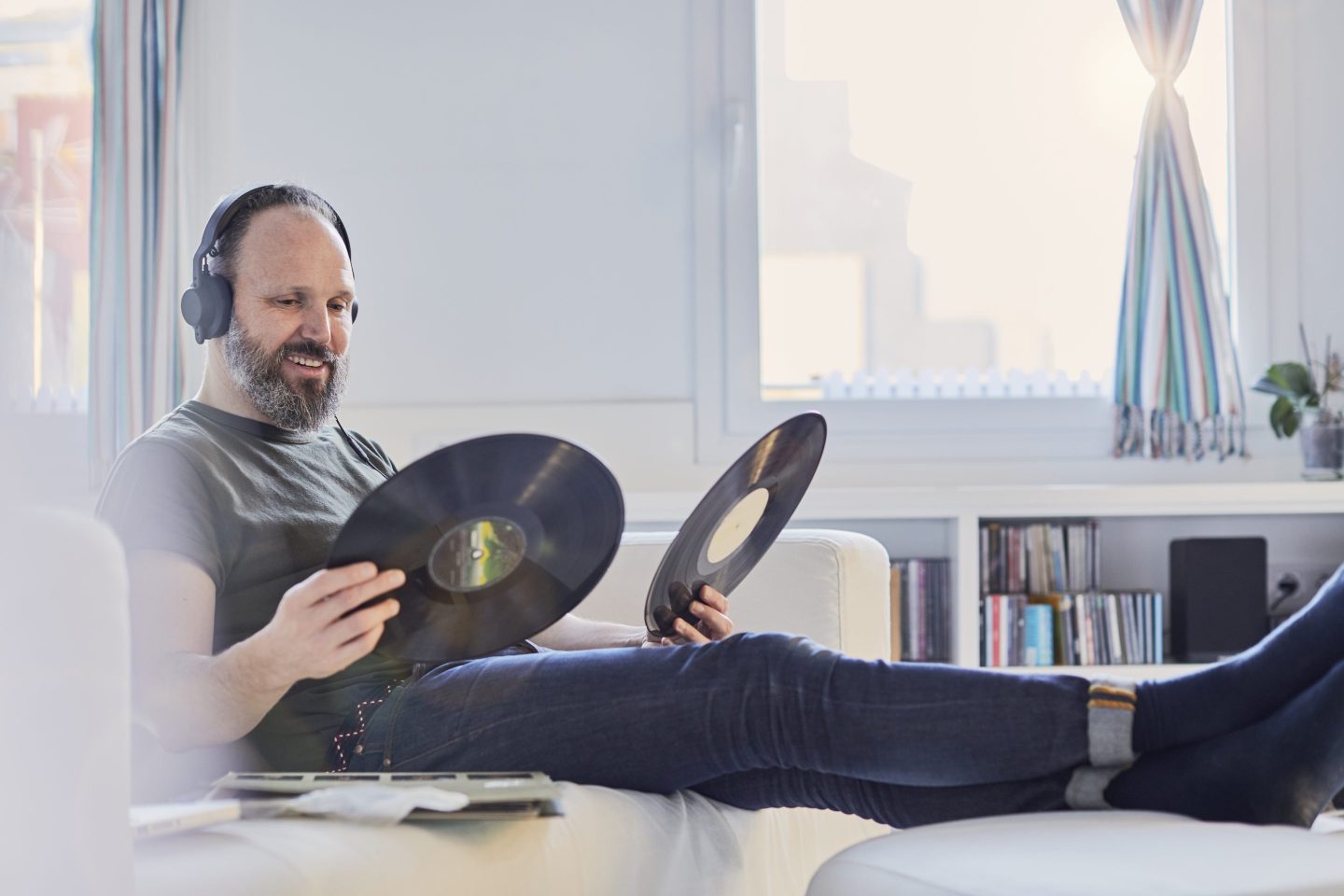
Over the past decade, vinyl records have made a major comeback. People purchased US$1.2 billion of records in 2022, a 20% jump from the previous year.
Not only did sales rise, but they also surpassed CD sales for the first time since 1988, according to a new report from the Recording Industry Association of America.
Who saw that coming?
I certainly didn’t. In the mid-1990s, I sold off my family’s very large collection of records over my wife’s protests. I convinced her we needed the space, even if the buyer was picking up the whole stash for a song.
Back then, of course, there were far fewer options for listening to music – it was years before on-demand streaming and smartphones.
I now teach at a business school and follow the economy’s latest trends. Sales of records have been increasing since 2007, and the data shows the vinyl record industry’s rebound still has not peaked. Last year, the music industry sold 41.3 million albums, more than in any year since 1988.
This resurgence is just one chapter in a broader story about the growing popularity of older technologies. Not only are LP records coming back, but so are manual typewriters, board games and digital cameras from the late 1990s and early 2000s.
There are many theories about why records are making a comeback.
Most of them miss the point about their appeal.
Why records and not CDs?
One suggestion is that sales have been spurred by baby boomers, many of whom are now entering retirement and are eager to tap into the nostalgia of their youth.
Data shows this theory is not true.
First, the top-selling vinyl albums right now are current artists, not classic bands. As of this writing, Gorillaz, a band formed in the late 1990s, was at the top of the vinyl charts.
Second, data from the recording industry shows the most likely person to buy a LP record is in Gen Z – people born from 1997 to 2012.
Another theory is that records are cheap. While that might have been true in the past, today’s vinyl records command a premium. “Cracker Island,” the Gorillaz album that is currently topping the vinyl sales charts, lists for almost $22 – twice the cost of the CD. Plus, subscribing to an online service like Spotify for 15 bucks a month gives you access to millions of tracks.
A third explanation for the resurgence is that people claim records have better sound quality than digital audio files. Records are analog recordings that capture the entire sound wave. Digital files are sampled at periodic intervals, which means only part of the sound wave is captured.
In addition to sampling, many streaming services and most stored audio files compress the sound information of a recording. Compression allows people to put more songs on their phones and listen to streaming services without using up much bandwidth. However, compression eliminates some sounds.
While LP records are not sampled or compressed, they do develop snap, crackle and popping sounds after being played multiple times. Records also skip, which is something that doesn’t happen with digital music.
If you’re really going for quality, CDs are usually a superior digital format because the audio data is not compressed and has much better fidelity than records.
Yet even though CDs are higher quality, CDs sales have been steadily falling since their peak in 2000.
The ultimate status symbol
In my view, the most likely reason for the resurgence of records was identified by an economist over a century ago.
In the late 1890s, Thorstein Veblen looked at spending in society and wrote an influential book called “The Theory of the Leisure Class.”
In it, he explained that people often buy items as a way to gain and convey status. One of Veblen’s key ideas is that not everything in life is purchased because it is easy, fun or high quality.
Sometimes harder, more time-consuming or exotic items offer more status.
A cake is a great example. Say you offer to bring a cake to a party. You can buy a bakery-made cake that will look perfect and take only a few minutes to purchase. Or you could bake one at home. Even if it’s delicious, it won’t look as nice and will take hours to make.
But if your friends are like mine, they’ll gush over the homemade cake and not mention the perfect store-bought one.
Buying and playing vinyl records is becoming a status symbol.
Today, playing music is effortless. Just shout your request at a smart speaker, like Siri or Alexa, or touch an app on your smartphone.
Playing a record on a turntable takes time and effort. Building your collection requires thoughtful deliberation and money. A record storage cube alongside an accompanying record player also makes for some nice living room decor.
And now I – the uncool professor that I am – find myself bemoaning the loss of all of those albums I sold years ago.
Jay L. Zagorsky is Clinical Associate Professor, Boston University.
This article is republished from The Conversation under a Creative Commons license. Read the original article.
Fortune's CFO Daily newsletter is the must-read analysis every finance professional needs to get ahead. Sign up today.