An hour before dawn on any given Tuesday across the tri-state area, the lights are on and the coffee is brewing.
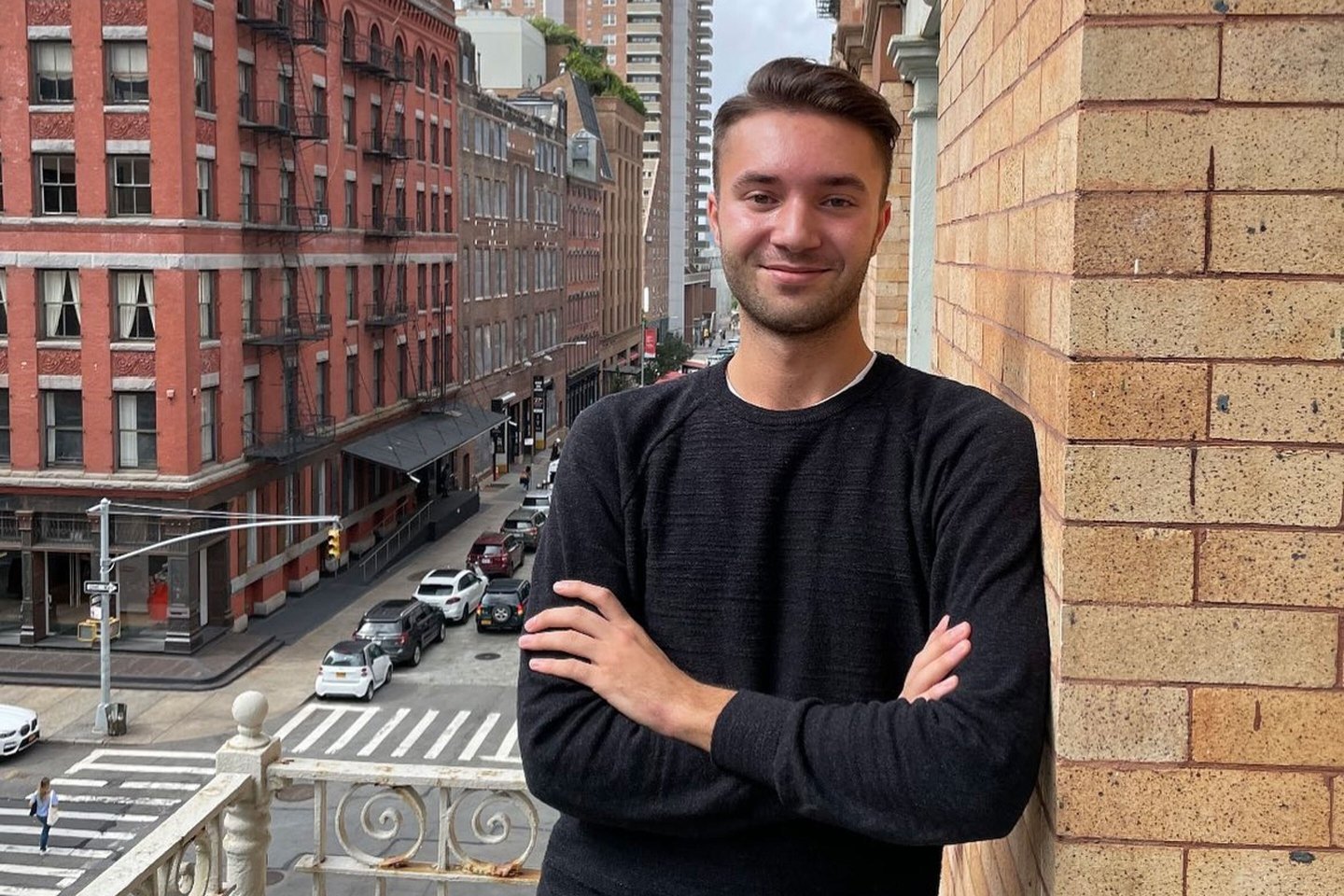
In Wilton, a small Connecticut farming town, Zach Kaminsky is up at 5:30 a.m., pouring himself a mug while watching NBC News. The 24-year-old PR account executive travels by train and multiple subway lines to his lower Manhattan office—45 miles as the crow flies, but it takes two hours and 15 minutes door-to-door.
In Neptune, a Jersey Shore township, Cathleen Crandall starts her car around 6:30 a.m. to head to the train. A senior legal assistant, the 45-year-old commutes to the office of the mutual fund group she works for in the city via NJTransit. It usually takes two and a half hours total, but she says these days “it’s a crap shoot.”
In Mahopac, a hamlet of fewer than 9,000 people in New York’s Putnam County, product marketing lead Chris Vennard wakes his two teenage children, makes them breakfast, and drops them at school before leaving for midtown Manhattan. “It takes an hour 45 no matter which way I cut it,” Vennard, 47, says.
A workweek morning resembles a tenuous Jenga tower; one misspent minute instantly decimates the balance. All three workers are required to commute two to three days per week, but the sheer time that journey takes puts them in a rare company, representing just 3.1% of American workers: super-commuters, who travel at least 90 minutes one way for work.
It’s been a budding trend for decades, long before swaths of urbanites fled to far-flung, airy suburbs during the start of the pandemic, Richard Florida, economics professor at the University of Toronto’s Rotman School of Management, tells Fortune. But the practice would still be a hard sell for most people, especially given the extent to which remote work has proliferated the business landscape.
“It’s really hard to afford raising a family in many American cities, but research knows this: The most miserable thing you can do for yourself is a long commute,” Florida says.
But in New York City, notoriously one of the most expensive cities in the U.S., the savings tradeoff has been worth it for workers like Crandall and Vennard, super-commuters for over a decade. And, as NYC’s cost of living intensified under inflationary pressures and skyrocketing rents in a pandemic world, super-commuting has given priced-out young professionals like Kaminsky a cushion to save up for their big-city dreams. While all acknowledged that no opportunities in their towns compare to their Manhattan jobs, it hasn’t come without some pain along the way.
Super-commuting offers New Yorkers both a career and affordability
Vennard and his wife bought their home around a decade ago, deciding the larger property and robust local community was a worthwhile tradeoff; his wife stays home, which means the commute is his sacrifice alone. “We could’ve moved 20, 30 miles closer, but it would’ve saved me like 20 minutes. What does 20 minutes add to my real quality of life? Not much,” he says.
Likewise, Crandall bought her house 15 years ago because she enjoys living down the Shore. She sees her 15 weekly hours of commuting—give or take—as necessary for maintaining the lifestyle she’s been able to build.
In New York City, housing costs were a factor for super-commuters long before the pandemic, Mitchell Moss, a professor of urban policy and planning at New York University, told Fortune. The 21st century was emerging as “the century of the super-commuter,” he wrote back in 2012. Between 2002 and 2009, eight of the 10 largest U.S. metro areas showed growth in super-commuting, Moss found. Separate research from Apartment List finds that the number of U.S.-based super-commuters grew 45% between 2010 and 2019, more than triple the growth rate of the overall workforce.
Now, Moss says, “distributed work has made it much more feasible” for people like Kaminsky, who can’t yet afford the city but still want a well-paying job. The 2020 college graduate says he sees super-commuting as a temporary measure until he has more of a financial cushion that would allow him to afford New York rent: The typical one-bedroom runs $4,095 a month these days, 20% more than just three years ago.
“I’ve been doing this for almost a year and a half. [I’d rather] take another year to build more substantial savings [instead of] moving to New York as early as I can and blowing a big chunk of my savings, which feels like going in a downward spiral,” he says.
His “amazing” coworkers and the city’s euphoric energy make it well worth the hassle, he adds, but maybe that’s because he’s only in the office two days a week. “I knew what I was signing up for,” he says. “But I would never do this five days a week.”
But super-commuting isn’t without its aggravations
There’s something to be said for a commute that doesn’t involve driving, which all three workers have. Psychologists refer to a person’s time in transit as a liminal space, a period in which one can detach and recover from work without yet taking on their role at home. This was lost during the pandemic, leading to role blurring and increased worker stress. Just ask Crandall, who says she used to have a “relaxing” commute, which allowed her to read a ton of books and watch movies on her iPad.
But the pandemic has soured the experience for her. One would think a hybrid super-commute would be more manageable than the five-day one she’s familiar with, but it feels worse for Crandall after dealing with no commute during remote work.
“I spent almost three years not commuting, and I realized how badly it’s screwed with my life,” she says, admitting she’ll sometimes call in sick on days she feels she can’t handle it. “I try to go in on Monday, Tuesday, and Wednesday just to get it over with. But now I hit Wednesday night and I’m just done.” It doesn’t help that her train ride has only gotten longer as the NJTransit added more stops during the pandemic, curtailing its express service.
The evening commute is just as bad as the morning. As each of the super-commuters pointed out, a five-minute conversation with the boss at the end of the day can mean an extra 40 minutes to get home. “And then your whole day is blown up,” Crandall says, adding there are very few benefits to commuting. “It’s expensive. It’s aggravating, especially when you’re dealing with some of these absolutely horrendous transit agencies.”
Vennard describes having to “force himself” out of the office by a certain minute. If he were local, he’d otherwise want to leave when the work is done. “I don’t have the luxury of just sitting at my desk until I’m ready. I always have my eye on the clock.” Impromptu drinks or after-hours bonding “just doesn’t happen for me,” he adds.
But his biggest issue is the omnipresent worry that something will happen at home, and he’ll be unable to get there for two hours. It hasn’t happened yet, he says, but the thought of doubling back—which he’s done for non-emergency needs and has meant upwards of five hours of transit in one day—remains a constant concern.
“But it’s a worthwhile trade,” he contends. “I’m looking out my window right now and I have a big green lawn and a pool in my backyard.”
Commuting for community
Any commute beyond 20 minutes “really affects” your life, well-being, happiness, and satisfaction, Florida, the Toronto professor, says. “To my mind, long commutes—especially by car—are very deleterious. It’s a lot of wasted time.”
But, he acknowledges: “We need community; we need each other.”
Moss, the NYU professor, is of a similar mindset. He believes the office remains vital, even with the slog and stress of a super commute and the flexibility we’ve enjoyed in a remote-work world. “We’re underrating the desire for human contact,” he says. “There’s more information conveyed through your eyes and your smile than anything that can be captured on Zoom, which doesn’t allow for bonding.”
Just ask Vennard. While he says he “hates” his commute, he’s more productive, a more understanding manager, and feels his work is more valuable once he’s in the building.
And, despite the five hours a day spent commuting, Crandall admits it’s a choice she continually makes. She doesn’t think she’d enjoy living in the city, and the ride is mostly passive. While she’s recently browsed housing listings in a handful of North Jersey towns that would ease her commute, she says the property market has become unaffordable. Feeling that a fully remote arrangement would never fly in her industry, she’s abandoned hope of giving up her commute any time soon.
Three years out of college, Kaminsky insists he won’t remain alongside Vennard and Crandall for long. His parents have always worked in Fairfield County; he laughs that he’s a proud first-generation super commuter.
“But I’m not jaded yet,” he says. “Super-commuting is a rite of passage. Being physically in Manhattan is a big motivator.”
And by the way, he adds, millions of people have done this every day for years. “It sounds totally insane, but I’m at the point that I don’t even think twice about it now.”
Learn how to navigate and strengthen trust in your business with The Trust Factor, a weekly newsletter examining what leaders need to succeed. Sign up here.