• Home
  • Latest
  • Fortune 500
  • Finance
  • Tech
  • Leadership
  • Lifestyle
  • Rankings
  • Multimedia
NewslettersImpact Report

As the role of the chief sustainability officer explodes, 4 types of leaders are emerging

By
Peter Vanham
Peter Vanham
Editorial Director, Leadership
Down Arrow Button Icon
By
Peter Vanham
Peter Vanham
Editorial Director, Leadership
Down Arrow Button Icon
February 2, 2023, 11:26 AM ET
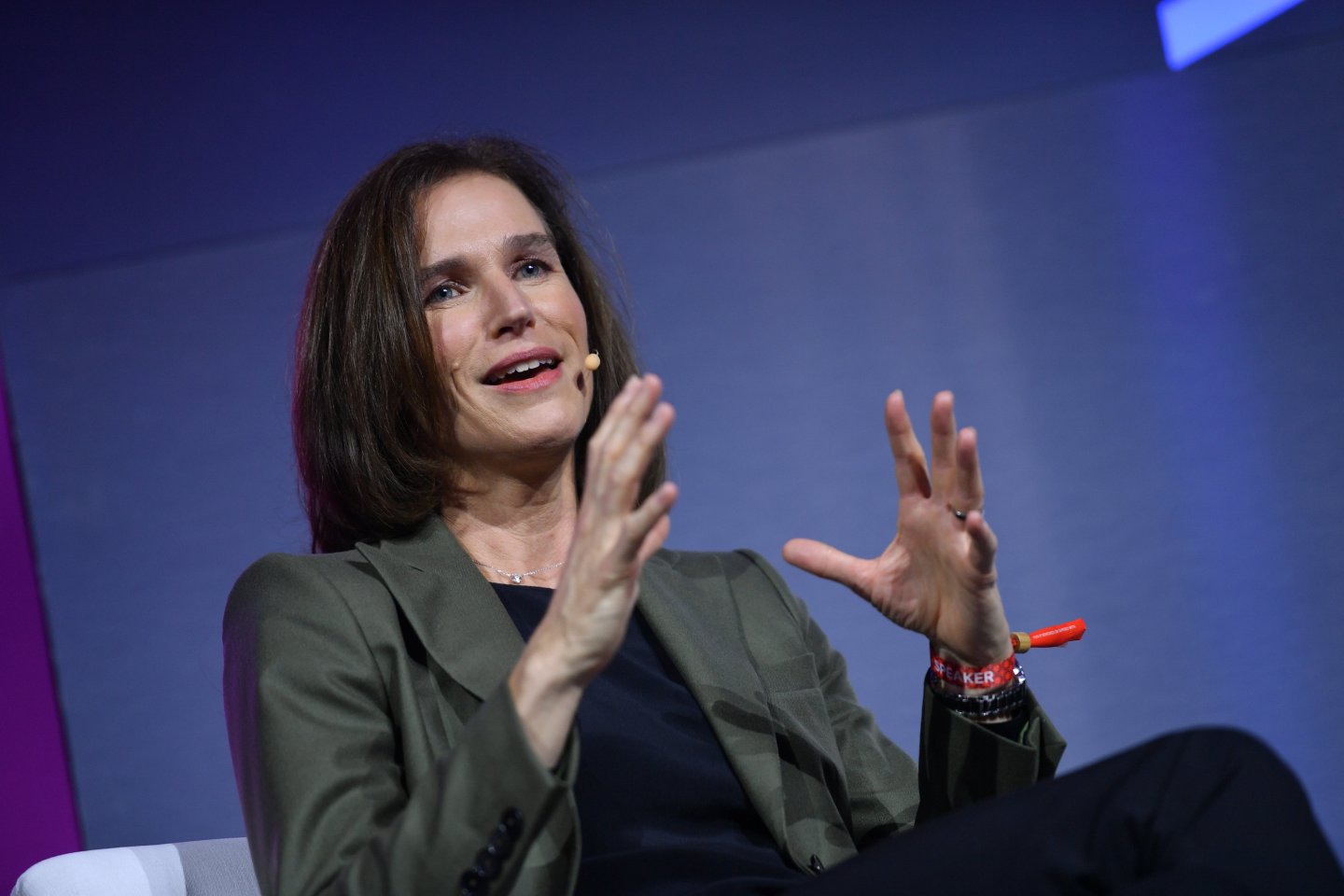
A woman with dark hair in a blazer addresses a crowd
Judith Wiese, chief people and sustainability officer at Siemens. Ramsey Cardy via Getty Images

Last month’s headline was admittedly a bit tongue in cheek (see: “What ‘sustainability’ Barbie tells us about the rise of the woman chief sustainability officer”). But I did get this feedback from a lot of readers: It’s great to know that many CSOs are women. It’s nice to see, too, that Mattel made a CSO Barbie. And it’s very interesting to see that the profile of CSOs is quickly rising, up to the point that 60 of them went to Davos.

But what do chief sustainability officers actually do? And why do they matter?

So, in this Impact Report, I set out to answer those questions. I spent much of the past month talking to chief sustainability officers of major global companies. Here’s what I found out:

First, there is no “one” chief sustainability officer. Since the role in many companies is barely a few years old, there is no template yet. Instead, four types of CSOs are emerging:

– The externally-focused CSO;

– The people-focused CSO;

– The strategy-oriented CSO; and

– The business-oriented CSO.

Let’s take them one by one.

The “external” CSO. This is the most common CSO profile: the one that combines their sustainability gig with leading public affairs. These CSOs engage with governments and other stakeholders, gain an understanding of their expectations, and make sure they are met inside the company. Companies with such CSOs include Coca-Cola, Takeda Pharma, Telefonica, Volvo, ABB, Trafigura, and more.

What would they do, for example? They would communicate the company’s policy on, say, CO2 emissions to the regulator; they would take note of the policies the regulator comes up with; and finally, they would inform their fellow executive committee members, and track the company’s performance back to the regulator and other stakeholders. These CSOs consider that the rules on sustainability are set by outside forces: government, regulators, advocacy groups, etc.

The “people” CSO. This is the CSO who spends a lot of time looking after people: employees and the communities in which a company operates. They often combine their title of CSO with one in HR, and their job is leaning a bit more towards achieving a sustainable “social” model. Companies with such CSOs include Hitachi, Siemens (though I’ll get back to this one), DP World, and Anglo American.

What would they do? They would spend time with “employee resource groups,” for example, asking them about their expectations of the company, whether on sustainability or social impact. They would then create a bottom-up approach to sustainability and impact, with more of an emphasis on people. They would emphasize that the company, in the long run, is nothing without them, and without a social license to operate.

The “strategy” CSO. This is the CSO who comes from a strategy and innovation background. They think about the big picture, speak to R&D teams, and come up with a new innovation, or strategy for the company to pursue. Companies with such CSOs include Iberdrola, BP, Shell, Chevron, SABIC, Schlumberger, PepsiCo, and AIG. (That’s a lot of energy companies!)

What would they do? They would get a mandate from the CEO to come up with a sustainable transformation plan. Say, we are BP, and we need to be net zero by 2050, while still having a viable business. In response, these CSOs would come up with a strategy (for example: turn the gas stations into electricity and restaurant stops) and get R&D and M&A teams involved. They realize that a sustainable economy requires them to transform and find a sustainable business model.

The “business” CSO. This is the CSO who is responsible for a specific business, including P&L responsibility. Companies with such a CSO (or similar role) include Bridgewater Associates, Bank of America, Goldman Sachs, and Siemens. Many are financial companies: They typically have an established business model on sustainability, including green bonds and loans, ESG investment products, and so on.

What would they do? They would oversee, for example, a budget to deploy in “sustainable finance.” They would directly invest in green companies or bring customers together to invest in them together. They may oversee “green loans,” financing only net-zero projects, for example. Or they may create indices or other financial products that customers can invest in.

Of course, this is just a rough sketch of the CSO landscape. Some of the companies I named here, may disagree with the characterization of their CSO. Some others may wonder why I missed another category. But what is clear, is that the CSO role is in full development and growth.

My takeaway? I would say that a successful CSO (and a company with a successful sustainability strategy) needs a bit of all of the above in their CSO role. One company that to me stood out in this regard is Siemens. Their CSO, Judith Wiese, is both chief people and sustainability officer and also has P&L responsibilities for various geographies. She is also just one of five executive committee members.

For those reasons, in 2023, Judith is my “CSO role model,” and Siemens is the company to emulate.

More news below.

Peter Vanham
Executive Editor, Fortune Impact and Connect
@petervanham
peter.vanham@fortune.com

Also on our radar:

The World’s Most Admired Companies subscribe to stakeholder capitalism
Our 2023 list of the “World’s Most Admired Companies” is out this week. It’s a list of the great brands people have come to know and rely on, including Apple, Amazon, Microsoft, and many more. And as our editors have pointed out, there’s an interesting correlation for these companies’ CEOs between being admired and having a long tenure. But I’ll add one more commonality of the most admired companies: Almost all of them (17 in the global top 20) subscribe to stakeholder capitalism: They are signatories of the Business Roundtable on the Purpose of a Corporation.      

Family-oriented CEOs have explaining to do after mass lay-offs
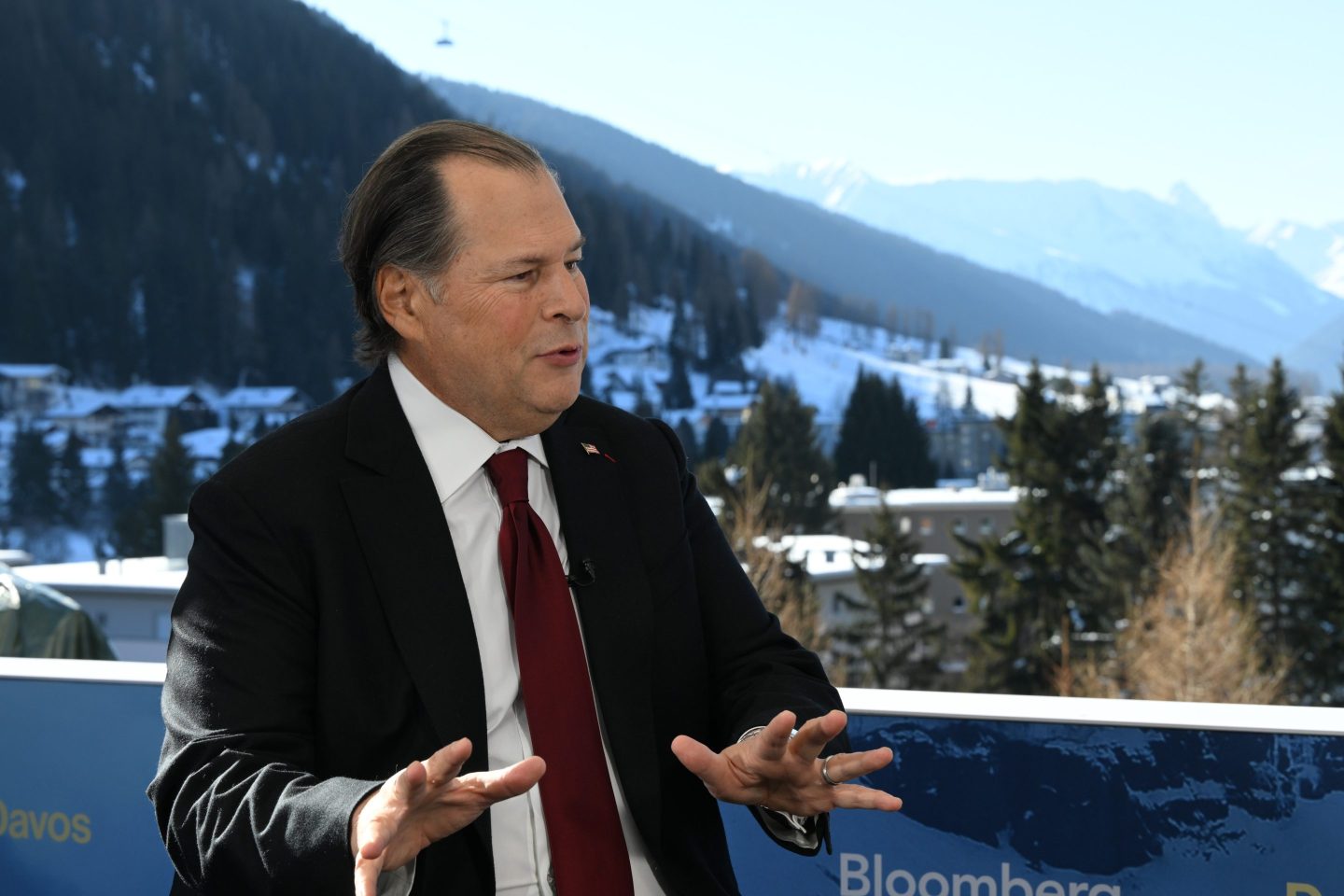
To what extent can you claim to see your employees as “family,” and your philosophy as one of stakeholder capitalism, when you let go of thousands of employees, despite decent profitability? That’s a question that’s increasingly being raised, after the recent mass layoffs in many tech companies. Marc Benioff at Salesforce is a particular target. “If the people impacted really were family, wasn’t it kind of awkward and heartless to put them out of a job?” Beth Kowitt asked in a Bloomberg opinion article. Her answer? “A resounding yes.”
This is the web version of Impact Report, a weekly newsletter on the latest ESG trends and news that are shaping the future of business. Sign up to get it delivered free to your inbox.
About the Author
By Peter VanhamEditorial Director, Leadership
LinkedIn icon

Peter Vanham is editorial director, leadership, at Fortune.

See full bioRight Arrow Button Icon

Latest in Newsletters

Finance
Lorem ipsum dolor sit amet, consectetur adipiscing elit, sed do eiusmod tempor incididunt ut labore et dolore magna aliqua. Ut enim ad minim veniam
By Fortune Editors
October 20, 2025
Finance
Lorem ipsum dolor sit amet, consectetur adipiscing elit, sed do eiusmod tempor incididunt ut labore et dolore magna aliqua. Ut enim ad minim veniam
By Fortune Editors
October 20, 2025
Finance
Lorem ipsum dolor sit amet, consectetur adipiscing elit, sed do eiusmod tempor incididunt ut labore et dolore magna aliqua. Ut enim ad minim veniam
By Fortune Editors
October 20, 2025
Finance
Lorem ipsum dolor sit amet, consectetur adipiscing elit, sed do eiusmod tempor incididunt ut labore et dolore magna aliqua. Ut enim ad minim veniam
By Fortune Editors
October 20, 2025
Finance
Lorem ipsum dolor sit amet, consectetur adipiscing elit, sed do eiusmod tempor incididunt ut labore et dolore magna aliqua. Ut enim ad minim veniam
By Fortune Editors
October 20, 2025
Finance
Lorem ipsum dolor sit amet, consectetur adipiscing elit, sed do eiusmod tempor incididunt ut labore et dolore magna aliqua. Ut enim ad minim veniam
By Fortune Editors
October 20, 2025

Most Popular

Finance
Lorem ipsum dolor sit amet, consectetur adipiscing elit, sed do eiusmod tempor incididunt ut labore et dolore magna aliqua. Ut enim ad minim veniam
By Fortune Editors
October 20, 2025
Finance
Lorem ipsum dolor sit amet, consectetur adipiscing elit, sed do eiusmod tempor incididunt ut labore et dolore magna aliqua. Ut enim ad minim veniam
By Fortune Editors
October 20, 2025
Finance
Lorem ipsum dolor sit amet, consectetur adipiscing elit, sed do eiusmod tempor incididunt ut labore et dolore magna aliqua. Ut enim ad minim veniam
By Fortune Editors
October 20, 2025
Finance
Lorem ipsum dolor sit amet, consectetur adipiscing elit, sed do eiusmod tempor incididunt ut labore et dolore magna aliqua. Ut enim ad minim veniam
By Fortune Editors
October 20, 2025
Finance
Lorem ipsum dolor sit amet, consectetur adipiscing elit, sed do eiusmod tempor incididunt ut labore et dolore magna aliqua. Ut enim ad minim veniam
By Fortune Editors
October 20, 2025
Finance
Lorem ipsum dolor sit amet, consectetur adipiscing elit, sed do eiusmod tempor incididunt ut labore et dolore magna aliqua. Ut enim ad minim veniam
By Fortune Editors
October 20, 2025
Rankings
  • 100 Best Companies
  • Fortune 500
  • Global 500
  • Fortune 500 Europe
  • Most Powerful Women
  • Future 50
  • World’s Most Admired Companies
  • See All Rankings
Sections
  • Finance
  • Leadership
  • Success
  • Tech
  • Asia
  • Europe
  • Environment
  • Fortune Crypto
  • Health
  • Retail
  • Lifestyle
  • Politics
  • Newsletters
  • Magazine
  • Features
  • Commentary
  • Mpw
  • CEO Initiative
  • Conferences
  • Personal Finance
  • Education
Customer Support
  • Frequently Asked Questions
  • Customer Service Portal
  • Privacy Policy
  • Terms Of Use
  • Single Issues For Purchase
  • International Print
Commercial Services
  • Advertising
  • Fortune Brand Studio
  • Fortune Analytics
  • Fortune Conferences
  • Business Development
About Us
  • About Us
  • Editorial Calendar
  • Press Center
  • Work At Fortune
  • Diversity And Inclusion
  • Terms And Conditions
  • Site Map
  • Facebook icon
  • Twitter icon
  • LinkedIn icon
  • Instagram icon
  • Pinterest icon

Latest in Newsletters

A laptop displaying the OpenClaw logo
CybersecurityEye on AI
OpenClaw is the bad boy of AI agents. Here’s why security experts say you should beware
By Sharon GoldmanFebruary 12, 2026
8 hours ago
NewslettersMPW Daily
How founders can tap women investors as a competitive advantage in 2026
By Emma HinchliffeFebruary 12, 2026
9 hours ago
Illustration of the Hewlett Packard Enterprise logo is seen displayed on a smartphone with words 'Artificial Intelligence' in the background.
NewslettersCFO Daily
HPE turns finance into the front line of enterprise AI
By Sheryl EstradaFebruary 12, 2026
11 hours ago
NewslettersTerm Sheet
Exclusive: Seligman Ventures debuts with $500 million and a new model for the blurring line between public and private markets
By Allie GarfinkleFebruary 12, 2026
13 hours ago
NewslettersCEO Daily
3 factors that will separate the ‘SaaSpocalypse’ winners from losers
By Diane BradyFebruary 12, 2026
14 hours ago
NewslettersFortune Tech
Elon Musk reorgs xAI amid talent X-odus
By Alexei OreskovicFebruary 12, 2026
15 hours ago

Most Popular

placeholder alt text
Crypto
Bitcoin reportedly sent to wallet associated with Nancy Guthrie’s ransom letter providing potential clue in investigation
By Carlos GarciaFebruary 11, 2026
1 day ago
placeholder alt text
Economy
America’s national debt borrowing binge means interest payments will rocket to $2 trillion a year by 2036, CBO says
By Eleanor PringleFebruary 11, 2026
1 day ago
placeholder alt text
Economy
America borrowed $43.5 billion a week in the first four months of the fiscal year, with debt interest on track to be over $1 trillion for 2026
By Eleanor PringleFebruary 10, 2026
3 days ago
placeholder alt text
Economy
Some folks on Wall Street think yesterday’s U.S. jobs number is ‘implausible’ and thus due for a downward correction
By Jim EdwardsFebruary 12, 2026
14 hours ago
placeholder alt text
Economy
‘Nothing short of self-sabotage’: Watchdog warns about national debt setting new record in just 4 years
By Tristan BoveFebruary 11, 2026
1 day ago
placeholder alt text
Commentary
Something big is happening in AI — and most people will be blindsided
By Matt ShumerFebruary 11, 2026
1 day ago

© 2026 Fortune Media IP Limited. All Rights Reserved. Use of this site constitutes acceptance of our Terms of Use and Privacy Policy | CA Notice at Collection and Privacy Notice | Do Not Sell/Share My Personal Information
FORTUNE is a trademark of Fortune Media IP Limited, registered in the U.S. and other countries. FORTUNE may receive compensation for some links to products and services on this website. Offers may be subject to change without notice.