• Home
  • Latest
  • Fortune 500
  • Finance
  • Tech
  • Leadership
  • Lifestyle
  • Rankings
  • Multimedia
NewslettersImpact Report

Climate insurance is becoming a world of haves and have-nots

By
Peter Vanham
Peter Vanham
Editorial Director, Leadership
Down Arrow Button Icon
By
Peter Vanham
Peter Vanham
Editorial Director, Leadership
Down Arrow Button Icon
January 26, 2023, 2:37 PM ET
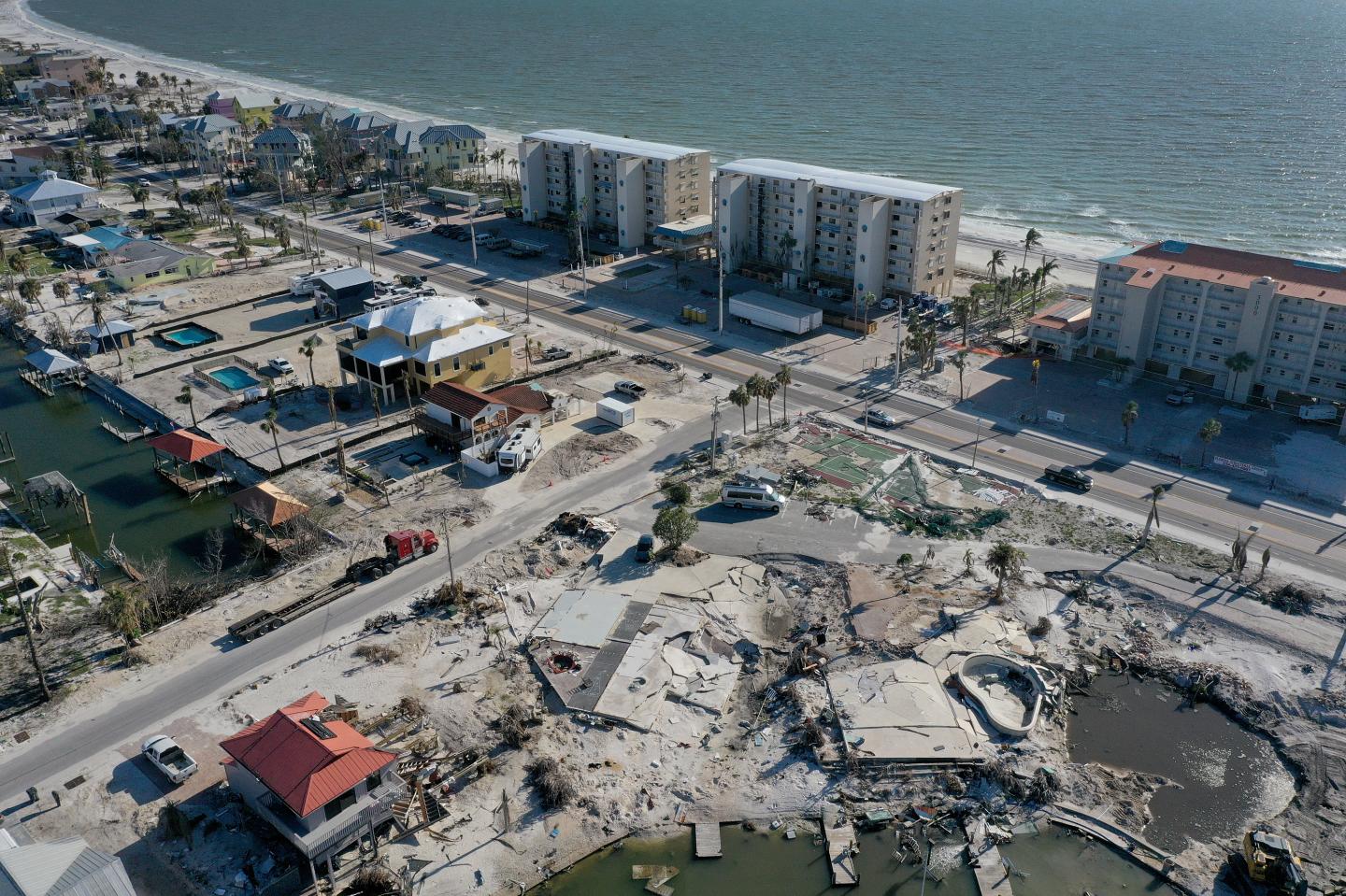
An aerial shot of concrete rubble and flattened buildings
Cleared lots are all that remain of some homes that were destroyed by Hurricane Ian in Fort Myers Beach, Fla.Joe Raedle—Getty Images

Hello, and welcome to the Impact Report.  

America—and the world we live in—often feels like a tale of two realities, doesn’t it? I, again, got that feeling when I went through two climate insurance reports this week, which painted a very different picture of where the U.S. (and the world) stand on climate resilience. The takeaway: Depending on which socioeconomic reality you face, climate disasters are either catastrophic or a manageable risk.  

The first report, from insurance broker Aon, showed that U.S. companies are among the best insured against climate disasters. Despite Hurricane Ian last year being the world’s second costliest climate disaster of the 21st century, at $99 billion in losses, the economic hit companies and citizens faced was not as bad as it could have been: About half of Hurricane Ian’s losses, and about to two-thirds of the overall losses caused by climate disasters in the U.S., were covered.   

The second report, from Ceres and Wharton’s ESG initiative, had a headline that was almost the polar opposite. “New report shows the U.S. insurance industry provides inadequate coverage for climate-related disasters,” it read. “U.S. climate-related disaster insurance is often inaccessible, unaffordable, or does not meet the needs of certain populations,” it continued. The same Hurricane Ian was mentioned to me as a case example of that problematic reality.   

So what is going on? I decided to call both report authors and get their take. And as it turns out, both are right. It just depends on where on the socioeconomic ladder you fall. It’s further proof of the bifurcated reality we live in where the situation of the haves and the have-nots is huge and growing.  

First, Dan Dick and Michal Lörinc at Aon told me how their company came to a rather optimistic view of the American market. Compared to other countries, he said, U.S. companies are much more “mature” in their climate insurance. Many firms insure themselves against climate risks, and reinsurers step in to absorb the shocks that occur when a billion-dollar loss event happens—which is increasingly often.   

In other regions, the insurance and reinsurance markets for climate disasters are less well-developed. Only 13% of the economic losses of the European summer draught were covered by insurance, for example. In Asia, the situation is even more dire. In China and Pakistan, only about 1-2% of the losses from the floodings there were insured.   

Over at Ceres and Wharton, though, such upbeat findings would have been met with frowns. When Hurricane Ian occurred, Ceres managing director Steven Rothstein told me, many families, “especially brown and Black families,” found out they were either not insured, underinsured, or thought they were insured, but, in fact, weren’t. The fact that one-half of losses were covered didn’t make a difference for the half that wasn’t covered.   

Events like Ian and other extreme weather events prompted Ceres to write a report of their own and to lobby the industry and government to provide better solutions. “The number of families that are affected is growing,” Rothstein told me. “They are not well served by the insurance industry overall. We can do better, and we need to do better.”   

So where does this leave us? On the one hand, companies and well-off individuals seem to have many of the levers that are required to limit the adverse economic impact of climate disasters. They get insurance and get reimbursed. The market being as mature as it is, reinsurers step in when a major disaster happens, and, overall, the market works and is resilient.  

On the other hand, many people living in the same country, or in less-developed economies, are facing a completely different reality. They often don’t have as little as $400 on hand in case emergency expenditures are required, let alone the financial ability to insure themselves against disasters. When a climate event does occur, as is increasingly the case, they are sure to suffer the full consequences.   

Here’s the moral of the story: Many readers of this newsletter probably find themselves in the first category. You live in New York, Washington, the Bay Area, London, or other well-to-do metropolitan cities. You work for Fortune 500 or other global companies and are responsibly steering them into being more resilient and adaptive in face of our changing climate.  

But it’s you—us—who nonprofits like Ceres target with their research and lobbying. They’re suggesting that unless the system changes, and unless we act as agents of that change, the reality for many people in the U.S. won’t be any different than the vast majority in Pakistan, India, or other developing countries where climate disasters are increasingly wreaking havoc.

More news below.

Peter Vanham
Executive Editor, Fortune Impact and Connect
@petervanham
peter.vanham@fortune.com

Also on our radar:

Is OnlyFans a fairer business than YouTube or Apple?
“OnlyFans became a runaway hit thanks to adult content,” my colleague Emma Hinchliffe writes in a Fortune magazine story this week. But now, CEO Amrapali Gan “wants to diversify its image without losing its edge.” What caught my eye, however, was the realization that OnlyFans allows its creators to keep more of their revenues than, say, YouTube or Apple. Whereas OnlyFans takes a 20% cut on revenues generated on their platform, Apple keeps 30% and YouTube up to 45%. Is it fair to weigh that more generous revenue-sharing model against the “morality” of the content? I’d love to hear your thoughts.

PepsiCo on climate: PR or pioneer?
The looming threat of global warming was “the elephant in the room” at this year’s World Economic Forum, Roberto Azevedo, chief corporate affairs officer at PepsiCo and former head of the World Trade Organization, told me in an interview in Davos last week. And for PepsiCo, it is critical too, he told me. “We’re a food company, so higher temperatures means lower yields for the crops. Every one-degree centigrade the Earth warms up, 10% of staple crops go out. It’s an urgent and important topic.”

One of Azevedo’s colleagues, CSO Jim Andrew, told me of the company’s efforts to avoid plastic by promoting its SodaStream drinks. PepsiCo is also starting the use of recycled PET bottles. But alongside its competitor, Coca-Cola, PepsiCo has been ranked as the world’s leading plastic polluter for four consecutive years. So is PepsiCo’s climate commitment PR or a pioneering effort?

This is the web version of Impact Report, a weekly newsletter on the latest ESG trends and news that are shaping the future of business. Sign up to get it delivered free to your inbox.

About the Author
By Peter VanhamEditorial Director, Leadership
LinkedIn icon

Peter Vanham is editorial director, leadership, at Fortune.

See full bioRight Arrow Button Icon

Latest in Newsletters

Finance
Lorem ipsum dolor sit amet, consectetur adipiscing elit, sed do eiusmod tempor incididunt ut labore et dolore magna aliqua. Ut enim ad minim veniam
By Fortune Editors
October 20, 2025
Finance
Lorem ipsum dolor sit amet, consectetur adipiscing elit, sed do eiusmod tempor incididunt ut labore et dolore magna aliqua. Ut enim ad minim veniam
By Fortune Editors
October 20, 2025
Finance
Lorem ipsum dolor sit amet, consectetur adipiscing elit, sed do eiusmod tempor incididunt ut labore et dolore magna aliqua. Ut enim ad minim veniam
By Fortune Editors
October 20, 2025
Finance
Lorem ipsum dolor sit amet, consectetur adipiscing elit, sed do eiusmod tempor incididunt ut labore et dolore magna aliqua. Ut enim ad minim veniam
By Fortune Editors
October 20, 2025
Finance
Lorem ipsum dolor sit amet, consectetur adipiscing elit, sed do eiusmod tempor incididunt ut labore et dolore magna aliqua. Ut enim ad minim veniam
By Fortune Editors
October 20, 2025
Finance
Lorem ipsum dolor sit amet, consectetur adipiscing elit, sed do eiusmod tempor incididunt ut labore et dolore magna aliqua. Ut enim ad minim veniam
By Fortune Editors
October 20, 2025

Most Popular

Finance
Lorem ipsum dolor sit amet, consectetur adipiscing elit, sed do eiusmod tempor incididunt ut labore et dolore magna aliqua. Ut enim ad minim veniam
By Fortune Editors
October 20, 2025
Finance
Lorem ipsum dolor sit amet, consectetur adipiscing elit, sed do eiusmod tempor incididunt ut labore et dolore magna aliqua. Ut enim ad minim veniam
By Fortune Editors
October 20, 2025
Finance
Lorem ipsum dolor sit amet, consectetur adipiscing elit, sed do eiusmod tempor incididunt ut labore et dolore magna aliqua. Ut enim ad minim veniam
By Fortune Editors
October 20, 2025
Finance
Lorem ipsum dolor sit amet, consectetur adipiscing elit, sed do eiusmod tempor incididunt ut labore et dolore magna aliqua. Ut enim ad minim veniam
By Fortune Editors
October 20, 2025
Finance
Lorem ipsum dolor sit amet, consectetur adipiscing elit, sed do eiusmod tempor incididunt ut labore et dolore magna aliqua. Ut enim ad minim veniam
By Fortune Editors
October 20, 2025
Finance
Lorem ipsum dolor sit amet, consectetur adipiscing elit, sed do eiusmod tempor incididunt ut labore et dolore magna aliqua. Ut enim ad minim veniam
By Fortune Editors
October 20, 2025
Fortune Secondary Logo
Rankings
  • 100 Best Companies
  • Fortune 500
  • Global 500
  • Fortune 500 Europe
  • Most Powerful Women
  • Future 50
  • World’s Most Admired Companies
  • See All Rankings
Sections
  • Finance
  • Fortune Crypto
  • Features
  • Leadership
  • Health
  • Commentary
  • Success
  • Retail
  • Mpw
  • Tech
  • Lifestyle
  • CEO Initiative
  • Asia
  • Politics
  • Conferences
  • Europe
  • Newsletters
  • Personal Finance
  • Environment
  • Magazine
  • Education
Customer Support
  • Frequently Asked Questions
  • Customer Service Portal
  • Privacy Policy
  • Terms Of Use
  • Single Issues For Purchase
  • International Print
Commercial Services
  • Advertising
  • Fortune Brand Studio
  • Fortune Analytics
  • Fortune Conferences
  • Business Development
  • Group Subscriptions
About Us
  • About Us
  • Editorial Calendar
  • Press Center
  • Work At Fortune
  • Diversity And Inclusion
  • Terms And Conditions
  • Site Map
  • About Us
  • Editorial Calendar
  • Press Center
  • Work At Fortune
  • Diversity And Inclusion
  • Terms And Conditions
  • Site Map
  • Facebook icon
  • Twitter icon
  • LinkedIn icon
  • Instagram icon
  • Pinterest icon

Latest in Newsletters

Dow COO Karen Carter wearing a white lab coat and sitting while smiling
NewslettersMPW Daily
What to know about Dow’s next CEO, the Fortune 500’s third Black female chief today who started at the $40 billion chemical maker as an intern
By Emma HinchliffeApril 15, 2026
4 hours ago
Why insurance giant Travelers’ CTO is placing fewer, bigger bets on AI
NewslettersCIO Intelligence
Why insurance giant Travelers’ CTO is placing fewer, bigger bets on AI
By John KellApril 15, 2026
5 hours ago
In this photo illustration, the American multinational investment bank, Citibank or Citi (NYSE: C), logo seen displayed on a smartphone with an Artificial intelligence (AI) chip and symbol in the background.
NewslettersCFO Daily
Citi’s new CFO touts AI gains as bank posts record $24.6 billion revenue quarter: ‘This is not the spell-checker working better’
By Sheryl EstradaApril 15, 2026
7 hours ago
Dow’s next chapter depends on whether new CEO Karen Carter gets room to lead—and how fast Jim Fitterling steps back
NewslettersCEO Daily
Dow’s next chapter depends on whether new CEO Karen Carter gets room to lead—and how fast Jim Fitterling steps back
By Diane BradyApril 15, 2026
9 hours ago
Mike Horton poses with his arms crossed.
NewslettersTerm Sheet
Exclusive: Hyfix raises $15 million to build a U.S. alternative to DJI’s drone dominance
By Lily Mae LazarusApril 15, 2026
10 hours ago
A ULA Atlas V-551 rocket lifts off with 27 new Amazon Leo satellites from Cape Canaveral Space Force Station in Florida on December 14, 2025. (Photo: Manuel Mazzanti/NurPhoto/Getty Images)
NewslettersFortune Tech
Why Amazon bought Globalstar for $11.6 billion
By Andrew NuscaApril 15, 2026
10 hours ago

Most Popular

Billionaire philanthropist MacKenzie Scott has donated again—a week after gifting millions to a college, she's just given $70 million to Meals on Wheels America
Success
Billionaire philanthropist MacKenzie Scott has donated again—a week after gifting millions to a college, she's just given $70 million to Meals on Wheels America
By Fortune EditorsApril 13, 2026
2 days ago
Retirees are facing a $345,000 bill they never saw coming — and most aren't prepared
Commentary
Retirees are facing a $345,000 bill they never saw coming — and most aren't prepared
By Fortune EditorsApril 14, 2026
1 day ago
Palantir CEO says working at his $316 billion software company is better than a degree from Harvard or Yale: ‘No one cares about the other stuff’
Success
Palantir CEO says working at his $316 billion software company is better than a degree from Harvard or Yale: ‘No one cares about the other stuff’
By Fortune EditorsApril 14, 2026
1 day ago
Warren Buffett’s first tax return showed $7 owed to the IRS. The then paperboy and former Berkshire Hathaway CEO is now worth $143 billion
Success
Warren Buffett’s first tax return showed $7 owed to the IRS. The then paperboy and former Berkshire Hathaway CEO is now worth $143 billion
By Fortune EditorsApril 14, 2026
1 day ago
Jeff Bezos pledged $10 billion for climate change. With the 2030 clock ticking, his wife, Lauren Sánchez Bezos, is leading the charge to spend it
Environment
Jeff Bezos pledged $10 billion for climate change. With the 2030 clock ticking, his wife, Lauren Sánchez Bezos, is leading the charge to spend it
By Fortune EditorsApril 15, 2026
5 hours ago
Anthropic is facing a wave of user backlash over reports of performance issues with its Claude AI chatbot
AI
Anthropic is facing a wave of user backlash over reports of performance issues with its Claude AI chatbot
By Fortune EditorsApril 14, 2026
1 day ago

© 2026 Fortune Media IP Limited. All Rights Reserved. Use of this site constitutes acceptance of our Terms of Use and Privacy Policy | CA Notice at Collection and Privacy Notice | Do Not Sell/Share My Personal Information
FORTUNE is a trademark of Fortune Media IP Limited, registered in the U.S. and other countries. FORTUNE may receive compensation for some links to products and services on this website. Offers may be subject to change without notice.